Anguished by her husband’s deportation, farm worker struggles to support her daughter
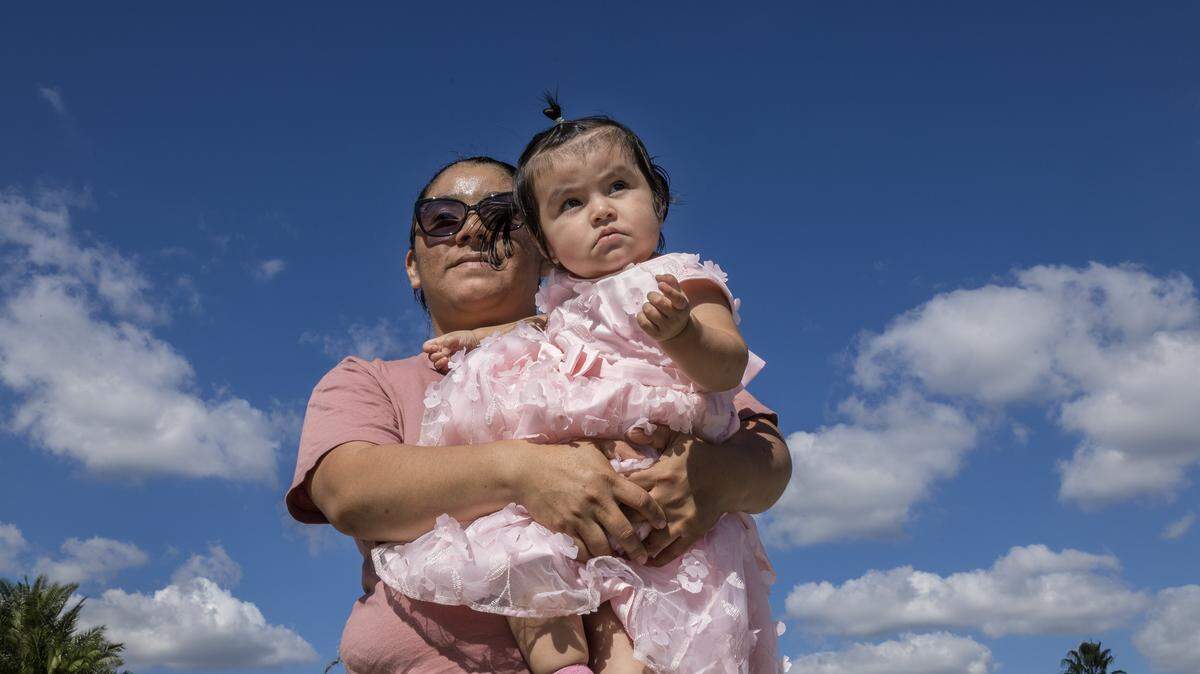
With a 14-month-old baby in her arms and barely any resources to get by, Leyla Ac Choc faces each day with anguish after her husband, tormented by unbearable pain in one eye and denied medical care at the Alligator Alcatraz detention center, chose to self-deport.
Her life fell apart on July 7 when she heard a message from her husband notifying her that immigration authorities had detained him in Homestead while he was looking for a coworker to drive to the fields where they harvested tomatoes and other crops.
“I noticed the audio around 1 in the afternoon,” Ac Choc, who is Guatemalan, told el Nuevo Herald. “He said, ‘Migration already got me. Take care and watch my little girl,’ and I thought, ‘What am I going to do now?’ ”
Her husband, originally from Cuilco, a municipality in the Guatemalan department of Huehuetenango, had lived in the United States for 14 years. Ac Choc said he had no pending immigration case or criminal record.
While confined at the controversial Alligator Alcatraz detention center in the Everglades wetlands, the man developed swelling in one eye that soon became unbearable. The pain was so intense it gave him severe headaches, his wife said.
Despite requesting medical attention and staging a hunger strike with other detainees, he received no medicine, his wife said.
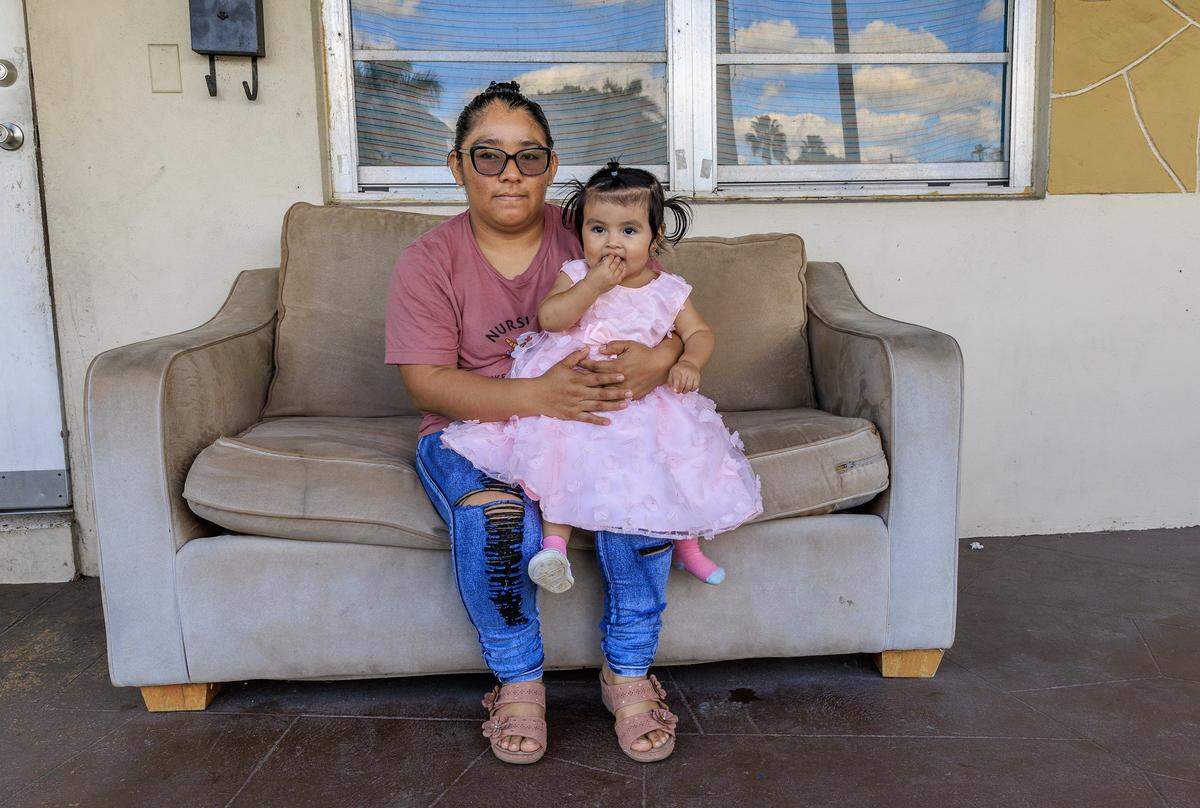
“They did a hunger strike so they would at least be given medicine, at least medical assistance. But he and everyone there weren’t given anything. They didn’t treat them like humans, they treated them like animals. So he suffered there for a month,” the woman said on the porch of the house where she rents a room, in an area where trash piles up on the street.
After enduring a month at Alligator Alcatraz with intense pain and no possibility of getting a hearing before a judge soon, he opted to ask to be returned to Guatemala.
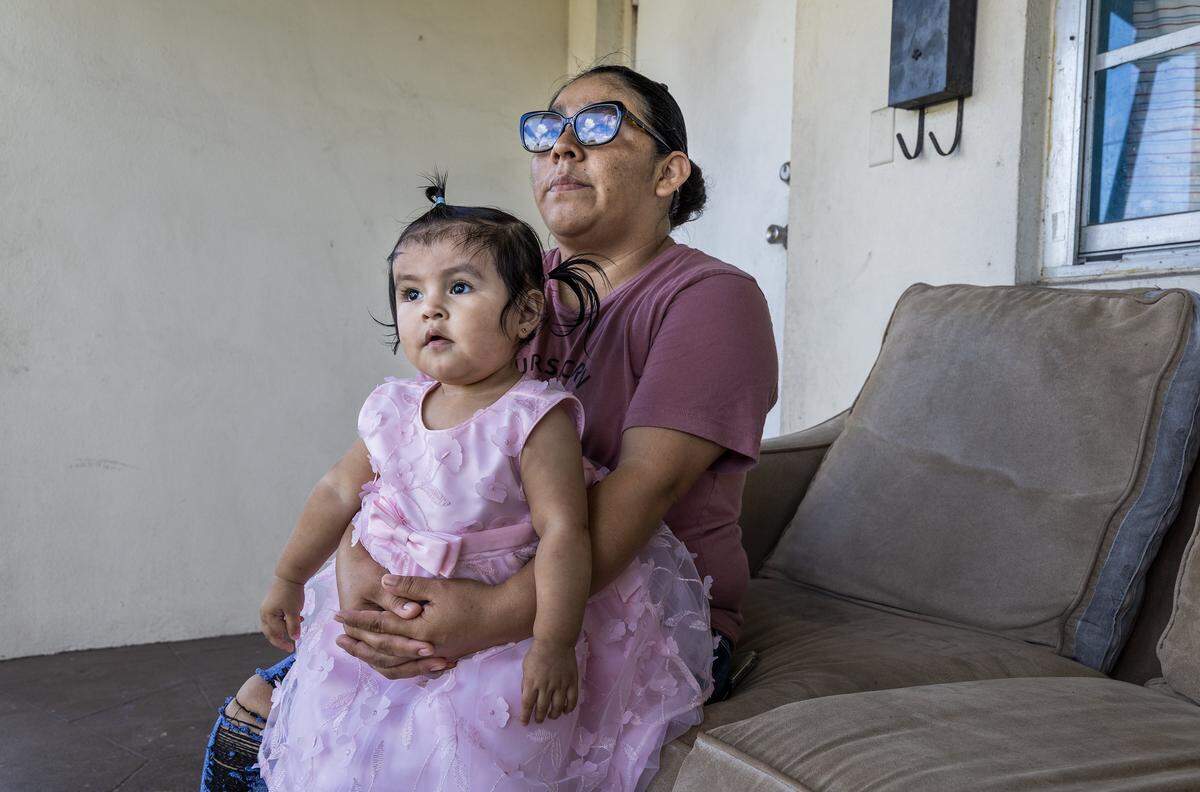
“They told him that if he waited for a hearing, he would have to wait 90 days. He had a date of Aug. 7, but everything was canceled and they said everything had changed. If they didn’t want to wait, they had to sign their self-deportation papers,” Ac Choc said.
Her husband chose to leave, and she had to move into “a very small, cramped room” with her daughter Melany Reynoso, where it’s difficult to come up with more than $500 a month for rent, water and electricity.
When she gets a ride, Ac Choc drops Melany at daycare and heads to the fields, taking any agricultural work that’s offered.
She usually has to pay $25 to people with vehicles who charge to take others where they need to go, but that’s not viable for her when she sometimes earns only $80 or $100 for a day’s work.
This situation prevents her from working regularly, taking Melany to daycare and running other errands her husband used to handle. She can’t drive because she doesn’t have a driver’s license.
“Housing got complicated for me this past month. I’m struggling a lot with financial need,” she said, while Melany played at her side, unaware of their precarious situation.
Adding to that, she must support another 12-year-old daughter in Guatemala who is cared for by her grandmother; she used to send money so the girl could study and eat.
‘Help me with your big heart’
Paying rent isn’t Ac Choc’s only need. She also needs a full-size bed for her and her daughter, clothing for the girl, money and, above all, food for both of them.
“If people had that big heart, they could help me a little financially or to help with food because that’s the main thing for me and my little girl,” said this Guatemalan mother, who has worked nine years in South Florida’s agricultural fields since she crossed the border seeking a better future.
Francis Contreras of the Redlands Christian Migrant Association, the organization that nominated Ac Choc to receive assistance from Wish Book, confirmed that the woman and her daughter are in real need of support.
Contreras explained that with the funds people might donate, Ac Choc could address some of her and her daughter’s needs. The money she had ran out after her husband’s deportation and she had to cover the medical expenses that arose when the little girl became seriously ill with a respiratory infection she is now recovering from.
The migrant association has supported Ac Choc, but it also lacks sufficient funds due to the elimination of federal aid. As a result, it has had to suspend or restructure some services and close about ten of the more than 70 centers it operates statewide.
Ac Choc emphasized that her situation is desperate. Her two sisters who live in Pennsylvania also cannot help her, and returning to Guatemala isn’t an option for now. In Quiché, the Maya town where she was born, there is only “pure poverty, and if they give you work washing clothes, they pay $3.”
“The truth is I’m in a very critical situation and I can’t take it anymore. Sometimes I get very desperate, I can’t sleep, I can’t do anything. There are moments I feel like I don’t want to exist in this world anymore, because it hurts me what’s happening,” she said.
How to help
To help this person nominated to Wish Book and more than 150 other families and individuals in need this year:
▪ To donate, use the coupon found in the print newspaper or pay securely online at www.MiamiHerald.com/wishbook
▪ For more information, call 305-376-2906 or email Wishbook@MiamiHerald.com
▪ The most requested items are usually laptops and tablets for school, furniture and accessible vans
▪ Read all Wish Book stories at www.MiamiHerald.com/wishbook

This story was originally published December 2, 2025 at 5:30 AM with the headline "Anguished by her husband’s deportation, farm worker struggles to support her daughter."