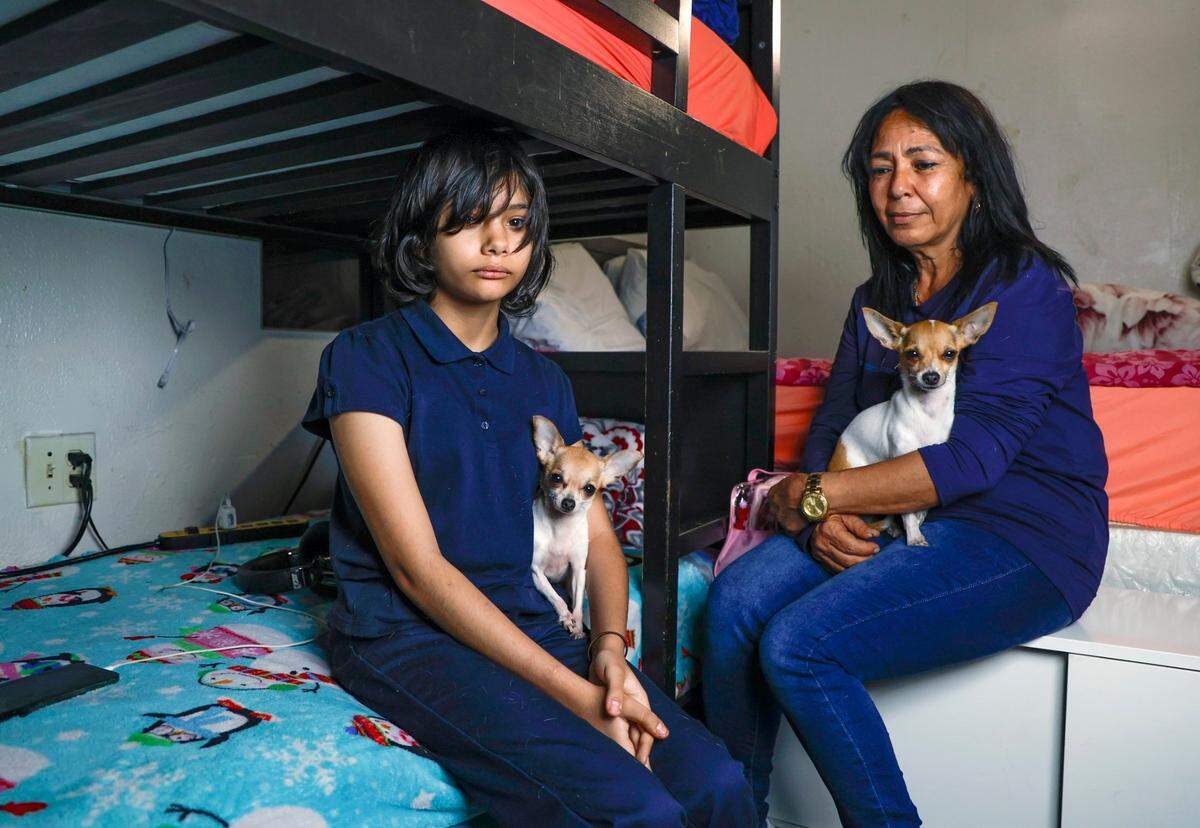
When her daughter died from cancer in Cuba, she brought her granddaughter to Miami
Georgina Sao went to Cuba thinking she could save her daughter, but the most she could do was return to Miami with her orphaned granddaughter, Gillian Rodriguez, who begs her, crying, not to abandon her.
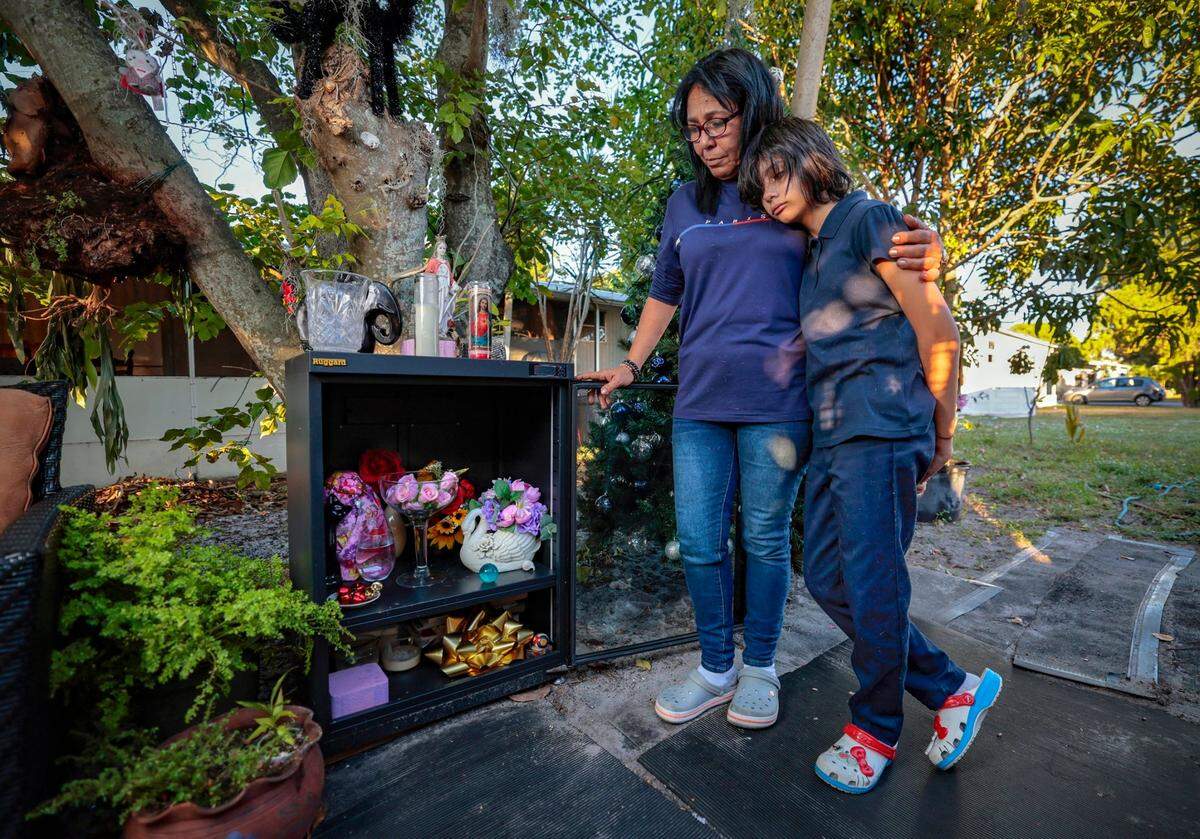
“In every little heart she sees a message from her mother,” says Sao, who, while her daughter, Yenisley Perdomo, was ill, had to travel to the island to take care of her.
In the process she lost her job and the economic stability she had achieved cleaning houses and hotel rooms since she arrived in Miami.
Yenisley Perdomo spent five years fighting cancer in the “medical impotence,” as she used to call Cuba’s health system, which has promoted itself as a medical power.
On that journey, which began at age 33 with breast cancer and ended at age 37 when it had metastasized to her bones and liver and caused her unbearable pain, courage never abandoned her.
The activist believed the Cuban government punished her for being outspoken in her criticism of the Cuban health system by denying or delaying treatment or giving her inadequate treatment.
On Facebook, where she told of how she faced the return of cancer and described a painful biopsy with a needle she suspected had been used repeatedly, her post used the slogan “Patria y Vida (Homeland and Life)” — the demand of the participants in the popular protests of July 11, 2021 in Cuba. “We had a lot of difficulty, but I am strong, and I endured the pain,” she wrote.
“I just wanted to vent about the mistreatment that we patients on this beautiful island, held hostage by this medical impotence, receive,” she complained.
Perdomo died on Oct. 25, 2023, unable to fly to the United States with the humanitarian visa that human rights activists and loved ones fought for.
Struggling with rent in Miami
For Sao, reliving memories of her daughter’s illness reinforces her grief.
“She didn’t sleep at night because of the pain. I had to carry her to take her to the bathroom,” she recalls, indicating that she took her daughter to the Oncology Hospital in Havana, where they would just give her an IV and send her home.
“I had several arguments with the doctors because of the poor care, and they threatened that they wouldn’t let me enter the hospital,” says Sao, who is now trying to raise her granddaughter in a small room in a trailer park in Miami Gardens.
“Georgina went to Cuba basically to bury her daughter and bring back her granddaughter. She can’t accept the death of her daughter so young,” Gemma Carrillo of the Miami-Dade Schools Police Department, which nominated Sao for Wish Book, told el Nuevo Herald. She was moved by the photos of her daughter that Sao sent her.
School police officials were touched by Sao, 55, who at first took her granddaughter, Gillian, to school on her bike because she doesn’t have a car. Now Gillian rides the school bus.
They were also concerned about the well-being of Gillian, who at 12 is at one of the most critical and formative times in her life and must cope with losing her mother.
“She has been diagnosed with depression and anxiety,” says Sao.
Already Gillian has had to deal seeing her mother go through breast surgery, radiation, chemotherapy, and pressure by the Cuban government, “very difficult, in which her mother was harassed by the authorities for her complaints on social media,” says Sao. The Miguel Díaz-Canel regime has imposed up to 10 years in prison for making critical comments on social media.
All these fears are revived in Gillian, who makes beaded necklaces but does not wear them in public, she said, because she is very shy.
“I have been asking my grandmother to take me shopping for clothes for two days, but we can’t,” says the teenager.
Sao admits that she avoids going to the stores with her granddaughter because she can’t buy her everything she asks for.
“She starts crying every time she talks. There are many toys that she had never seen before, she looks at them and says, ‘Oh, Grandma, how I wanted to have that doll in Cuba,’” says Sao.
She describes Gillian as “very witty.” Ask the 12-year-old what her favorite class is, and she answers, “I don’t like any of them. If I had to choose one it would be lunch.” Ask her favorite colors and she says, “I like black and gray.”
The hardest thing for Sao, as for many Miamians, is the high rent.
She is separated from her ex-husband, with whom she came from Cuba. Even so, they live together, because he is helping her get through this difficult situation, in which she finds herself without a job and with one more mouth to feed.
Now, it’s four people living in the small room in Miami Gardens for which they pay $1,400, because her husband also brought his daughter from Cuba.
Sao doesn’t have much hope of moving. It will be hard for her to raise the money to put up the deposit and other costs of an apartment.
She doesn’t receive any money for her granddaughter because legal custody is still pending. Nevertheless, she is very happy to have Gillian with her.
“She tells me that she misses her mommy a lot, that please don’t leave her ever, that I don’t die like her mother,” says Sao, who hopes Wish Book will help her give her granddaughter a nice holiday season.

HOW TO HELP
To help this Wish Book nominee and more than 100 others who are in need this year:
▪ To donate, use the coupon found in the newspaper or pay securely online through www.MiamiHerald.com/wishbook
▪ For more information, call 305-376-2906 or email Wishbook@MiamiHerald.com
▪ The most requested items are often laptops and tablets for school, furniture, and accessible vans
▪ Read all Wish Book stories on www.MiamiHerald.com/wishbook