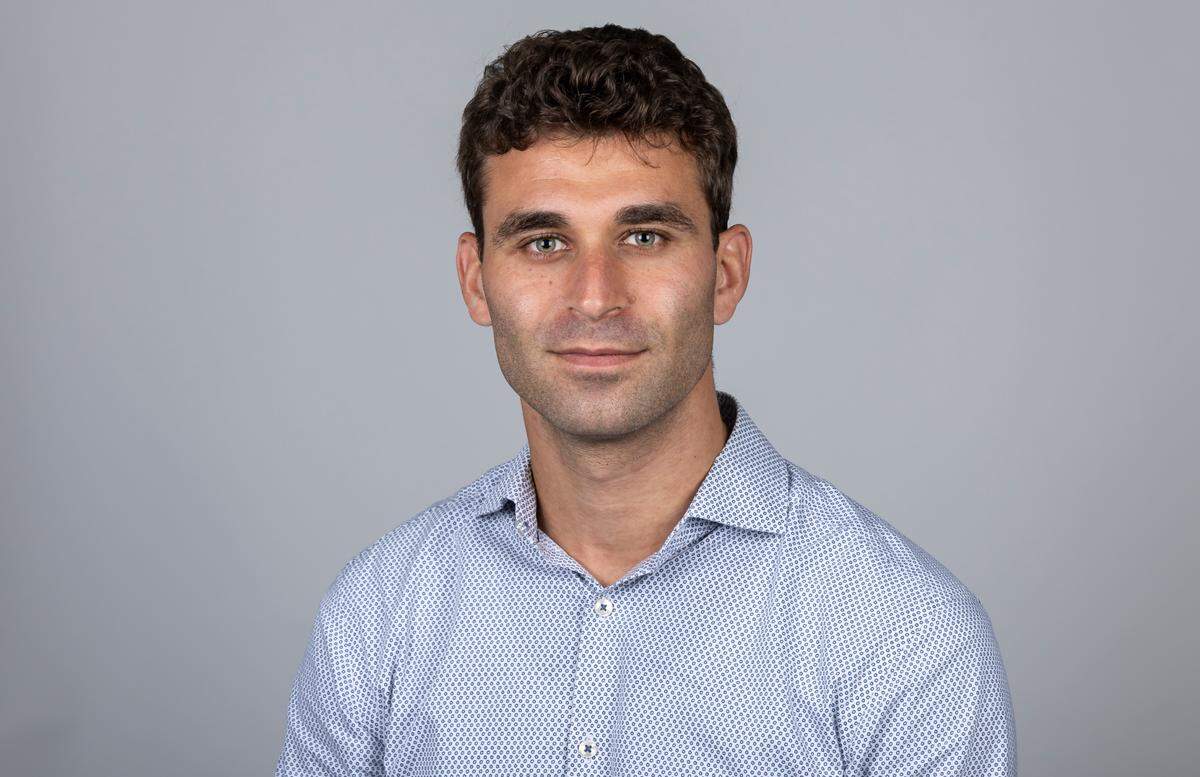
Mind over matter: Living with muscular dystrophy, Gabriel Vergara aims to serve
Gabriel Vergara had always been a starter. His youth baseball career was promising, until his coaches took greater notice of him, but for the wrong reasons.
Something was off.
An otherwise athletic 11-year-old, Vergara struggled to raise his arms. Laps around the infield, once easy warmup exercises, became more strenuous. Catching balls became increasingly difficult. Eventually, both became impossible.
“My muscles just wouldn’t respond,” said Vergara.
His coaches sent him to get checked out.
After a blur of tests, Vergara found himself in what was then an incomprehensible conversation with his doctor about muscular dystrophy.
“You’re going to experience lots of changes,” Vergara recounted being told, changes that included eventually being unable to walk and dress himself, both faculties that seemed inalienable to him at the time.
Muscular dystrophy, a group of genetic diseases, causes muscle tissues to progressively break down, often severely limiting the mobility of those who live with it. Though there are a number of treatments, muscular dystrophy does not yet have a cure.
But Vergara, 44, is nothing if not optimistic. “I’ll likely be even more debilitated in 10 years,” he said, sitting in his wheelchair, “but, like in anything, you have to have the mindset that you’ll win, that life can always improve.”
He smiled gently and nodded his head, offering as much to himself as to those in his presence a pithy philosophical coda: “Everything starts in the mind.”
Vergara was diagnosed with facioscapulohumeral muscular dystrophy in 2002. Five years later, he and his mother moved from their hometown, Cartagena, Colombia, to the United States, where he had more treatment options.
Since then, and as his muscular dystrophy has progressed, Vergara has clarified his raison-d’etre, one that’s uncompromisingly centered around service.
“Whoever you are, you have value, and you have something to offer,” he posited, speaking in his characteristically soft, almost monkish voice that’s marked by considerate pauses and free of fillers. “You don’t have to be 100% normal to offer something, because we live in an abnormal world.”
According to Jorge Guijarro, Vergara’s case manager at Spinal Cord Living Assistance Development, Inc (SCLAD), that spirit of contribution is precisely why the organization — which provides affordable housing and services for people with disabilities — nominated Vergara for the Miami Herald/el Nuevo Herald Wish Book program. Vergara lives in a SCLAD-managed apartment in Hialeah.
“He tries to make sure that everybody’s happy,” said Guijarro, emphasizing Vergara’s unflinching willingness to help his neighbors when they’re in need. Vergara, said Guijarro, plays a leadership role in his building, whose residents all live with disabilities.
Denis Guzman, Vergara’s next-door neighbor and close friend, couldn’t agree more. Vergara is always on the scene when someone needs help, said Guzman, who’s paralyzed from the neck down.
“Siri,” Guzman shouted in demonstration at the phone on his nightstand, “call Gabriel.” Vergara laughed as his phone buzzed. “If something falls or I need help,” said Guzman, “I call Gabriel.”
Beyond picking up fallen objects, Vergara tries to advocate for those in his building. “They’re shy,” he said, adding that many of his neighbors are hesitant to speak out when an issue arises with their apartments or the building.
“They don’t feel that their voices count,” he speculated, “but my education has given me the tools to view life differently, and that helps me advocate for them when they have problems.”
Besides an empowered outlook, Vergara’s extensive education has bestowed upon him five degrees. He completed two of those — one in microbiology and the other in health administration — in Colombia.
The other three — a bachelor’s and a master’s in public administration as well as an additional bachelor’s in sociology, which he completed in 2019 and described as “for fun” — he earned from Florida International University. A Panther through and through, Vergara adorned his apartment with FIU memorabilia.
“I had to orient myself around education to contribute as much as I could to society,” said Vergara.
He puts his ample knowledge to use for the Department of Economic Opportunity, a state agency that helps unemployed Floridians find jobs. He works there as a customer service specialist, helping people improve their resumes, prepare for job interviews, and connect with employers.
Outside of work, Vergara loves to read, write and play chess. Going into the holiday season, Gabriel is hoping that Wish Book can help him buy a new MacBook Air, which he intends to use to pursue his passions and, of course, help others.
He’s already a member of the Muscular Dystrophy Association and the Facioscapulohumeral Muscular Dystrophy Society, two organizations that he says offer invaluable resources to those living with muscular dystrophy.
But a new computer would allow Vergara, who spends much of his time at home, to engage more online with others in the muscular dystrophy community. An avid writer, he envisions taking his new computer to the park to write stories, essays, perhaps even a book that could bring greater visibility and interconnectedness to the muscular dystrophy community.
And, he added with a coy smile, a better working computer would help him improve his already formidable chess game.
“My username is VergaraORG,” he said in an open invitation to anyone looking for a friendly online game.
HOW TO HELP
To help this Wish Book nominee and more than 100 others who are in need this year:
▪ To donate, use the coupon found in the newspaper or pay securely online through www.MiamiHerald.com/wishbook
▪ For more information, call 305-376-2906 or email Wishbook@MiamiHerald.com
▪ The most requested items are often laptops and tablets for school, furniture, and accessible vans
▪ Read all Wish Book stories on www.MiamiHerald.com/wishbook
This story was originally published December 12, 2024 at 5:00 AM.