When this building spree is done, Florida will have eight new roller coasters
Depending on how you count them, Florida’s theme parks have 23 roller coasters, not counting children’s rides. Five more are coming in the next two years.
In fact, Florida’s theme parks are in the midst of a roller coaster building spree of sorts. Between June 2018, when Slinky Dog Dash opened at Disney’s Hollywood Studios, and October 2021, when Disney says Guardians of the Galaxy at Epcot and Tron at Magic Kingdom will have opened, the parks are adding eight new roller coasters. That’s twice as many as the parks have built in any other 3 1/2-year period.
“It’s a crazy amount of stuff happening,” said Robb Alvey, who runs the website Themeparkreview.com. The new coasters “are going to be major attractions. They draw a lot of people. … There’s just something about thrill rides, and the roller coaster is the king of thrill rides.”
Florida doesn’t have the longest, fastest or the tallest roller coasters in North America. But it does have — or will soon — a hybrid wood and steel coaster, dive coasters that plummet straight down, coasters with seats that turn 360 degrees, coasters that launch in reverse, coasters that run up spikes and fall back down, coasters that free fall and coasters with a variety of other kinds of loops and inversions.
Florida also has a large concentration of highly themed roller coasters, perhaps the largest concentration in the world, from the elaborate queues to the Harry Potter Rides at Universal to the tale of how “Toy Story” character Andy built Slinky Dog Dash at Disney’s Hollywood Studios from a roller coaster play kit.
They’ve come a long way since Orlando’s first theme park roller coaster, Space Mountain, opened in 1975 at Magic Kingdom. Although it’s a sentimental favorite, Space Mountain tops out at 28 mph and doesn’t turn upside down even once. Its distinction is that it runs in total darkness, where riders can’t see what’s going to happen next, and that makes it scary for some people.
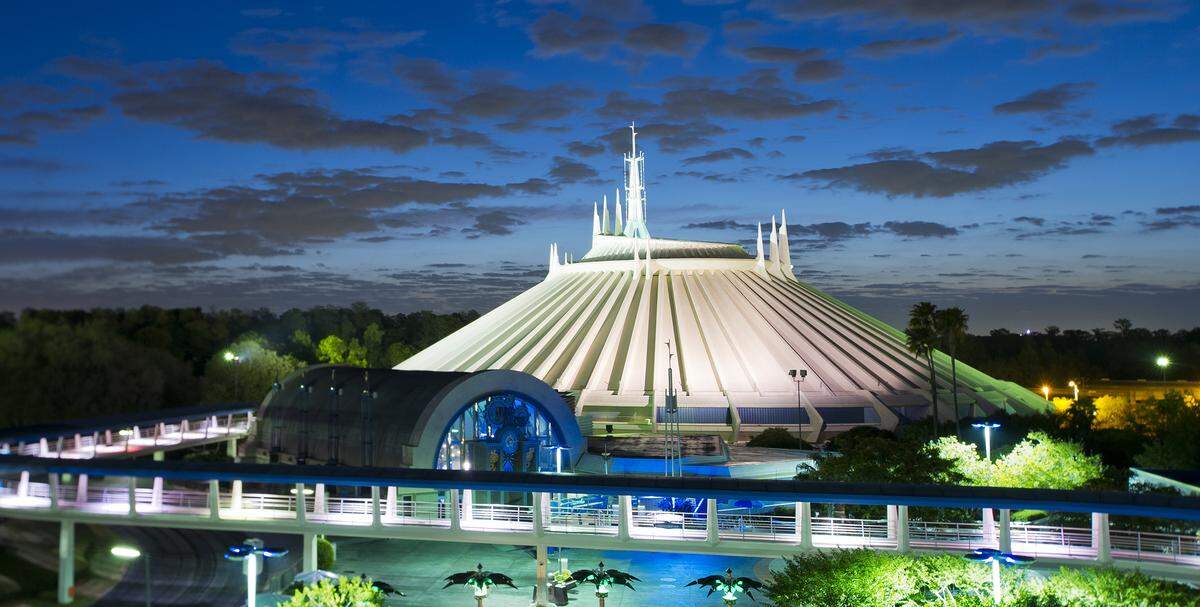
The eight new or under-construction coasters offer a mix of heavy theming and new twists and turns that the latest technology made possible. Most of the new rides are launch coasters, which increasingly are replacing the traditional combination of chain-lift hills and gravity to propel the ride vehicles. Instead, they use magnets to launch a coaster car uphill or accelerate abruptly.
Here’s what’s coming:
▪ The remains of the roller coaster formerly known as Gwazi, a pair of dueling coasters on wooden tracks at Busch Gardens, will reopen next spring as Iron Gwazi, a hybrid coaster with a wooden foundation and steel rails. It is perhaps the trendiest type of coaster being built — or rebuilt — today.
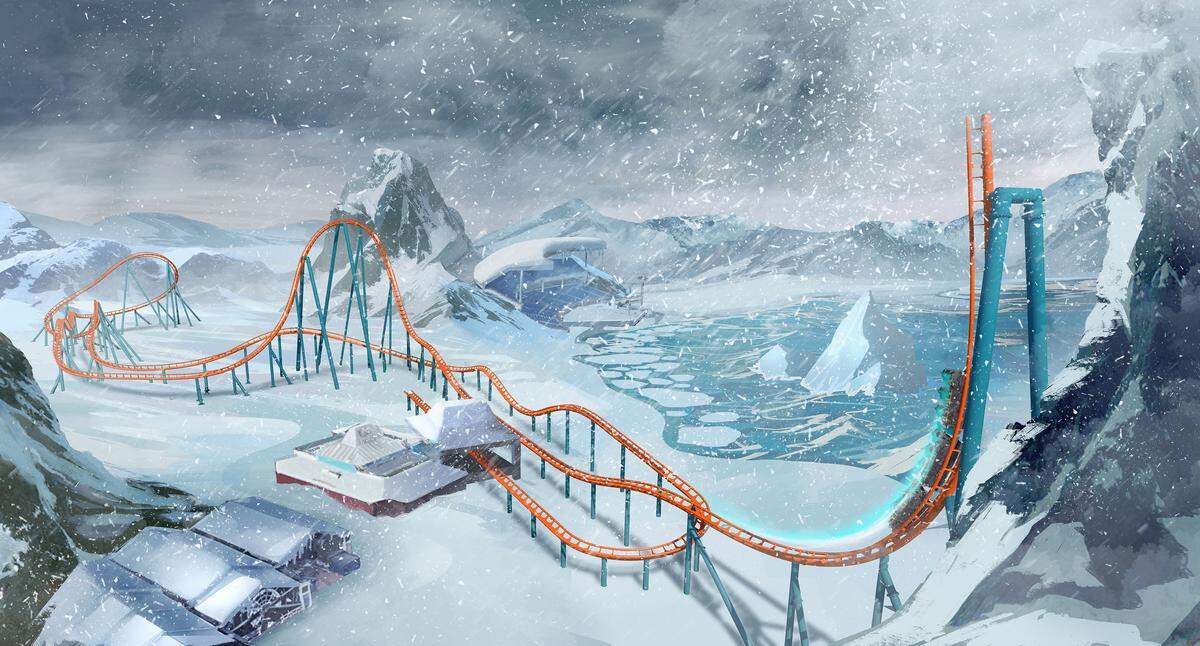
▪ Ice Breaker, opening next spring next to Wild Arctic, will be SeaWorld’s first launch coaster. It will have four launches, including a 93-foot spike with a reverse launch at a 100-degree angle — which means a drop that is not only straight down, but bent backwards another 10 degrees.
▪ Guardians of the Galaxy: Cosmic Rewind, a long indoor coaster scheduled to open at Epcot by fall 2021, will have cars that can turn a full 360 degrees — not free-spinning cars but ones that will turn riders to face the action. It also will have a reverse launch.
▪ Tron: It’s not an original design, but a copy of the Tron Lightcycle Power Run at Shanghai Disney Resort. It’s being built in Tomorrowland at Magic Kingdom. The coaster, which looks like a chain of motorbikes, will hit 60 mph. It is supposed to open by the park’s 50th anniversary in October 2021.
▪ A mystery roller coaster in Jurassic Park at Islands of Adventure. Universal has not confirmed that any attraction is in the works, but is building something on land it cleared at the former Triceratops Encounter and around the Discovery Center. The company submitted a trademark application for Velocicoaster as the name of an amusement park attraction. Universal has been storing roller coaster tracks on property offsite, and fan sites have published what they say are plans for the track layout.
In addition, three coasters have opened in the last 18 months:
▪ Hagrid’s Magical Creatures Motorbike Adventure, which opened in June at Universal’s Islands of Adventure, has seven launches, a 17-foot drop in the dark, as well as a ride up a 65-foot almost-vertical spike, then a fall backwards.
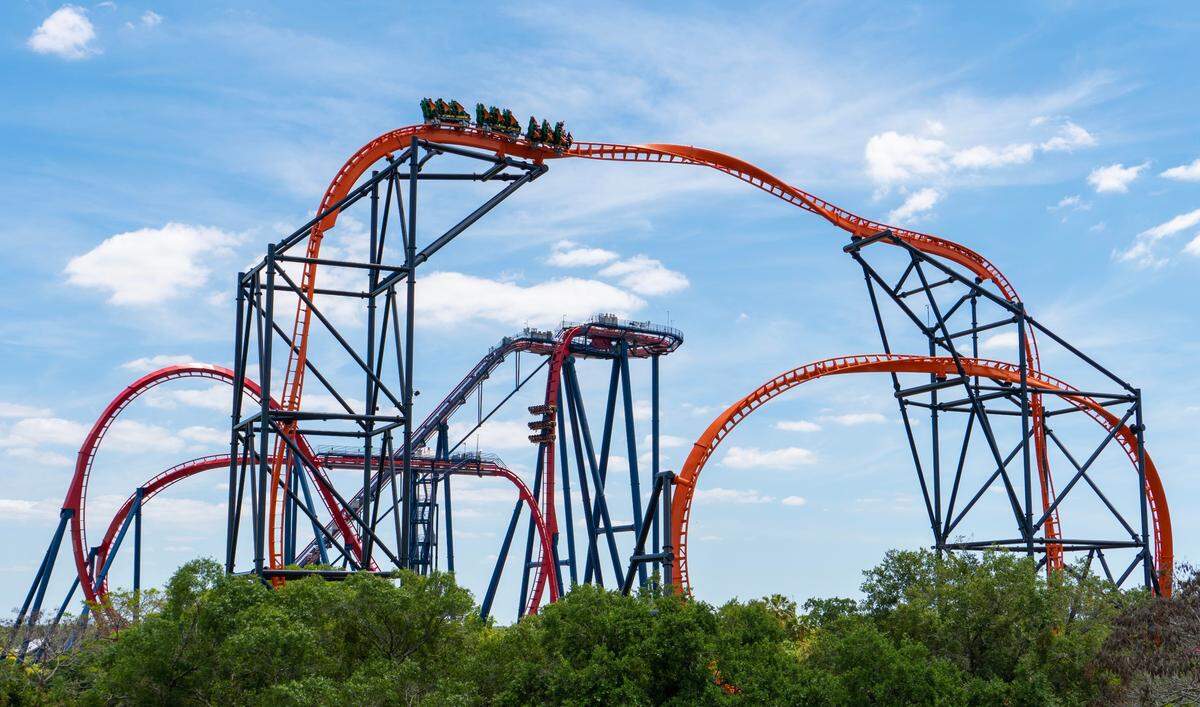
▪ Tigris, which opened this year at Busch Gardens, has three launches, a twisting heartline roll across the top and a restraint system that allows a scary amount of movement in your seat.
▪ Slinky Dog Dash: The family coaster opened in June 2018 at Hollywood Studios. It’s highly themed, smooth, slow with two launches and a brief slide backwards.
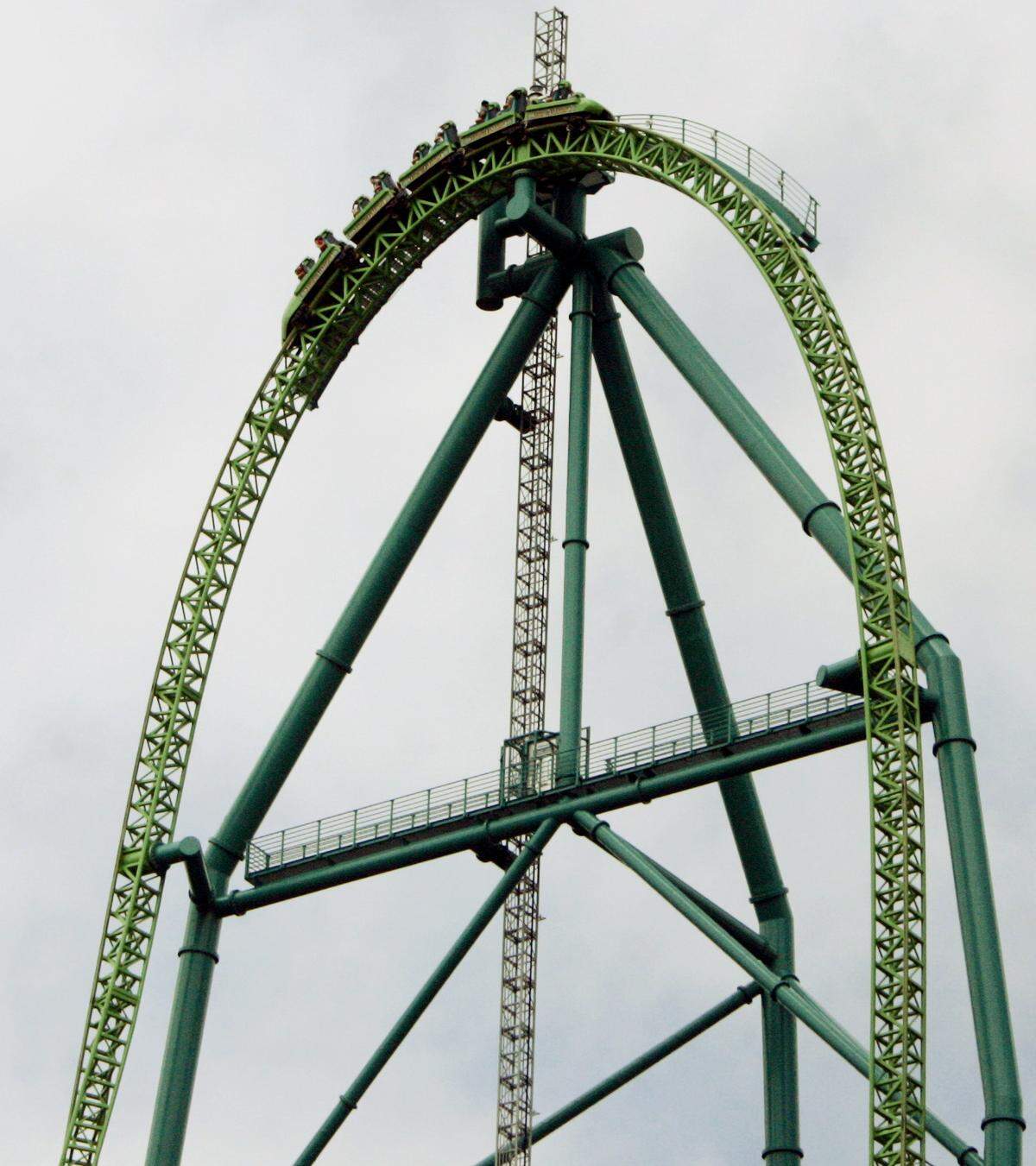
Orlando’s thrill rides typically don’t go to extremes of height and speed. Florida’s two tallest coasters (SheiKra at Busch Gardens and Mako at SeaWorld) are 200 feet. Its fastest (Mako) goes 73 mph. In comparison, the world’s tallest coaster, Kingda Ka at Six Flags Great Adventure in New Jersey, is 456 feet. The world’s fastest coaster, Formula Rossa at Ferrari World in Abu Dhabi, hits 150 mph.
Instead, Disney and Universal prioritize storytelling as a ride’s most important feature. Thus the elaborate queue for Revenge of the Mummy at Universal Studios and the pre-story for Rock ‘n Roll Roller Coaster Starring Aerosmith at Disney’s Hollywood Studios. Universal is even calling Hagrid’s Motorbike Adventure a “story” coaster.
“Florida is about theming and special experiences,” said Josh Bullock, founder of CoasterCritic.com. The theme parks “don’t really go for the records. … [They think] ‘We’re giving people an experience, we’re not going to take them up to 400 feet.’ “
STARTING WITH A STORY
Talk to people from each theme park company’s creative division and you’ll hear a real difference in how they design a ride.
“We always start with the story, the overall arch of the story and the guest experience,” said Scott Mallwitz of Walt Disney Imagineering. “We don’t lead with the physicality of the technology, we always start with the story — we’re going to bring you on the train through Everest, we’re going to let you live on the grid in Tron. Then we ask, what technology can we leverage in telling that story?
“I don’t think we have ever sat there and said we need something that’s 180 feet tall.”
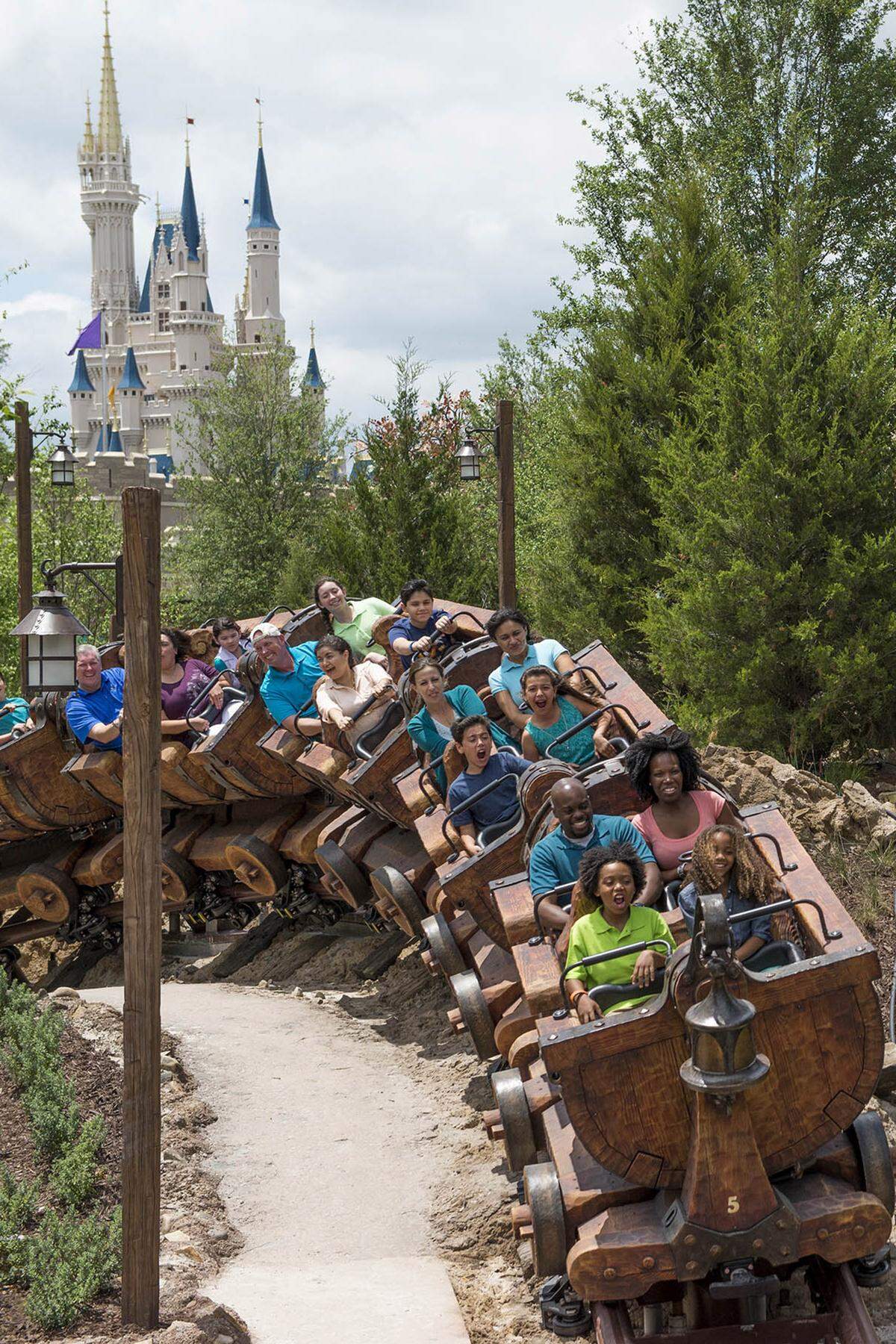
For example, when Disney was designing the Seven Dwarfs Mine Train, which opened at Magic Kingdom in 2014, Mallwitz said the focus was on telling the story of the dwarfs. Animatronic figures of the dwarfs would make up some of the ride’s scenes, but they wanted the dwarfs’ faces to be more expressive than animatronics could make them. They chose to use projection mapping for the eyes, the first time Disney had used that technology on a ride.
“Nobody ever says ‘we have this great technology, let’s do this,’” Mallwitz said. “It was ‘how do we make these dwarfs expressive?’”
Because of that emphasis on storytelling, some people think Disney’s rides are too tame, but spokesman Diego Parra of the Imagineering team points out that the first roller coaster that used tubular steel tracks, the innovation that made complicated loops and inversions possible, was the Matterhorn Bobsleds at Disneyland. Expedition Everest at Animal Kingdom is a runaway mine train coaster that has an 80-foot drop and runs downhill backward. Rock ‘n Roll Roller Coaster Starring Aerosmith is a launch coaster — zero to 57 mph in 2.8 seconds — and has three inversions. They’re not as tall or as fast as Mako, but they have plenty of thrills.
REPLACING THE DRAGONS
About three years ago, Universal decided to replace the Dragon Challenge coasters in the Wizarding World of Harry Potter at Islands of Adventure with another roller coaster. The Dragon Challenge coasters, which opened in 1999, were definitely a thrill ride. They were inverted, which means the cars were suspended below the track instead of sitting on top of it. The vehicles turned upside down five times. Riders’ feet swung free, and there was more of a feeling of flying.
For years, the two coasters were synchronized to look like they were about to collide at several points, a feature that was removed after riders were injured by items that appeared to be tossed from the passing coaster. After that, a lot of riders complained that the thrill was gone.
When Universal’s creative team brainstormed Dragon Challenge’s replacement — what would become Hagrid’s Magical Creatures Motorbike Adventure — a lot of new technology was available, most notably launches. Hagrid’s coaster has seven launches, more than any other coaster in the world. There’s a 65-foot spike that the ride car shoots up, then falls down backwards and onto a different track that has just switched places with the old one. It has sophisticated animatronics, holograms and a 17-foot free fall, track and all.
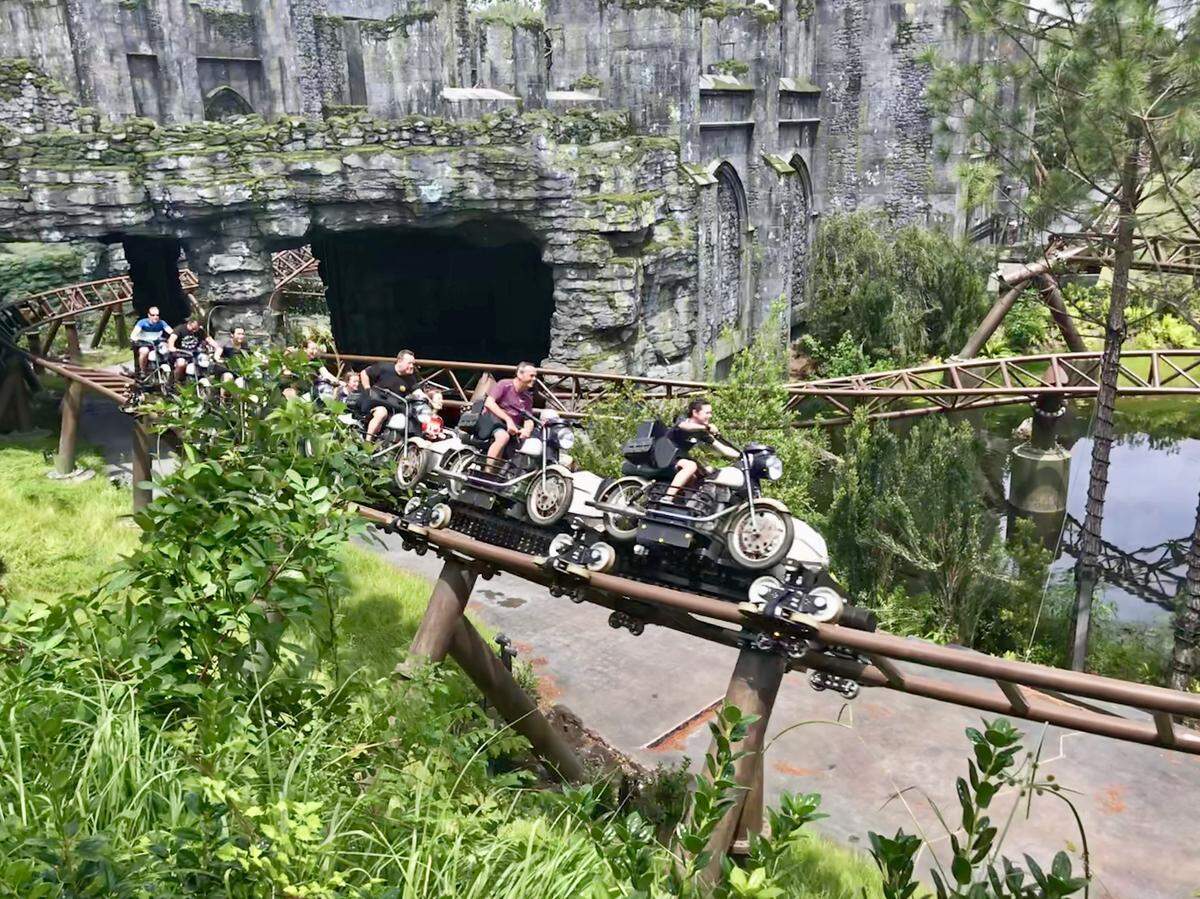
The new coaster is slower than Dragon Challenge, it has no inversions and it’s open to smaller children.
“We wanted to produce something the entire family could do together,” said Elaine Hinds, an executive show producer with Universal Creative. “We wanted to design it in a way that everybody could enjoy.”
Even though the coaster only goes up to 50 mph, it feels faster because of the launches and the overbanked tracks. “It’s deceptively fast,” Hinds said.
PLANNING A GIANT
When the team at SeaWorld sat down in 2013 to plan its next attraction, the first decision was that it would be a hyper coaster — a coaster at least 200 feet high — and that it would have a lot of air time, said Mike Denninger, senior vice president for attractions for SeaWorld Parks & Entertainment. Then the team decided it would have a shark theme. The coaster would be fast like a shark, the cars would be shaped like a shark, and the loading station would be a faux shipwreck-turned-reef. The ride would be named Mako, and it was a hit with hard-core coaster fans.
Most coasters at SeaWorld and Busch Gardens (both are owned by SeaWorld Parks & Entertainment) are lightly themed to represent an animal at the park and some are attached to animal habitats, but most don’t have stories. While Mako has its shark theme, Cheetah Hunt at Busch Gardens was designed to simulate a cheetah chasing prey across the park’s Serengeti Plain.
“The connection to the natural world … is clearly our company‘s mission and the goal of everything we do in our parks,” said Suzanne Pelisson-Beasley, a spokeswoman for SeaWorld Parks & Entertainment. But, she added, “There are lots of superlatives with our coasters coming next year.” Iron Gwazi will be the tallest and fastest coaster in Florida. Ice Breaker will have “the steepest beyond-vertical drop in Florida.”
“We love having attractions that can go up against any coaster in the world,” she said.
HYBRID COASTERS
For hard-core coaster fans, Busch Gardens is Florida’s exception, building coasters with thrills, superlatives and little or no story. The park has nine coasters (including one junior coaster) and a tenth, Iron Gwazi, under construction.
Hybrid coasters are one of the most exciting trends in the thrill ride industry, experts say, and the company that is doing the rebuild — Rocky Mountain Construction — is known for its high-quality hybrids.
“A wooden coaster throws you around. Steel rails allow a ride to be super smooth,” Bullock said. “Also it’s doing maneuvers that you never see on a wooden coaster. [Hybrids] are very popular.”
.jpg "Busch Gardens Iron Gwazi (1).jpg")
There are only about 15 such hybrid coasters in the world.
“As far as roller coaster and thrill seekers go, [Iron Gwazi] could be the top roller coaster in Florida,” Alvey said. “If you want an instant top-five roller coaster, [Rocky Mountain] are the guys you go to. ... Every single one is a fantastic ride, better than the last.”
Some of old Gwazi’s lumber — about 40 percent — is being used to build Iron Gwazi, but the track won’t have the same layout. It will be 206 feet tall and hit 76 mph, making it the tallest and fastest coaster in Florida. It will have three inversions, a feature rarely found on wooden coasters, which have less flexibility than steel-rail coasters.
The attraction of wooden coasters? The wooden structure shakes and rattles, increasing the sense of danger. Gwazi was a bone-rattler.
“When Gwazi was put in in 1999, it was a beast,” Denninger said. “What has happened there is truly revolutionary.
“When you ride these [hybrid] coasters, it’s a different experience. It’s not the wooden coaster you remember. It’s so smooth and so fast. What the steel has done to the wooden coaster experience is a huge enhancement. ... This is an evolution of Gwazi. It’s a completely new ride. I am so excited about that ride.”
This story was originally published November 25, 2019 at 6:30 AM.