
Fairchild’s tropical garden column: Romancing your palms
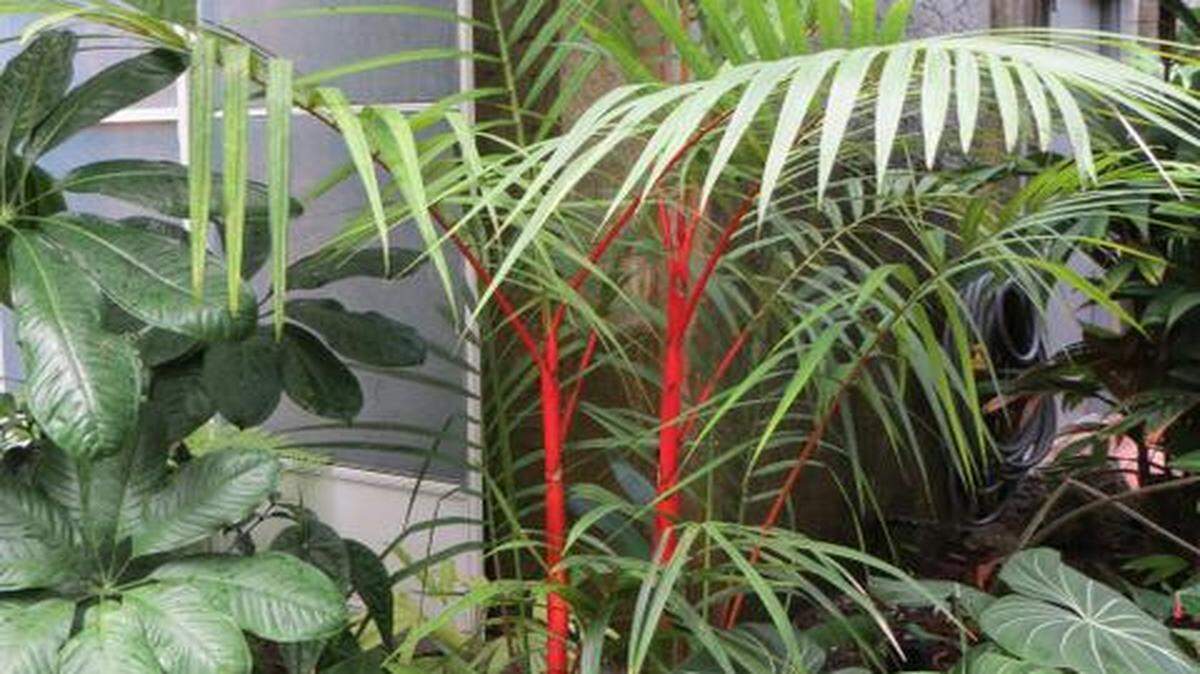
Many South Florida homeowners love to send snapshots of their luscious green palms and gardens in the middle of the winter to family and friends hibernating in the deep, arctic North. These frozen family members respond with jealousy, remarking about how easy it is for us.
While taking care of palms does have major perks, it’s not all fun and games. Caring for palms is just like a relationship. Maybe you’re waiting to send the picture because your palm is not behaving as you’d like. Well, palm lover, you need to romance your palm. Similar to any other relationship, there are a few sure ways to make this one long-lived: learn to communicate, end all toxic relationships and take the time to know your (palm) partner.
Learning to communicate with your palms may be the most important way to create a lasting relationship. Even though palms can’t speak, they have mastered the art of body language. They express their needs through their leaves and trunks and it is our job, as their partners, to not only listen but to respond.
Happy palms have a full canopy of green leaves. Palms express hunger through leaf discoloration. The most common expressions of cravings are yellow leaf tips indicating a need for magnesium; brown, tattered tips signifying inadequate potassium; and brown frizzled developing leaves specifying a need for manganese. Listen to their cravings and respond appropriately with fertilizer.
As a baseline, palm special 8-2-12 is recommended two times a year; once in May and again in September. Even though our arctic friends believe we live in the summer year round, the palms know better. Fertilizer is not absorbed in the “winter” months here.
Happy palms also have a solid trunk. Cracks in the trunk are from expanding or collapsing and neither is and indicator of a drunk-in-love palm. Cracks from expansion are caused from overwatering. The palm is bloated and the trunk cracks to release pressure. This opens the palm to infection, fungus and disease.
A collapsing trunk is much worse than an expanding trunk. This indicates that the inner part of the trunk that moves water and nutrients between roots and shoots is not functioning. If the palm is not able to move these necessary resources, the relationship with your palm is over. Usually dehydration is the cause and while the collapse is not reversible, the palm will survive if it’s watered. You have received a second chance with your palm.
Palms are very expressive — don’t shut them out. As we all know, listening is only part of the solution; we also must respond in order to foster healthy relationships.
Ending toxic relationships is another important step in romancing your palms. In the palm world, a toxic relationship is any interaction that weakens your current relationship.
Palms have two main enemies — pests and their caretakers. Common palm pests include white fly, scale and leaf skeletonizer. Since these pests are not fatal, you can choose to do nothing. Or you can apply one of several substances: spray the leaves with soapy water, apply horticultural oils, or — the most extreme option — apply pesticides. Pesticides should not be used if you have young children or pets that spend time near your palms.
The actual plan is not as important as picking a method and sticking with it. Just like any relationship, choose a plan that works for you and your palm.
We, the caretakers, are the other toxic relationship. Too often we opt for the easy way out instead of working with our palms. Instead of waiting for fertilizer to make an impact, we trim deficient leaves. The deficient leaves still have nutrients and removing them leaves the palm less healthy. The fresh cuts are open wounds that invite pests, fungus and disease. Stop toxic acts — don’t trim green leaves. By removing the toxic elements, you can have a healthy relationship with your palm.
The final step in romancing your palms is to get to know them. Certain species have distinct characteristics. Like any relationship, knowing these traits will make it easier to care for them.
For example, date palms (Phoenix sp.) are notoriously nutrient deficient. Apply fertilizer generously and don’t over trim the deficient leaves. The red lipstick palm (Cyrtostachys renda) is always cold. Plant it in the water or keep it indoors. Paurotis palm (Acoelorrhaphe wrightii) gets frizzle top in our limestone soils. Keep this palm well watered and the problem isn’t as obvious.
Each palm has characteristics along the same lines as these. It’s important to know your partner in any relationship — especially when you’re the sole warden of their well-being.
Palms are iconic in southern Florida but they require maintenance and care, like any relationship. Treat your backyard giants like a partner, and listen to their needs, end toxic relationships and get to know them. Romance your palms and live happily ever after with your beautiful palm collection.
▪ If you’d like to learn more, sign up for Sara’s class on “How to Romance Your Palms” on Feb. 11 at Fairchild Tropical Botanic Garden. Go to www.fairchildgarden.org and click on education, then adult, then horticulture.
Sara Edelman is the palm and cycad manager at Fairchild Tropical Botanic Garden.
This story was originally published February 6, 2015 at 10:00 PM with the headline "Fairchild’s tropical garden column: Romancing your palms."