
Can the color of your landscaping improve your mood? Try chartreuse
.jpg "Sedum provides yellow-green in well-drained, sunny locations.")
Some say it’s more green, some say it’s more yellow. Either way, adding chartreuse foliage to your landscape is bound to improve its appearance — and your mood.
Like so many things, what we call chartreuse is dependent on our perception. Some call it lime green, but it’s more yellow than that. The color we call chartreuse, whatever it may be, is so called because of the color of the French liqueur of the same name, which in turn is named for the Carthusian monks who invented it; their monastery nestles in the Chartreuse Mountains of France.
Besides the liqueur and some Miami-Dade County fire rescue vehicles, it can be tough to find chartreuse. But it never fails to lift my spirits when I see it. So when a plant exhibits the color, especially in foliage, I want it around. I feel we need to be flexible in the definition of chartreuse, so I include lime green and yellowy bright green.
By far, it seems old-fashioned Coleus (now divided into the genera Solenostemon or Plectranthus) and Begonia offer the greatest opportunity to get hold of chartreuse, followed by Philodendron. They have all been hybridized for many years, and the variety available is dizzying.
The “Chartreuse” cultivar (from “cultivated variety”) of coleus is appealing for our purposes, and its wavy-margined foliage is even more eye catching. When the sun hits it, the color is simply joyous and lifts one’s outlook. Like most coleus, which I’m now using as a general common name, they enjoy bright shade. While they won’t tolerate wet feet, they also require consistently moist soil. A deeper pot can help, as can mulch — even if they’re in the ground.
.jpg "Image 1 (97).jpg")
In addition to Solenostemon, the other genus will also not be outdone: Plectranthus ciliatus “Hybrid Easy Gold” is shockingly gold-chartreuse with pale purple leaf veins. I may be overgeneralizing, but Plectranthus I’ve grown seem a little tougher and more drought-resistant than Solenostemon.
Philodendron “Moonlight” is a small philodendron with bright lime leaves. The newest leaves emerge chartreuse and gradually change to darker green, but this visually sets off the next set of bright leaves. “Moonlight” does best in part to full shade with regular watering.
Begonia “Lime Marmalade” has the asymmetric foliage typical of the genus, but with a color you’ll be tempted to taste. And there’s Begonia “Canary wings” with angel wing foliage a bit greener than a canary’s wings.
Next up is the succulent Sedum, with cultivars like “Lemon Ball” or “Florida Friendly Gold” shining in full sun or bright shade. Just give them plenty of drainage and these small plants will serve as an accent groundcover in the foreground or as the star in a pot.
Sweet potato vine (Ipomoea batatas) is another beauty available in cascading chartreuse glory, perfect for a hanging planter in part sun, though it will struggle in a South Florida summer. This one is not cultivated for consumption.
.jpg "Image 2 (96).jpg")
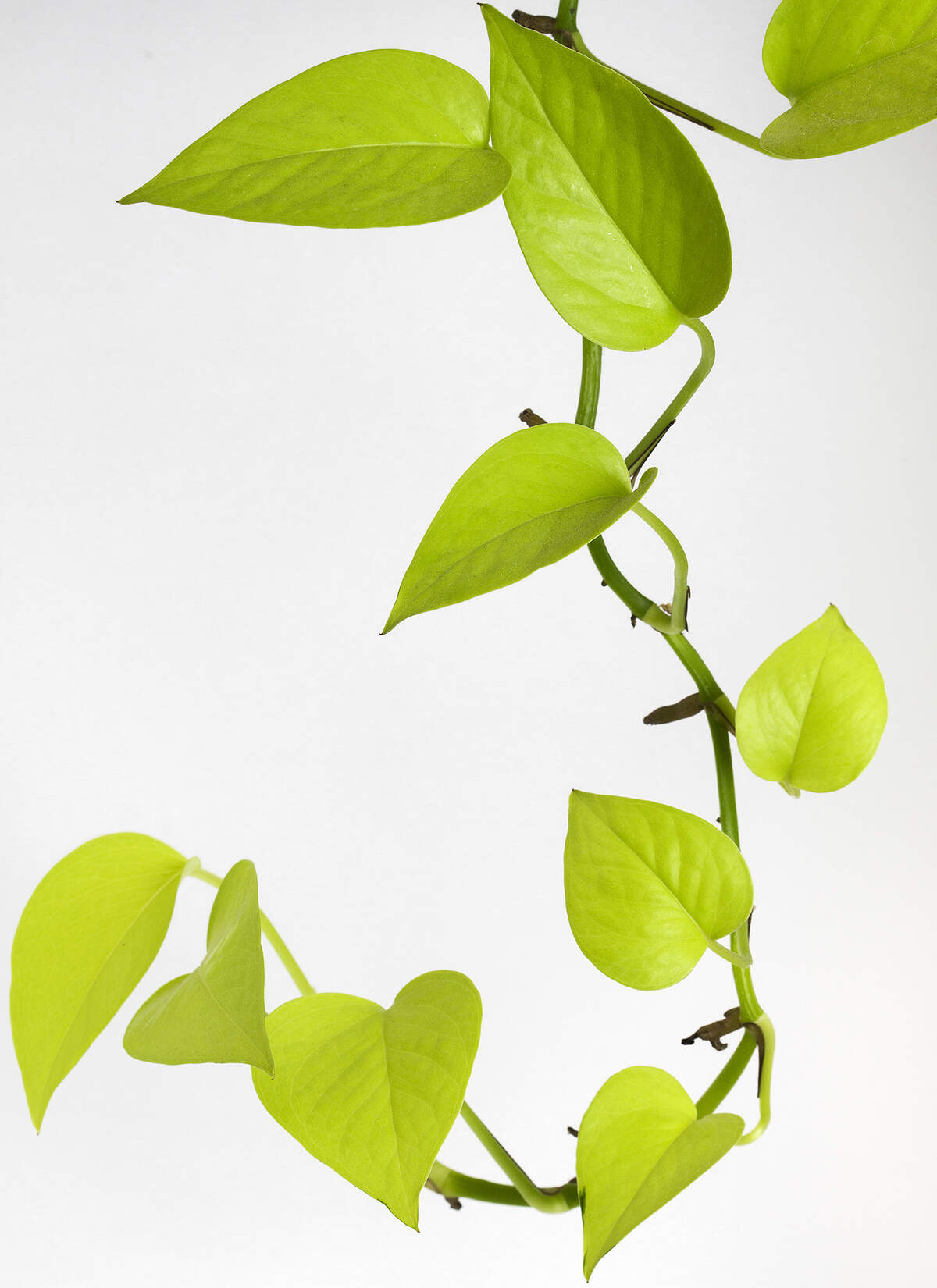
Another super common plant, pothos (Epipremnum aureum) is available as Neon pothos, a practically glowing chartreuse vining plant that loves shade and is great for indoors. Pothos can become a nuisance outdoors, though I’m not sure the Neon variety would adapt.
The old standard Creeping Jenny (Lysimachia nummularia) is another available in chartreuse-lime varieties and works well spilling out over from a hanging pot.
Finally, to work chartreuse into the landscape, try golden dewdrop “Cuban gold” (Duranta erecta), a good butterfly attractor available in a short, mounding shrubby version to about two feet tall called “Gold Mound.”
Mix chartreuse and lime green foliage with dark purple and maroon for a combination that awakens the senses and invigorates the mind all year round, independent of flowers.