
No space for a pond in your yard? Here’s how to make a small water garden in a pot
A small water garden can be as simple as a bottle containing a single cutting or as complex and involved as you care to make it. But one glance into your water garden will transfix you, and before you know it, you’ll have been staring calmly at the life contained within those glass or ceramic walls.
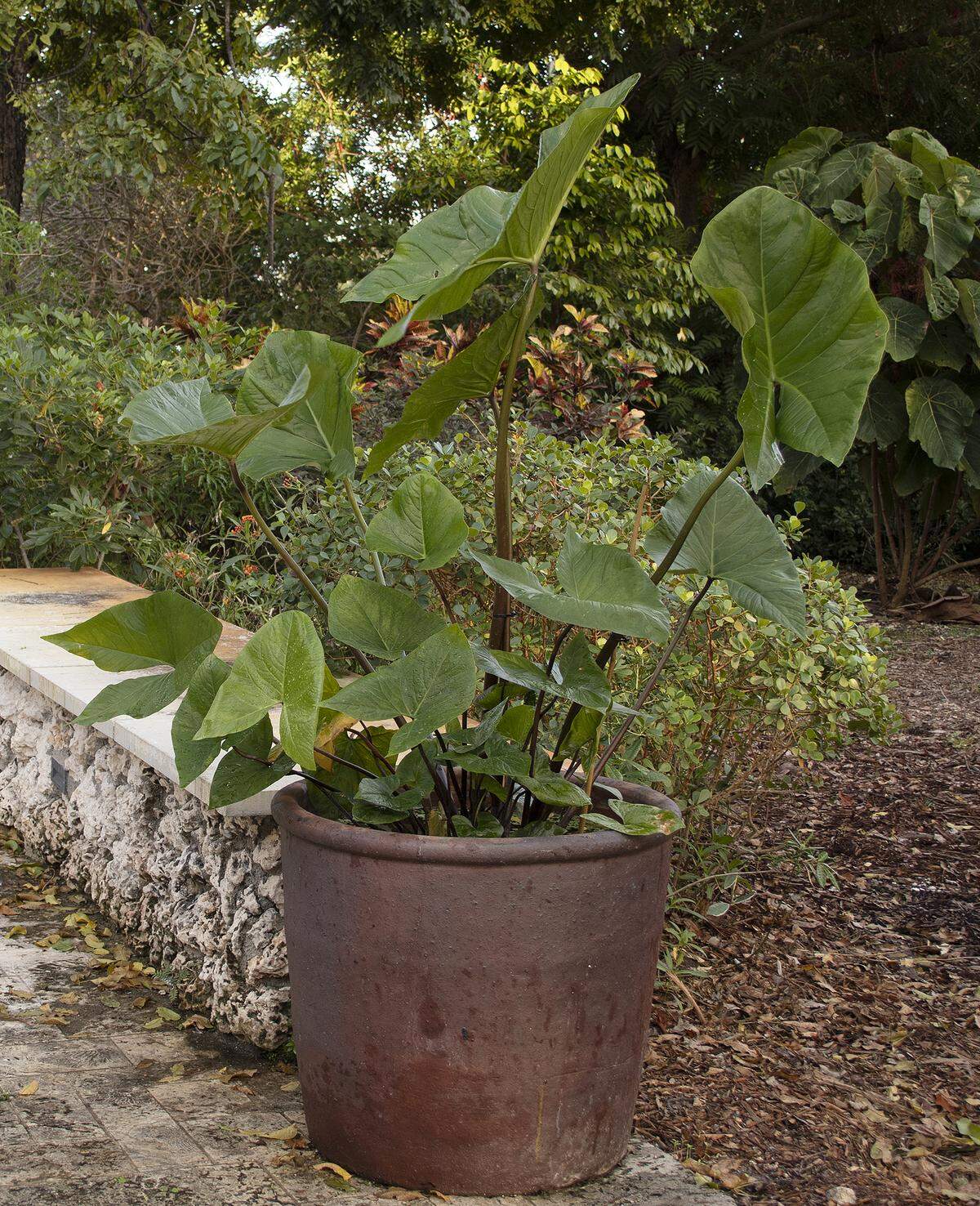
In doing research for this article, I searched for plants suitable for a smallish container with no pump. I asked, and I received. On a short walk through the gardens, I came upon two beautiful pots of water plants flanking Fairchild’s Arts Center entrance.
Our director of collections, Brett Jestrow, it turns out, is experimenting with small water gardens at Fairchild.
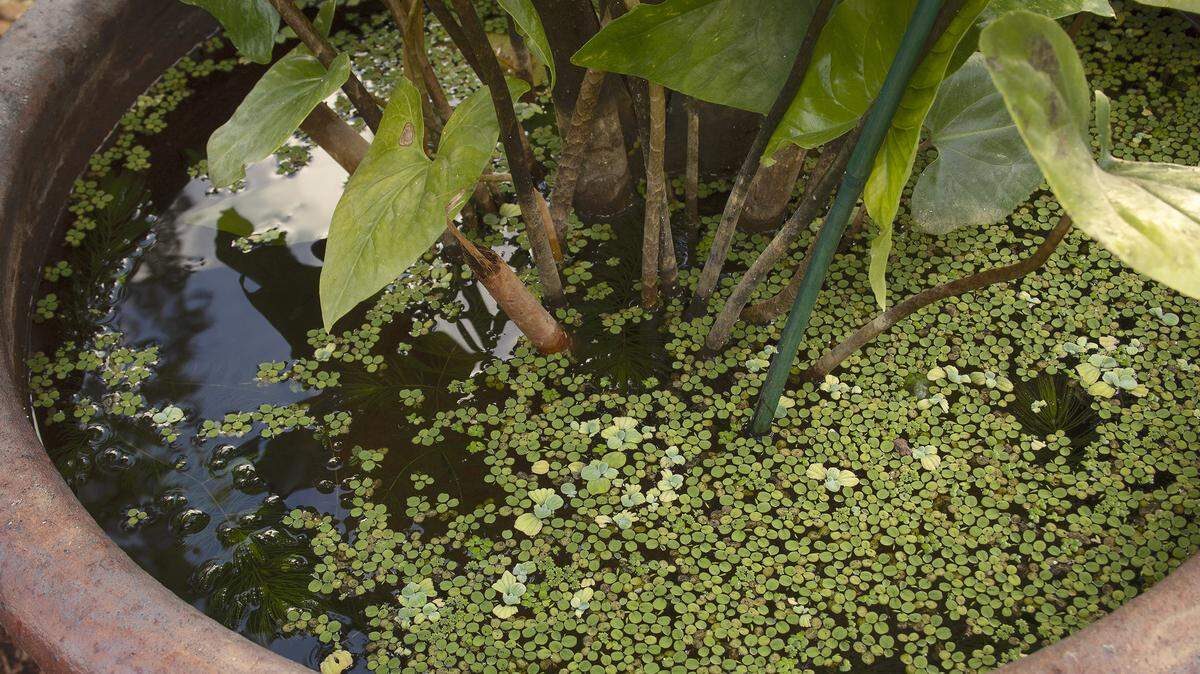
The pond pots are simply glazed ceramic pots with the drainage holes plugged; pots with no drainage hole can, of course, also be used. These pots contain a substrate of play sand, which has been rinsed and won’t cloud the water as much. It’s followed by a layer of composted manure covered by turface, a fired clay soil conditioner. Other combinations being tried include play sand, manure, and a final top layer of play sand, or just simply turface and fertilizer.
The pond pots, Jestrow mentioned, contain potted plants so they can be moved around if needed or if they aren’t thriving.
Plants include Cyrtosperma merkusii, called giant swamp taro, to provide a large emergent anchoring element; Salvinia and Azolla, both floating aquatic ferns; and dwarf water lettuce, a floating aroid. Besides their intriguing beauty, the floating plants serve to block sunlight, which might otherwise encourage algae to grow.
They’re also serving as shelter for guppies, an optional but enchanting addition. But please don’t put fish into bowls or jars; it’s just too small, even for a single betta fish. Aquarium snails are another option for keeping things clean.
A similar-looking, more readily available taro plant option is Colocasia esculenta, which can be grown in pond pots. There are tons of striking cultivars available, including some purplish-black varieties like Colocasia Black Magic. They’ll grow happily in pond pots small enough to flank a patio or doorway.
Now for potential problems. Mosquitoes breed in still(ish) water, and since pond pots don’t usually have pumps to keep the water moving, this is a concern. Covering the water surface with plants discourages mosquito breeding, but if it becomes a problem, drop some mosquito “dunks” into the pond. They contain a bacterium fatal to mosquito larvae, but not harmful to any other aquatic life. Dunks are available at most hardware and home stores. Pond pots are small enough to empty and clean if there’s a problem.
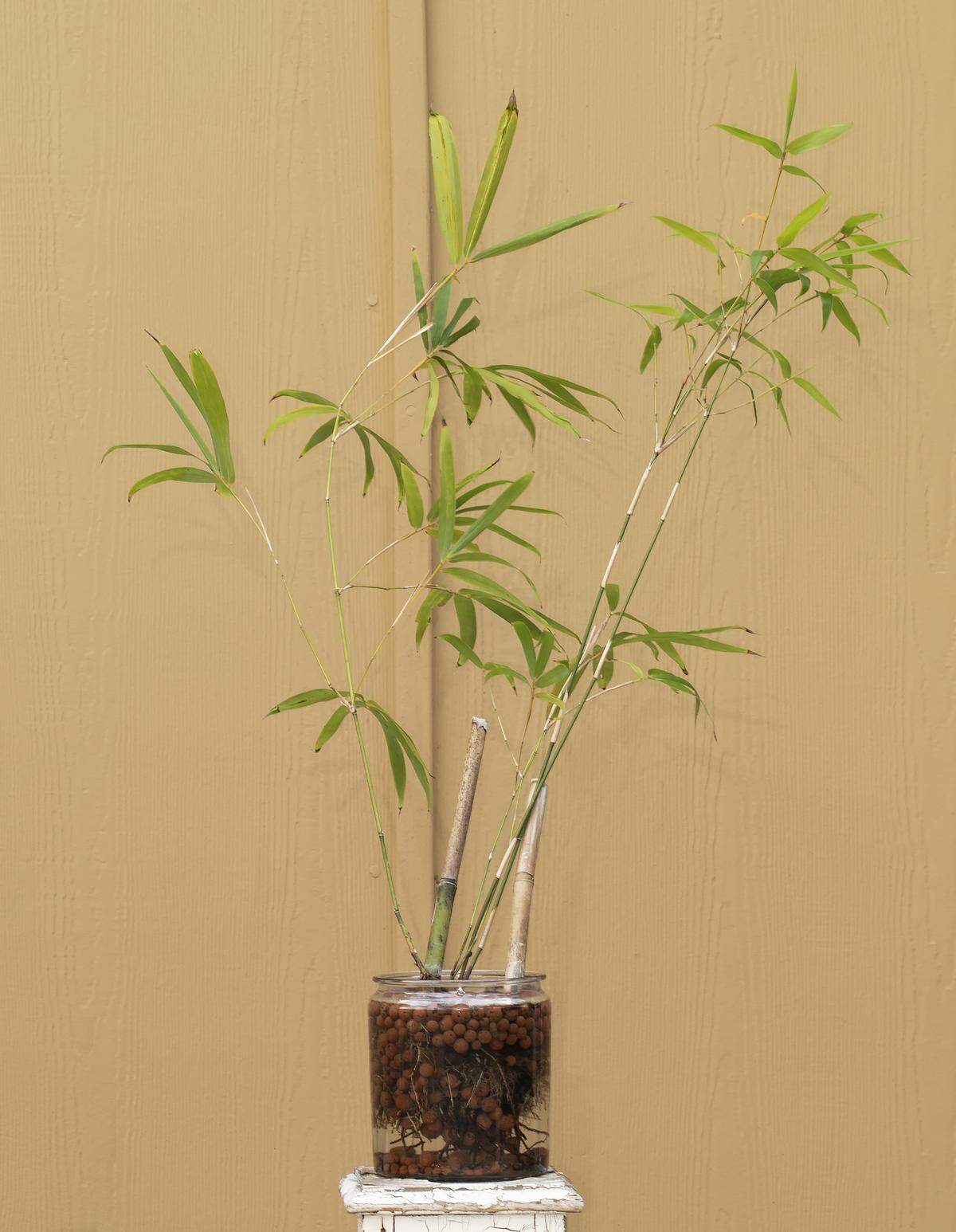
That “lucky” bamboo for sale in vases of water, incidentally, is not bamboo, but rather a Dracaena. Not bad, it’s just not bamboo. However about a year ago, while thinning an area of weaver’s bamboo (Bambusa textilis var. gracilis), we tossed a section of it into my small in-ground pond, and it’s survived; it’s now in a small container of water, and makes a graceful display. It’s got no substrate, but for stability contains only expanded clay balls normally used to loosen soil. This bamboo in general is hardy, tall and thin.
A word of warning: Some pet shops offer aquatic plants for fish tanks that are not truly aquatic, or at least not meant to be completely submerged. For example Chlorophytum, aka spider plants, Brazilian sword (Spathiphyllum sp.) and Syngonium are among plants offered for aquariums but which will die and dissolve if permanently submerged. Even Anubias should be able to poke its leaves out of the water.
A common plant, Epipremnum aureum (formerly Pothos) is cheap, and can grow indefinitely rooted in water, as long as the leaves are not submerged. It’s technically a little water garden, so why not?
For a pond pot in bright sun, papyrus (Cyperus sp.) makes a statement, and you can tell visitors you’re growing the source of some of civilization’s first writing paper. Dwarf varieties are also available.
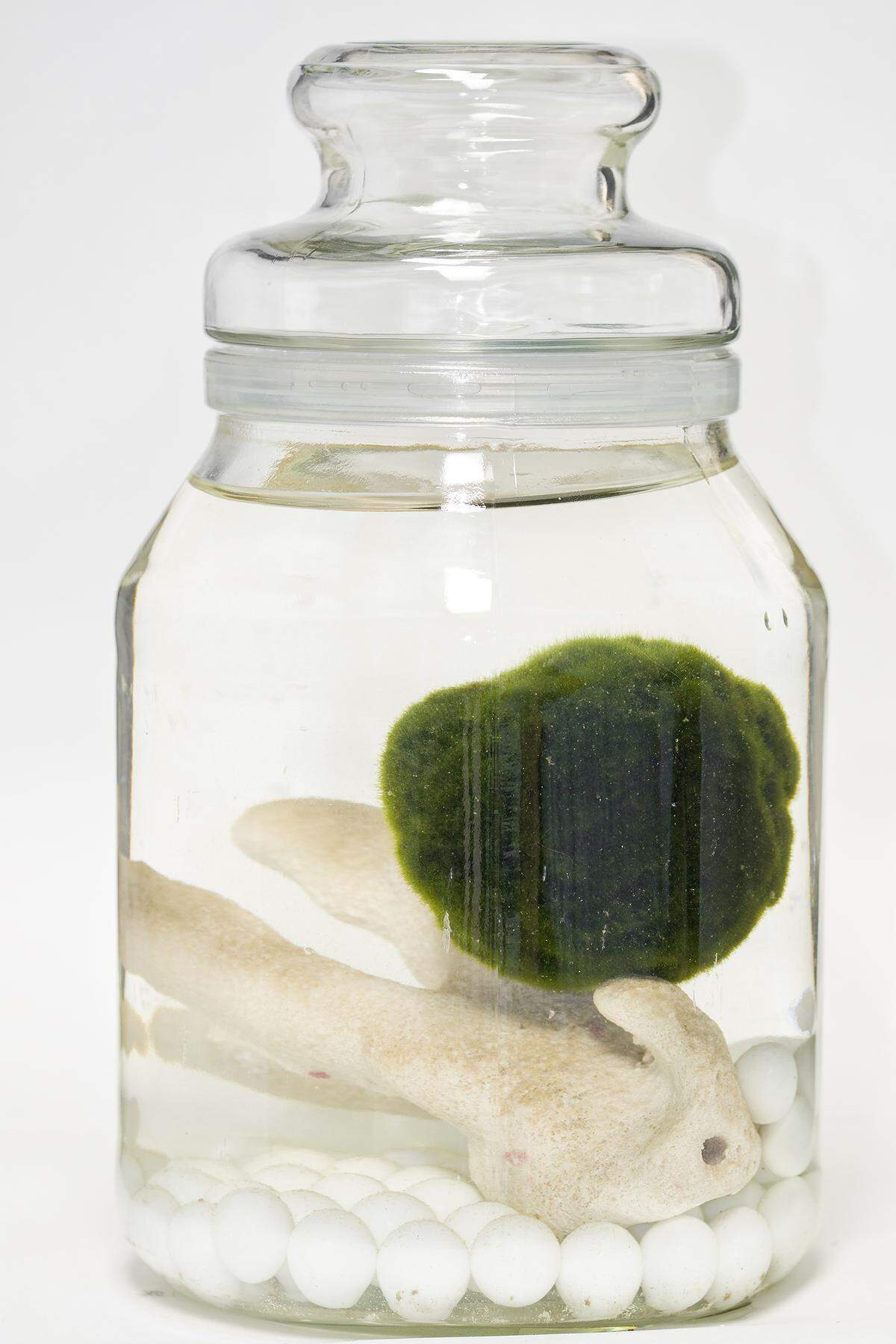
For ultra-simplicity, marimo are popular little “pets.” They are Aegagropila linnaei and billed as moss balls, but are actually a filamentous alga, not moss. It’s hard to tell they’re actually alive, but they are at least easy and a pleasing green.
Finally, there’s wabi-kusa, a method of growing small, indoor boggy plants in a saucer of water, but this is a separate topic.
While an in-ground pond is always a nice option, you can accomplish the same feel and grow interesting aquatic plants with very little space.
This story was originally published February 27, 2019 at 7:15 AM.