
Maybe you can’t replace disappearing pine rockland by yourself, but you can plant this
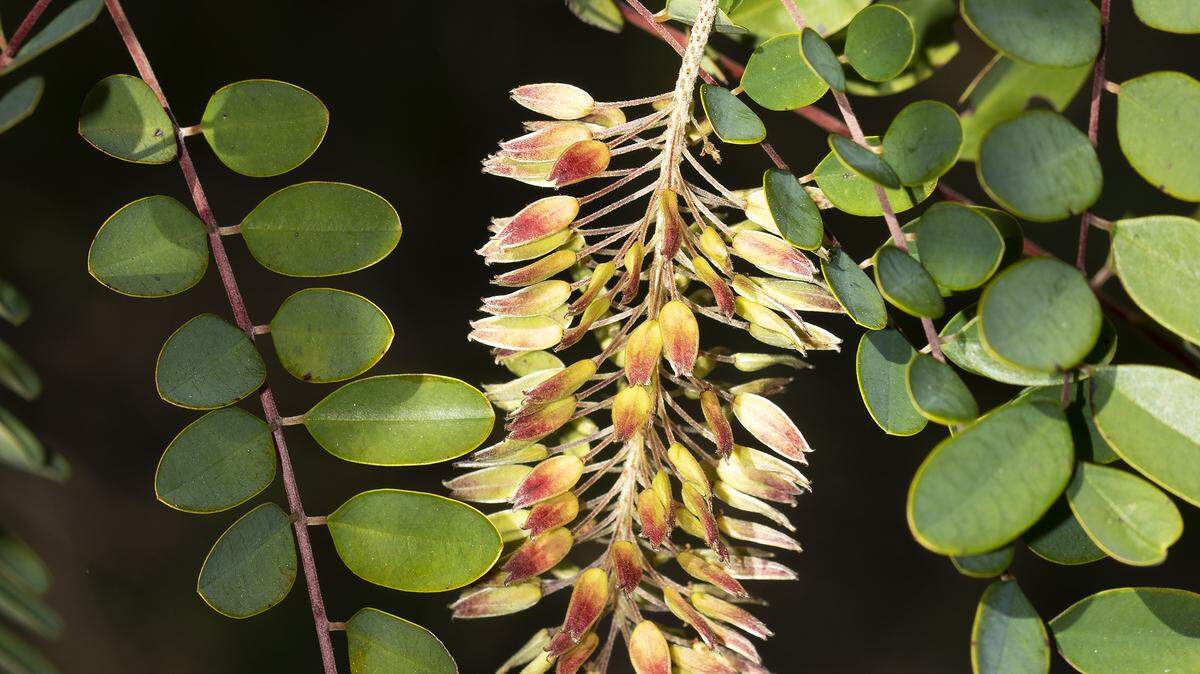
A native plant much underutilized in gardening was right under my nose.
I get to see so many wonders daily here in Fairchild Tropical Botanic Garden that I admit I sometimes overlook some of the beauties around me. It’s like the bar has been raised, and what would normally stand out as exceptional now must work harder to catch our/my fleeting attention.
So while wandering around in our Pineland exhibit staring at slash pines releasing their pollen, I literally stumbled onto the most stunning display put on by a few small, bushy trees. The ferny foliage made me think of Fabaceae, the pea or bean family, but no, not quite. Still, there was something familiar about this plant. I gave in and looked for one with a tag: Alvaradoa amorphoides, in the slightly uncommon Simaroubaceae family.
Of course. I’ve seen it at Fairchild plant sales, on our list of flowering plants and our online native plant information. But it took walking into one to open my eyes and appreciate this beauty.
Mexican alvaradoa is native to parts of the Caribbean, southern Mexico and Central America, and a few very small areas of southern Miami-Dade County; it’s listed as endangered within the state.
Mexican alvaradoa is dioecious, meaning individual plants are either male or female. The opposite is monoecious, when an individual plant may possess both male and female parts. I remember it like this: “mono” takes only one, for reproduction anyway.
Either way, this plant likes sun and stays a decent shrubby size; it can however reach 20 feet or more but responds very well to heavy pruning. It’s also drought tolerant and a host plant for the also-rare dina yellow butterfly (Eurema dina). (Plant bitterbush (Picramnia), another host plant, for a greater chance of attracting the dina yellow.)
The few areas alvaradoa inhabits in Florida are mainly ecotones — transition zones — between pine rocklands and hammocks, but you can grow it in similar environments without re-creating an entire habitat. It flowers in winter and early spring to the delight of bees and other insects. The flowers form along racemes — a shoot or stem bearing flowers on short stalks — the males longer and thinner and females shorter and more robust. Even the fruit is ornamental as strands of small pink and yellow samaras.
Whether your aim is to re-create a natural habitat or just incorporate a well-behaved ornamental, seek Mexican alvaradoa at native plant nurseries or by joining Fairchild’s Connect to Protect Network, the garden’s free program to encourage homeowners to plant native pine rockland species (Get more information at http://fairchildgarden.org/ctp or email ConnectToProtect@fairchildgarden.org to sign up.)
Alvaradoas’ drought tolerance and ability to survive in low-nutrient soil make it a winner.
This story was originally published January 23, 2019 at 7:15 AM.