
Yes, the Surinam cherry is edible, but that doesn't mean you're going to like it
The phrase “edible landscaping” sounds odd, as though we’re going to graze on our lawns. Actually, a lot of what we use for landscaping produces edibles — the cocoplum, for example.
Another pretty little tropical tree with edible fruit has fallen out of favor, though — the Surinam cherry. It’s a fascinating tree, but is it also an invasive species?
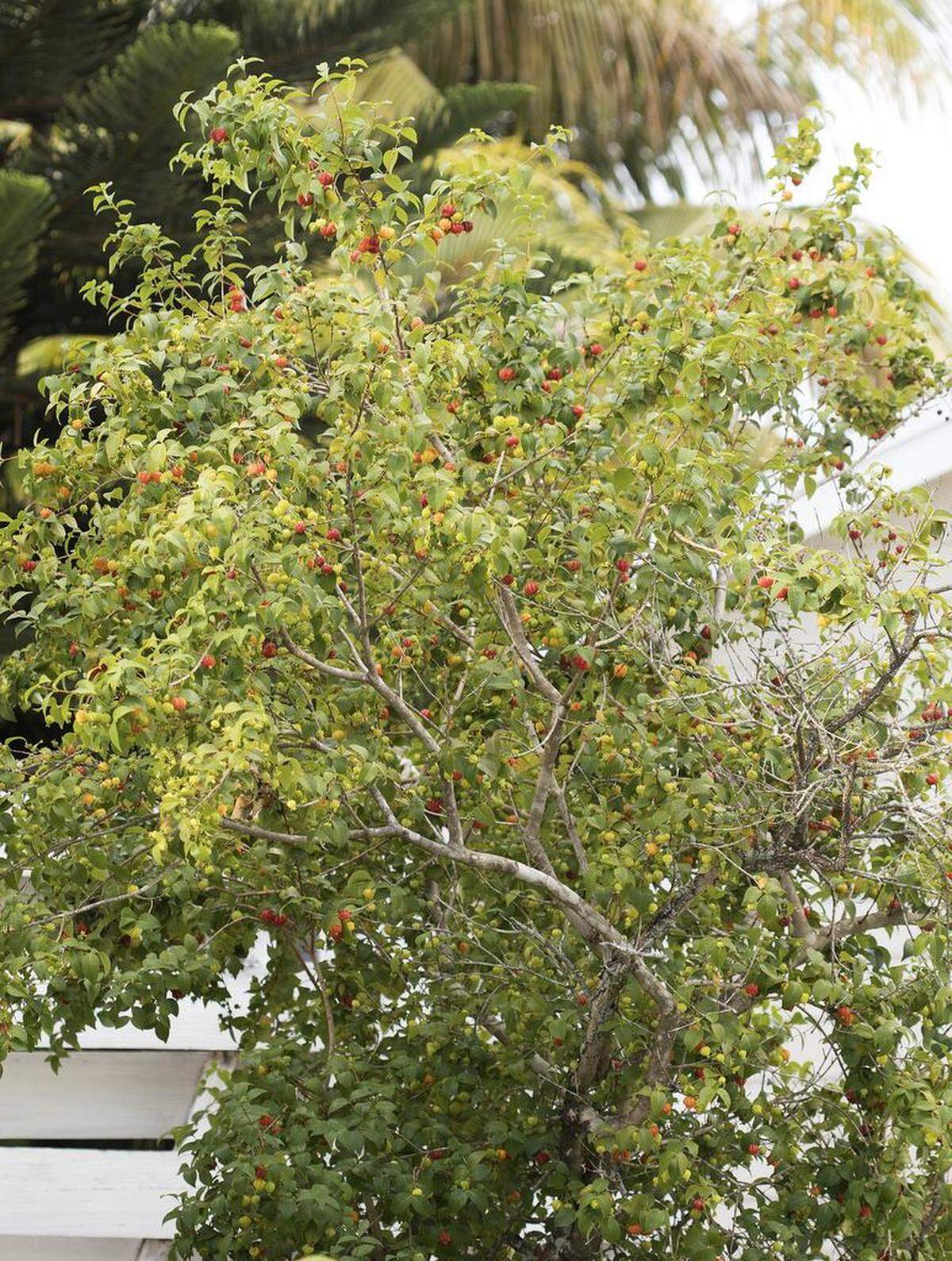
Back when I moved into my house, a ratty little bush slightly blocked the entrance to my backyard. I’d push back the branches, and realizing no one else was caring for it, I occasionally pruned it, more out of frustration than anything else.
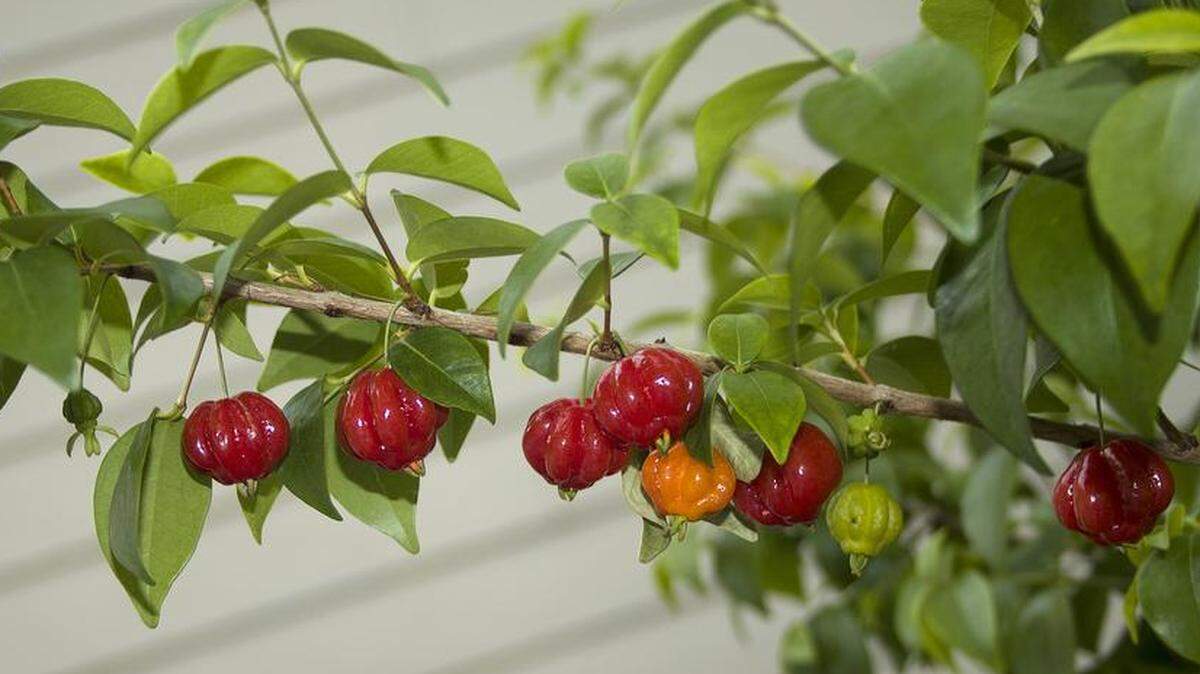
Then one magic day, what looked like tiny green pumpkins appeared all over this bush like Christmas tree ornaments. They started out bright green, maturing slowly to yellow, pumpkin orange, and finally cheery cherry red. A useful word describes their shape: oblate — flattened at the poles.
“I wonder if I could eat those,” I thought, “without shortening my life.” With fruit, I could identify this unobtrusive plant: Surinam cherry.
Surinam cherry (Eugenia uniflora) is in the same genus as our native stoppers like white stopper (E. axillaris), Spanish stopper (E. foetida), red stopper (E. rhombea), and redberry stopper (E. confusa). Simpson’s stopper is in a separate genus, but same family.
Like our native stoppers, Surinam cherry stays relatively small and compact. It produces very small, very pretty cream-colored flowers, and supposedly attracts birds with its small fruit. In South Florida and the Bahamas, Surinam cherry fruits in spring, starting around March, and also in fall, around September.
Like others in the Myrtaceae family, it sheds bark. Allspice and bay rum tree are other examples.
Julia Morton’s classic “Wild Plants for Survival in South Florida” includes white stopper (Eugenia axillaris) fruit as edible, although not of much value, but omits Surinam cherry. Morton includes Surinam cherry in the later book “Fruits of Warm Climates,” saying “the Surinam cherry is one of the most common hedge plants throughout the central and southern parts of the state,” but doesn’t indicate whether it is particularly invasive.
So, when I was sure what tree I had, at last I tasted the fruit. Yuck. It tasted like an electrical fire smells — of melted plastic. After some research I learned why: The berries should be eaten only after they ripen to a very dark, blackish purple and they are ripe only when they easily fall into your hand, or to the ground.
Are they an invasive threat? The 2017 Florida Exotic Pest Plant Council list includes Surinam cherry as a class 1 invasive in Central and South Florida. I don’t see many around in landscaping or natural areas. Introduced around 1931 and used as a fast-growing hedge or privacy screen, it’s had time to spread — and possibly be removed from the South Florida landscape.
“Those used to grow everywhere,” stressed Glenn Huberman, a Fairchild volunteer. “We used to throw the berries at each other. Now, whenever I smell the leaves it reminds me of when I was a kid.”
It seems possible they could cross breed with our closely related native stoppers, and that would be a problem, but I’ve never read of this happening. There are also mentions of Surinam cherry attracting Caribbean and Mediterranean fruit flies; I’ve not personally seen them. But like nearly every other plant, mine has had scale.
Oddly, nothing seems to want the fruit from my tree. Apparently neither birds nor squirrels nor possums are willing to eat them. Fruit just gathers on the ground. Morton's book indicated the seeds should not be eaten, but I don’t even find partially chewed fruit lying about. Just my observation.
That doesn’t mean Surinam cherry isn’t still out there, of course. And it would be harder to remove it from natural areas than from landscaping. At any rate, I’ve learned the hard way that invasives sooner or later are going to cause trouble.
Just the other day, a plump little fruit landed on my head and rolled to the ground, so I thought “eat the fruit and help the environment.” It was ripe enough to fall off the tree and was a dark cherry red. I nibbled a tiny amount. Nasty. I hadn’t waited long enough.
If you’ve got a Surinam cherry, keep an eye on it, and consider replacing it with a native stopper.
This story was originally published May 12, 2018 at 7:20 AM with the headline "Yes, the Surinam cherry is edible, but that doesn't mean you're going to like it."