
Miami-area nonprofits reeling from government cuts when need is at record levels
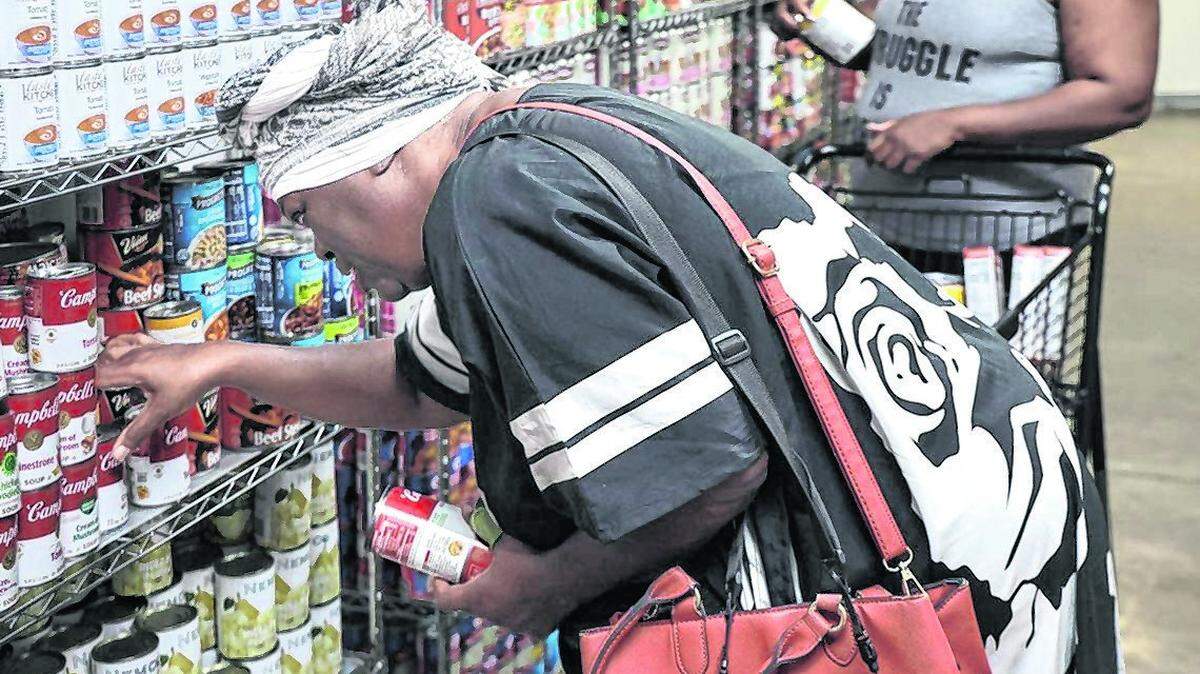
South Florida’s nonprofit organizations are under assault.
The Trump administration’s Department of Government Efficiency slashed federal grants that fund local nonprofits. State and local governments trimmed their budgets, cutting key funds to many community-based organizations, including pivotal Medicaid payments. Then, on Oct. 1, came the federal government shutdown.
All of this means less help to the region’s most vulnerable residents, at a time when the need for food, housing and other basics is at record levels.
“These organizations are being asked to do the impossible: Realign their programs and do more with less at a moment’s notice – while demand is going up as more people realize key government services aren’t available,” said Jennifer O’Flannery Anderson, president and chief executive of the Community Foundation of Broward.
There’s not a neighborhood nor sector in South Florida that won’t be affected by the cutbacks, said Rebecca Fishman Lipsey, president and CEO of The Miami Foundation, which connects donors and nonprofits.
Nonprofits that focus on health and nutrition, food, education, the arts, housing, the environment, senior services, youth programs and an array of other social services are bracing for the cuts. Federal funds expected by food banks and public radio and television stations have been rescinded, putting a major dent in their budgets.
This comes at a time when up to 400,000 Floridians, including 115,000 in Broward County, could see their Medicaid benefits cut, said Sheri Brown Grosvenor, the Community Foundation of Broward’s vice president in charge of community impact.
“There’s not only uncertainty, there is also fear,” she said. “We know this will be a drastic impact.”
Government grants have never been guaranteed, Brown Grosvenor said, but the suddenness with which they have been sliced or eliminated has many organizations reeling. “They’re not aware of who else they can go to for funding,” she said.
Food insecurity is also a looming problem, said Paco Vélez, chief executive of Feeding South Florida, which operates food pantries, including 24 at South Florida schools, in Palm Beach, Broward, Miami-Dade and Monroe counties.
Funding for SNAP (Supplemental Nutrition Assistance Program), which helps put food on the table for many low-income South Floridians, is in jeopardy at a time when food prices are increasing. Unless federal funding is restored, SNAP benefits for about 1 million Florida households that receive food stamps will lapse on Nov 1.
Additionally, DOGE cut $1 billion from a U.S. Department of Agriculture program that helped schools and food banks purchase food from local farmers and producers, Vélez said.
The austere budgets could bring cuts in social services, staff reductions and consolidation of programs for local nonprofits, Brown Grosvenor said. “We’re talking streamlining, possible mergers and more collaboration. Some programs will be closing if they can’t find supplemental funding. Everyone is trying to figure this out.”
“We’ve been watching the cuts very closely at the state level, at the federal level and at the local level,” added Fishman Lipsey. At one point this past summer, The Miami Foundation estimated that South Florida nonprofits were facing an estimated $100 million loss in overall funding, she said.
That included approximately $40 million in grants — money funding arts groups, food pantries and other nonprofits — that Miami-Dade Mayor Daniella Levine Cava said needed to be eliminated from the county’s $12.9 billion budget due to a $402 million budget shortfall.
In August, after weeks of organizing and lobbying by nonprofits, a petition drive and public outcry, Levine Cava announced an amended budget that restored about 70 percent of the funding that had been earmarked for community-based organizations for the new fiscal year. The budget that finally passed after a Sept. 18 budget hearing included full restoration of the charity grants.
But county officials warned that the revised budget represented a stopgap fix that won’t be available going forward. “This is short-term money. This is not recurring money,” said Levine Cava.
While leaders of nonprofits applauded the restoration of funds, many said they are still facing a difficult scenario that will require the community to dig deep and open their hearts and wallets.
“Now it falls on businesses and individuals to decide what we want our community to provide,” Fishman Lipsey said. “We must step up to make sure our quality of life is what we need and protect the things that matter to us. We have to make sure our safety nets are still in place.”
Here’s a look at how several South Florida nonprofits are weathering the austere funding environment:
WLRN
In July, Congress stripped $1.1 billion in funding from the Corporation for Public Broadcasting, the nonprofit that supports NPR and PBS and provides funding for 1,500 public radio and television stations, including Miami’s WLRN. The corporation has been winding down its operations.
South Florida Public Media Group, the nonprofit that operates WLRN radio and television stations for the Miami-Dade School Board, took a $1.5 million hit to its budget beginning Oct. 1 as a result of the corporation’s dismantling.
The federal funds reduction coincided with state cuts. The Florida Legislature had already approved $6 million in funding for public media for the fiscal year that began July 1, but Gov. Ron DeSantis vetoed the appropriation. That will cost WLRN another $470,000 this year.
John LaBonia, the chief executive officer of South Florida Public Media Group, said WLRN had been anticipating a cut in federal spending, but the governor’s veto was a “big surprise.”
With an operating budget of $14 million, “these cuts are pretty severe,” said La Bonia. “We’ll dip into our reserves, but financially we’re very strong,” he said. WLRN doesn’t plan any cuts in programming or layoffs of its 26 full-time newsroom employees.
Since the cuts were announced, he said, more than $500,000 in additional contributions came in – even before WLRN’s fall fundraising campaign began in September.
“It’s a start, but it’s not $2 million,” said LaBonia. “It shows just how valuable our services are to the South Florida community. Our members have really been coming through.”
To bridge the gap, WLRN went to PBS and NPR, which provide programming, and asked for a reduction in the dues it pays. PBS, which slashed its operating budget by 21 percent, is cutting its member stations’ dues by 15 percent, said LaBonia. Public radio and television stations also are working with NPR on dues-reduction packages.
“Obviously this has been a setback, but in the big picture, this is not going to slow us down. We’re here to serve the South Florida community,” LaBonia said.
To help bridge the funding gap, the Miami-based Knight Foundation committed $10 million to the Public Media Bridge Fund. Led by Public Media Company, it’s part of a $37 million emergency response to stabilize the most vulnerable stations.
Kristi House
This has been an autumn of uncertainty for Kristi House, Miami-Dade’s only nationally accredited Children’s Advocacy Center. Both federal and county funding for the center, whose mission is treating and preventing child sexual abuse, trafficking and other childhood trauma, were in jeopardy.
Some $465,000 in funding that Kristi House planned to use to support mental health and trauma therapists was slashed from an early version of the Miami-Dade budget, but was restored when the county commission approved the final budget in September.
Less clear is the fate of federal funds.
At stake are the extension of a five-year grant from the Substance Abuse and Mental Health Services Administration and a human trafficking grant from the Office of Victims of Crime, said Amanda Altman, chief executive of Kristi House.
The Victims of Crime Act grants have declined in the past two years, from $1.9 million to $1.1 million. Kristi House, which is named for a girl impregnated by her stepfather who gave birth at the age of 10, has yet to hear the amount of its grant for 2025-26.
Altman is also worried about how the federal shutdown will impact grant payments. “All our federal dollars come to us as reimbursable grants, so we spend the money and then get reimbursed,” she said. Kristi House is still waiting for Victims of Crime Act payments for services it provided as long ago as July.
How or when payments will be processed for the other two federal grants is also unclear, Altman said.
“Basically, it is a lot of uncertainty for us right now, which is disconcerting,” she said, “but we continue providing the same services at the same level without interruption. “
.jpg "SPECIALSESSION055 (1).jpg")
Before the county money was restored, Altman said Kristi House, which provides its services free of charge to victims and their families, would have to learn to live with a smaller budget. “The bottom line is that we’re going to have to cut back on programs,” said Altman. “Without sufficient government funding, that will mean potential layoffs and serving fewer kids and families.”
Untreated childhood sexual abuse may bring extensive long-term costs to the community – an estimated $300,000 per individual is associated with physical and psychological problems, PTSD, and the possibility of entering the juvenile justice system, said Altman. Children who have been abused are also more likely to become abusers themselves, she said.
Kristi House also has used federal and county grants to leverage matching funds from family foundations. “You’re potentially losing matching money, too,” said Altman.
Ann Storck Center
When President Trump signed the One Big Beautiful Bill Act on July 4, the bill cut Medicaid, the federal and state health insurance program for low-income households, by almost $1 trillion over the next decade. About 11.8 million Americans may lose their health insurance as a result, the Congressional Budget Office has estimated.
With these cuts, Carlos Rivera worries that other families may not be able to find the same quality care his son received during the 29 years he lived at the Ann Storck Center in Fort Lauderdale.
Alek Giovanni Rivera, who passed away last November, entered Ann Storck’s residential intermediate care facility as a 10-year-old after his premature birth left him medically fragile.
At ACS, which provides residential, therapy and training programs for adults and children with intellectual and developmental disabilities, his world opened up despite his medical issues and frequent hospitalizations.
“There was a new Alek. He became more active; he was able to socialize. He was truly living his life to the maximum potential,” said Rivera, who is on the Ann Storck board.
.jpg "Alek and Pat and Carlos (1).jpg")
But the center’s services are at risk. Sixty-eight percent of ASC’s funding for long-term intermediate care group homes comes from Medicaid, said Pat Murphy, ASC’s chief executive. Medicaid waivers support four ASC group homes.
“For individuals with disabilities and their families, this isn’t a luxury, this care is essential,” said Murphy.
Mimi Tracey’s 30-year-old son Jimmy is a resident at the center. Diagnosed with cerebral palsy, he’s blind, has seizures and uses a wheelchair.
Sixteen months ago, the family moved him to Ann Storck to be closer to their Broward County home. “Now I go to bed at night and close my eyes and know that my son is being taken care of,” Tracey said.
But with the impending cuts, she hopes her son will continue to receive his current level of services.
The center will step up its fundraising efforts and look for more foundation grants. But Murphy is aware there will be competition: “All the nonprofits are in the same boat, vying for the same dollars.”
“You always try to attract more private donors to fill in the gaps,” said Rivera, “but if the cuts keep coming, places like Ann Storck may become an endangered species. We’re committed to making sure Ann Storck survives. I want other individuals to have the joy and care that Alek had.”
One thing ASC won’t be doing is cutting any of its 400 staff members who are spread over 17 locations. “We don’t want to provide the minimum standard of care for people with disabilities,” Murphy said. “We have the most vulnerable adults in the state in terms of fragility and health problems.”
The government officials making the cuts “don’t see this population,” added Tracey. “They’re just numbers to them. But this person is part of a family. This person is loved. Don’t discard the person because they can’t vote for you. I just don’t get it.”
Feeding South Florida
Feeding South Florida relies on the generosity of corporations, individual donors, an army of volunteers and, until recently, the federal government to put fresh produce and food staples on the table for the community’s most vulnerable populations. Most of its clients are seniors and the working poor.
While Feeding South Florida always counts on its donors to come through, this year it had to drastically cut its budget to make up for a $17 million loss in funding from the federal government.
The budget for the fiscal year that began July 1 is $19.5 million, down from $34 million in the previous fiscal year when Feeding South Florida distributed 84 million pounds of food.
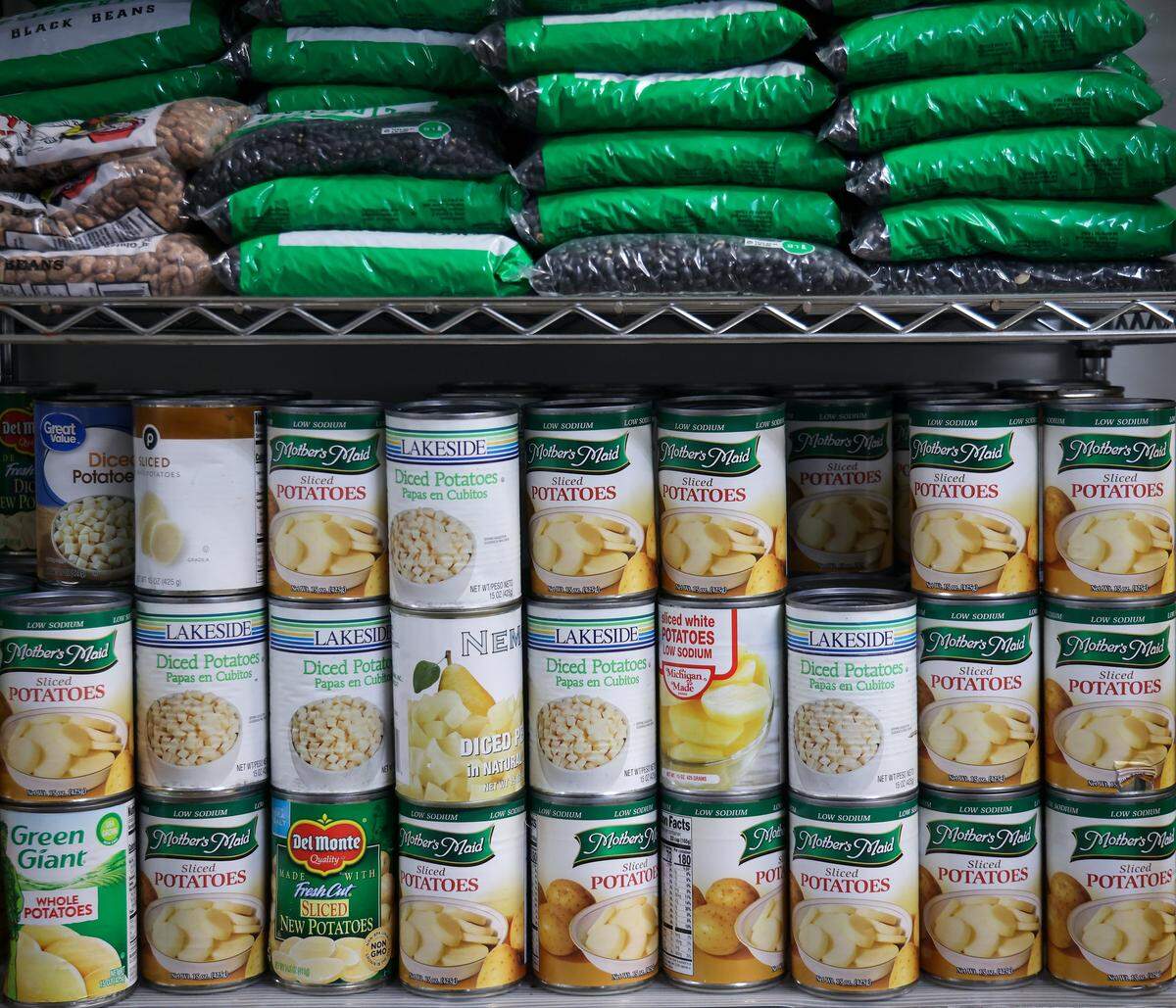
Feeding South Florida has endured difficult times in the past when hurricanes struck and during the pandemic when people were losing jobs, he said. But back then, everyone was ready to lend a hand, Vélez said. “Now, government resources are going away. It’s going to be incredibly difficult to serve the community.”
Feeding South Florida plans to work with corporate partners, retailers that donate food, individuals and foundations to try to close the funding gap. “We’re letting the community know the situation with the federal funding and that we need their help more than ever,” said Vélez. “So far, the South Florida community has been extremely generous.”
As the fall harvest season gets under way, Florida will face another dilemma: Who will pick the crops? ICE immigration raids have already swept up some undocumented farmworkers and prompted others to go into hiding.
To boost its income, Feeding South Florida also has launched a for-profit catering business out of its commercial kitchen in Boynton Beach. No donated food is used for this venture.
“We’ll do corporate events, government functions, catering for other nonprofits, even weddings and quinces,” said Vélez. “We’ve been pretty successful and hope we’ll continue to grow.”
Miami-Dade County Homeless Trust
Unlike many Miami-Dade nonprofits that depend on government grants, the Miami-Dade County Homeless Trust, a county agency that helps people experiencing homelessness, is helped by a dedicated funding source — a 1 percent food and beverage tax countywide.
But trust chairman Ron Book is concerned about two proposed changes in U.S. Department of Housing and Urban Development rules that could push more people into homelessness.
The Trump administration, which says the changes will encourage economic self-sufficiency, wants to impose a two-year limit on rental assistance for “able-bodied adults” who are not elderly or disabled. Now, there are no time limits on the vouchers that help low-income people afford stable housing.
Another proposed HUD rule change would strip households with at least one undocumented member of access to public housing and rental vouchers.
Book said it’s unclear how the HUD rule changes will play out; Congress still must act on the rule changes.
On any given day, Book said, the trust is helping house 5,000 people in permanent supportive housing — many who are funded by the voucher program, several hundred in transitional housing and another 2,500 in shelters waiting for housing.
The trust’s summer homeless count showed 1,068 people living on the street in Miami-Dade County— a 6 percent year-over-year increase.
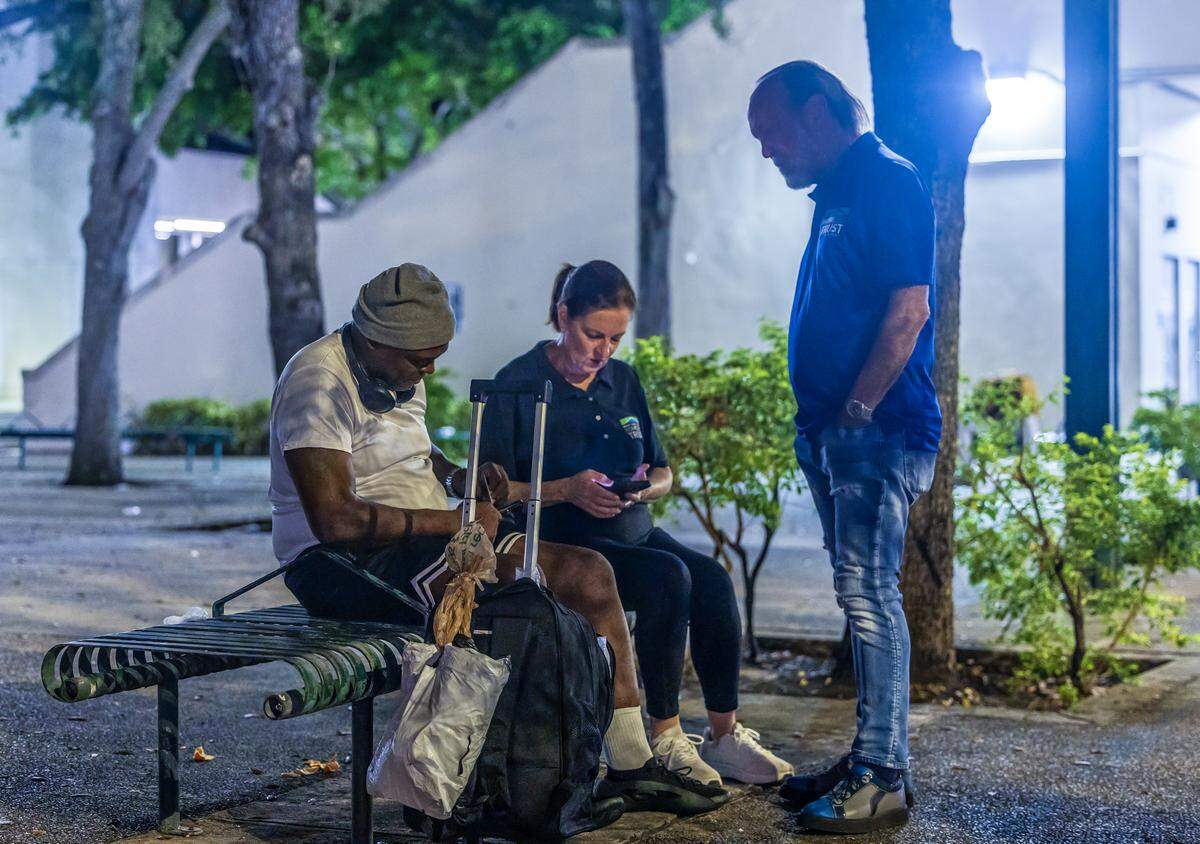
In addition to its temporary shelters, the trust’s goal is to own 1,000 housing units for Miami’s homeless population. It now owns 370 units and is acquiring another 150.
The trust got a boost in November 2024 when Jeff Bezos and Lauren Sanchez contributed $5 million through the Bezos Day 1 Families Fund to house children and families. The trust pledged to come up with matching money, but Book said it isn’t “far enough along” on its matching funds’ goal.
“For 35 years I’ve said you can’t rely on government funding or just philanthropic funding. The village as a whole has to be the solution,” said Book. “If we don’t raise money in the community, we’re going to go backward.”
Community Foundation of Broward
The Community Foundation of Broward, which provided $20 million in grants in fiscal 2025 to organizations addressing critical needs in the community, is trying to help nonprofits rethink how they will operate.
Philanthropy isn’t going to be able to replace what the government is cutting, so the foundation is encouraging community organizations to work smarter and shop their programs to various funders and collaborate to make sure needs are still being met.
“You don’t need to reinvent the wheel,” said the foundation’s Brown Grosvenor. “We’re going to help our organizations figure it out and strategize.”
The foundation recently connected Scholarship Plug and Scholar Career Coaching, two nonprofits with similar missions, to offer college prep services and scholarship and college planning at Deerfield High School.
“They are so happy to be working with each other,” said Brown Grosvenor.
The foundation also is increasing its advocacy at the state and federal level and sharing stories such as that of a family of five, including two-month-old twins, whose breadwinner lost his job. United Way helped them get emergency funding for a hotel room after they were evicted at midnight.
“This is real life, and these are real stories,” said Brown Grosvenor. “Our job is to bring these stories to donors. When we do, they will step up.”
“When government wavers, philanthropy has to help carry communities through uncertain times,” said O’Flannery Anderson, making sure “people don’t fall through the cracks.”
.jpg "3. Lesley Mitchell Jones, Jennifer O'Flannery Anderson, Burnadette Norris-Weeks, Aaron Weeks, Juliet Roulhac (1).jpg")
The Miami Foundation
In the face of diminished resources available for charities, The Miami Foundation is holding workshops for nonprofits on how to budget, increase income and fundraise.
Despite the challenges, Fishman Lipsey said she’s optimistic about this year’s Give Miami Day, which is Nov. 20 with early giving beginning on Nov. 15. The online campaign, which connects donors with community organizations, is the foundation’s largest fundraising initiative and one of the biggest in the nation.
Last year 51,755 donors contributed a record $39.5 million – a 16 percent increase from the prior year— to 1,276 organizations in the Greater Miami area.
Fishman Lipsey said she looks at the annual event as “our entire community investing in itself. We want so much for our community. I want people to think of this [the funding cuts] not as a disappointment but as a moment of hope and responsibility. I want everyone to feel hope and join in.”
%20(1).jpg "GMD 2024 (135) (1).jpg")
This story was originally published October 28, 2025 at 5:00 AM.