
From a toy drive to a Saks Fifth Avenue-endorsed show. This is Catwalk for Charity
.JPG "Judith Joseph, founder of the non-profit Catwalk for Charity, with students from Ecole Nouvelle Zoranje in Port-au-Prince in July, 2018. Her charity has an annual fashion show in Miami to raise money for various organizations in Haiti, including PRODEV, which is an education nonprofit that created the school.")
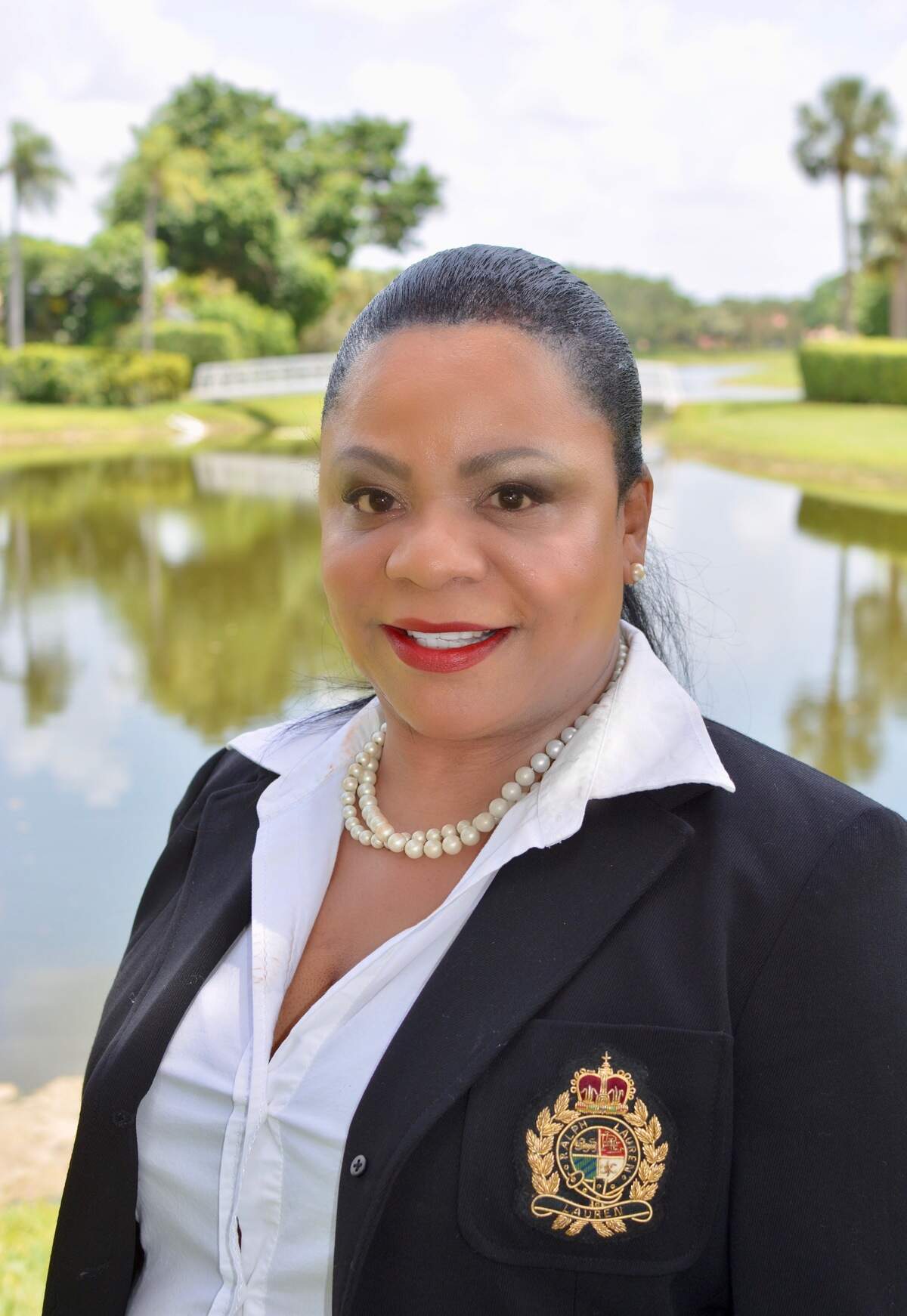
Judith Joseph began with a simple mission — to uplift Haitian children in Miami during the holiday season.
She billed her event as Breakfast with Santa, in 2006, where hundreds of kids from Miami’s Little Haiti neighborhood enjoyed a hearty breakfast at a local Marriott hotel, and hang out with Santa Claus.
But after five years of email blasts and putting up fliers trying to get Haitians to donate toys for poor kids, Joseph decided she needed another strategy to attract donations.
“It got a point where we would just go and buy toys for each of them,” said Joseph, now an event planner who lives in Boca Raton. “Like $7-$10 per toy.”
Then one day in 2011, as she and her friends brainstormed ideas on how to raise funds, Joseph thought: How about holding an annual fashion show? It was a perfect fit with Miami’s runway-inspired scene, said Jean-Raymond Alexandre, a friend.
“Even if it’s for charity, people in Miami want to dress up,” Alexandre said.
Catwalk for Charity was soon born. Joseph, who had been thinking about the children in her Haitian homeland, which the year before had been struck by a tragic earthquake, also changed the focus.
And instead of using the fashion-inspired fundraiser to benefit children in Miami, she decided that children in Haiti needed it more.
For the past seven years, the star-studded event featuring celebrity hosts, top designers and high-end department stores like Neiman Marcus and Saks Fifth Avenue, has raised hundreds of thousands to benefit thousands of Haitian children.
For a week in December, she and her team of Catwalk for Charity volunteers travel to Port-au-Prince, rent buses, and invite thousands of children to the Institution Saint-Louis de Gonzague, an all-boys Christian school, for a huge breakfast and lunch, toy giveaway and of course, a meeting with Santa.
“What matters to me is helping kids,” said Joseph. “Nothing else matters.”
The children are selected by schools and hospitals and come from underprivileged communities like Cité Soleil, the eight-square-mile slum in Haiti with no sewage system and barely any power.
They also come from orphanages around the Haitian capital. The team also provide toys to sick children at the State University of Haiti, also known as the General Hospital, and some 800 children at Special Olympics Haiti, which trains children and adults with different intellectual or physical disabilities.
But as she traveled more and more to Haiti, she saw that the children needed something more substantial: They needed a better education.
In 2015, a common friend introduced Joseph to Maryse Pénette-Kedar, the board president of PRODEV, an educational nonprofit. Founded in 1995 by Pénette-Kedar’s husband Daniel Kedar, and late father, Max Pénette, a professor and former mayor of Pétion-Ville . PRODEV began as a small family foundation that sent children to school who otherwise couldn’t afford it.
After the earthquake, Pénette-Kedar took the foundation to another level. She built its first school, Ecole Nouvelle Zoranje, in Port-au-Prince and launched a training program for teachers throughout the country.
“We believe that this (education) is one of the biggest problems in Haiti,” Pénette-Kedar the said. “We’ve created a model of what quality education can be.”
She and Joseph instantly hit it off when they met.
“We are obsessed with PRODEV,” Joseph said. “To me, it is a hidden gem in Haiti. If we had 10 PRODEVs, wow, it would make such a difference.”
In addition to training teachers, PRODEV tries to provide students with a top-tier education in a country where only 61 percent of the population is literate, compared with 92 percent in other developing Latin American and Caribbean nations, according to the CIA’s World Factbook.
PRODEV’s students are encouraged to communicate their feelings to staff and no corporal punishment is allowed —which is unusual in Haiti, where teachers are allowed to discipline students.
Earlier this year, the foundation made international headlines and prime-time TV in the U.S. when comedian Conan O’Brien visited Ecole Nouvelle Zoranje after President Donald Trump described Haiti as a “shithole” country.
PRODEV’s director of partnership, Leonie Hermantin, said that Catwalk for Charity has been a great asset to the nonprofit, which relies strictly on donations.
“They have given us visibility, attention and raised our profile,” she said of Catwalk for Charity, which has provided donations for the past three years from its fund-raising efforts.
Last year, Catwalk for Charity brought down optometrists to Ecole Nouvelle Zoranje to give free eye examinations for 500 children and teachers. A fifth received a pair of glasses.
“The glasses were $20-$30 a pair,” said Hermantin. “And they were all free.”
This year, Joseph said she plans on doing a dental mission for the school’s students and teachers.
Joseph said while she believes her efforts are needed in Haiti, where many children go without toys and even an education, getting people to donate remains a struggle.
She has tried to expand her list of donors through Catwalk’, tapping into Miami’s more affluent communities. The annual fashion show fundraiser has taken place at the Turnberry Isle Resort in Aventura, the JW Marriott in Miami and the JW Marriott Marquis.
As the venues upgraded, so did the event’s list of luxury store sponsors, some of which were initially apprehensive about working with a small organization.
This year’s event, sponsored by Saks Fifth Avenue, featured a renowned production team and high-end models. It took place at Fontainebleau Miami Beach. Saks selected all the clothing, from designers like Dior.
This year’s hostess, Haitian American actress Garcelle Beauvais, also joined a high-profile list of past celebrity hosts including actress Vivica A. Fox, designer Kimora Lee Simmons, TV personality Giuliana Rancic and Miss Universe Haiti Raquel Pelissier.
Some of Catwalk for Charity’s long-time supporters include WPLG Local 10 news anchor Calvin Hughes, who was this year’s co-host and Dr. Rudolph Moise, a physician in North Miami.

What all her hosts all have in common, Joseph said, is that they believe in philanthropy, want to help Haiti and have a massive following. They are not paid. The charity, Joseph said, pays for travel accommodations, lodging and other expenses that accumulate.
Working at the Marriott for 20 years has given her access to well-connected people. And she has used them to raise the profile —and fund-raising possibilities of Catwalk for Charity. That has only expanded since starting her event planning business.
Although her fashion show brings out high-profile guests every year, Joseph said the philanthropy is not yet reflected.
“People are not familiar with our name yet,” Joseph said.
But she is not discouraged.
“I am not Mother Teresa,” Joseph said. “But if I feel like I can help 10 kids, then I know I did something.”
This story was originally published October 25, 2018 at 10:03 AM.