Food label on front of package led shoppers to make healthier choices, study shows
What leads people to make better food choices? Is it price, availability, health attributes of the food or something else? This is the million-dollar question. The most common statement I hear from my clients is, “Just tell me what to eat.”
Nutrition labels entered the supermarket in 1994. The motivation was that providing consumers with more information would help them make healthier choices. In 2020, nutrition facts labels became mandatory and included additional information on sugar, allergens and serving sizes.
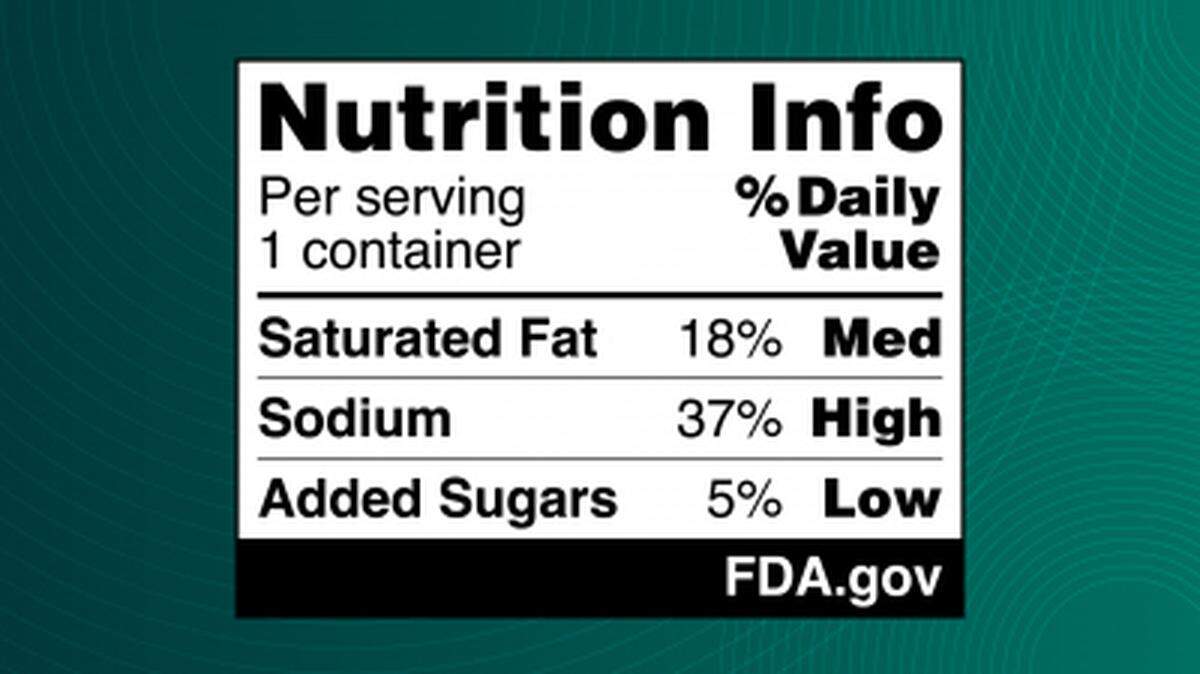
In January, the Food and Drug Administration proposed requiring front-of-package information (FOP) that would show when food is high, medium, or low in saturated, fat, sodium and added sugars. An example is below.
The front-of-package label, if adopted, would be in addition to the Standard Nutrition label on the back or side of the package. The question is: Will these work?
Proposed nutrition label for front of package
Per serving: 1 container
% Daily Value
Saturated Fat: 18% Med
Sodium: 37% High
Added Sugars: 5% Low
An October article in JAMA Network Open analyzed what is the most useful nutrition label. This randomized clinical trial was conducted online and included 5,636 participants. The online shoppers were shown a virtual supermarket that had items with six different styles of the front-of-package label.
They set out with their virtual shopping carts, and were given instructions to shop for items that can be top contributors to fat, sugar and sodium. The labels ranged from ones that had only nutrition information on them, ones that had nutrition information plus designations of good, better and best, and ones that the researchers called spectrum labels that had ratings of poor, fair, good, better and best.
The spectrum labels led to healthier food choices in the virtual shopping cart. Shoppers bought foods with higher fiber per serving, more protein per serving, and fewer items that were high in fat, sodium or sugar.
Most people, when given a choice, would choose a package that says best on it rather than poor. It goes back to what my clients would so often say to me, “Just tell me what to eat.”
Sheah Rarback MS is a Dietitian nutritionist in private practice in Miami.