
‘We are trained to work in adversity.’ How husband-and-wife doctors have coped amid pandemic
While the coronavirus pandemic disrupted the lives of everyone, one group that faced especially challenging circumstances were husband-and-wife physicians.
Not only were they contending with COVID-19 like everyone else, but they had to treat their patients and painstakingly take steps to avoid catching the virus and spreading it to their colleagues and loved ones.
Many pivoted to telemedicine, but others saw emergency cases in person. In some cases, they did surgery throughout the pandemic. Yet despite the daily stresses and the emotional toll of so many lives lost, the physician couples said practicing medicine in the time of COVID has been among the most rewarding work they’ve done in their career.
“We are trained to work in adversity,” said Dr. Manmeet Ahluwalia, a medical oncologist, deputy director and chief scientific officer at the Miami Cancer Institute, part of Baptist Health South Florida. “And this training was essential during the pandemic.”
‘Being married is a huge source of support’
As the pandemic began in March 2020, Dr. Katherine Amin learned she was pregnant with her second child.
“It was scary,” said Katherine, 34, a urologist at the University of Miami Health System. “COVID was new and there were so many questions. It was unknown territory.”
She studied every report on the possible effects of COVID on pregnant women and fetuses. She initially stopped seeing patients in person. But because of the nature of her specialty, she began working directly with patients again in May 2020 — two months after the pandemic began — seeing up to 30 a day and performing surgeries until she gave birth in November.
Her lifeline was her husband, Dr. Sunil Amin, 38, a gastroenterologist, who works for UHealth on another floor in the same building.
“We get each other and cover for each other. Being married is a huge source of support,” he said.
Today, the Amins are parents of Zian, their healthy 15-month-old son (carried during the pandemic), and Maya, their 2-and-a-half-year-old daughter.
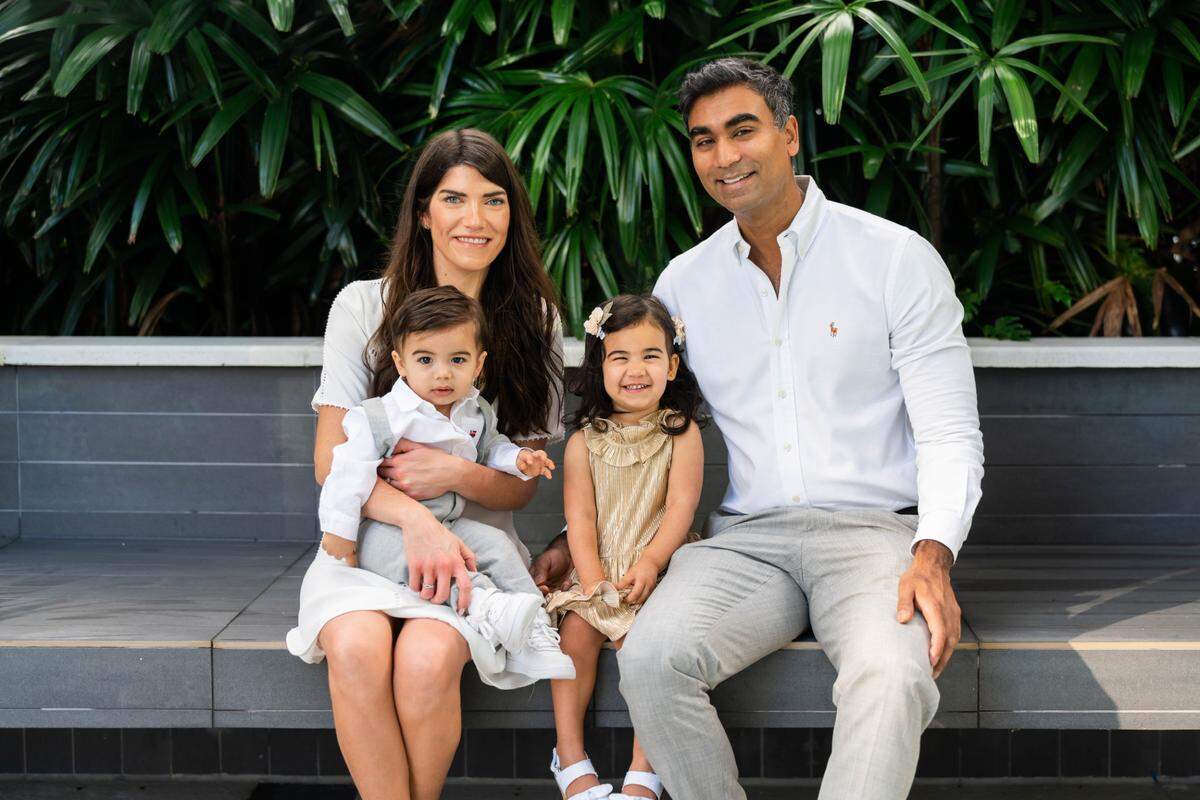
Like others in the healthcare field, the Amins used N95 masks (doubled) and personal protective equipment and took detailed precautions when they returned home after work.
And after consulting with experts, Katherine received the Pfizer vaccine in December 2020, just over two weeks after giving birth. She also breastfed Zian after taking the vaccine.
“I weighed the theoretical risks of the mRNA vaccine against the risks of contracting COVID-19, and for me the choice was clear to protect me, and hopefully protect my baby,” Katherine said.
Sunil, a gastroenterologist, had to consider the risks of performing endoscopies, in which a tube is inserted to examine a person’s digestive tract. Since these procedures are done via the mouth, they are high risk for contracting COVID. He halted elective outpatient endoscopies from March 2020 until May 2020, mostly relying on Zoom visits. Scans and blood tests also helped to reach a diagnosis.
Amid all this, they leaned on each other for professional guidance and personal support. The Amins, like other husband-and-wife physician couples, understand that a workday may not end at 5 or 5:30, and that a doctor can’t stop in the middle of a procedure — even if there is a problem at home.
“We live 10 minutes away from work, but if our nanny gets sick, we can’t just leave the operating room,” Katherine said. “Our hours are not predictable and we don’t have any family here.”
Added Sunil: “Because we’re both working, no one gets bitter.”
Katherine grew up in Rochester, N.Y., and earned her M.D. from SUNY at Buffalo School of Medicine and Biomedical Science.
Sunil grew up in Vancouver, British Columbia, and earned his medical degree from the Columbia University College of Physicians & Surgeons in New York. He also obtained a master’s of public health there. He is director of endoscopy at UHealth’s Lennar Foundation Medical Center and at Jackson Memorial Hospital.
The two met in 2012 while they were residents at the Icahn School of Medicine at Mount Sinai in New York. They married in 2016.
“We’re happy and fortunate to be in Miami,” Katherine said. “We’re in different specialties and work for the same employer. We love Miami!”
Contending with new city, new job and the pandemic
For Dr. Harneet Kaur Walia, 41, and her husband Dr. Manmeet Ahluwalia, 43, the challenges of working amid the pandemic were compounded by relocating to Miami in 2021.
The two Baptist Health South Florida physicians had to adjust as the delta variant of COVID-19 would soon erupt into a deadly scourge, acquaint themselves with new colleagues and patients, and find a new home and school for their two children, ages 7 and 10. (Manmeet’s mother helped during part of the pandemic.)
“The pandemic was a big disruption to our normal day-to-day activities, but it is one of the most rewarding points of our careers,” said Harneet, director of sleep medicine at Miami Cardiac & Vascular Institute, part of Baptist.
“Because of the pandemic, we had to pivot and change the way we were doing things,” added Manmeet, the Baptist oncologist. “We both joined Baptist Health in January 2021, and made the transition to our new positions here from the Cleveland Clinic, so we spent part of the pandemic in Cleveland, and part here in Miami.”
Like many physicians, they turned to telehealth, saw fewer patients in person, held administrative meetings virtually and took great care to protect patients and their loved ones. Both physicians adopted a hybrid approach to seeing patients in person and virtually.
But while medical visits and elective surgeries were often curtailed during the early stages of the pandemic, cancer patients still had to be treated regularly, often in person.
“Cancer does not wait, and we had to make sure that we were providing the best possible cancer care to our patients,” said Manmeet, a neuro-oncologist who treats tumors that originate in the brain and cancers that form in other parts of the body and metastasize to the brain.
Nor did they stop clinical trials. Manmeet supports the work of 120 researchers who are trying to develop anti-cancer drugs; Harneet conducts research on sleep-related breathing disorders and cardiac issues.
Both grew up in India and are fluent in English, Hindi and Punjabi. They received their medical degrees in India, and did their residencies in the United States with advanced studies in the U.S. and Canada.
They met in India while visiting their families.
“My aunt set us up. We met and fell in love,” Manmeet said, marrying in 2005. “I’m blessed to have Harneet as my partner.”
‘No time in history when we could help people more’
Dr. Aharon (Ari) Sareli spent most of the past two years in the ICU at four Memorial hospitals, treating both COVID and non-COVID patients at bedside.
“In March 2020 [the pandemic’s start], we had no idea what we were facing,” said Ari, 48, chief of critical care medicine at Memorial Healthcare System, overseeing the ICUs at four of Memorial’s six hospitals in South Broward — Regional, West, Pembroke and Miramar. (Memorial Regional South does not have an ICU and another physician oversees the ICU at Joe DiMaggio Children’s Hospital, part of Memorial Healthcare System.)
“Days started at 5 a.m. and we worked until midnight, then slept a few hours, usually seven days a week,” Ari said. “There was the summer surge, then the winter surge.”
About 18,700 COVID-19 patients were admitted to Memorial’s hospitals from March 2020 to the beginning of March 2022; approximately 2,000 were admitted to the intensive care units.
Ari found deep professional and personal support from his wife, Dr. Candice Sareli, 48, who as Memorial’s vice president and chief medical research officer, oversees the research and clinical trials conducted at Memorial, including some key ones connected to COVID treatments.
Candice set up Memorial’s research program in 2011, following her work as a director of research at the University of Pennsylvania. Today, she and her team support the research being done by 130 physicians involved in 150 clinical trials covering 136 specialties.
Memorial and Mount Sinai Medical Center in Miami Beach were the first two South Florida hospitals to administer remdesivir, an antiviral medication the FDA approved in October 2020 to treat hospitalized COVID-19 patients. The Memorial infrastructure was vital in testing remdesivir, she said, and for putting more than 1,700 patients on a protocol to test convalescent plasma, the blood of recovered coronavirus patients used to treat COVID-19 patients.
“More than enduring COVID, we and the healthcare system thrived during COVID,” Candice said. “There is no time in history when we could help people more.”
At home, conversations were dominated by COVID. “Our kids had to put up with this for a long time,” Ari said. The Sarelis have two children: Gabe, 20, and Rachel, 15.
The Sarelis are from Johannesburg and speak English, Afrikaans, Hebrew and Zulu. They met at the University of the Witwatersrand medical school in Johannesburg, and have been married for 25 years. Both worked in South Africa and later in the United Kingdom. They came to the United States in 2001 for their internships and residencies.
“Research decided on me,” Candice said. “Newly pregnant and emigrating to the U.S., it was difficult to start a clinical career. I was looking for a life-insurance policy and a friend told me about a research job.”
She took one job, then went to UPenn “and started at the bottom of the totem pole. I did studies on asthma and COPD, and it turned out to be the right place at the right time.”
The past two years, while extremely trying, also renewed in them the importance of practicing medicine.
Said Ari: “In critical care, I always have to remember which side of the ventilator I’m on. My very worst day is better than my ICU patient’s best day.”
Love in the time of COVID
Dr. Rodrigo Ruano and his wife, Dr. Flavia Fairbanks Lima de Oliveira Ruano, moved to Miami amid the pandemic.
Despite the challenges of a new job, a new city and the coronavirus, they are thrilled. It is the first time they are living in the same city after a five-year, long-distance relationship that spanned 5,481 miles — the distance between the Mayo Clinic in Minnesota, where he worked, and São Paulo, Brazil, where she did.
Rodrigo, 48, an obstetrician, gynecologist and expert in fetal surgery, started at Jackson Health System and the University of Miami Health System in January. Flavia, 47, an obstetrician, gynecologist and expert in female sexuality, will start at the two medical centers at the end of March.
The two met in medical school at the University of São Paulo 25 years ago. They dated for about three years, before their professional lives charted a new course for each.
Rodrigo, who also obtained a Ph.D., conducted research in France and moved to the United States to work in Texas and Minnesota, making occasional visits to Brazil. Flavia practiced medicine in Brazil and taught at the medical school. She, too, earned a Ph.D. in addition to her M.D.
Both married, had two children and eventually divorced.
Seven years ago, the two reconnected by posting on their medical school’s Facebook page. “When I saw his pictures on Facebook, I thought, ‘Wow! That’s my Rodrigo,’ ” she said.
Thus began a long period that moved from texts on professional issues to chats about their personal lives. In May 2017, they met at a conference in Vancouver, and Rodrigo invited her to come to Rochester, Minnesota, where he was a professor and researcher at the Mayo Clinic.
“I was always thinking about him,” Flavia acknowledged.
“When I saw her in Vancouver, she hadn’t changed; she was still the Flavia I met many years ago,’’ Rodrigo said.
Despite the distance between São Paulo and Rochester, the two kept their relationship going. Flavia visited Minnesota 17 times and Rodrigo visited Brazil several times.
But everything changed in March 2020 when the coronavirus pandemic hit.
“It was our nightmare,” Rodrigo said. “We had to stop flying and stop seeing each other. We called each other every day.”
By late September of that year, there was some relaxation in travel restrictions and Rodrigo flew to Brazil. “Flavia showed me where we could get married.”
They married in São Paulo in June 2021, but had to postpone a big beach reception until later this year.
When Rodrigo was offered the new job at JHS, he accepted, and hoped he could bring Flavia to the United States permanently. That happened when Jackson Health System offered her a position as well.
“The beauty of our story is that we never gave up,” Flavia said. “We are together now, happier and stronger, and doing our best for medicine and our patients.”
‘COVID is still out there’
When the coronavirus pandemic hit in the spring of 2020, Dr. Adriana Rodriguez and her husband, Dr. Gabriel Gavrilescu, had to leave their home — which was being renovated — and move into the apartment of Adriana’s 85-year-old mother-in-law.
She was a great help, transforming her apartment into a home school for their two boys, Gabriel Ignacio, 14, and Lucas, 13.
“During COVID, we all learned to be nimble and work as a team,” said Adriana, a Cleveland Clinic Weston epileptologist (a specialist in epilepsy). “We’re inspired by all the care providers — doctors, nurses, hospital greeters, people cleaning the rooms. They all sacrificed, put themselves at personal risk. The clinic never closed. We came in every day and we did it. You feel like someone has your back.”
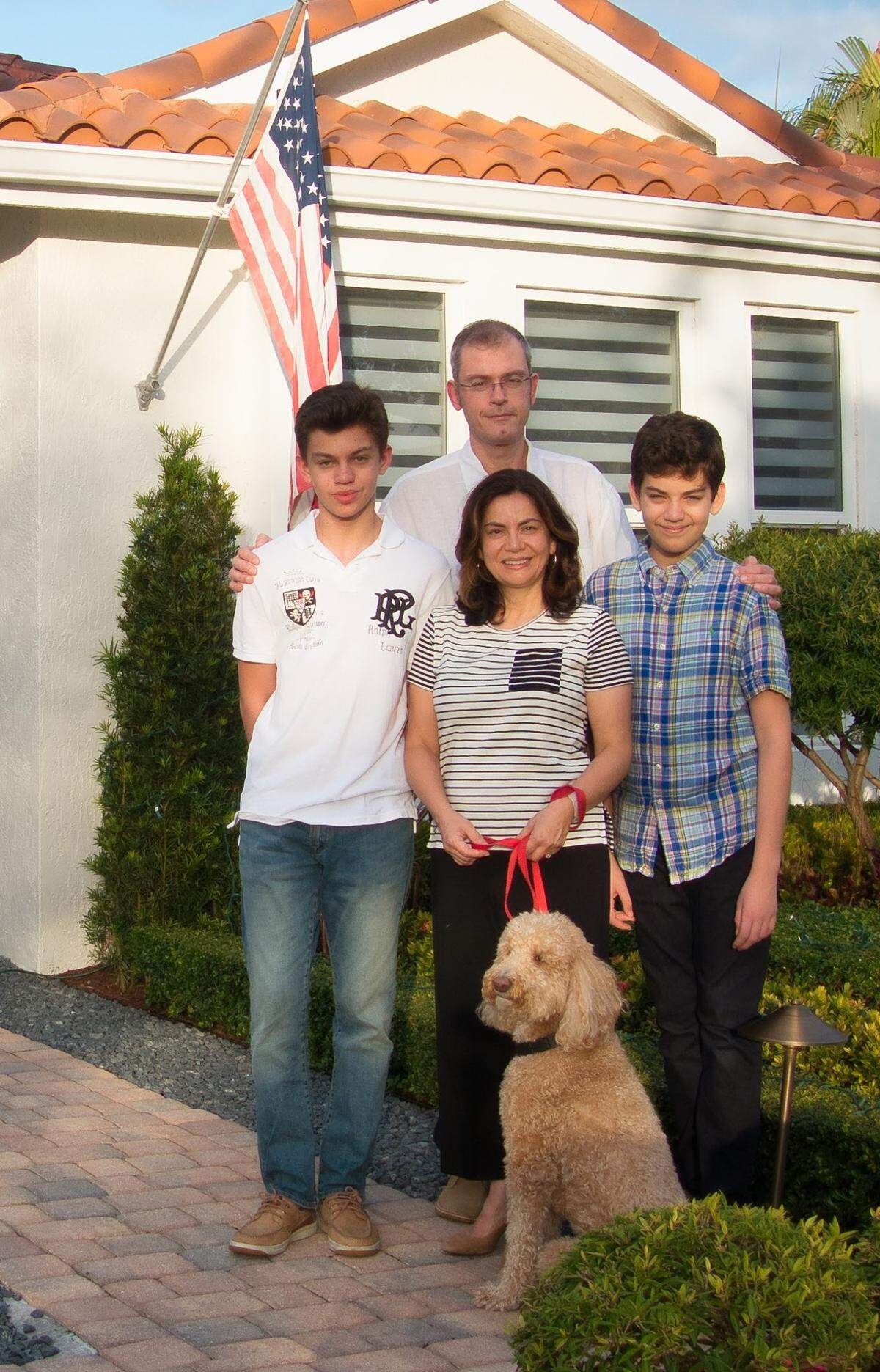
Married for 15 years, the two physicians met while doing their residencies in Chicago. “Some people are high school sweethearts,” said Gabriel, an internal medicine specialist and chairman of medicine at Cleveland Clinic Weston. “We are hospital sweethearts.”
They have worked at Cleveland Clinic Florida’s Weston hospital since 2007.
Both come from families of physicians. As a little girl, Adriana would accompany her father when he made his rounds. She was impressed by “how much joy he got from taking care of patients and how much they appreciated his work.” She said she knew she wanted to be a doctor when she was about 4.
Gabriel also stresses the personal relationship he develops with patients. Visits with patients are “a conversation that goes on for years,” he said.
Sometimes, he’ll meet the child of a patient, and later the child becomes a patient.
When the coronavirus hit in March 2020, they, like so many physicians, pivoted to online sessions.
“It was easier to manage the outpatient clinic by telemedicine,” said Adriana, 49. “It took me a couple months to get my COVID legs.”
For patients who could not drive, online consultations were easier.
For Gabriel, 49, telemedicine also worked for the snowbirds he was treating, since he could keep in touch with patients in other states and outside the country.
The two doctors often worked from home, “but we never stopped seeing people in person.”
Both doctors visited hospitalized patients in person, and helped cover schedules with residents. They consulted with other patients online. “There was a lot of maneuvering” at home and at work, Adriana said.
Today, most patients have returned to in-person visits.
“We’re about 80-90 percent back to normal, with a hint of virtual visits,” Gabriel said. “COVID is still out there.”
A previous version of this article had the wrong first names of Dr. Aharon Sareli and his son Gabe, and incorrectly stated Dr. Candice Sareli’s position at UPenn and his role in treating ICU patients. Dr. Candice Sareli was a director of research at UPenn; Dr. Aharon Sareli treated both COVID patients and non-COVID patients at Memorial during the past two years of the pandemic.
This story was originally published March 21, 2022 at 6:00 AM.