
His mother, grandfather died young of same condition. How 19-year-old escaped that fate
Estrella Guillen of Miami has raised her grandson Bryan Fernandez since the day he was born.
Her daughter, Ida Cruz, died suddenly of a torn aorta at 19 while giving birth to Bryan — 17 years after Ida’s father died at 28, apparently of the same condition.
Guillen despaired when she learned years ago that Bryan, now 19, had inherited the connective-tissue disease that caused his mother and grandfather to die so young.
“I felt terrible, like I didn’t know what to do,” Guillen said. “My world went into depression.”
Life-changing procedure
Guillen said “my life changed” Jan. 25 when cardiac surgeon Dr. Steve Xydas repaired Bryan’s damaged aorta at Mount Sinai Medical Center’s new aortic center in Miami Beach.
“I don’t know how to make it up to him,” she said the day after Bryan returned home from the hospital.
“Here I am in recovery,” said Bryan, who grew up not allowed to play sports or exercise after doctors confirmed he inherited Loeys-Dietz Syndrome, which leads to an enlarged aorta. The aorta distributes blood from the heart to the rest of the body.
“It felt kind of like unfair to me, but at the same time, I felt, ‘I have this. I have to learn how to live with it,’ ” he said. “Now, I feel like I don’t have to worry about taking too many medications. I’ll be able to do more physical stuff, go out, do more exercise, stuff like that.”
Doctors told Bryan to expect a six-month recovery. “I’ve progressed more than that, so it will probably be less,” he hopes.
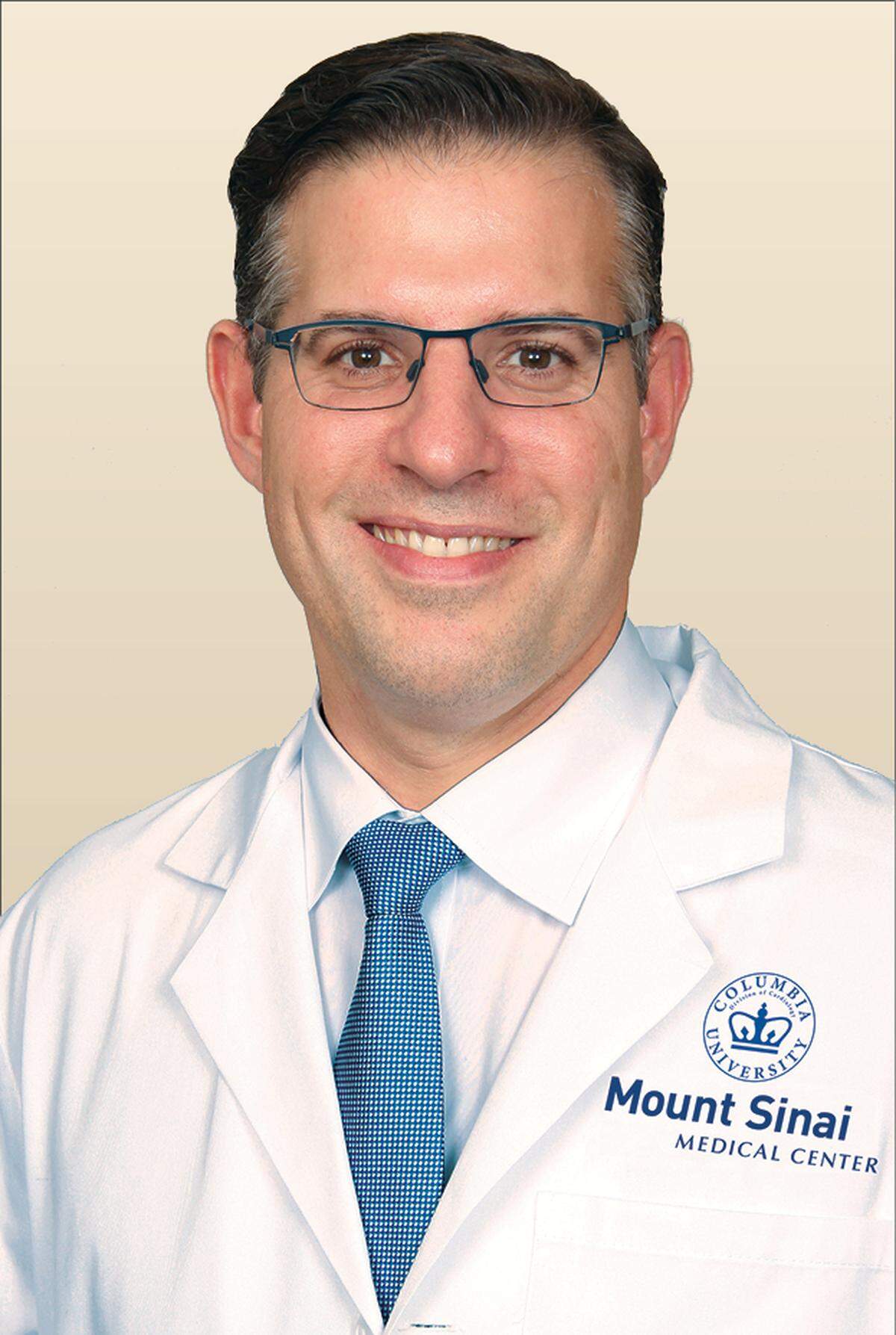
Xydas, chief of cardiac surgery at Mount Sinai, said Bryan had been followed for years by staff at Nicklaus Children’s Hospital.
When doctors there believed the aneurysm near Bryan’s heart had grown enough to warrant surgery, they “sought me out to help him. And we took a difficult case,” Xydas said.
Only aspirin required
“We did an aortic root aneurysm repair,” Xydas said. “This is a specialized procedure in which we repair the patient’s own aortic valve. What is common in centers that do not have experience with this procedure is to replace the patient’s valve and then they’re compelled to be living with a mechanical valve the rest of their lives, and dealing with lifelong needs for anticoagulation.
“We were able to repair Bryan’s valve at the same time as doing this complex aortic root surgery, so that his aortic valve is his own and he does not require anything other than aspirin.”
Xydas said Bryan’s medical case illustrates why the Mount Sinai aortic center is needed in South Florida.
“Overall, what’s common is for there to be centers where you can deal with routine cardiology and cardiac surgery issues,” he said. “What is rare is a center of excellence that deals with aortic aneurysms and aortic disease in a multidisciplinary fashion.”
The new center, which is affiliated with New York-Presbyterian Columbia University Irving Medical Center, brings together both expert staff and medical equipment.
“People more than equipment, but there are definitely high-resolution CT scanners which map out things three-dimensionally, and really do add a lot from an imaging perspective to quickly diagnose emergencies,” Xydas said. “They also really hone down on being able to measure the size of aneurysms in three dimensions, over time and on patients who are followed electively.”
The aorta is the largest artery in the body. “It’s the one that receives all the blood,” according to Mount Sinai’s chief cardiologist, Dr. Gervasio Lamas.
“The main pumping chamber of the heart, which supplies the entire body with its blood supply, is the left ventricle,” Lamas said.
“The left ventricle ejects the blood into the aorta, which is the longest artery in the body. Therefore, the aorta is subject to a lot of mechanical stress, from getting a large bolus of blood with each heartbeat under pressure.”
Impact of smoking, heavy lifting
Not only can aortic disease be inherited, it also can be acquired.
“Uncontrolled high blood pressure can sprout aneurysms, because of the internal force on the aorta,” Xydas said.
“Secondly, smoking, because smoking independently weakens the wall of the aorta and can lead to aneurysms. But also continued smoking can make aneurysms grow over time.
“Thirdly, heavy lifting. The extreme example are squat lifters or Olympic weightlifters, who create a lot of strain on the aorta with heavy lifting.”
Xydas said that at Mount Sinai alone, medical staff treat up to 150 aneurysms a year. Most are in the chest; about 50 are abdominal.
Survival mostly depends on whether an aneurysm is surgically treated before it bursts, called an aortic dissection.
“If they go to the emergency room with a dissecting aorta, the mortality is much higher than if they have an elective surgery to replace an aorta that is not dissecting,” Lamas said.
Celebrities who have lost their lives to aortic dissections include Lucille Ball, 77; John Ritter (who collapsed at 54 on the TV set of “8 Simple Rules” and died shortly after at a nearby hospital); “Growing Pains” star Alan Thicke, 69; U.S. diplomat Richard Holbrooke, 69; and composer-lyricist-playwright Jonathan Larson, 35, who perished in the early morning of Jan. 25, 1996, the day his show “Rent” had its first off-Broadway preview at the New York Theater Workshop.
Most people who die of aortic dissections never knew they had a problem, Lamas said.
“We’re trying to change that paradigm,” he said. “We’re trying to turn a disease which typically presents in the emergency room to one that is more carefully followed, organized and prevented.”
To learn more about the Aortic Center
For more information about Mount Sinai Medical Center’s new 24-hour aortic center in Miami Beach, visit www.msmc.com/cardiovascular-care or call 305-614-6492.
This story was originally published February 16, 2022 at 2:01 PM.