
Lung cancer kills lots of people. New screenings will try to lower those numbers

Experiencing pain in her ribs and back, Lilianna Jenkins decided to visit her doctor in December.
She was diagnosed with stage 4 lung cancer and discovered it was spreading.
“When they told me, I was really desperate,” said Jenkins, a 50-year-old wife and mother in Deerfield Beach, who’d been a smoker for 30 years. “I thought this would be my last Christmas.”
Jenkins’ situation is not uncommon. Most Americans aren’t diagnosed with lung cancer until the disease has reached an advanced stage.
Lung cancer is the leading cause of cancer death with more than 130,000 deaths estimated this year, more than breast, colon, and prostate cancer deaths combined, according to the American Cancer Society.
Lung cancer screenings for younger people
To try to change this, new guidelines from the U.S. Preventive Services task force will allow more people to be eligible for lung cancer screenings. Adults, ages 50 to 80, who have a 20 pack-year smoking history and currently smoke or have quit within the past 15 years are now eligible. A pack-year means smoking a pack of cigarettes a day for a year or an equivalent amount.
Previously, only adults beginning at age 55 with a 30 pack-year smoking history were recommended for the screening.
The new guidelines will allow 15 million people to qualify for lung cancer screenings, nearly double the previous amount, said Dr. Luis Raez, chief scientific officer and medical director at Memorial Cancer Institute, part of Memorial Healthcare System in Broward County.
.jpg "LR (2).jpg")
“Screenings are a benefit that very few people are using to prevent and discover curable lung cancer,” Raez said.
The goal of the screenings is to detect lung cancer at an earlier stage when it is more curable, said Dr. Evan Alley, an oncologist at Cleveland Clinic Florida in Weston.
“We are only screening a tiny percentage of those who are eligible,” Alley said. “Lung cancer can grow undetected and grow silently for a long time before it causes symptoms. Patients and primary care doctors must be educated on the importance of lung cancer screenings.
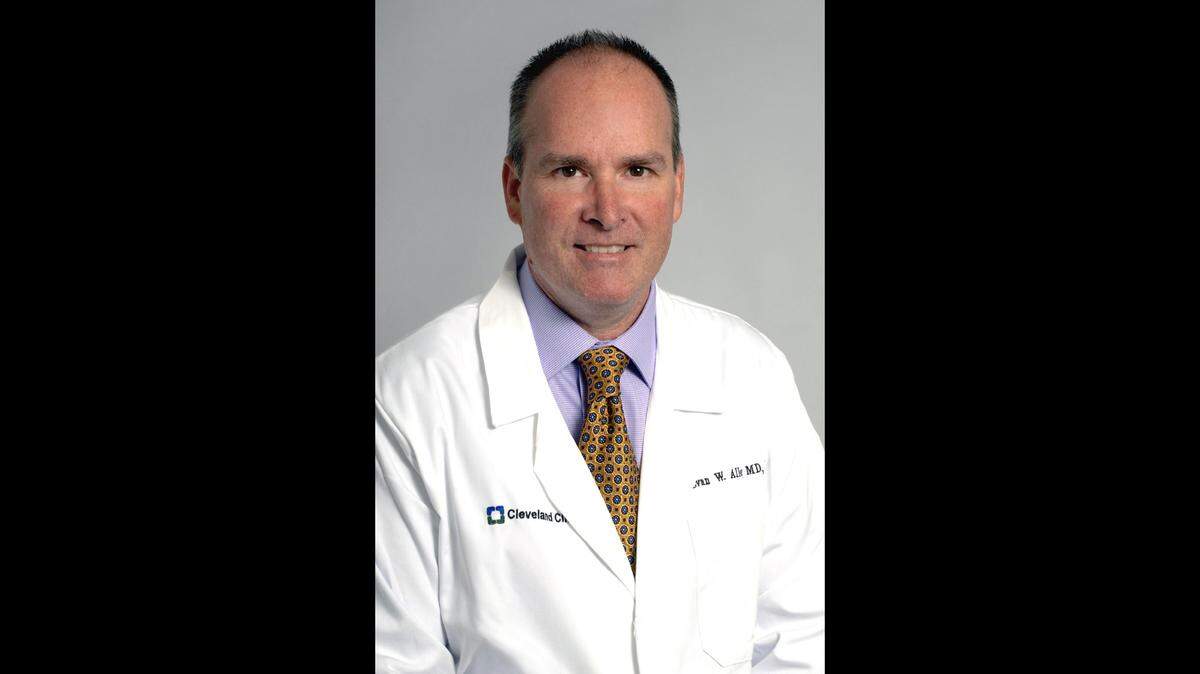
“It is ingrained for patients to have breast cancer exams and colonoscopies by the primary care physicians,” Alley added. “Because lung cancer screenings are newer, they have only been recommended for the last eight or nine years. It is important for the healthcare community and primary care doctors to recognize patients that are appropriate and get them lined up for screenings.”
New screenings to include more women, Blacks
The new screening guidelines will also qualify more African Americans and women who are affected by lung cancer more than other populations.
“Lung cancer doesn’t discriminate,” Raez said. “It kills women more than any other cancer. It also kills Blacks in a very high disproportionate rate.
“It is not only socioeconomic disadvantages, such as not having access to care or good insurance, but also biologically there are several cancers where the disease is more aggressive in the Black population. We still don’t know why that is biologically.”
African American men are about 15 percent more likely to develop lung cancer than white men, according to the American Cancer Society. The rate is about 14 percent lower in African American women than in white women.
And while Black and white women have lower rates than men, the gap is closing, according to the ACS. The lung cancer rate has been dropping among men over the past few decades, but only for about the last decade in women.
.jpg "rodriguez (1).jpg")
“This was long overdue,” said Dr. Estelamari Rodriguez, a thoracic medical oncologist and hematologist at Sylvester Comprehensive Cancer Center, part of the University of Miami Health System.
“Women and African Americans can have very aggressive lung cancer with less smoking history and at younger ages.
“By changing the guidelines, we can reach out to populations that are at risk and that aren’t being captured right now. It will be easier to offer them surgical approaches and will get more women and minorities into screening programs.”
Another barrier to lung cancer screening for patients is the stigma associated with the disease, Rodriguez said.
“It is associated with smoking,” Rodriguez said. “That message of smoking has created a stigma that they did this to themselves and they don’t want to find out. They don’t want to get bad news.”
Three days after Christmas, Jenkins underwent surgery to remove a nodule from her lung but a mass surrounding her aorta was unable to be removed. After completing radiation and immunotherapy, Jenkins is looking forward to her next CT scan to find out how she is doing.
In the meantime, she has returned to work as a hairdresser and is no longer in pain, but experiences a pinching sensation in the area.
“I am going to visit Poland to see my mother in July,” said Jenkins, who immigrated to the United States 18 years ago.
This story was originally published May 26, 2021 at 6:00 AM.