
Blacks are underrepresented in cancer clinical trials. How Sylvester is changing that
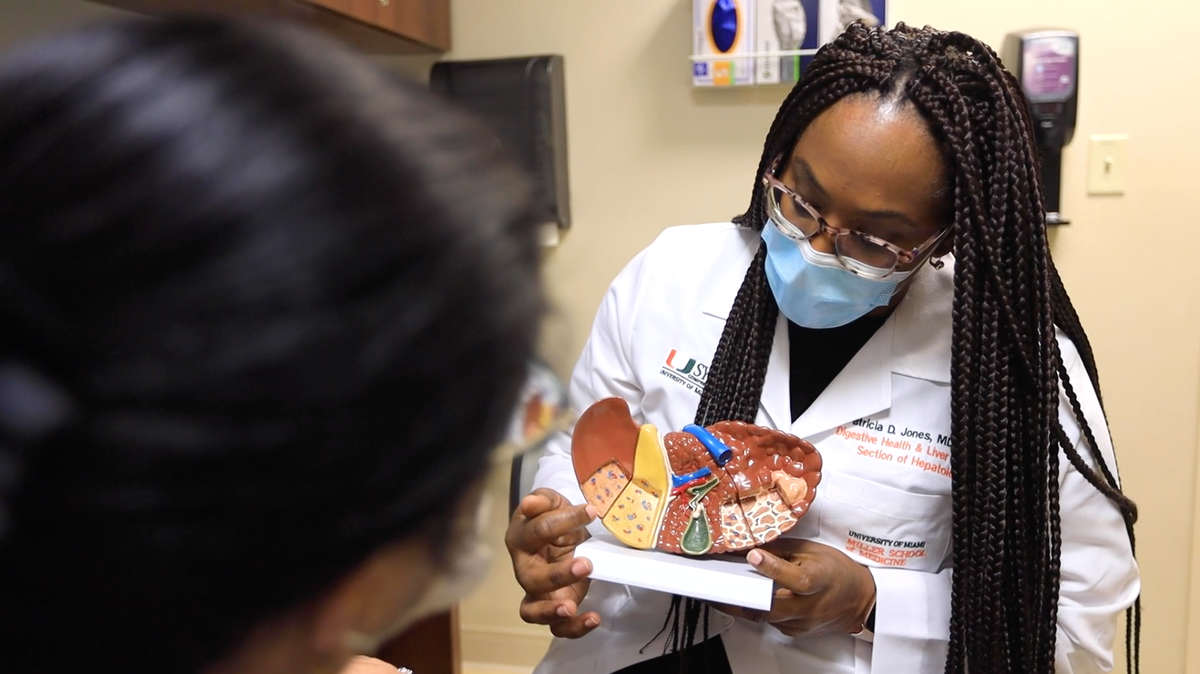
Early on in her career, Sylvester Comprehensive Cancer Center hepatologist Dr. Patricia Jones noticed an unsettling pattern. Her Black patients tended to be younger and their liver cancer at a more advanced stage. As a result of their late diagnoses, they were also more likely to die.
These observations prompted her to delve into why this was happening. The result? Published medical studies that teased out the disparities found among racial and ethnic groups in screening and treatment. As early as 2016, Jones and her research team found that race was the biggest predictor of who was likely to die of hepatocellular carcinoma (HCC), the most common type of liver cancer.
Jones is not the only researcher at Sylvester studying why certain population groups shoulder a disproportionate burden of disease. Dr. Brandon Mahal, a Harvard-trained radiation oncologist, leads a research lab that focuses on prostate cancer and cancer disparities. Sophia George, Ph.D, a molecular geneticist who teamed up with breast oncologist Dr. Judith Hurley, recently presented findings about breast and ovarian cancers in Black Caribbean women. And Dr. Jonathan Trent landed a substantial grant that brought to South Florida a national initiative to increase minority participation in early phase precision medicine trials.

Higher cancer mortality rates among Blacks, Hispanics
These concerted efforts at the University of Miami Health System’s cancer center are a way of leveling the playing field in a healthcare system that often fails to educate, screen and treat all communities equally. While there has been substantial progress in cancer research, it still remains the second-leading cause of death in the U.S. And those mortality rates, fueled by late-stage diagnosis and unequal access to treatment, are higher among Blacks and Hispanics.
As Jones says so succinctly,“There are certain groups that simply get forgotten.”
Trying to understand how, why, and what can be done informs the work of these Sylvester scientists.
Disparities in the delivery of healthcare are hardly new, and are usually a result of broader inequality in society. There are many reasons for this: bias, prejudice, low income, and lack of health insurance and access to doctors and treatment centers. COVID-19 brought these inequities front and center, as it affected Blacks and Hispanics more than their white counterparts.
However, “COVID is just the most recent example,” Jones says. “This has been going on a long time.”
Liver cancer misconceptions in Haitian, Black communities
In her research, Jones found that Hepatitis B (HBV), which is the leading cause of liver cancer, impacts African Americans and Haitians more than other groups, partly because widespread misinformation prevents early detection.
The study, published in the Journal of Hepatocellular Carcinoma, looked at almost 11,000 liver cancer patients in Florida. The Sylvester team found that African Americans were younger and had more widespread disease when diagnosed than white, Hispanic, and Asian patients. They were also least likely to receive a lifesaving transplant.
For example, in South Florida, 21 percent of African-American and 30 percent of Haitian liver cancer patients had HBV. Only 8 percent of white liver cancer patients had long-term HBV infections. Yet, only a fraction of those with the chronic infection were aware of their condition and therefore had not accessed the vaccine and antiviral therapy that prevents and treats HBV.
Her team concluded there was an urgent need to develop “culturally relevant, community-based interventions” to educate these communities and encourage their members to get screened. Developing partnerships with community groups in Miami, the team held focus groups in English and Haitian Creole to find out what people knew about HBV.
Among Haitians, 42 percent knew about HBV, compared to 78 percent African Americans. However, there were many misconceptions about the disease as well as mistrust of the healthcare system in general. Both groups admitted the late-stage diagnosis was due, in part, to resources and confusion about the infection.
What’s more, many of the African-American study participants thought hepatitis and liver cancer were uncommon among Blacks. Some participants thought HBV was transmitted through a cough — not true — and confused HBV with HIV, the human immunodeficiency virus that can lead to AIDS.
“This tells us we have to be smart about how we deliver information and care,” Jones says. “We have to meet people where they are. We have to get the information out in a way they can understand and also encourage them to get early screenings.”
Outreach will become increasingly important as liver cancer is expected to surpass colorectal, prostate, and breast cancer as the third-leading cause of cancer deaths in the next decade.
Liver cancer, however, is not the only malignancy that affects minorities unevenly.
Recruiting Blacks into clinical trials to tailor treatments
Mahal, assistant director of Sylvester’s Community Outreach and Engagement, has devoted his research to finding out why Black men are more likely to develop prostate cancer and more than twice as likely to die from it.
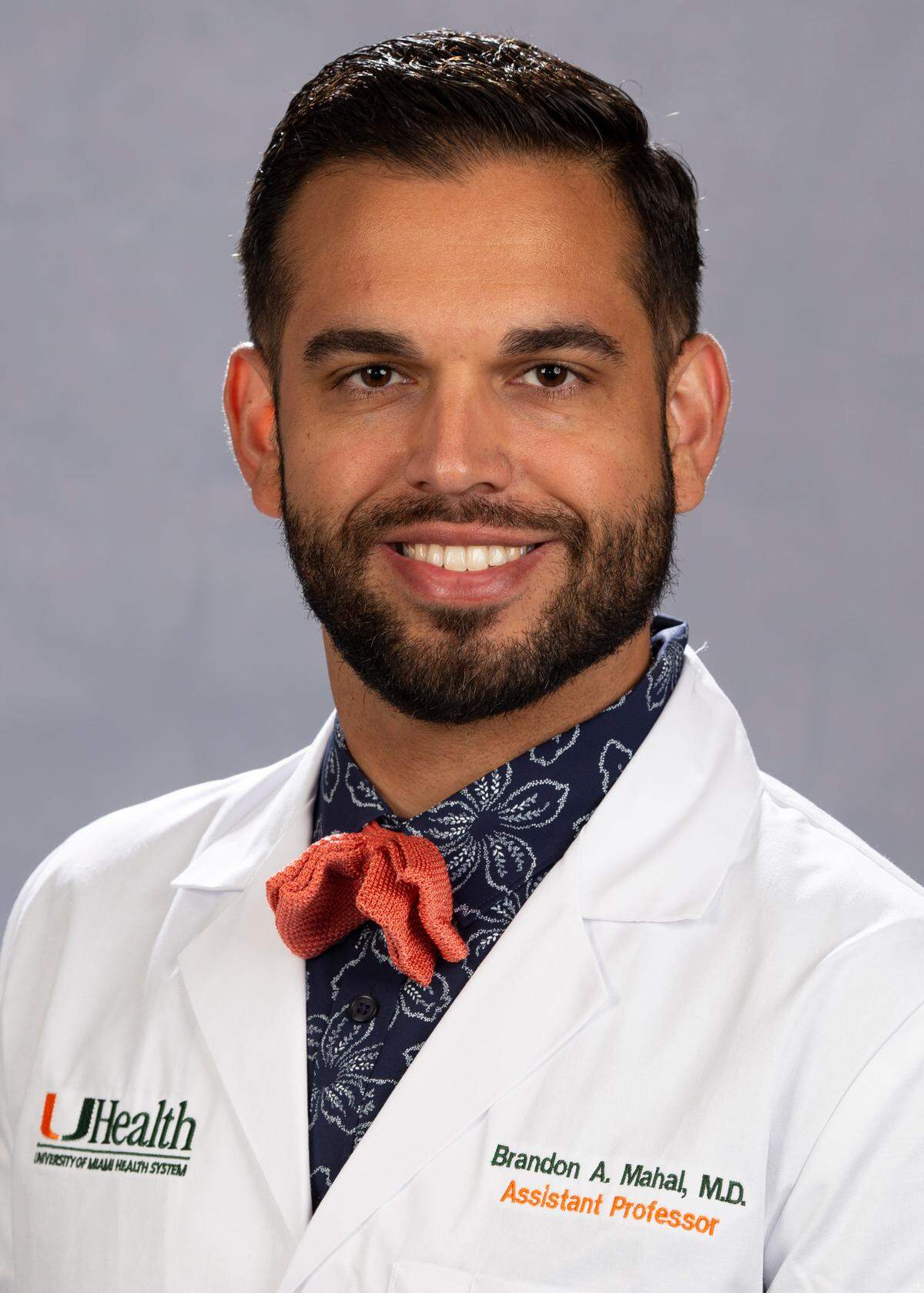
He is particularly interested in bringing more minority patients into precision medicine clinical trials. Precision medicine is considered the future of treatment because it allows physicians to use therapy that targets the individual genetics of a patient’s tumor.
Yet, advances in this kind of therapy actually run the risk of widening the gap in survival rates between Black men and the rest of the population. “The targeted therapies we now used are designed for white of European-descendants,” Mahal explains. That’s because this demographic makes up the majority of study participants.
In addition, “we know less about the genomics [of Black men’s tumors] and that directly affects how we design our treatments,” he said.
He notes that African-American men with similar tumor characteristics can count on comparable outcomes when they receive the appropriate therapy. “It shows how important it is for patients to get early screening and receive timely treatment,” he adds.
Researchers have yet to determine why African-American men have a higher risk of prostate cancer, but Mahal is encouraged that the convergence of big data and artificial intelligence will help physician-scientists figure out what genetic and lifestyle factors come into play.
With technology in place, “we need large-scale studies across the country and across the globe to identify what factors determine [the higher prevalence of prostate cancer among Black men] and to what degree these affect outcome.”
A good place to start is by attracting more minorities to clinical trials, which can eventually result in drugs and other therapies. Sylvester took a big step forward in this effort when it received a one-year supplement of $550,000 from the National Cancer Institute. Sylvester was one of only eight NCI-designated cancer centers chosen for this national initiative.
The program is known as CATCH-UP.2020, which stands for Create Access to Targeted Cancer Therapy for Underserved Populations. Its goal is to include more minorities in investigational targeted cancer therapy trials. For these sponsored trials, at least half of the patients must belong to a minority or underserved population. (CATCH-UP.2020 is comprised of 49 trials for patients with solid tumors and blood malignancies.)
“There’s a huge disparity in representation of racial and ethnic minorities in clinical trials and NCI is seeking to address this disparity,” says Trent, who led the application team for the grant. “The goal is to make these [experimental] cancer treatments available to groups that otherwise would not have access to them.”
As associate director of clinical research at Sylvester, he oversees hundreds of clinical trials, many of which involve genetic research. Among those trials are studies conducted by Sylvester breast oncologist Hurley and George, an associate professor in the Department of Obstetrics, Gynecology and Reproductive Sciences.
Black Caribbean women getting screened for breast cancer earlier
They found that more than a quarter of Black Caribbean women with breast cancer had mutations in one of two genes, BRCA1 and BRCA2. (In the U.S., these mutations account for less than 5 percent of breast cancer cases.)
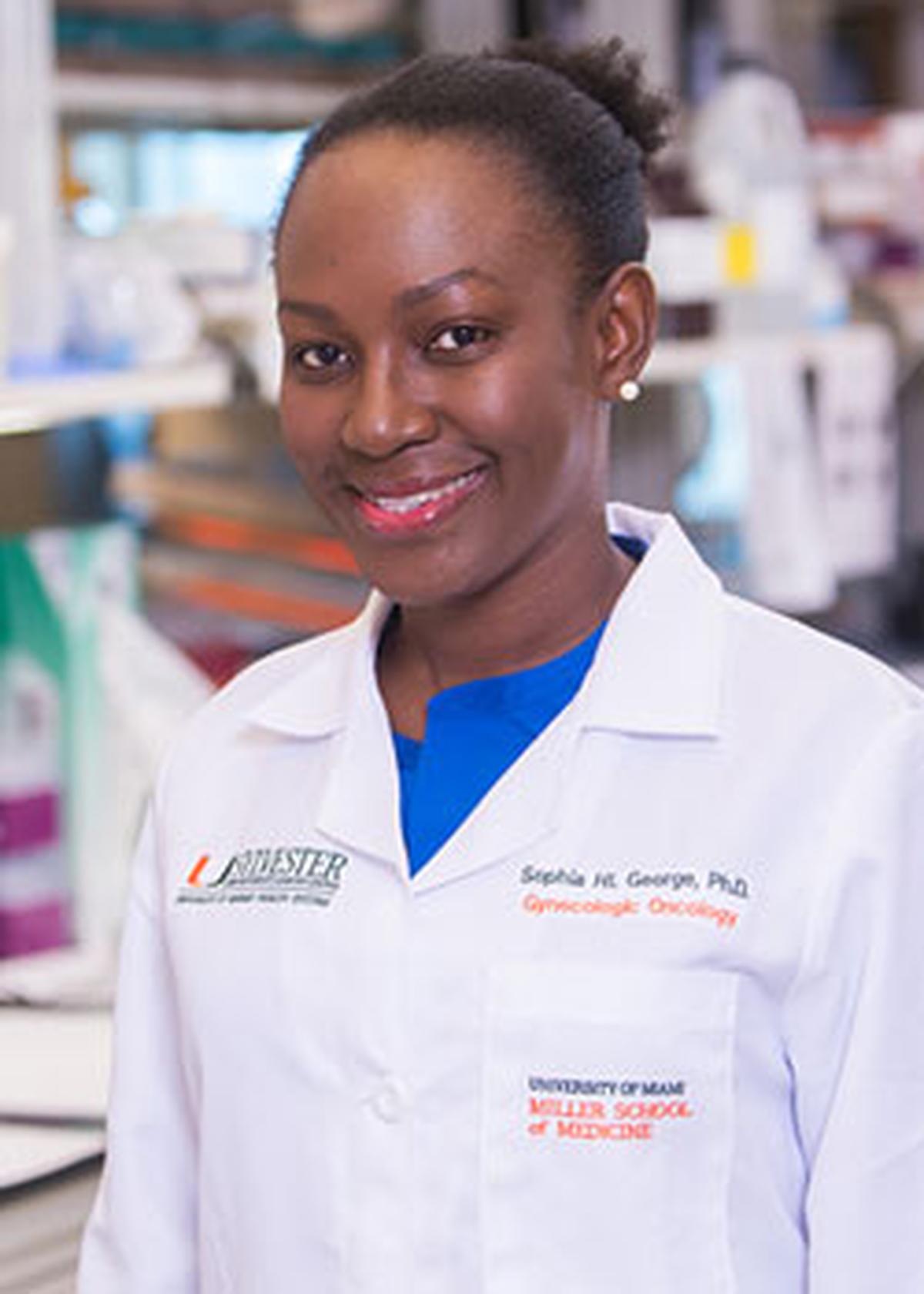
The Hurley-George team, working with researchers across the island nations, also found that the spectrum of mutations varied from island to island and that the mean age of Caribbean patients with mutations was younger than that of patients without mutations.
Their work is applicable to the U.S. population. About 10 percent of U.S. Blacks are Caribbean-born and about one-third have Caribbean ancestry.
This information has had real-world benefits, as breast oncologists are now on the lookout for mutations in this particular demographic.
The findings have also led to changes in the guidelines for breast cancer screenings for women of Bahamian descent. Currently, women of Bahamian descent with a first-degree relative with breast cancer are told to begin breast cancer screening in their mid-20s, instead of in their 40s.
“These studies give us the necessary information about how to screen, how to diagnose and how to improve outcome,” George explains. “In this way, we open up access more broadly.”
This story was originally published May 25, 2021 at 6:00 AM.