
Childhood cancer radiation treatments can cause later-in-life heart disease
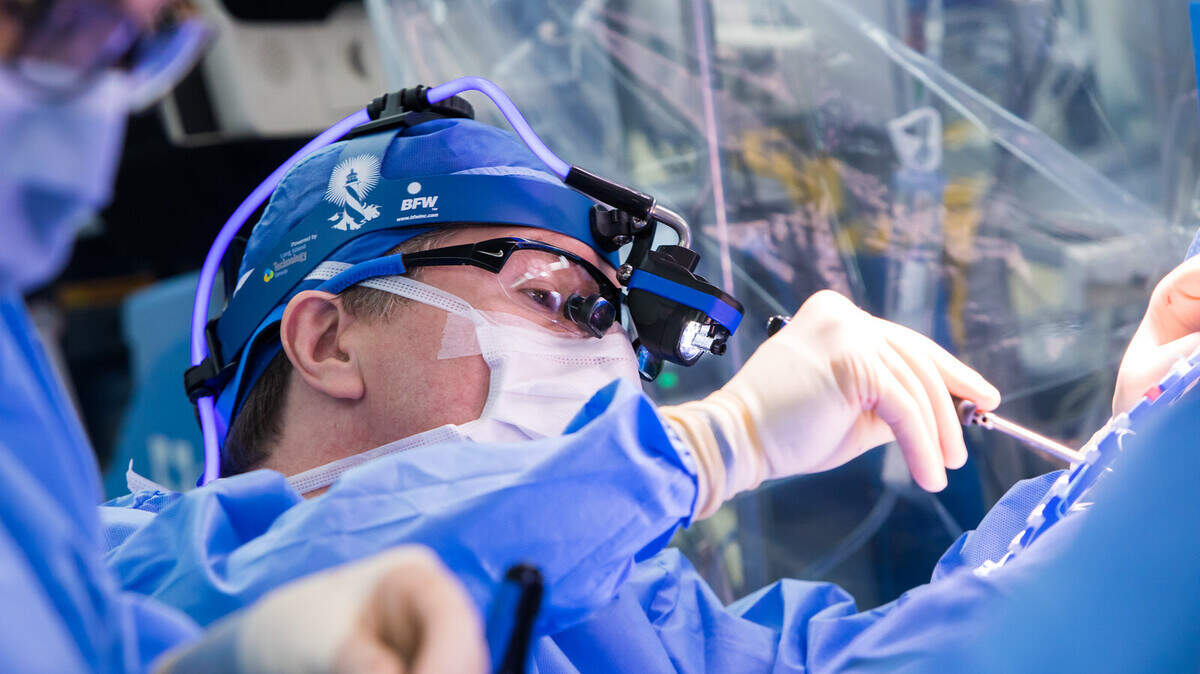
Many years before Dr. Jorge Orbay became a noted South Florida orthopedic surgeon, physicians treated him as a teenager for cancer.
“When I was 17 years old, I had Hodgkin’s disease, a form of cancer,” Orbay said. “They gave me radiation.”
More than 40 years ago, cancer doctors often zapped patients with much more diffused radiation than would be considered necessary — or safe — in 2020.
“The dose of radiation they gave people with Hodgkin’s disease was 5,000 rads (a unit of absorbed radiation dose). Now they give 3,500 rads,” said Orbay, 62. “They now know of all these Hodgkin’s disease survivors who are dying of heart disease.”
Orbay — who grew up in Puerto Rico, moved to Miami in 1990 and later founded the Hand and Upper Extremity Institute near Baptist Hospital in Kendall — said he lived 38 years after massive radiation treatments to his chest before experiencing any heart or valve trouble.
“I had a heart murmur and initially no symptoms. Then, I developed an arrythmia,” he said.
Doctors implanted a pacemaker in 2016. Last year, “I had two valves replaced: the mitral valve and the aortic valve. Then, I didn’t get better. There was another valve not working. It became dysfunctional a year later. The tricuspid valve. That was about six months ago. I’m doing fine.”
Orbay is also CEO of Skeletal Dynamics, a Dadeland-based company that designs, builds and markets implants for upper-extremity surgeries. He developed a technique to treat wrist fractures that’s been used on thousands of patients — and he says wouldn’t have been possible if not for his own medical care “that kept me alive.”
“I’m grateful to my cardiologist, Dr. Donato Arguelles in Coral Gables. And I’m grateful to Dr. Lamelas. It’s a miracle. He’s operated on my heart twice; I have three artificial valves and I’m doing great.”
Dr. Joseph Lamelas, chief of cardiac surgery at the University of Miami Health System, helped save Orbay’s life.
Lamelas said he works with “two subsets” of cancer patients:
“One is the patient identified with cancer somewhere in the body,” he said. “When they undergo a cardiac workup, they’re found to have cardiac disease that’s significant and needs intervention. The heart takes priority and the heart problem needs to be fixed before they undergo a major cancer operation.”
Lamelas said he’s had many patients, some with colon or lung cancer, who are then found to have cardiac disease.
“If the heart is not taken care of first, if you have known heart disease, that can be a fatal event. That can be more deadly than cancer because the risk of death is more imminent,” he said. “It can happen on the operating table for the cancer surgery.”
Patients with one or two blocked arteries can often be treated by their cardiologists with stents. Others with more significant heart disease need coronary bypass surgery or valve replacement or repair. After heart surgery, most patients can be treated for their cancer four to six weeks later.
Lamelas said the second subset of patients “are probably the most challenging” — people such as Orbay who “have undergone radiation of the chest and or chemotherapy, and then years later, they start developing problems with the heart.”
He describes four heart conditions that can be “radiation induced”:
▪ A thickening or calcification of the pericardium, the sac around the heart.
▪ A cardiac fibrosis, which actually affects the muscle of the heart and can cause decreased function of the heart.
▪ Calcium buildup affecting the coronary arteries, which can lead to a heart attack due to narrowing of the arteries and decreased blood circulation to the heart.
▪ Valve disease, the most challenging. The two main valves affected are the aortic valve and also the mitral valve.
“All of these things are relatively common,” Lamelas said. “They don’t surface right away. Coronary disease surfaces five years after the radiation, the valve disease about 10 years. It takes time for the calcium to build up.”
Lamelas is known for having performed more than 7,000 “minimally invasive” heart valve surgeries, “where I don’t have to cut the sternum down the middle.”
“The surgery is done with a 5cm incision on the side of the chest without breaking the ribs,” he said.
Minimally invasive surgery has multiple benefits, according to Lamelas, particularly for patients who have previously been treated with chest radiation.
“Those patients that have radiation, the tissues of the chest wall are much more fragile. They don’t heal as well because the radiation affects the blood flow, not just in the bone but in the skin.
“Doing the operation without breaking the breastbone, the healing is significantly improved and, in addition to that, the patients can go back to the normal activities a lot quicker. With a minimally invasion operation, two weeks later they can have the (cancer) surgery. Not only is the patient’s healing quicker, the risk of needing a transfusion is a lot lower, as well.”
Many who’ve been treated with chest radiation — people who had Hodgkin’s, as well as breast cancer patients — have little idea they may later develop serious heart or valve disease.
Even a physician like Orbay said he “was totally unaware” the cancer radiation he received as a teen would cause him major heart problems as an adult.
“The moral of the story is that radiation is bad for your heart. When I was 17, that was 1975, we didn’t know the risks of radiation.”
Dr. Raphael Yechieli, a radiation oncologist at Sylvester Comprehensive Cancer Center at the University of Miami, refers to heart damage caused by cancer treatments as “cardiac toxicity.”
“Radiation to the chest and heart structure is known to cause cardiac toxicity. In combination (with chemotherapies), the risk of cardiac toxicity is even higher,” Yechieli said. “The only guaranteed way to avoid treatment-related side effects is not to get the treatments. The problem with that is that people are going to die from their cancer.”
Generally, there are three ways to treat cancer, according to Yechieli:
▪ Surgery: “Cut it out.”
▪ Radiation therapy: “Where we use radiation to treat cancer wherever it might be.”
▪ Chemotherapy and immunotherapy: “These are systemic treatments. It’s either injected into the bloodstream or it’s taken by mouth and absorbed into the bloodstream. Where does the blood go? Everywhere.”
Cancer treatments have changed dramatically since Orbay was a teen, Yechieli said.
“Hodgkin’s lymphoma is a blood cancer and therefore it needs chemotherapy,” Yechieli said. “There tends to be a mass of cells in one lymph node area. They used to give radiation to the masses that they saw, as well as the surrounding lymph node areas and we cured people.
“But that obviously came at a cost. So they started giving chemotherapy and then we were able to use radiation to treat smaller areas. With our better technology, we’re able to target better and avoid damaging anything around the area.”
Yechieli said doctors are moving toward being better able to “map out the at-risk areas of the heart itself.”
“With intensity-modulated radiation therapy and image-guided radiation therapy, as well as the use of proton therapy, we hope to continue to mitigate these risks going forward, to provide cure with less and less side effects,” he said. “This is the essence of patient-centered care.”