
How nurses are coping with the stress from the coronavirus — it isn’t easy
Each has a compelling story about what inspired them to become a nurse. Now each of them has a gripping worry about contracting COVID-19.
As these frontline healthcare workers mark another Nurses Week in May, it’s never been more stressful to help sick people get healthy — yet that hasn’t stopped nurses from going to work.
“Typically,” says Barbara Bruce, a 42-year RN veteran who works for Memorial Healthcare System in Broward, “you don’t go into this profession unless you want to help people, and that’s what we’re doing right now, even more so.”
Nonetheless she acknowledges reality: “Every time I get close to someone coming in, I think, ‘do they have it?’ ”
Bruce, a director of nursing in charge of regulatory oversight for MHS, was supervising nurses at the C.B. Smith Park coronavirus testing site in Southwest Broward when she was interviewed for this story. Her hours have been long, she says, the stress debilitating.
Like so many working in hospitals and medical offices, “You worry about your patients, you worry about your institution and your job, you worry about your family and you worry about yourself.”
Colleague Candace Pineda also joined the park testing team. She usually serves as the administrative director of trauma and acute care surgery for Memorial Hospital. “But in times of need, It’s all hands on deck,” she explains. “Everyone is doing more frontline work.”
Like other healthcare workers, she’s well aware of risks of communicable disease, but this novel coronavirus feels particularly perilous because “with this there are so many unknowns,” Pineda adds.
That danger was driven home when longtime Jackson Memorial Hospital nurse Araceli Buendia Ilagan became the first nurse — and the second South Florida healthcare worker — to die from the novel coronavirus in March. (A Margate internist, Dr. Alex Hsu, also died from COVID-19 complications.)
Even as they remain on the front lines delivering care, nurses now worry mostly about having enough personal protective equipment to keep the virus at bay. Martha Baker, head of the healthcare worker union at Jackson, told CBS4 reporter Jim Defede that she has been speaking to nurses every day.
“When they call, they don’t want to talk about themselves,” she said. “They talk about needing equipment to do their jobs safely.”
The concern is statewide. Willa Fuller, executive director of the Florida Nurses Association, listens to the same worry echoed in both urban and rural settings on conference calls with nurses in the trenches.
“This profession is stressful by the very nature of the work you do,” she says. “But now there’s a whole other level of stress. What I’m hearing is that they have enough protective equipment for a certain limited time. After that, it’s anyone’s guess.”
Even nurses who aren’t directly providing care to COVID-19 patients worry. Jessica McIntyre is a nurse practitioner who works at Sylvester Comprehensive Cancer Center at the University of Miami Health System as executive director of clinical operations. She says nurses often feel as “we have the responsibility of the world on our shoulders.”
That burden has been multiplied several times over in the era of the novel coronavirus, which is many times more contagious than the flu and other respiratory ailments.
What’s more, nurses and other healthcare workers fear bringing the contagion home. All practice a similar ritual: they leave their scrubs at the door and shower and disinfect before connecting with their loved ones.
But for some, the sacrifice has been steeper. Pineda, for example, has had to send her two young children to her parents on the days she works on COVID-19 testing. “It’s both a curse and a blessing,” she explains. “I know they’re safe, but I miss them.”
Some hospitals are providing emergency childcare for those without ready babysitters. All have Employee Assistance Programs as well, and various nursing organizations sponsor conference calls and video chats to gather information and blow off steam. Such help is essential for a profession where burnout — and corresponding attrition — can be high even under normal circumstances.
A 2018 survey by RNnetwork, a travel nurse staffing agency, found that 62 percent of respondents reported feeling regularly burned out at work, and 54 percent said a heavy workload has negatively affected their mental health. Forty-nine percent have considered leaving nursing in the last two years.
Other studies underscore those findings. One found that up to 33 percent of new nurses leave the workforce within the first two years, and the 10-year RN Work Project study found 17 percent of newly minted RNs quit their first nursing job within the first year, 33 percent leave within two years, and 60 percent leave within eight years.
Job stress, Fuller of the Florida Nurses Association points out, varies tremendously across settings. A hospital nurse may face much more pressure than, say, one at a physician’s practice, but all share some common stressors: workload and emotional strain.
“In many instances you simply don’t have a lot of control over your day,” she says. “Situations can change quickly.”
Stressors have only been magnified by the pandemic. A study of healthcare workers attending COVID-19 patients in Chinese hospitals found that 71.5 percent experienced psychological distress, 50 percent reported symptoms of depression, 45 percent anxiety and 34 percent insomnia. Nurses reported especially severe symptoms.
“Protecting healthcare workers is an important component of public health measures for addressing the COVID-19 epidemic,” concludes the study, published in the Journal of the American Medical Association. “Special interventions to promote mental well-being in health care workers exposed to COVID-19 need to be immediately implemented, with women, nurses, and frontline workers requiring particular attention.”
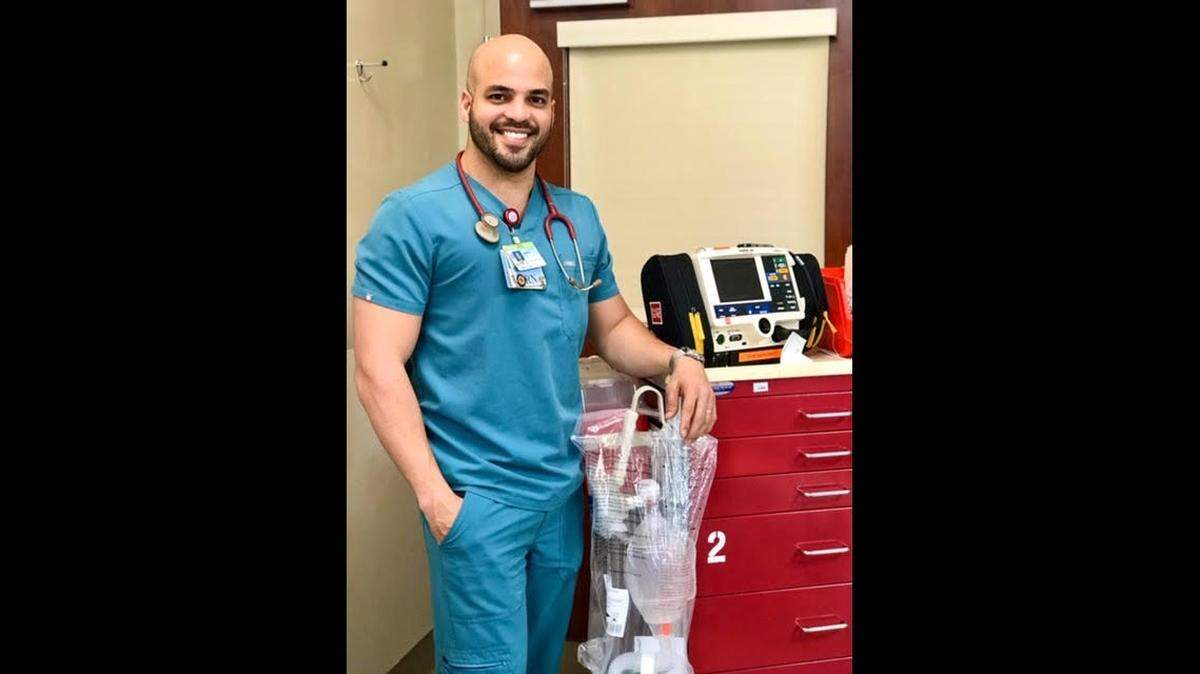
Leandro Aguila, an RN who is a lead triage nurse at Baptist Hospital, explains that nurses, as the backbone of healthcare delivery, carry the overwhelming load of emotional support of patients and their families. While he feels confident about “taking care of any situation,” he admits shouldering the responsibility can take its toll.
“We cannot show them [patients] that we’re panicking or worried too,” he says. “They’re coming here because they want to be taken care of. I can always go to the bathroom and cry, but then I have to return to my responsibilities.”
In addition to accessing mental health support from their employers, veteran nurses learn ways to cope with “the extremely physical and very emotional demands of the job,” as Bruce of Memorial Healthy Systems puts it.
During these trying weeks of coronavirus testing, she makes it a point to FaceTime with her grandchildren and jot down a positive anecdote every day.
“I like to take pictures of the incredible collaboration that is going on here at the park,” she says.
Pineda practices an “attitude of gratitude.” She prays, she listens to uplifting music, she connects with friends and family. “Today may be challenging but not as challenging as it could be,” she adds.
In these fraught times, the public has become aware and appreciative of these healthcare heroes. In turn, the nurses say they will continue to do their jobs.
“That’s what we signed up for,” says Aguila of Baptist. “We’re going to take care of you and try to make you feel better. We’re here for you, 24/7, 365 days a year.”
This story was originally published April 28, 2020 at 3:51 PM with the headline "How nurses are coping with the stress from the coronavirus — it isn’t easy."