You may think 6 feet is enough social distance. But what about that cough?
The drill on social distancing is now as familiar as the alphabet.
Stay six feet apart and wear a mask — even a homemade one — if you’re going outdoors to public places like grocery stores, recommends the Centers for Disease Control and Prevention.
But that may not be nearly enough if someone coughs, according to a new study at Boca Raton’s Florida Atlantic University.
According to researchers at FAU’s College of Engineering and Computer Science, a preliminary flow visualization experiment in the lab suggests that a cough, especially a forceful one, can spray droplets twice that distance.
These are the droplets you don’t want to inhale or rub into your face when scratching an itch or adjusting a face mask because that is how COVID-19, the contagious disease caused by the coronavirus, spreads.
And the germs linger in the air, too.
The study was led by professor Manhar Dhanak, chair of FAU’s Department of Ocean and Mechanical Engineering, and director of FAU’s SeaTech and Siddhartha Verma, an assistant professor in the Department of Ocean and Mechanical Engineering.
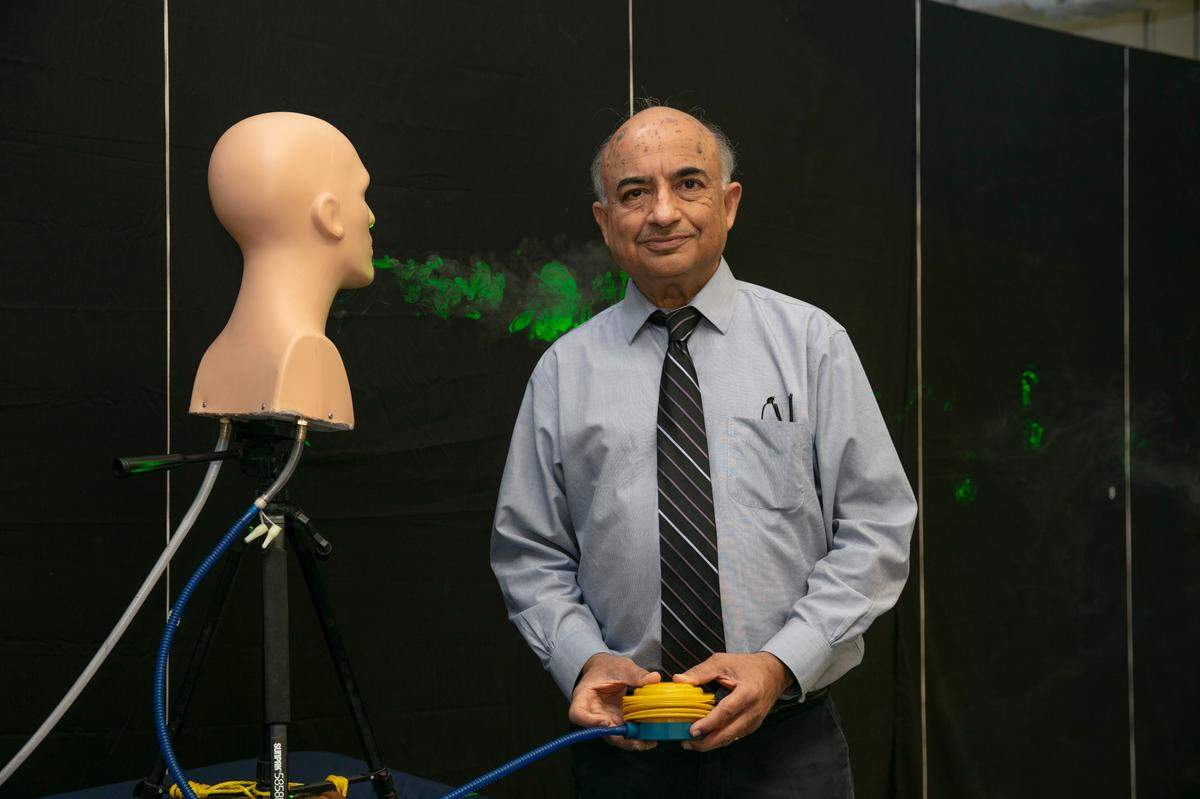
“Preliminary results from our experiment reveal that significant concentrations of small particles from a turbulent jet such as from a heavy cough [or] sneeze can linger in still air for more than one minute. It only took the particles a couple of seconds to travel three feet. In about 12 seconds it reached six feet and in about 41 seconds it reached around nine feet,” Verma said in a news release.
A heavier cough sent particles up to 12 feet, the researchers found by using LED and laser lights to look at a mechanically emulated cough and sneeze “jet” coming from a mannequin’s nose and mouth. The associated particle-laden airflow was a fog-like mix of glycerin and distilled water researchers could peer into and measure distance traveled, FAU reported.
Gravity pulled the heavier particles down in a short distance. But a breeze could carry the smaller particles farther.
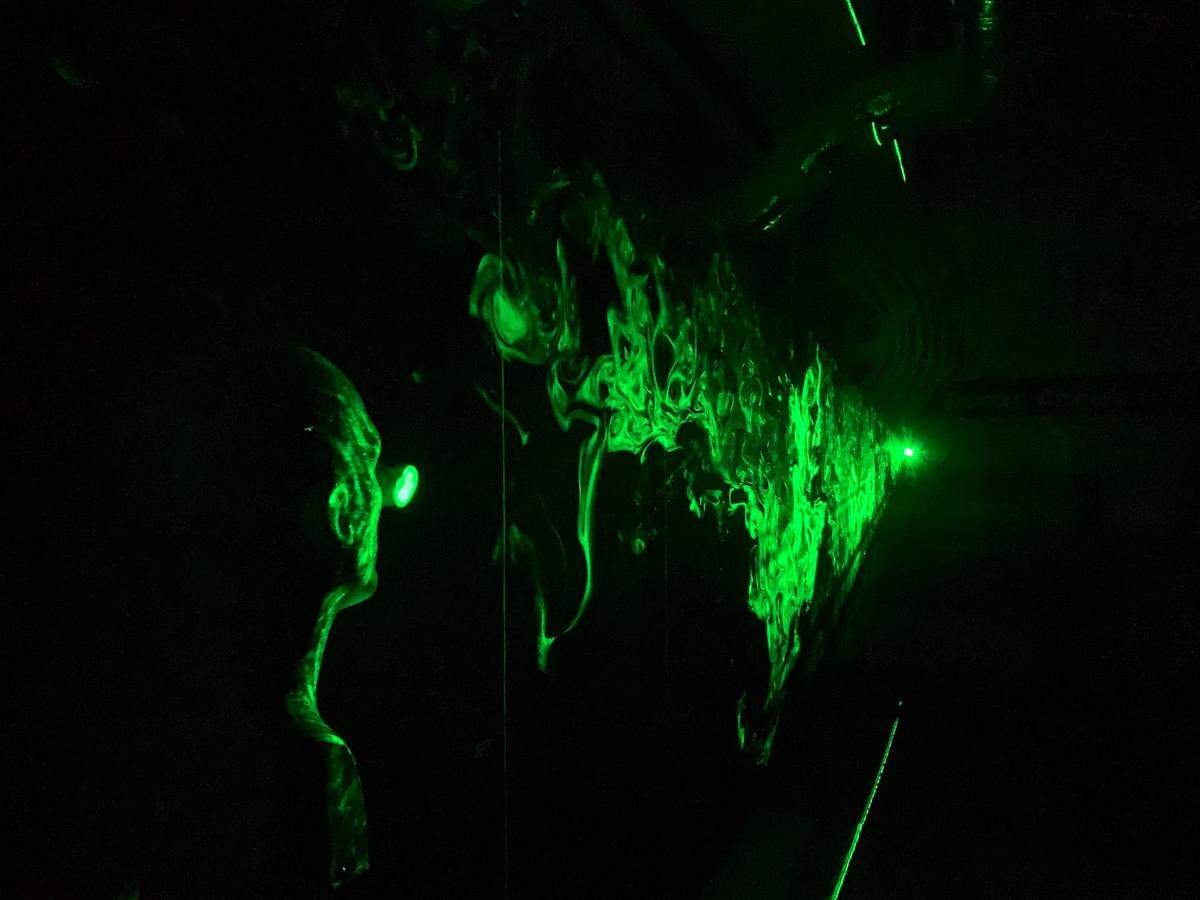
The FAU researchers also found that simply wearing a face mask was not sufficient to stop all the particles from entering us if exhaled, but the mask still slowed down the cough jets coming from the mannequin.
The school said that more research is necessary but the message remains the same: Wear a mask when going out into public places where you will come across people.
And, by all means, if you feel a cough or a sneeze coming on, cover that expulsion to avoid contaminating others.
This story was originally published April 22, 2020 at 12:03 PM.