
Your overweight/obese child may be heading to heart disease
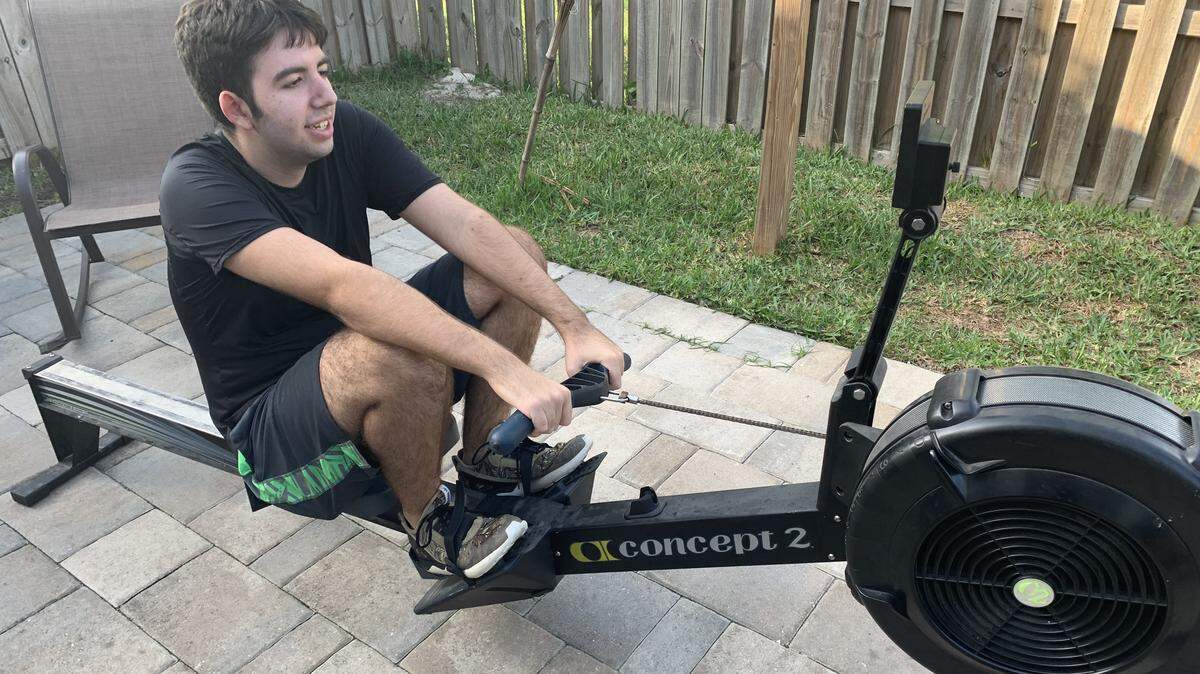
When Julian Miranda went in for his regular medical checkup last fall, the 5’9’’ Homestead teen knew at 220 pounds that he was overweight. What he didn’t expect to hear from his pediatrician was the high fatty enzyme count in his liver was putting him on track for cardiac disease.
“I definitely felt sluggish a lot, like lazy, not much energy. But I didn’t know how badly this could affect me in the future,” said Miranda, 18.
With obesity having become one of the most significant threats to children’s health, doctors are finding more and more of their young patients showing cardiac risk factors typically seen in adults. Teenagers going in for checkups are exhibiting blood pressure readings of hypertension, diabetes or pre-diabetes, high cholesterol and fatty enzymes in the liver — all red flags that they are headed for cardiac disease.
Miranda’s pediatrician referred him to Dr. William Muinos, pediatric gastroenterologist and director of the obesity clinic at Nicklaus Children’s Hospital in Miami. Muinos’ program used a similar template to “Shaq’s Big Challenge,” a 2007 reality-based TV show that put middle school students through a rigorous program to get them into better shape and teach them healthier living skills.

According to the Centers for Disease Control and Prevention, the percentage of children and adolescents in the United States affected by obesity has more than tripled since the 1970s. Data from 2015–2016 show that nearly 1 in 5 school-age children and young people aged 6 to 19 years across the country are obese.
Today, nearly 32 percent of children and adolescents are overweight and that 16 percent or more can be categorized as obese, Nicklaus doctors say.
Aside from physical education classes no longer being part of schools’ daily curriculum, and the growing sedentary lifestyle inspired by video games and smart phones, Muinos began observing a cultural component to faulty nutrition and less exercise in kids. Potatoes were often the only vegetable with a meal and depending on socio-economic conditions, running in one’s neighborhood might not be a safe choice.
“It’s not that kids have some genetic defect — in many ways the culture we live in has created this,” he said.
It wasn’t realistic that parents could rearrange their schedules to bring their children to the hospital gym five days a week for an hour at a time. So Muinos works with the adolescents on a nutrition and exercise program that they can do in their own homes and apartments: sit-ups, floor routines and running steps while listening to music.
Their low-carb diet consists of five helpings of vegetables throughout the day, lean proteins, sugars only from fruit and no processed food.
An adolescent’s Body Mass Index (the measure of body fat based on height and weight) is not as static as in adults, Muinos said. So the young patients that Muinos typically sees have a BMI in the 95th and 99th percentile. After six to nine months of regular exercise and a diet of low carb, high protein and no sugars, the goal is to get the kids under the 85th percentile, and ultimately down to the 72nd percentile.
Dr. Danyal Khan, a pediatric cardiologist at Nicklaus, likens children’s bodies to new cars.
%20(1_fitted.jpeg "Danyal Khan MD 001 (2) (1_fitted.jpeg")
“Even if you mistreat your car and do not do any oil changes/ maintenance — the car will still keep on running fine for a while. But eventually, the lack of maintenance will catch up to you,” said Khan, who noted that obesity/hypertension/diabetes/lack of exercise will not cause a life-threatening problem in the pediatric age group, but it will cause a problem as a young adult. And by that time, it may be too late.
Khan explained that after birth, cholesterol is continuously getting deposited and is clogging the arteries in our bodies. This process continues through childhood and adulthood. How much cholesterol is deposited depends on existing cholesterol levels, weight, genetics, blood pressure, exercise and other factors. In the pediatric age group, he added, heart attack and strokes are generally not seen, because not enough time has passed for dangerous levels of cholesterol deposition to have occurred.
However, in patients with these high-risk factors, people do have heart attacks and strokes in their late 20s and 30s.
Muinos is happy with Miranda’s progress, as are Miranda and his mom, Michele. But the teen admitted the new diet was challenging in the beginning.
“It hurt at first. We started with a diet of no carbs, no spaghetti — and I love rice. But the more I ate chicken and squash and eggplant, and I was running around the neighborhood with my dad, and swimming and using the row machine, I forgot about the rice. I feel a lot better,” he said.
Michele noted that she loves seeing her son eat healthier and has noticed an increase in the teen’s confidence level since dropping the weight. She called Muinos a “very positive influence” in her son’s life.
The Columbus High School senior now weighs in at a far healthier 192 pounds and has grown two inches since the fall.
This story was originally published February 23, 2020 at 7:30 AM.