
Hispanics face higher risks of diabetes and heart disease. It starts with the diet
Eusebio Gamito walked into his Little Havana kitchen last September to get a glass of water when he felt a sharp pain in his stomach.
“The pain was the worst in the world. I felt like an elephant was stepping on my chest. I fell to the ground like a chicken,” said Gamito, 59.
It was 11 a.m. and little did Gamito know, he was having his third heart attack.
Gamito was born in Cuba and has been living in the U.S. since 1995. According to the Centers for Disease Control and Prevention, U.S. Hispanics have a much higher risk of developing diabetes, compared with white non-Hispanics, and diabetes is one of the major risk factors for developing heart disease.
Gamito’s heart attack was the result of a perfect storm of conditions: He smoked and has diabetes, hypertension and high cholesterol. The morning he had the heart attack, he had used Viagra before having sex with his wife. The Food and Drug Administration has cautioned using erectile dysfunction drugs if you have had a heart attack, a stroke or a history of congestive heart failure or uncontrolled blood pressure.
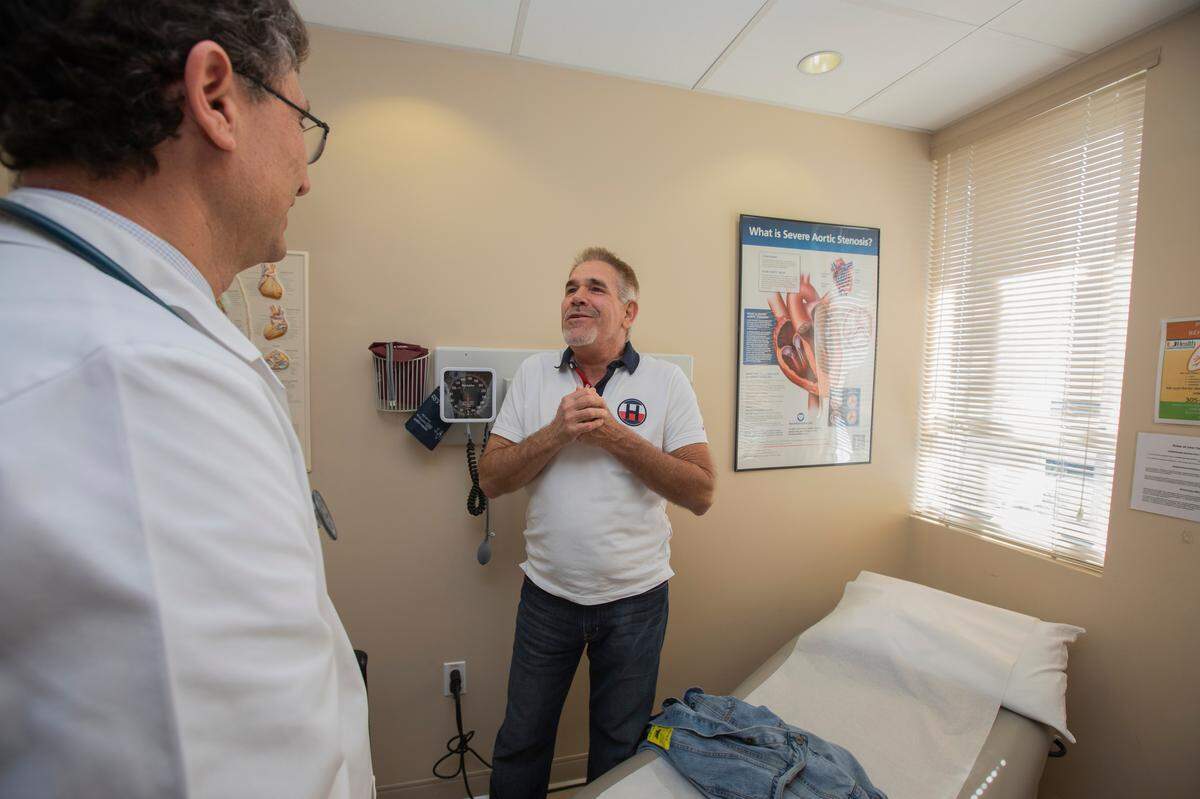
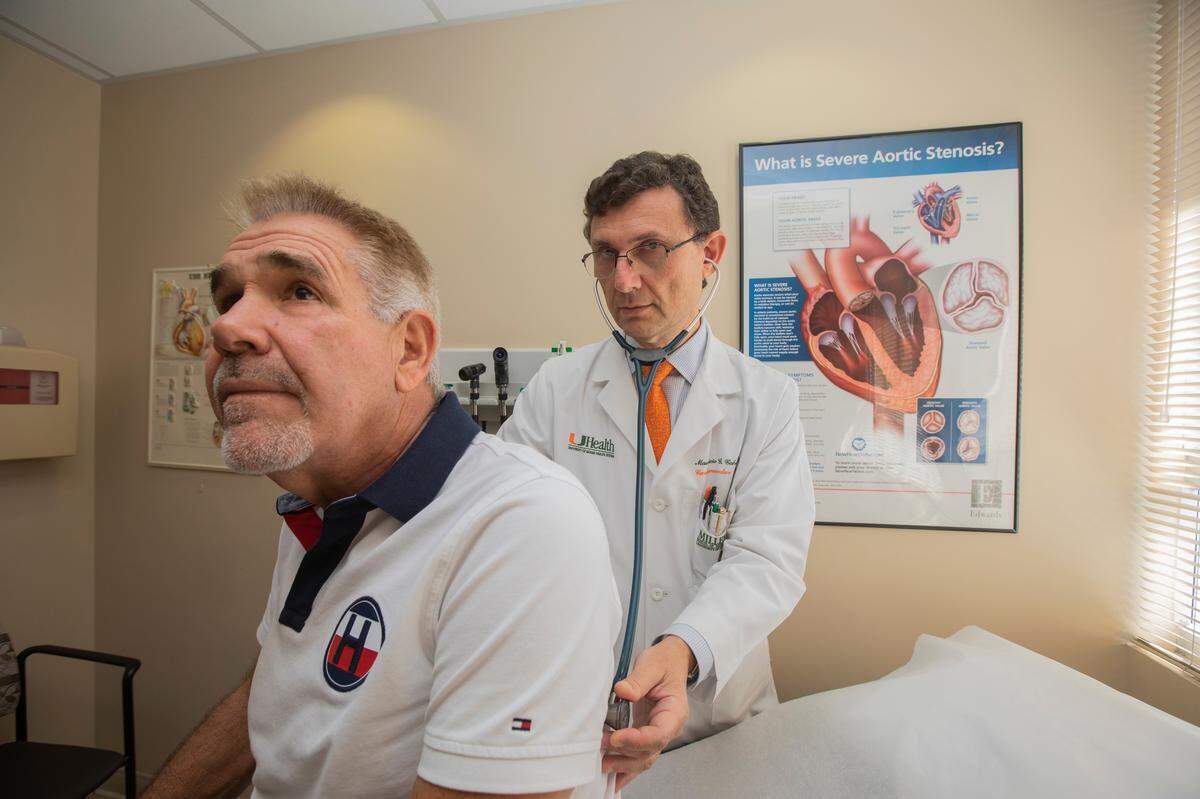
Gamito was rushed to the UHealth Tower at the University of Miami Hospitals and Clinics and taken to the Cardiac Catheterization Lab, where he was treated by Dr. Mauricio Cohen, an interventional cardiologist and director of the lab.
Cohen just happened to be on call that day.
Gamito “had one of the worst heart blockages I’ve ever seen,” said Cohen, who’s been practicing medicine since the early 1990s. “Having 60-65% of heart function is normal, but his was less than 20%.”
As a result of the heart attack, Gamito went into cardiogenic shock, which, according to the Mayo Clinic, is a condition in which the heart suddenly can’t pump enough blood to meet the body’s needs.
“I arrived at the hospital dead. The surgeon didn’t think I was going to survive,” Gamito said.
Cohen says that people who go into cardiogenic shock have a 50% chance of dying during the hospital stay.
Because of Gamito’s delicate state, doctors couldn’t give him a bypass. Instead, they opted for placing a temporary pump in his heart, which was inserted through his groin and strung up to his heart. They also implanted stents.
Gamito is stubborn, Cohen said. He could have had a bypass when he had his first heart attack six years ago, but he rejected doctors’ orders and left the hospital against medical advice. He was given a set of pills to take, which helped him feel good enough for another six years.
“I thought that if I had surgery then and there I would die because my body was so weak. So I’ll be honest, I put my clothes on and went home. I thought, ‘At least if I die, I’ll be at home,’ “ Gamito said.
But when he finally came across Cohen’s table six years later, he said, “He brought me back to life. I feel great now!”
While Gamito has made changes to his lifestyle, including eating more fruits and vegetables, he was candid that he still has fried beef about once a week and “eats everything,” he said. He has stopped smoking.
And while exercise is an important part of heart health, Gamito says he’s unable to exercise because of a circulatory problem in one of his legs. “I can work in the yard and push the lawnmower,” Gamito said.
Risks to Hispanics
According to the U.S. Census Bureau, there are approximately 58.9 million Hispanics in the U.S. or about 18 % of the total U.S. population. Hispanics include people of Mexican, Puerto Rican, Cuban, Central or South American or other Spanish culture or origin, regardless of race. According to the CDC, each group has its own history and traditions, but all are more likely to have type 2 diabetes (17%) than white non-Hispanics (8%).
But the differences in each group are remarkable. According to the San Antonio Heart Study, 26% of Puerto Ricans, 24% of Mexican-Americans and 15% of Cuban-Americans living in the U.S. have diabetes. South Americans are known to be healthier than other Hispanics.
While genetics play a role in developing diabetes, some other risk factors that are specific to Hispanics can have an impact, too. Hispanics are known for eating more fried foods and for having weekend family celebrations that revolve around a big meal.
Cohen thinks it is especially important to keep an eye on Hispanics and their health, because since they represent the largest minority in the country, “Just wait for them to age. They are going to have heart disease,” he said.
Despite the high rates of diabetes, Hispanics are known to live, on average, two years longer than white non-Hispanics, according to the CDC. This is what’s known as the Hispanic Paradox.
Doctors say it could be due to the strong family ties and support that many Hispanics have within their social networks.
Diet an issue
Dr. Clifford Medina, chief of general medicine at Mount Sinai Medical Center in Miami Beach, says that one of the big problems immigrants have when they arrive in the U.S. is that they adapt to the American way of life.
“Industrial countries have a worse diet than developing countries,” he said.
In the U.S. it’s common practice to stop for takeout on your way home from work, but in Latin America, that’s not customary and often frowned upon, he said. While there are several factors in American life that create stress and make it difficult to cook at home, one of the biggest problems he said, is our lengthy commutes.
Dr. Aldo Calvo, director of ambulatory care at Broward Health, said that one of the main factors that needs to be addressed in the U.S. is obesity.
“Diet is paramount,” he said. “And the larger you are, the less likely your natural insulin works.”
One of Calvo’s patients is Michael Herrera-Vaillant, 80, who was born in Cuba and moved to New York when he was 2. He’s an Army vet, and as he’s aged, he’s developed several medical conditions, many of which were provoked by his weight.
“When I first saw Dr. Calvo, I was weighing 345, but I’ve since managed to knock off 20 pounds,” he said. “A ‘good weight’ would be 230, which I weighed 20 years ago,” he said.
“He has type 2 diabetes, which is insulin requiring, hypertension, hyperlipidemia (an abnormally high concentration of lipids in the blood), and morbid obesity,” Calvo said.
As a result, Herrera-Vaillant has developed cardiomyopathy, which, according to the Mayo Clinic, is a disease of the heart muscle that makes it harder for the heart to pump blood to the rest of the body. He’s also developed atrial fibrillation, which creates a rapid heart beat. To stay out of trouble, Herrera-Vaillant takes 10 medications a day.
Because Herrera-Vaillant has arthritis, he finds it hard to exercise, but he’s happy with the progress he’s made so far and continues to work at losing more weight.
“The more weight I lose, the more mobility I’ll get,” he said. “I’m excited about the prospect of living many more years.”