
UM doctor develops minimally invasive surgery for back fractures in young people
Nick Mucerino of Boynton Beach dreamed of playing professional hockey.
He was home-schooled his senior year of high school to play full time in the juniors league, where players hone their skills to potentially play in college and professionally.
His dreams were almost dashed, however, when he was injured during a hockey game when he was 16.
“Hockey was everything for me,” Mucerino said. “I was chasing the dream to play in the NHL one day.”
He’d suffered a pars fracture, a break in a bone in the lumbar spine often caused by repetitive stress on the lower back.
Student athletes are at risk for spine fractures due to the repetitive nature of the movements in sports such as football, baseball, hockey and gymnastics, said Dr. Allan Levi, professor and chairman of neurosurgery for the University of Miami’s Miller School of Medicine.
In most cases, the injury gets better on its own and doesn’t require surgery, although some can’t return to their sports, Levi said.
Initially misdiagnosed, Mucerino was given cortisone shots for the pain. He also underwent months of wearing a back brace and physical therapy. But the pain persisted.
“The pain had started shooting down my leg, too,” Mucerino said. “It was serious, and I knew it should get looked at.”
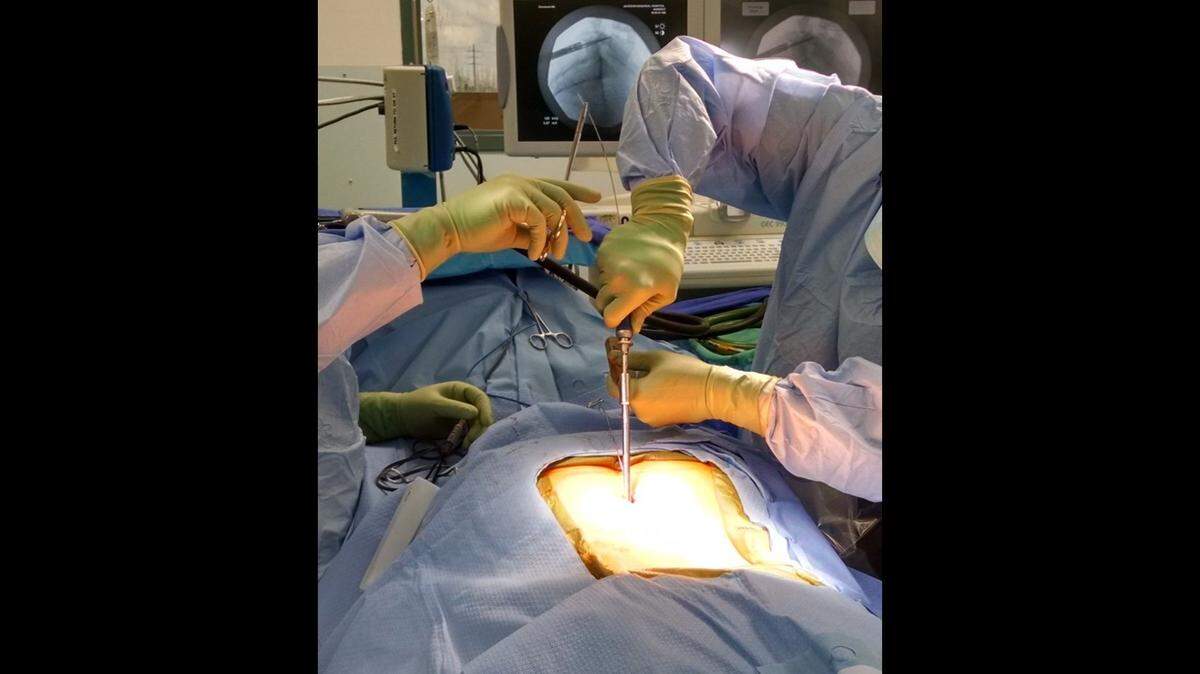
More than a year later, Mucerino went to see Levi, who had developed a minimally invasive surgical technique for children and young adults, ages 13-25, to treat pars fractures.
A pars fracture often requires open back surgery, fusing one vertebra to another, entailing a long and difficult recovery. The surgery can stress surrounding vertebrae.
Levi’s surgical technique allows for the bone to be repaired directly. More importantly, the procedure does not lead to other surgeries.
“Kids are resilient,” Levi said. “If given the opportunity, they can bounce back.”
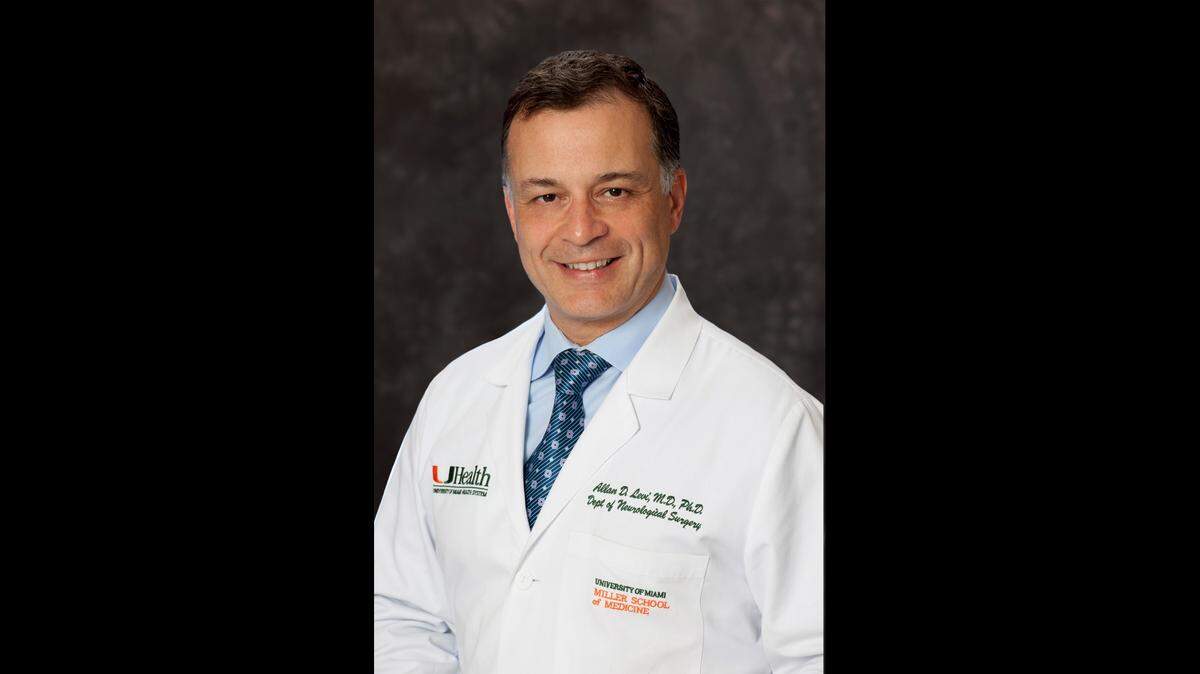
Levi has had nearly 15 patients undergo this surgery, since he began performing the technique in 2012. There are so few patients because young people who suffer this injury generally heal on their own.
But if a growth plate fracture has occurred, surgery may be required, said Dr. Roger Saldana, pediatric orthopedic surgeon with Miami Orthopedics & Sports Medicine Institute at Baptist Children’s Hospital.
Growth plates are areas of cartilage located near the ends of bones. Because they are the last portion of a child’s bones to harden, growth plates are particularly vulnerable to fracture.
According to the American Academy of Orthopaedic Surgeons, 15 to 30 percent of all childhood fractures are growth plate fractures.
Last fall, Max Diaz, 18, was in a wrestling match during a national tournament in Iowa when he suffered a dislocated elbow. He couldn’t wrestle, and his doctor told him he might have to miss the rest of the matches for the season. He needed surgery immediately.
“It was scary,” said Diaz, a recent graduate of Miami Coral Park Senior High School. “It was a big year because it was my senior year and colleges were looking at me. I was looking for anything that could get me back [to wrestling] soon.”
After the surgery, performed by Saldana, Diaz was cleared to play a week before the standard three-month minimum recovery period.
“My elbow is great,” Diaz said. “To come back before three months is pretty big. If you come back in three months, it’s major.”
In the fall, he attended William Penn University in Iowa, where he plans to major in sports management.
“I want to be an athletic trainer,” Diaz said. “I like to take part in the traveling, camaraderie and the life lessons I learned in wrestling. I’d like to be responsible for making that happen for other kids and other athletes.”
As for Mucerino, a few months after surgery with Levi, he was able to get back on the ice in a no-contact skate.
“I wasn’t in pain,” Mucerino said. “I had full range of motion. I could play and skate. I was going to be able to play hockey again.”
He played hockey for four years at Florida Gulf Coast University. He is now in law school at the University of Miami.
“Having the surgery is one of the best decisions I’ve made,” said Mucerino, now 25.
Since he underwent surgery, he’s backpacked through Europe, ziplined, and white water rafted through the Alps. He’s also been cliff diving in Jamaica and Mexico.
He works out every day and he still plays hockey.
“I play for fun now,” Mucerino said.