
Technology is quickly changing how to treat patients, often kids, with type 1 diabetes
Bring together some of the world’s best doctors, scientists and engineers and the latest technological advances and what do you get?
Florida’s medical institutions now offer new and better ways to treat patients with type 1 Diabetes, a chronic and lethal autoimmune disease. Through ongoing technology-enabled research, the experts also are greatly deepening their understanding of the disease in their quest for a cure.
Already, continuous glucose monitoring systems allow patients to better manage their blood sugar. Instead of checking blood sugar multiple times a day, these monitors do it every five minutes.
On the near horizon is technology that offers a pain-free way to inject insulin under the skin. There’s no needle and it doesn’t have to be refrigerated, said Dr. Camillo Ricordi, director of Miami’s Diabetes Research Institute and Cell Transplant Center at the University of Miami Miller School of Medicine.
.jpg "Ricordi with Ricordi Chamber (1).jpg")
At UM’s Diabetes Research Institute, part of UHealth, technology has been part of its DNA for decades. What’s more, “there is a lot of ‘we need it, it doesn’t exist, let’s design it’ going on at the DRI,” said Dr. Mitra Zehtab, DRI’s chief operating officer.
After all, the DRI is directed by Ricordi, one of the world’s leading scientists in diabetes cure-focused research and cell transplantation. He invented the Ricordi Chamber, a machine that DRI and institutions around the world now use to mechanically and chemically separate the islet cells (insulin-producing cells) from the human pancreas for either transplantations or use in research.
It’s just one of a number of inventions by Ricordi that came to life through an unusual partnership with Ramón Poo and his manufacturing company Biorep. Poo, an engineer, was inspired to help DRI scientists on their quest for a cure after his daughter was diagnosed with juvenile diabetes.
More rewarding than the inventions, Ricordi said, is “that I shared them for free worldwide to any center and investigator who could join our mission to cure diabetes in the fastest and most efficient way possible.”
On the cell technology side of things, Ricordi is excited about a number of breakthroughs and developments he and his DRI colleagues have been a part of, including the advancement, through National Institutes of Health-sponsored Phase 3 clinical trials, of the manufacturing of insulin through stem cells.
The University of Miami. meanwhile, is also a key partner in important research housed at the University of Florida.
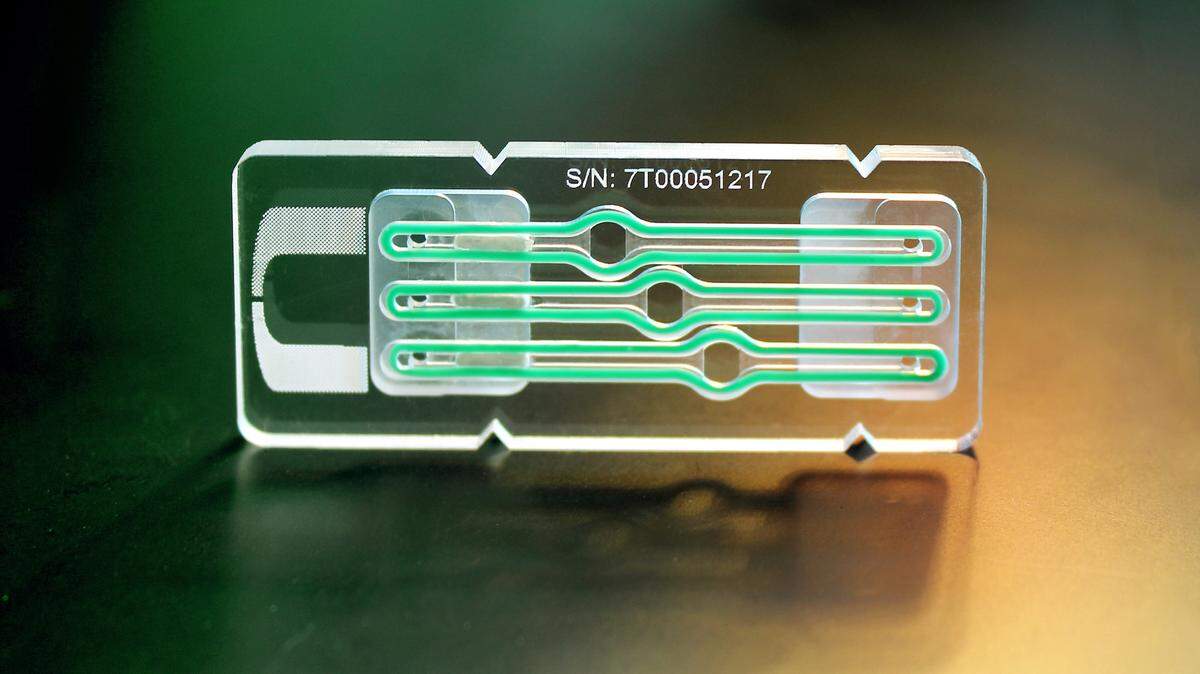
‘Pancreas on a chip’
UF recently announced that a multidisciplinary team of researchers won a $5 million NIH grant, on top of an earlier $5 million grant, to continue work on their “pancreas on a chip.”
With type 1 Diabetes, a body’s own immune cells destroy beta cells, which are responsible for secreting insulin.
“One of the biggest challenges is we don’t know what causes it … We really don’t have enough information,” said Cherie Stabler, Ph.D., one of the principal investigators on the grant and a professor in UF’s department of biomedical engineering.
This in-vitro platform that mimics, outside the body, the pancreatic beta cells under attack “allows us to get that window that we really need to study the development of the disease and what sort of pathways may initiate that,” she said.
“If we can develop a microchip-like system that captures human cells and human immune cells attacking each other, we can screen thousands and thousands of drugs way more efficiently. And, hopefully, it is way more predictive than the information we are collecting right now using animal models. No animal develops autoimmune disease like a human does so a lot of these studies are very incomplete and not predictive of what happens in a human.”
Stabler, who has been studying diabetes for about 20 years, was a researcher at the University of Miami before moving to UF in 2015. It was there she started on this research, working with Ricordi and Ashutosh Agarwal, a renowned biomedical engineering expert and assistant professor at the University of Miami, who had developed a heart on a chip and a kidney on a chip.
“It was a beautiful partnership, and the collaboration has continued,” Stabler said.
The UF Diabetes Institute is one of the few sites in the world that can generate immune cells for diabetes, a complicated process conducted by stem cells experts, Stabler said.
“Once you do that, you can now create a patient’s beta cells, you can create their different types of immune cells that we think are important for the development of diabetes and now we can have a very personalized, patient-specific cell system that we can observe and see what is going on,” she said.
Making all this possible: This convergence of stem cell technology and Crispr gene-editing technology that didn’t exist even five years ago. In the last six months, the team has seen things they have never seen before, like T-cells climbing all over beta cells and killing them.
Says Stabler: “I sincerely hope this opens the door for us to stop the progression or come up with ways to treat the disease … It’s why I do this every day. I want to cure this disease but we haven’t done it yet.”
Reaping tech benefits at Nicklaus
While work is continuing in the labs, the young patients at Nicklaus Children’s Hospital are reaping the benefits of high-tech pumps and sensors that help them and their families continuously monitor blood sugar and make changes as needed throughout the day.
The insulin pumps came out first, giving a patient a constant rate of insulin that can be changed throughout the day. Then constant glucose meters came out.
“When we had both, people said what if there was a pump that could make decisions based on what the constant glucose meter is doing,” explained Dr. Luis Gonzalez-Mendoza, director of pediatric endocrinology at Nicklaus Children’s Hospital.
So now the new pumps are starting to pair what the pump delivers and what the glucose sensor is perceiving. If the pump perceives the blood sugar is too low, it will shut down the insulin delivery; if it perceives your blood sugar is rising, it will increase the delivery.
Gonzalez-Mendoza said about 80 percent of Nicklaus’ diabetic patients are on pumps right now, and it is working well for patients who are compliant: “Of course, if you don’t do what you are supposed to do, the pump is not going to fix that.”
Still, the technology has made a world of difference for the child patients at Nicklaus Children’s.
“I’m old enough to tell you that low blood sugar reactions were very common problems for diabetics on injections. I used to get called two to three times a week,” Gonzalez-Mendoza said. “Now I can tell you that if I get called once a month on a child that is having a hypoglycemic or a low blood sugar reaction, that’s too much.”
Jody Ramirez’s son, Ryan, 11, has been using an insulin pump and a continuous glucose monitor since about a month after he was diagnosed with type 1 diabetes in 2016. She has seen the technology improve over those years, and now Ryan, a patient of Nicklaus Children’s, is using a pump and monitor that work independently but simultaneously, which seems to work best for him.
Ryan’s continuous glucose monitoring system transmits his blood sugar readings to the phones of his mother, father and his nurse. “So all of us are watching his blood sugar constantly — it gives us a little more peace of mind,” Jody Ramirez explained. With his mom’s supervision, Ryan can make adjustments to the pump as needed, based on the readings. He’s a youth ambassador for the Juvenile Diabetes Research Foundation to raise awareness of the disease.
Says his mother: “I can tell you honestly I could not imagine life without this technology.”
This story was originally published November 18, 2019 at 3:12 PM.