
Yes, glaucoma, can strike children — especially infants and toddlers
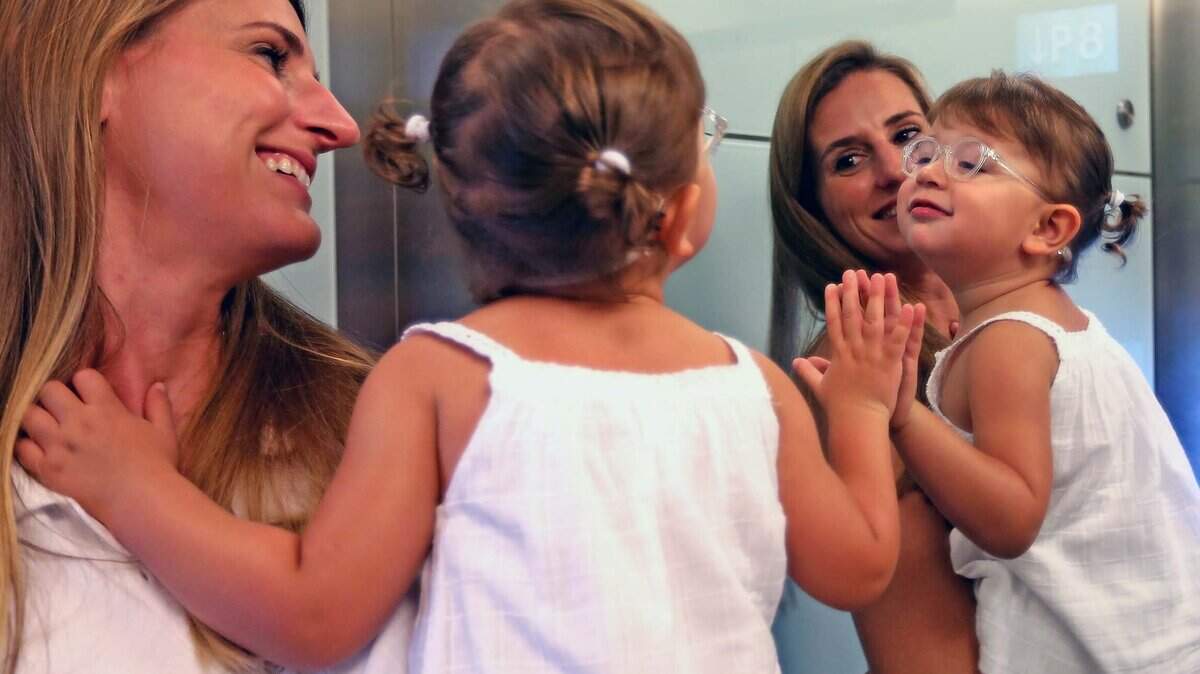
Carolina Escudero received the devastating news six hours after her daughter, Adriana Escudero-Harmer, was born. The infant’s cloudy corneas spelled trouble.
“I was so scared,” recalled Escudero. “It was awful.”
Vivian Ros Varela got similarly upsetting news before her second child, Marcelo, had turned a day old. “I couldn’t see any depth in his eyes,” Ros Varela said. “I knew there was something wrong.”
Initially misdiagnosed with cataracts, both children suffered from another rare condition: pediatric glaucoma. Though it usually affects older people, glaucoma in kids shares some characteristics with the adult versions. The fluid that normally flows in and out of the eye does not drain correctly, throwing the intraocular pressure, or IOP, off.
This creates too much pressure inside the eye which, in turn, damages the optic nerve, responsible for transferring visual cues from the retina to the vision centers of the brain via electrical impulses.
“Left untreated, childhood glaucoma can be potentially blinding, but most don’t lead to that anymore,” explains Dr. Alana Grajewski, director of The Samuel & Ethel Balkan International Pediatric Glaucoma Center at Bascom Palmer Eye Institute at the University of Miami. “Still, early detection and treatment are very important.”
Because children can’t always explain what they feel and because glaucoma can be mistaken for other conditions, she urges parents to have a baby’s eyes examined by a pediatrician in the first year of life. If childhood glaucoma is suspected, parents should visit a pediatric glaucoma specialist right away.
If vision seems to be normal, the child should then undergo a comprehensive eye exam by the time she or he turns 4, and then every two years after that.
In the case of Adriana and Marcelo, both from South Florida, surgery led by Grajewski when they were only a few days old proved to be a vision-saver. Now 2 years old, Adriana wears glasses. Her parents won’t know more about her visual acuity until she’s older.
“She’s managing very well so far,” her mother said. “She’s hit all the milestones and is such a happy child. For me this is a miracle.”
As for Marcelo, he has limited vision in his left eye but lost vision in his right eye due to an unrelated infection. He wears prescription goggles to protect his eyes, but it hasn’t stopped him from playing sports. He’s now on the golf team at Christopher Columbus High School.
“He probably wouldn’t have had any vision at all if not for Dr. Grajewski,” says Ros Varela.
Grajewski says that if an infant’s condition isn’t detected by medical staff soon after birth, “it’s usually the mother who notices something is off.”
The eyes of children with glaucoma tear excessively and their corneas are cloudy, their irises dull. They’re also extra-sensitive to light and sometimes may have enlarged eyes (one or both), though this can be mistaken for normal because the enlargement can be subtle. They tend to have myopia — nearsightedness — in one or both eyes.
While all childhood glaucomas are characterized by abnormally high intraocular pressure, they are divided into two kinds. Primary congenital glaucoma, the most common form of glaucoma in infants, occurs in about 1 out of 10,000 births, according to The Glaucoma Foundation. It’s a result of improper development of the drainage system in the eye.
About 10 percent of primary congenital glaucomas are diagnosed at birth — as in the case of Marcelo Varela and Adriana Escudero-Harmer — and another 80 percent are spotted within the child’s first year of life. While some glaucoma can be inherited, most primary glaucoma cases have no identifiable causes.
Secondary glaucomas tend to be found more often in children who have certain conditions, such as neurofibromatosis, Sturge-Weber Syndrome, Axenfeld-Rieger Syndrome and Aniridia. They can also be a result of chronic steroid use, trauma or previous eye surgery.
At Bascom Palmer, Grajewski and two other pediatric glaucoma specialists, Drs. Elizabeth Ann Hodapp and Ta Chen Peter Chang, get about 2,000 visits a year from young patients and their families. While still rare, Grajewski has found that childhood glaucoma “occurs more noticeably in African-Caribbean communities,” an important subset of patients in South Florida.
Though the diagnosis can be heart-wrenching for families, Grajewski is quick to reassure them that existing treatment for the condition has “fairly high success rate for normal or close to normal vision.” In most cases, surgery — sometimes several of them — is a better option than medication, though eye drops are also used as a preoperative therapy or a supplementary one. (In contrast, many adults manage their eye pressure with prescribed medications for years.)
One of the more common surgeries, the goniotomy, involves removing tissue that is blocking ocular drainage.
“I use the analogy of a sink when I talk to parents,” Grajewski says. “You have to remove what’s blocking the drain to make sure the water is going down.”
Other types of glaucoma surgery for children include a trabeculotomy, when a piece of tissue in the eye’s drainage angle is removed to create an opening, and the implanting of a glaucoma drainage shunt. Sometimes it takes more than one surgery to control IOP.
Marcelo, for example, has had more than 40 procedures, including a trabeculotomy and tube-shunt surgery. But the rising high school sophomore says it has made him more resilient and presented him with an unexpected gift.
A patient of Grajewski’s since he was a few days old — Grajewski opened up her clinic on a Saturday to see him that first time — he says he considers her a second mother.
“I’ve known her so long,” he says, “that I trust her completely. I trust her advice, whatever she tells me. I know she wants to do the best for me.”
This story was originally published July 24, 2019 at 8:00 AM.