As you age, so do the valves around your heart. New treatments are much less invasive
Vincent Cuzzo, 67, of Tamarac was feeling shortness of breath, dizziness and chest pains.
He learned he had aortic stenosis, a narrowing of the arteries that restricts blood flow. On Jan. 18, he underwent a procedure for sutureless aortic valve replacement at Broward Health Medical Center.
The valve was approved by the FDA in January 2016, and Dr. Kenneth Herskowitz, chief of cardiovascular and thoracic surgery at Broward Health, performed the first sutureless aortic valve replacement in South Florida in October 2016.
“A sutureless valve is basically a marriage between a surgical valve placed with a traditional open-heart surgery and the newer transcatheter valve replacement for aortic valves,” which most commonly goes through the groin, Herskowitz said.
About five million people in the United States have heart valve disease, according to the American Heart Association. Heart valve disease affects about one in eight Americans ages 75 and older. As such, heart valve treatments are continuously being upgraded and refined.
The sutureless valve is a surgical valve, but instead of having a sewing ring that requires 12 or 14 stitches, the valve has a cuff underneath that blows up and seats itself to hold it in place, he said.
“The sutureless valve has a number of different benefits. Number one is that many patients with aortic stenosis have more than one type of heart disease,” Herskowitz said, including coronary artery disease or the need for other valves to be replaced. “The sutureless valve enables us to streamline when we have multiple procedures to do.”
The valve can be deployed in about one-third to one-quarter of the time that a regular surgical valve takes. This results in less time on the bypass machine — 20 minutes compared to about 40 to 60 minutes.
“The benefits of a shorter bypass time are decreased mortality, less time on the ventilator after surgery, less blood loss and need for blood transfusions, less kidney complications and shorter ICU stays,” Herskowitz said. “And overall these patients can oftentimes go home in three to four days after surgery.”
Cuzzo went home four days after surgery.
“The surgery went great. I was sitting up that evening and basically the next day I was up and walking around, doing everything by myself,” he said. “I feel much different now.”
Repairing aneurisms
The David Procedure is used to repair an aneurism while keeping the patient’s own valve. Named after the doctor who invented it, the procedure is also known as valve-sparing aortic root replacement.
Aneurisms are a ballooning out of the aorta, which carries blood from the heart to the rest of the body. The aorta is connected to the heart and is separated by a valve.
“When we operate on aneurisms, because it’s so close to the valve, the standard operation is generally to take out that valve and replace it,” said Dr. Allan Stewart, chief of cardiac surgery at Miami Cardiac & Vascular Institute, part of Baptist Health South Florida.
If the valve is replaced with a mechanical valve, the patient will take blood thinners, most commonly Coumadin, for the rest of his or her life. If it is replaced with a biological valve from an animal, the valve has a limited life and will wear out after 10 to 12 years.
Stewart said it was discovered that a patient’s valve could be preserved when an aneurism is taken out if the tube is the problem, not the valve. That’s how the David Procedure works.
“If we can rebuild the valve inside of a tube, we can create a cure so that that person does not need to be on blood thinners for the rest of their life for a mechanical valve or does not face the proposition of needing another operation later in life because they had a biological valve,” he said.
The David Procedure is most commonly used on middle-aged or younger patients. The most common age is from 12 to 65, but Stewart has operated on older patients.
“Now we’ve figured out a way to actually fix the (valve) leaflets themselves, so if someone’s valve is leaking, we can rebuild leaky valves while fixing an aneurism,” he said.
Stewart has completed more than 500 David Procedures in 23 countries on five continents. As a young surgeon, he assisted in performing quadruple bypass surgery on former President Bill Clinton in 2004 while on staff at Columbia-Presbyterian Medical Center in New York.
Patients interested in the David Procedure should find an experienced surgeon, someone who does 50 or more procedures per year and has low incidence of re-operations on the valve, he said.
“There’s probably under 20 hospitals in the country that do a lot of this,” Stewart said.
Catching debris to avoid a stroke
In June 2018, the FDA approved Sentinel, a filter used during transcatheter aortic valve replacement, to catch debris that could lead to a stroke.
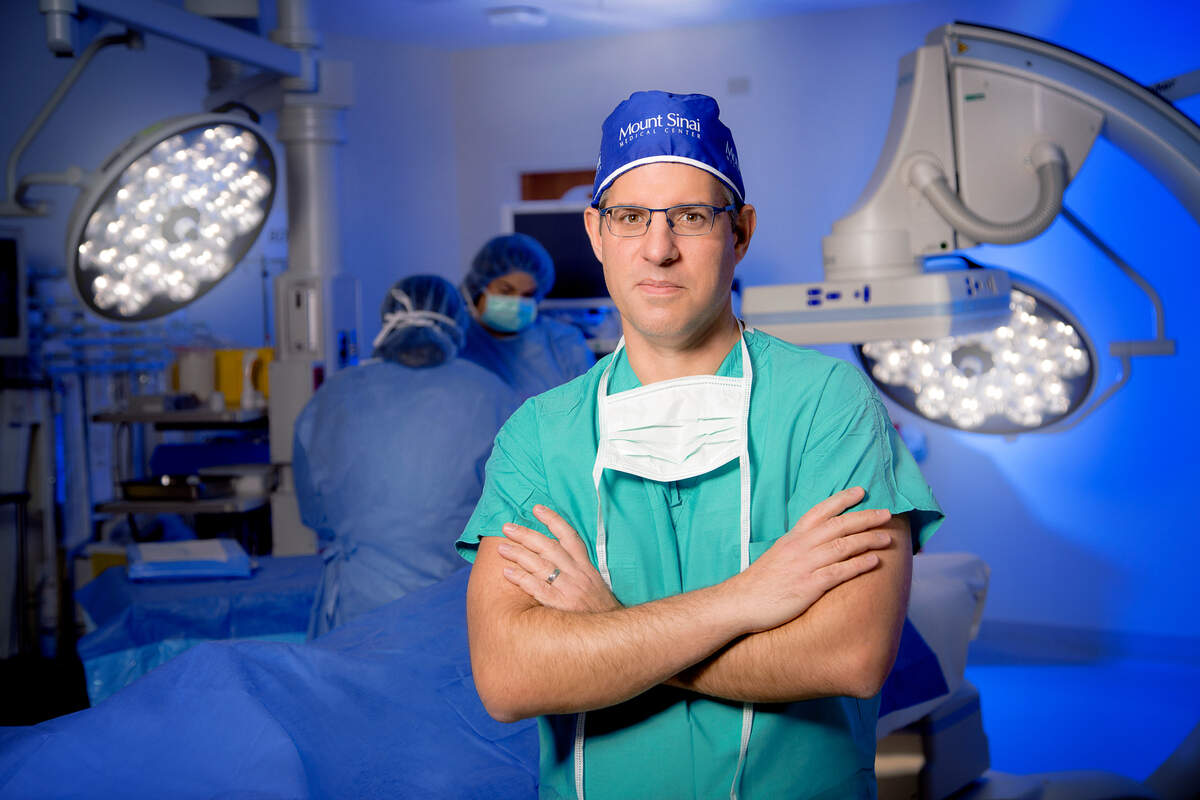
Mount Sinai Medical Center in Miami Beach began using the Sentinel device selectively on patients about six months ago, said Dr. Steve Xydas, chief of the Columbia University Division of Cardiac and Thoracic Surgery at Mount Sinai and co-director of the Mount Sinai Heart Institute.
The Sentinel is inserted through the arm and goes into the two major arteries that feed the brain. It is placed prior to a transcatheter valve replacement to prevent debris from breaking off and causing a stroke.
“Transcatheter valve replacement is a major move forward. It is much less invasive than standard aortic valve replacement,” Xydas said.
The procedure is done using a catheter from the groin, so there are no chest incisions. Recovery time is less. If all goes well, patients go home the next day and return to work in one to two weeks, versus open heart surgery, which has a one- to two-month recovery.
The procedure is used to replace valves with aortic stenosis, a calcification that restricts blood flow. During the transcatheter procedure, debris from the calcified aortic valve or along the aortic wall could break off and travel to the brain, causing a stroke.
Most recent trials show that there is no significant increase in stroke rate for transcatheter valve replacement versus standard aortic valve replacement, Xydas said. However, the risk is still about 1 or 2 percent.
Risk of “a stroke is certainly a big drawback and disadvantage of the procedure, and these filters are meant to try to decrease their risks in order to make the procedure more safe,” Xydas said.
The Sentinel device is placed just before the diseased valve is manipulated and the filter is opened just before the transcatheter valve replacement. Then the filter is removed. About 80 to 90 percent of the time, you can look at the filter with a naked eye and see the debris caught by the filter, Xydas said.
Ongoing trials are studying the Sentinel’s role in stroke prevention, he said.
Since the FDA approval in 2018, Mount Sinai has used the Sentinel selectively with patients who are at a high risk for stroke.
Less trauma to the tissue
After doing thousands of minimally invasive cardiac surgeries, Dr. Joseph Lamelas, chief of cardiac surgery at the University of Miami Health System, invented a way to repair aneurisms in the ascending aorta and treat valve disease.
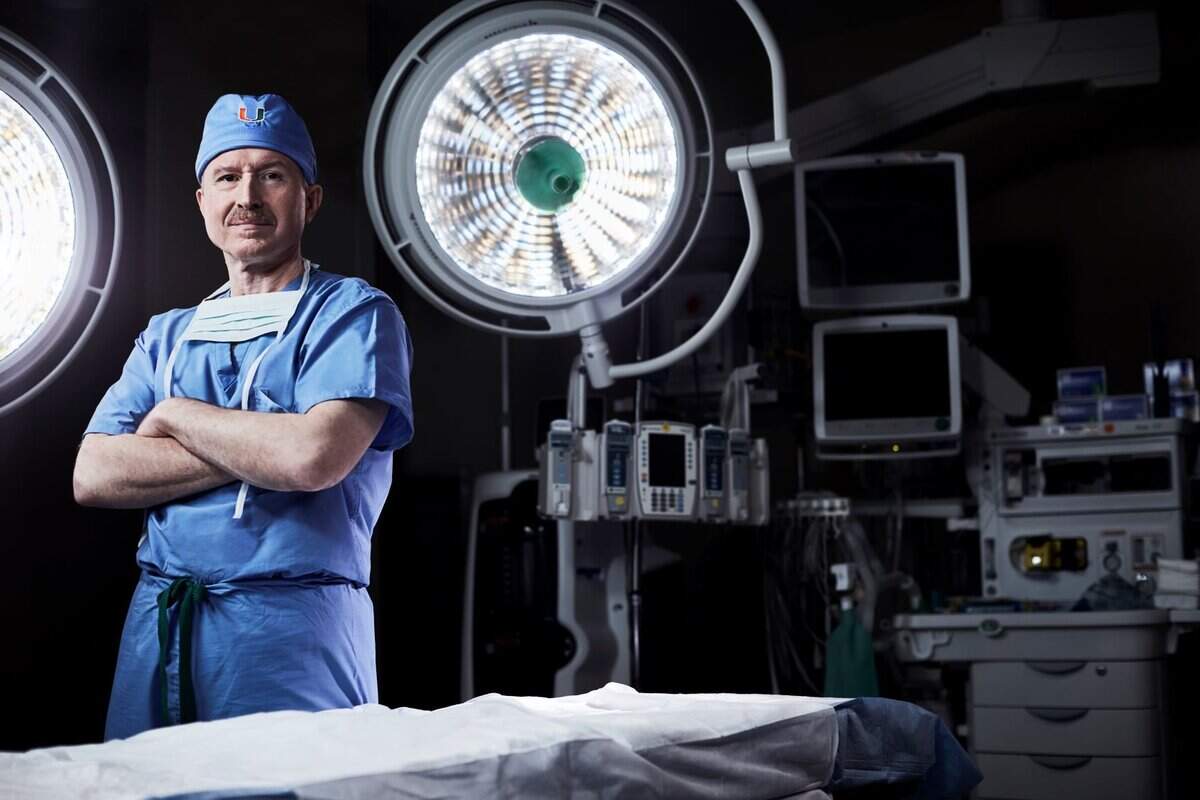
“I have pretty extensive experience doing minimally invasive aortic valve surgery, mitral valve surgeries... this is not done with splitting the chest at all. It’s done through a small incision on the right side of the chest,” he said. “So after doing thousands of these operations, I thought to myself one day that I want to expand it into replacing the ascending aorta.”
Lamelas said he had to go through a significant learning curve to feel comfortable, because the small incision meant no room for error.
He began doing minimally invasive surgeries in 2004 and developed the ascending aortic procedure in 2012. “I’m the only one in the world that I know of that does this particular approach,” he said.
During the procedure, the aortic valve and/or the mitral valve can also be replaced or repaired, if needed.
“In fact, the majority of patients who need this type of surgery to correct an aneurism in the ascending aorta have valve disease,” Lamelas said.
There is less trauma to the tissue during the surgery, so recovery and time in the ICU is shortened, he said. Bleeding and the need for transfusions are minimal.
Lamelas also has invented surgical instruments to use with minimally invasive surgeries.
“In 2004, the necessary instrumentation didn’t exist… coincidentally, I did surgery on a patient who happened to be an engineer,” he said. The two ultimately partnered and developed instruments that are used around the country for minimally invasive surgery, including ascending aortic surgery.
Lamelas worked in Miami for 26 years, most recently at Mount Sinai Medical Center, before leaving for two years for Houston. He returned to South Florida in January to join the University of Miami.
He has dubbed his minimally invasive approach to surgery the Miami Method.
“I’ve always wanted Miami to have ownership of something from the cardiac surgical world,” he said. “This helps to continue to recognize Miami as a leader in cardiovascular medicine and surgery.”