
The French spy who loved Tony Roma’s ... and other Miami restaurant reviews from the past
Do you remember Juniors and Woody’s Famous Steak Sandwich? What about Prince Hamlet? La Paloma? A Place for Steak? Marcella’s? Food Among the Flowers?
These were some of Miami’s most popular restaurants from the 1950s through the 1980s.
Let us take you back to these long-closed places through the archives of the Miami Herald. We’re opening the vault for the original restaurant reviews from the pages of the Herald (and, oh, just look at those prices .. some are higher than you would think and others are low-low-low!).
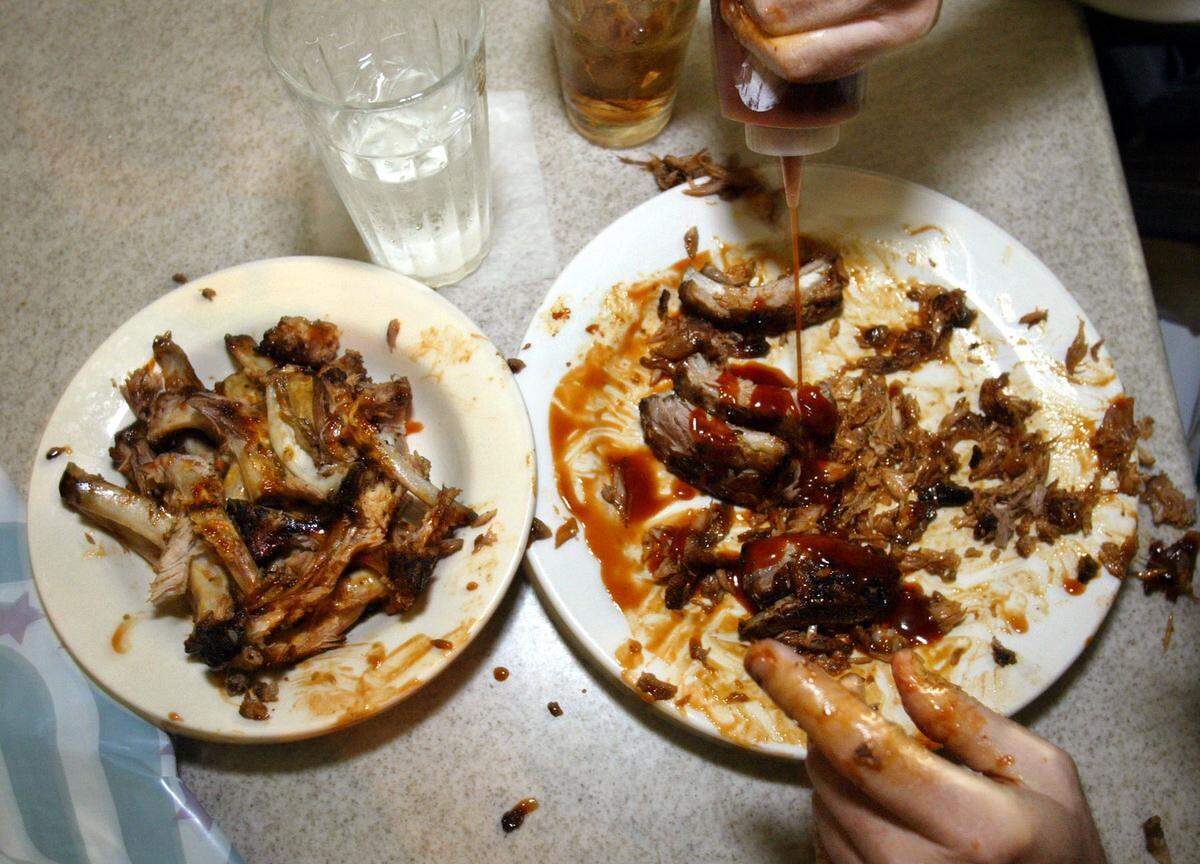
We’ll start with a restaurant that is still in business, but with fewer locations: Tony Roma’s. At the time, the new restaurant critic for the Miami Herald visited the original South Florida location of the place for ribs, along the train tracks in North Miami Beach.
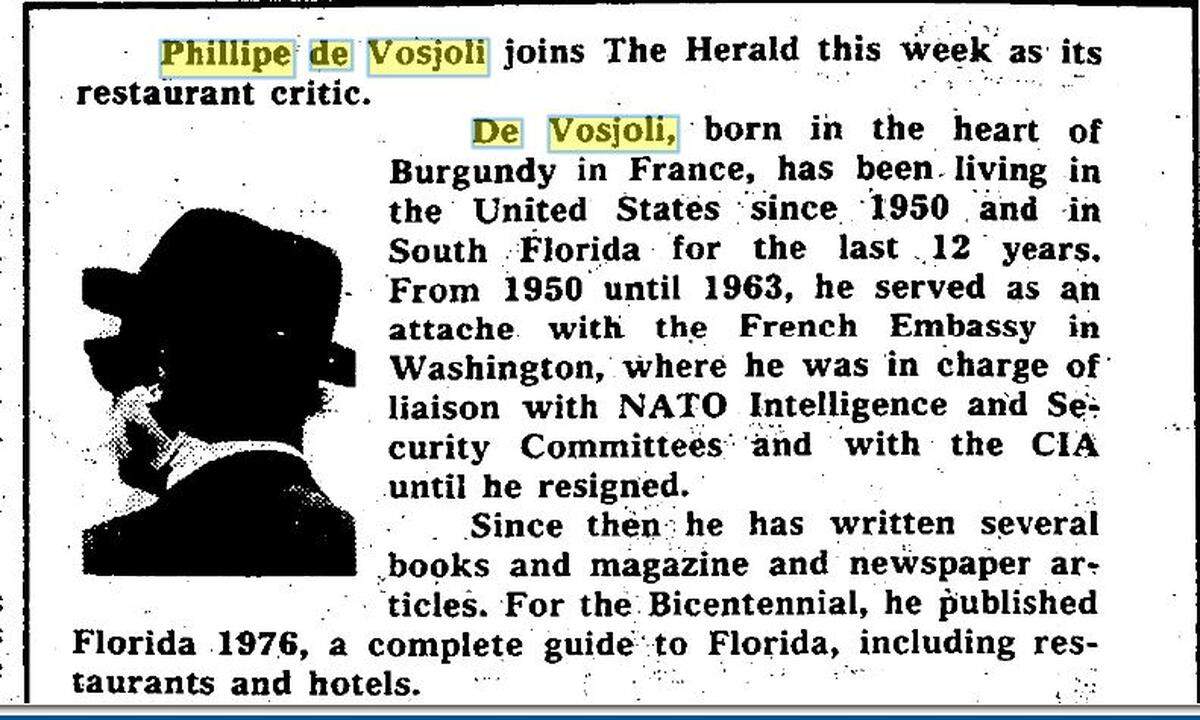
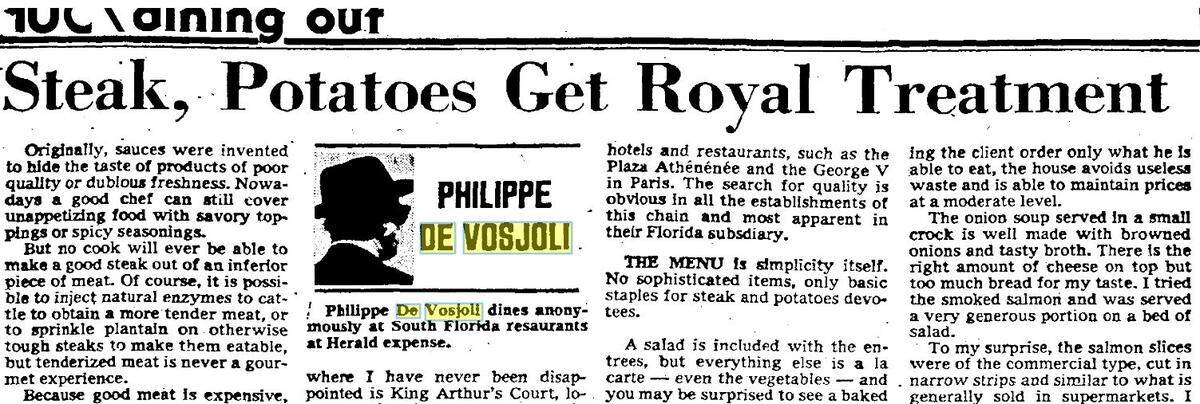
In his first review, Philippe De Vosjoli gave Miami’s Bilbao restaurant a two-star rating, noting he had found the tripe “tender and the rich tomato sauce was very good.” But he was really taken with the London broil at Tony Roma’s.
By the way, the photo De Vosjoli used of himself in the pages of the Herald was from the 1968 cover of Time magazine. In the ‘60s, he was the chief of French Intelligence in Washington. He received reports of missiles in Cuba and notified the CIA.
Back to food. The following reviews were primarily written De Vosjoli, Linder Cicero and Lucy Cooper of the Miami Herald’s staff.
Here we go:
TONY ROMA’S
Published July 7, 1977
With a name like Tony Roma’s, I expected an Italian restaurant. I had neglected to read the full sign which also stated A PLACE FOR RIBS. Matter of act, there is nothing Italian about Tony Roma’s in North Miami. The menu, printed on the table mats, is as typically American as you can find. (The only problem is you need some time to read it, not because of its length, but the room is so dark it takes a few minutes for your eyes to adjust.)
Meals are served in the dining room or in the bar. Both are soberly decorated with old bricks and wood walls, black seats and wooden tables. The atmosphere is warm and relaxing. In the evening, a musician plays the organ or the piano, and a few couples use the microscopic dance floor. The service is courteous and fast, although waitresses wear pseudo-Victorian costomes, which does not say much for the designer’s good taste.
The best bets on the menu are the daily specials: baked ham ($2.95) on Monday, veal parmigiana ($2.95) on Tuesday, etc. ... They are served with French fired potatoes and cole slaw. I chose London broil ($3.50). It was delicious, and served rare, exactly the way I ordered it. The center was red and the edge slightly crusty, with that good taste of meat cooked on an open flame. It was tender, due to the choice of a nice piece of flank steak cut diagonally across the grain. The French fried potatoes were crisp, not greasy and rather abundant. I could not avoid the comparison with a London broil I had a few days earlier in a more pretentious restaurant: It cost twice the price though half the value, quality- and quantity-wise.
My companion had pot roast (lunch $2.50 - dinner $2.95) cooked the old fashioned way with homemade type of gravy. It was garnished with parsleyed potatoes. Nothing great, but still very satisfying. The heart of lettuce salad (.75) and the sliced tomatoes (.75) were fresh and served with choice of dressings. The cole slaw was very good.
Rye bread, pumpernickel and butter accompanied the meat.
Naturally, you can order cocktails. But we decided on half a bottle of Burgundy Almaden ($2.50). It was a fruity, ordinary wine which went nicely with the meat.
The check, without service, came to $10.45. So, for just over $5 a person we enjoyed a nice atmosphere, good food, good service and some wine. That is what I consider good value! And apparently my view is shared with by police officers and other personnel crowding the place at lunch time from the police substation across the street.
If you are ready to spend a little more, you can order the barbecued baby back ribs (luncheon $3.95 - dinner $6.50) the specialty of the house. I could not help hearing the enthusiastic comments at the next table where the patrons said that they had never tasted better ribs. Matter of fact, they looked pretty good, and I promised myself to come back and try them soon.
A PLACE FOR STEAK
Published Sept. 27, 1985
The Place for Steak is just that — a restaurant where the steaks are big and good.
And make no mistake. Although the new managers make much of the fact that there have been many cuisinary changes, this is still a place for steaks. With a wine list as minimal as the one I found here, a commitment to any semblance of haute cuisine is hardly to be taken seriously.
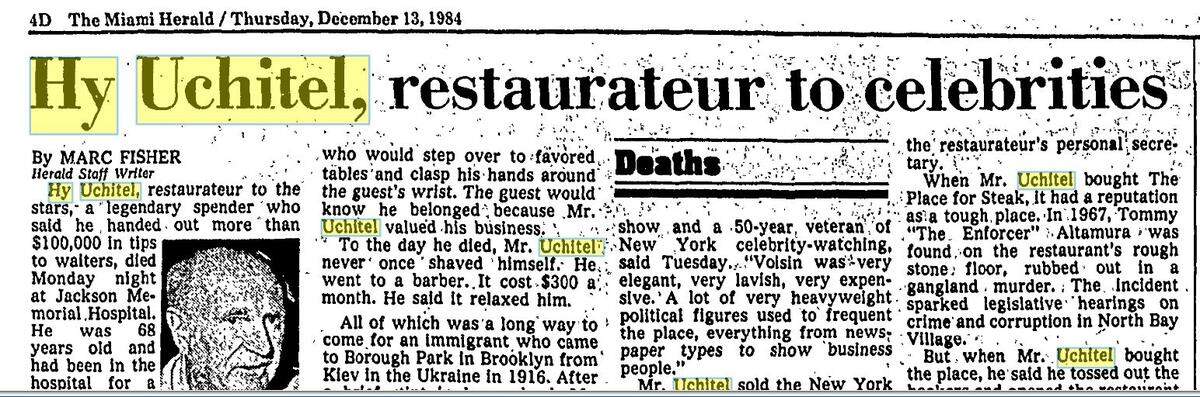
There have, of course, been some changes since the days of the late Hy Uchitel, the ubiquitous former owner. His silent partners have taken over and already one sees improvements in the quality of the foods. And though the ambience is still much the same -- laminated tabletops with paper place mats, red napkins, fans and artificial flowers -- changes are being made.
Here’s a restaurant that attracts people from early evening for the twilight specials, to late at night when there’s entertainment, a band and dancing to go along with late night snacking or even breakfast. This combination of offerings probably is a throwback to Uchitel’s days as an owner of El Morocco, a nightclub that attracted a succession of celebrities at a time when diners were more interested in people-watching than the food. Though the people-watching at this location is hardly titillating, the entertainment late at night can be fun and lively.
Order a steak or the roast prime ribs of beef and you will leave reasonably happy. My steak au poivre ($19.50) was a big thick one, finished medium-rare as ordered and deliciously sauced. It was not finished off at tableside as is the custom in class restaurants, but there’s no doubt that our highly professional and well-trained waiter would have done it well. He was very, very good (and, halfway through the meal, guessed my identity).
A baked potato that accompanied the steak -- one has several choices of potato -- was perfectly done, too, as was a stuffed baked one that came along with what I thought was a far overpriced 1 1/2-pound Maine lobster, prepared at a cost of $15 per pound. Lobster prices, incidentally, change as market prices fluctuate, or so the menu states. Bowls of salad -- the usual chopped lettuces, red cabbage, tomatoes and sliced mushrooms topped with a choice of dressings -- are included in entree prices.
The management has made a stab at incorporating a few trendy sounding dishes -- black pepper fettuccine and lemon linguine primavero -- but the black pepper fettuccine is described as smothered with beef stroganoff -- heaven help us! The lemon linguini primavera ($14.95), a toss of light pasta with shrimp and bits of broccoli, was flavorful but overcooked. There’s also a new coconut shrimp appetizer -- $6.75 for three, which seems rather pricey, but they’re delicious and crunchy with coconut. Forget the anemic-looking sweet-sour sauce.
From a good choice of desserts we chose an enormous, individual deep-dish apple pie topped with vanilla ice cream, and a rich and dense cheesecake.
Unless you order from the early bird menu, you will not dine cheaply at The Place for Steak. Steaks are priced from $18.50 to $22, with junior cuts available at $14.50. Planked sirloin for two and chateaubriand for two are $37.
Nevertheless, we found the food to be quite good, the service excellent, and, on the whole, the quantities generous. A younger management may indeed bring this restaurant into the 1980s rather than leaving it to flounder somewhere in the ‘50s.
LES VIOLINS
Published July 19, 1985
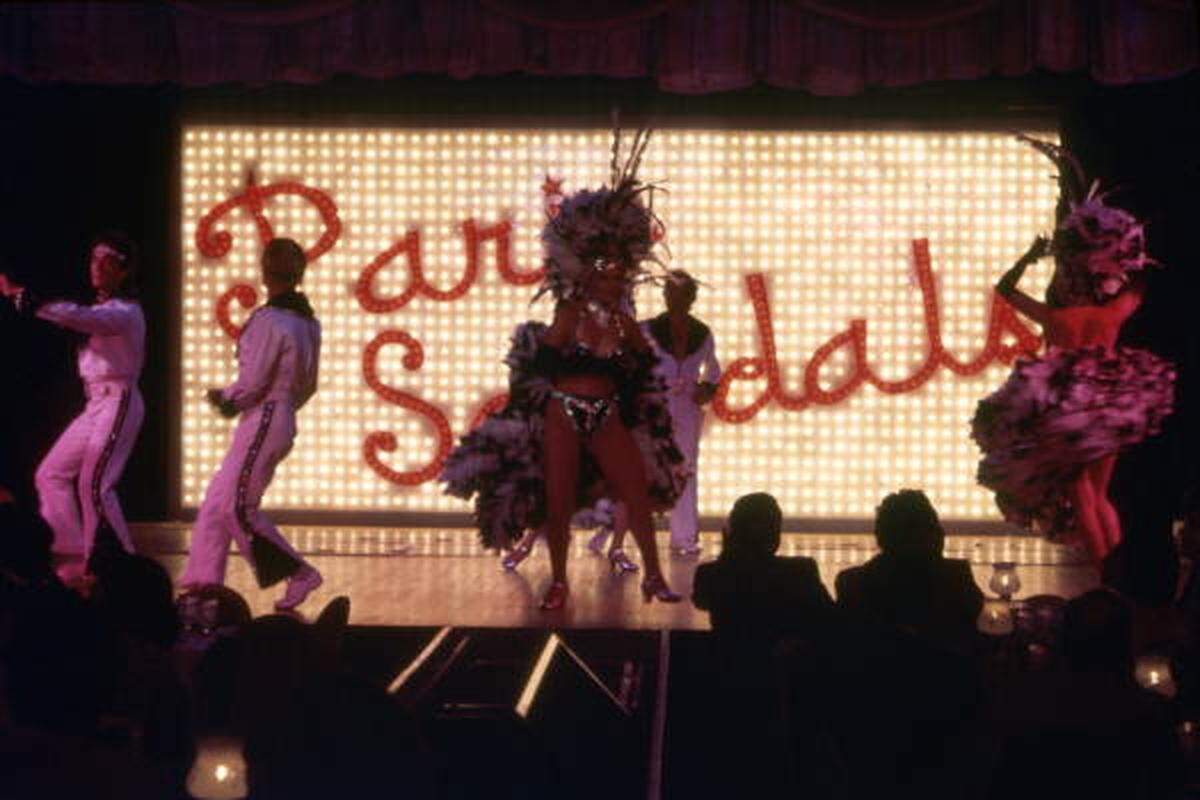
You haven’t tasted all the flavor of South Florida nightlife until you’ve visited Les Violins, now in its 25th season of flesh-and-feathers revues.
Of the few Miami nightspots specializing in Latin and international entertainment, Les Violins is the oldest. Owned and operated by the Cachaldora and Currais families, former Havana restaurateurs, Les Violins, on Biscayne Boulevard, has established a respected tradition of extravagant floor shows featuring authentic Latin music, dance, decor and cuisine.
A sophisticated but not stuffy setting for dining, dancing and entertainment, Les Violins attracts mainly middle age and older Latin tourists and residents.
One reason the nightclub hasn’t lured many younger patrons is because it has prided itself on keeping its acts as culturally authentic (younger clubgoers might say old-fashioned) as is commercially possible. While Mundo Magnifique (which debuted at Les Violins last year and is now presented as the second show) did include introduce some touches of Americana, most of the show’s music, dancing, choreography and costumes remained true to the cultures of Cuba, Spain, Mexico, Italy, the Caribbean and South America.
This season, the club has shifted its sights toward a younger, or at lease more diverse, audience by devoting more of the new show, Savage ‘85, to the music and technology of the American ‘80s.
The traditional Las Vegas-style variety show is still the main ingredient of Savage ‘85. A cast of 12 bailarinas and bailarines and six modelos parade up and down the elaborate stage of brightly lit mechanized platforms and staircases, wearing more than $100,000 worth of lavish, sparkling, multi- colored fabric and plumage, and baring more than a bit of belly and buttocks.
A Four Pearls of the Caribbean segment is the most authentically appealing, featuring classic songs, dances and costumes of Cuba, Puerto Rico, Santo Domingo and Haiti.
And as usual, the full-cast finale is fabulous, complete with flashing lights, moving platforms, marching chorus lines, and festive whistles and shouts.
But this year, the feathered boas and ballads share the spotlight with mirrored helmets and contemporary pop tunes. Savage ‘85 opens with a futuristic 2001: A Space Odyssey theme, dancers in silver spacesuit costumes moving to the explosive music of Night on Bald Mountain before a screen backlit with streams of pastel light.
Even-voiced male lead singer Jorge Bauer opens with, of all things, Begin the Beguine, and female lead singer Ada Luque winds up the segment with a poorly arranged rendition of international contemporary songs, including the 1982 pop hit Gloria.
Aside from a Pirate Fantasy set, where a large pirate ship “sinks” into the sea, most of the usual colorful painted sets and backdrops have been eliminated in favor of Savage ‘85’s backlit screen.
Perhaps Les Violins is only mirroring reality. South Florida’s Latin community is becoming more Americanized, and so is Savage ‘85.
Les Violins’ owners can’t be blamed for trying to update their show, which is still the best of its kind in South Florida. But there’s something sad about seeing this unique showroom bow, even slightly, to modern fad and fashion. No matter how shiny, silver spacesuits don’t match the simple beauty of a brocade-trimmed peasant dress or the fiery elegance of a lacy red flamenco gown.
A more positive note on the subject of authenticity: the Latin dinner music provided by Les Violins’ lively orchestra and strolling violinists prior to the show is charming and romantic.
Dinner at Les Violins is tasty and plentiful, but can be expensive (dining is optional, however). The menu includes a wide variety of Latin and American entrees (from $10 to $20) and a la carte salads, soups, appetizers and desserts.
THE STUDIO
Published Sept. 16, 1983
Success in the restaurant business is inexplicable. It has little to do with beauty of surroundings or with the high quality and allure of the food, or even the price structure. One restaurateur’s success formula can spell failure to another.
The Studio is a case in point. It is a vastly successful operation. People wait in line to dine in its strange, haphazard wandering of rooms. The quality of the food rarely extends above the level of good. Prices range from moderate to moderately high. Coq au vin is priced at $6.95, and roast duck is $13.95. Yet its popularity endures.
It’s true that one receives a great deal of food for the money. A relish bowl, garlic bread and an enormous salad are included in the entree price, and entree portions are generous. And believe it or not, for $1.95, the diner may choose as many desserts as he or she can eat from a tiered table brimming with a variety of them.
Some offerings can be impressive bargains. For $4.95 one receives an appetizer of five truly enormous shrimp accompanied by a hot and spicy horseradish-laden cocktail sauce. Two of those shrimp can be filling. Equally wondrous is the $4.95 lobster salad, which contains an abundance of lobster chunks, watercress, tomatoes and mushrooms.
On the whole, however, the food is merely satisfactory. All too many restaurants serve food of similar quality, and many of them fail. So perhaps that clutter of rooms -- with their brick archways, multicolored lanterns, wrought iron dividers, mishmash of pictures, wine racks and other artifacts -- makes the difference here. It had to be pointed out to us that each room represents a different country -- Swiss chalet and Place Pigalle are examples -- and that the general decor is intended to be medieval. Well, maybe.
Certainly service is excellent and well organized. One never feels rushed or neglected here, in spite of the fact that business is brisk. Waiters, dressed in sailor suits, are well trained and solicitous. They serve salads with aplomb at tableside. Big wooden bowls are filled with a mix of lettuces and tomatoes tossed in a garlic-flavored dressing that does little to enhance the greens.
Sauteed yellowtail ($10.95) could have been any fish, for it tasted flat and was overcooked. But the portion was large, as were the accompaniments of carrots, sauteed onions and sliced potatoes. Veal piccata ($13.95), a saute of veal scallops over fettucine noodles, was equally undistinguished, though in a hefty portion.
For those to whom dessert is all, The Studio provides the ultimate lure. An enormous bowl of chocolate mousse, a variety of rich cakes, eclairs, fruit tarts, cheesecakes, flans and many more pastries may be had in any quantity one’s sense of propriety permits for that minescule price of $1.95. Most of them are good, and certainly they are sweet.
Other entree offerings are broiled Florida lobster; bouillabaisse; Dover sole meuniere; frog legs; ragout of boneless chicken breast, Indian style; steak au poivre; shish kebob; and beef Wellington.
JUNIORS
Published May 4, 1995
The glory days of Arthur Horowitz’s mini-empire may be a memory, but the dapper restaurateur, itchy in semi-retirement, has resurrected his recipes for a new venture.
The man who created Juniors -- a chain of bustling delis founded on Miami Beach in 1946 -- needed only to count the condo towers in North Dade to find his old fans. Those who remember not just Juniors, sold by Horowitz in 1968, but Arthur’s Eating House, Horowitz’s classy Biscayne Boulevard fixture that featured jazz greats and a stunning collection of art. Arthur’s closed in 1986, the victim of a deteriorating neighborhood.Horowitz did some consulting work in the past decade, but was unfulfilled. His wife of 50 years, Bunny, had the idea that turned into his latest business.
“We’re in the day and age,” Horowitz says, “where convenience is the most important thing.”
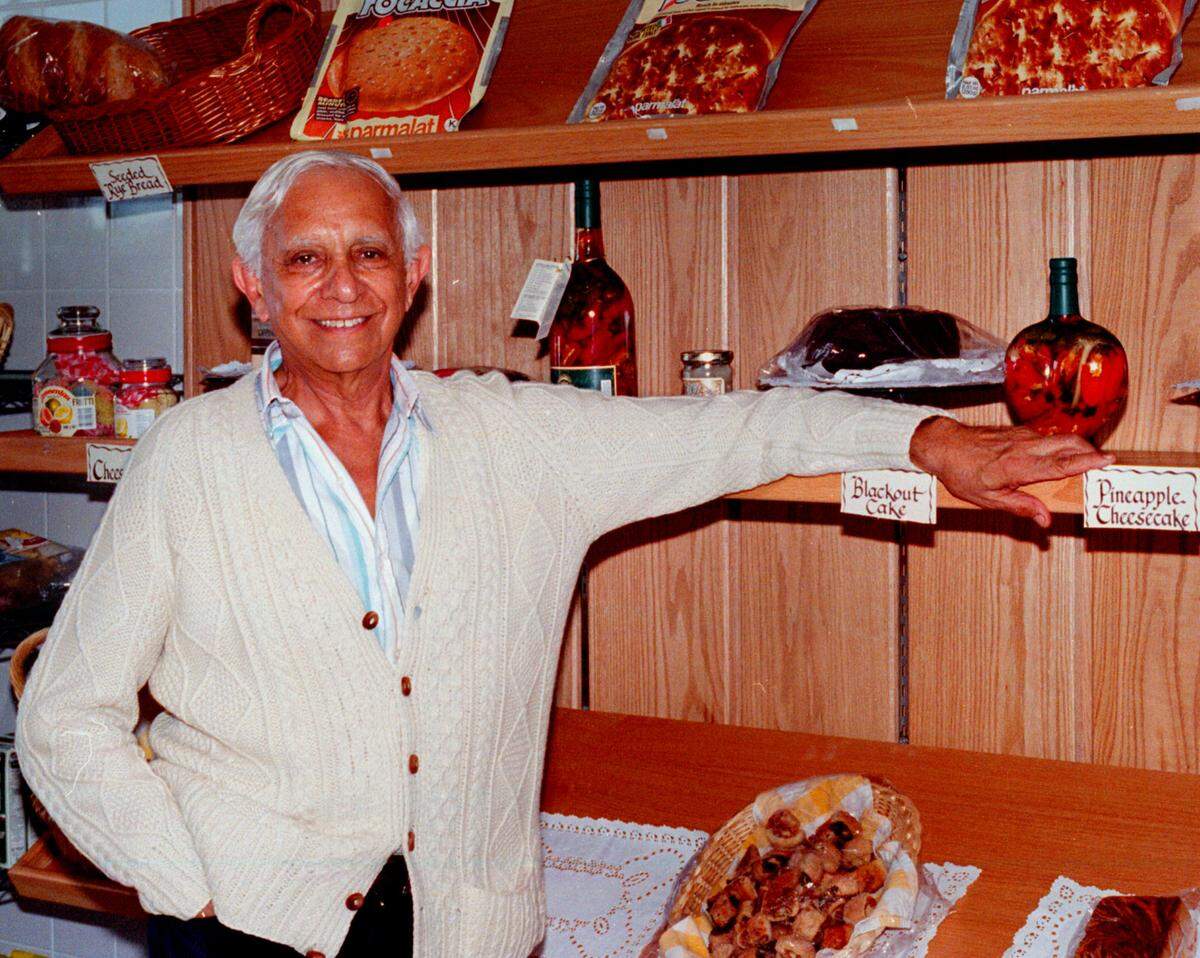
So six months ago, after building a $600,000 “state-of-the- art” commissary in Pembroke Park, Horowitz, 70, opened the Original Juniors Take Home, a small brightly decorated retail store in Aventura and the first of at least seven other Juniors Take Home businesses he plans to open in South Florida.
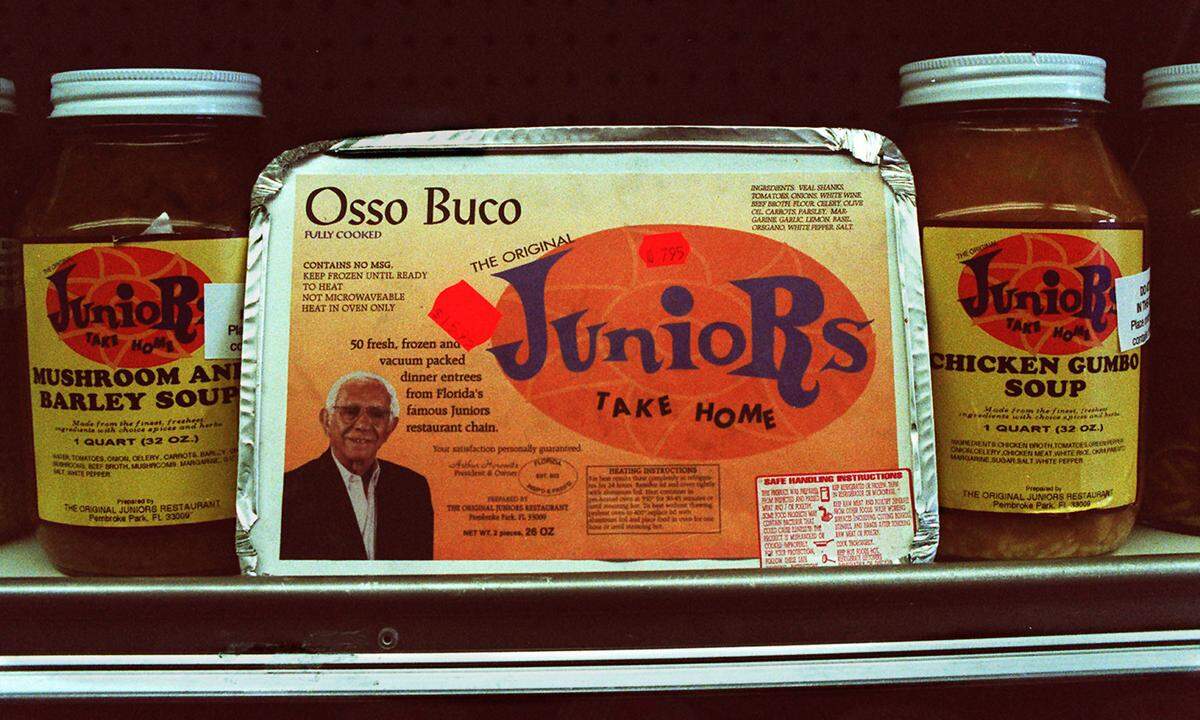
There, the freezers are filled with old Juniors’ favorites: brisket of beef, Hungarian goulash, stuffed cabbage, roast turkey, lamb shanks. The cooler sections feature a dozen varieties of soups, vacuum-packed to stay fresh in the refrigerator for three weeks; fresh salad dressings; rice pudding; blintzes; creamed spinach; orzo with mushrooms. Dinners for one, which include two side orders, range from $3.95 to $4.75.
It’s all the fun of the food business, Horowitz says, without the fuss.
“It’s a very, very simple operation,” says Horowitz, a Coconut Grove resident with the deep tan of the serious sailor he is. “That’s the beauty of it. That’s the reason I’m back in it.”
The retail store has two employees; the commissary has five, including chef Mariano Restrepo. He follows Horowitz’s old recipes and sometimes offer new items that must be approved by his boss.
Every day, either Horowitz or his director of operations, Joel Weiner -- who has worked with Horowitz for 30 years -- tastes the meats and side dishes Restrepo prepares. “He understands you never deviate one iota from the recipe,” Horowitz says. On Tuesday, Horowitz praises the matzoh ball soup but tells Restrepo to add “a touch of salt” to the chopped steak.
At the request of regulars, Horowitz has developed salt- and fat-free items, too.
The food is cooked, boxed and bottled at the commissary, where a U.S. Department of Agriculture worker makes daily inspections. Then it’s trucked to the retail store. One shift in the kitchen is all Horowitz would need to fill the shelves of eight retail stores. He’s ready to open a second store, probably in the South Miami area, and is looking at Weston, the Grove, South Dade and Pembroke Pines for other locations. His goal is to do between $300,000-$325,000 of business at each store annually.
Since the Aventura store opened, customers have signed a guest book Horowitz will use to develop a mailing list. Many of the hundreds of signers add personal notes. I grew up on Juniors in Miami Beach. Glad to see you back, says one. Excited, delighted to be shopping here. Wonderful to be in exquisite shop of your creations, says another.
Horowitz offers free delivery for orders over $25. Juniors Take Home is making about 25 deliveries a week, from South Dade to Boca Raton.
The food business, Horowitz says, is in his blood. His father Harry was a partner in the New York chain of Willow and Stewart cafeterias, which served 95,000 people a day. In Juniors’ heyday, nearly 1,000 employees served 25,000 customers a day.
“My dad gave me great training in the business,” says Horowitz, a master sergeant during World War II who designed and ran the food operations at Fort Monmouth in New Jersey. “I’ve enjoyed my business immensely. It’s been very rewarding financially and a lot of fun.”
Harry Horowitz, who died at 89, never did retire. Neither will his son.
“I’d like to die the way my father did,” Horowitz says. “Friday night he worked. Saturday night he died.”
FOOD AMONG THE FLOWERS
Published Dec. 17, 1982
In the seven years that Food Among the Flowers has been in existence, it has garnered an impressive list of dining awards from national publications and weathered a change in ownership.
The setting -- a working flower shop reached from a tree- bedecked courtyard, opening onto a gazebo with a dining room lush with fresh flowers -- is an invitation to graceful dining.But on a recent visit, we were subjected to a virtual assault of the senses that destroyed the romantic effect. Loud, disco-beat versions of Rudolph and Santa Claus Is Coming to Town disconcertingly interspersed with The Messiah grated on the nerves and made conversation impossible. The lovely, simple beauty of the dining room had been rendered almost garish with strings of Christmas lights, tinsel and a plastic snowman.
Now, even a Grinch could overlook the holiday spirit overkill if the food and service had measured up. But we found few mitigating factors, particularly when you consider that the tab at Food Among the Flowers ranks among the most expensive in South Florida.A shrimp cocktail is $7.50, a crabmeat version $8.95. Steak au poivre is $20.95. If the food were breaking new ground in preparation or style, the prices would be easier to swallow. But we found nothing that was memorable on the menu -- and indeed were disappointed in several of our choices.
An appetizer of escargots in mushroom caps ($5.75) was good but not wonderful; the heavy dousing of Pernod was simply too evident. Onion leek gratinee ($3.50) was merely a bland version of cheese-obscured broth that was mushy with onion but lacking subtlety.
The entree of salmon steak ($17.95) was thick and moist, served with an intriguing horseradish sauce. But the crabmeat casserole ($20.95) was a disaster. A beautiful, generous portion of crabmeat wallowed in a pool of butter sauce was so oily it obscured the delicate flavor of the crab; indeed, after two bites we gave up on the dish rather than risk heartburn. Still- crunchy carrot slices were simple but marvelous, as was a serving of cauliflower napped in hollandaise. But the wild rice served with the crab was dry, and a creamy noodle that accompanied the salmon was ruined by pieces of dried-out, hard noodles.
The house salad ($3.50) was good -- crisp, cold bites of Romaine, a mound of sprouts and two quarters of tomato with a vinaigrette full of bite. But we were troubled when the waiter brought the salad and asked if we’d like our entrees served at the same time. Did that mean our entrees would sit under a heat lamp until we were ready?
Indeed, while we had waited some time between the serving of our appetizers and the salad, the entrees arrived within seconds after the salad plates had been cleared away. It was enough to make us suspicious, particularly when the crabmeat and vegetables were merely tepid.
Throughout our meal, we were subjected to service that could only be called desultory. Instead of walking around the table, the waiter did a body block of my companion, reaching in front of him to put down dishes or clear them away. Our wine (from a list that was unimaginative, at best) was placed in a bucket that had been sitting at a nearby table when we came in, and no fresh ice was added. After the initial pouring, we were forced to take matters into our own hands, a task made even more unbelievable when the waiter used the same bucket to store the wine for another table.
We watched with amazement as a waiter cleared another table, then used his hands to brush crumbs onto the floor and chairs before setting clean plates on a soiled cloth. The same waiter had had to ask us who got which entree -- a small sin, perhaps, but another example of unprofessional service.
There were only three desserts offered -- Amaretto or marbled chocolate cheesecake or Key lime pie. The chocolate cheesecake ($3.50) was creamy and rich with bittersweet chocolate, but a rather heavy way to end a meal. The coffee, however, was first rate.
Our bill for two was $89 (a 15 per cent gratuity is automatically included). Seldom have we paid so much for so little satisfaction, when our expectations had been so high.
Can this possibly be the same restaurant that Travel and Leisure dubbed “one of the 10 best in the world”?
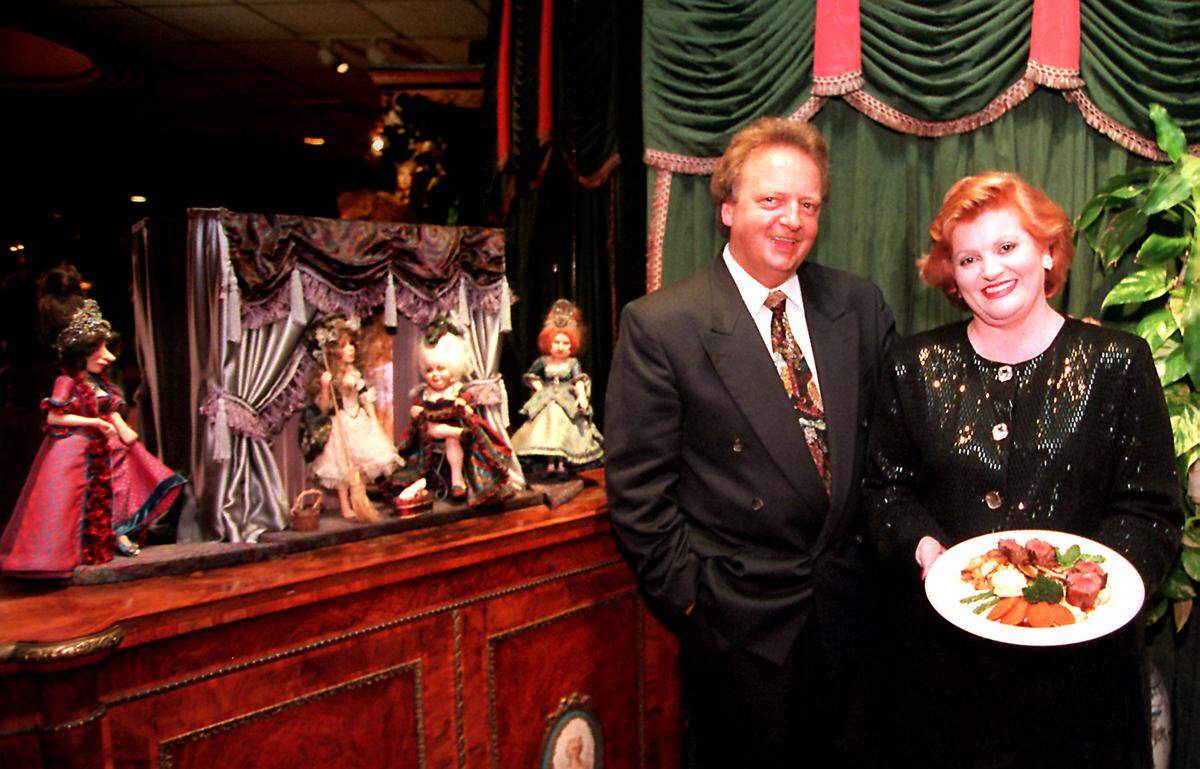
LA PALOMA
Published Dec. 10, 1982
Here’s the word for those who used to know and love La Paloma in its cramped quarters near the Omni:
The new location is five times the size of the old restaurant, gorgeously decorated with masses of flowers, mirrors and twinkling lights. Quaint white gazebos, banked by flower boxes, strive for intimacy in the cavernous space. The atmosphere is not as warm or as cozy -- and in fact is a bit noisy with the chatter of diners -- but the over-all mood is still charming.
Best of all, the quality of the food has remained the same, despite the pressure of serving so many more customers. And while there appears to be more selections on the menu, the price structure is as reasonable as it was at the old La Paloma, and the emphasis remains on Swiss/Continental food.
Service is not as polished, a problem that can be attributed to the newness of the operation (the restaurant has been open for only eight weeks). While our waitress was pleasant and knowledgeable (and a veteran of the old La Paloma), the pacing of our meal was never quite right. The “food runner” was nonplussed when we asked him to take our entrees back to the kitchen when they arrived before we had finished our appetizers or started our salads. We decided to accept the situation, though the waitress did volunteer to send the food back when apprised of the problem.
We started with a shrimp cocktail ($4.50), four jumbo shrimps attractively presented and bisque d’homard ($2), which was pleasant but unspectacular, with a base that was too pasty to be saved by the generous serving of lobster.
The salad was simple but satisfying, an attractive mass of crisp-cold greens, shredded carrots and cabbage napped in a creamy tarragon dressing. We decided that the basket of crusty French bread with herb butter, which comes with the meal, was better than the garlic bread, which costs 95 cents.
A garniture of fresh vegetables -- sweet carrot slices, crisp green beans and lightly fried, cubed potatoes -- brightened our entrees. Red snapper meuniere ($9.50) featured an impeccably fresh filet in an unassuming butter and lemon sauce.
Veal Oscar ($10.95) was a bit tough -- and one shrimp and one stalk of asparagus were so good that you wished there was more -- but the silky bearnaise helped ease any disappointment. Other entrees include such favorites as bratwurst with sauteed onions ($7.50), chicken Kiev ($8.75), Wiener schnitzel ($8,95) and steak Alfredo ($11.90) or au poivre ($11.90).
The new La Paloma has a full liquor license, a definite improvement, and an expanded wine list. The emphasis is on French wines, but there is a good selection of German, Italian, Chilean and Californian, all at acceptable prices. Our Rutherford Hill Gerwurtztrammer ($11.50) was fruity yet crisp.
The star of the dessert table is the chocolate mousse cake, rich and bittersweet. The Black Forest cake was a bit ordinary, needing a better lacing of Kirsch, perhaps, but the luscious ripe strawberries in Romanoff would have stood out on their own.
Bigger is not always better, but the new La Paloma has made the transition with grace. Give owner Werner and Maria Staub, who are as welcoming as always, time to iron out some difficulties with an over-anxious kitchen and inexperienced service staff, and soon no one will be making comparisons with the former operation.
GATTI’S
Published Feb. 9, 1983
As you enter Gatti’s Restaurant, even before you learn it is in its 59th year of operation, you are enveloped in its timeless charm.
Contributing to this are spacious art deco dining rooms, creamy white walls, dropped ceilings with decorative borders, roomy tables covered with crisp white cloths, an efficient staff that seems to belong, and the professional, “no wait” greeting at the entranceway, where the bar beckons warmly.
That the restaurant has endured through three generations of the Gatti family, beginning when there were more alligators than people in Florida, is indeed evidence that the restaurant is doing much that’s right. And, though the food is less than exceptional here, one does eat well and generously.
A menu that is primarily Italian veers surprisingly to include such American standards as baked sugar-cured ham, calves liver with bacon or onions, minute and sirloin steak, filet mignon, lamb chops and a thoroughly American pastry selection.
The antipasti table, however, is all-Italian. From it, at a cost of $6.50, a waiter will fill your plate with mounds of shrimp in a mayonnaise-based sauce; stuffed eggs; mortadella; pate; cold, tomato-seasoned fish; asparagus and other cold vegetables -- all tasty beginnings that encourage one to devour the basket of bread provided.
Other appetizers are thoroughly mundane: crabmeat and shrimp cocktail, clams and oysters on the half shell, prosciutto and melon, grapefruit, and pimiento and anchovies.
A similarly ordinary pasta list of a mere five dishes yielded a quite bland fettucine Alfredo ($9.50), and the ravioli with meat sauce ($9.50) was overcooked and meager of filling, but with a fresh and piquant sauce.
The kitchen seems more at home with local fish than with pasta, for the pompano amandine ($16.50) was perfectly fresh, beautifully sauteed and subtly seasoned beneath its blanket of toasted almonds.
Though some main dishes are apparently named for customers, friends or family, since they have no traditional meaning to my knowledge, others are classics -- eggplant parmigiana, chicken tetrazzini and cacciatori and veal parmigiana.
We chose a dish of thoroughly Italian veal and peppers ($12.50), a stewy, aromatic concoction that blends pieces of veal, slices of red and green peppers, tomatoes, mushrooms, onions, herbs and seasonings. Chicken saute a la Gatti ($12.50) was so intensely infused with the flavor of wine that it struck me as an Italian version of coq au vin, a delicious one, with moist, tender and savory meat. An accompanying gratin of zucchini was covered with a bit too much batter to permit positive identification of the vegetable.
Except for the spumoni, unavailable on a recent visit, there are no Italian desserts available at Gatti’s. We settled for satisfactory Boston cream pie ($3.50) and lemon pie ($3.50) with an inches-high meringue topping and a too gelatinous filling.
We chose a full-bodied 1979 Ridge Zinfindel from the limited wine list.
The menu at Gatti’s is a la carte, with vegetables, potatoes and salads priced separately. Entree prices are on the high side, ranging from $12.50 to $20.
MARCELLA’S
Published April 28, 1983
In the old days at the old Marcella’s, the lines of eager patrons used to back up nearly onto the street. People came for the pasta and the pizza, the sophisticated Italian dishes found nowhere else in South Florida, and most of all for the homey Italian mama touch that Marcella Vitalini had cultivated since opening in 1952.
So when various business failures and tax problems forced Marcella out of business last year, culminating in a public auction of everything in the restaurant, there were many who mourned its passing.
Well, we have some good news: Marcella is back, albeit in much more austere surroundings. The bad news is that the new Marcella’s isn’t what the old one used to be.
The new restaurant, across the street from her old cooking grounds in what used be a Cuban cafeteria, wouldn’t seat 50. The location is less than ideal -- a small, strip shopping center, where she must share space with a self-service laundry and a convenience store. And while there have been some attempts at camouflaging the bare-bones atmosphere with some pretty, imported plates and an antique sideboard, space is cramped.
Of course, these flaws could all be overlooked if the food were good. While there are some intimations of promise, the food we sampled was at best mediocre. But what truly disappointed was the service; rarely have I been subjected to worse.
Now insiders tell me that the key to getting good food and at least adequate service is to either know Marcella personally or to know to ask her to cook you something that is not on the menu. We watched just such a transaction take place the night we visited. A couple was greeted effusively by Marcella, who brought out dishes such as fresh artichokes stuffed with clams, imported cheese and fruits, and a special pasta. They drank an imported wine from a bottle Marcella brought to the table.
Meanwhile, we were told that there was no hot antipasto available and had to settle for a listless cold one ($2.75) consisting of brown and wilted lettuce, two pieces of hardened provolone and two pieces of salami, one black olive, one green olive and a smattering of pimiento awash in a harsh dressing. We were told there was no wine available other than the house wine.
We were given a choice of minestrone or pasta fagioli soup or salad with our meals. The soups were fine, particularly the pasta fagioli; the salad featured the same tired lettuce and the same dressing. But all were dumped unceremoniously on the table while we were still trying to salvage something edible from the antipasto. Before we had taken even a few bites of the soup, two of the entrees arrived and again were shoved onto the table, competing for space amid all the dirty dishes that never were removed. A good 10 minutes later, the other two entrees arrived.
The entrees were not bad. Veal in a white wine sauce with mushrooms ($7.95) was lightly battered and tender. The sauce was not inspired and would have been better with fresh parsley rather than dried, but in all the dish tasted good. The same sauce showed up on a daily special, a boneless chicken breast ($5.95), which unfortunately had been sauteeing too long and was tough and dry. Eggplant parmigiana ($4.50) was a standard preparation, a little short on the parmesan but in all, OK.
All the entrees were accompanied by a side dish of spaghetti with meat sauce. The meat sauce was very good, but unfortunately the side dishes appeared to have been prepared ahead of time, then run under a broiler to heat them up, resulting in strands of pasta that were black and hard.
The best part of the meal, we all agreed, was the garlic rolls, what Marcella called “precious rolls” in the old restaurant. They were soft and yeasty and pleasantly afloat in a parsley and garlic infused buttery oil.
Although the menu lists espresso as an option, and it seems to me that it would not be difficult to make when an espresso machine is in plain sight for the preparation of Cuban coffee, we were snippily told by our waitress that we could only have the sweet version or American coffee. We settled for the American coffee, which was again dumped on the table amid the dirty dishes, in cups only half full. We were not offered refills.
The food at Marcella’s is reasonably priced. There are lunch specials in addition to the regular menu, which includes some intriguing pizza choices: White Pizza, billed as a blend of 3 imported cheeses ($6 for the 14-inch size) and Marcella’s Special Seafood Pizza ($6.25). There is also calzone ($6.25), various submarine sandwiches ($2.25 to $3.50), and very reasonably priced pastas -- the spaghetti with white clam sauce, for example, is $3.25.
If I were to return to Marcella’s, I would certainly ask that she cook specially for my party, since those who simply wander in unheralded obviously get inferior fare. But philosophically, I find such a caste system troubling. Is this any way to run a restaurant?
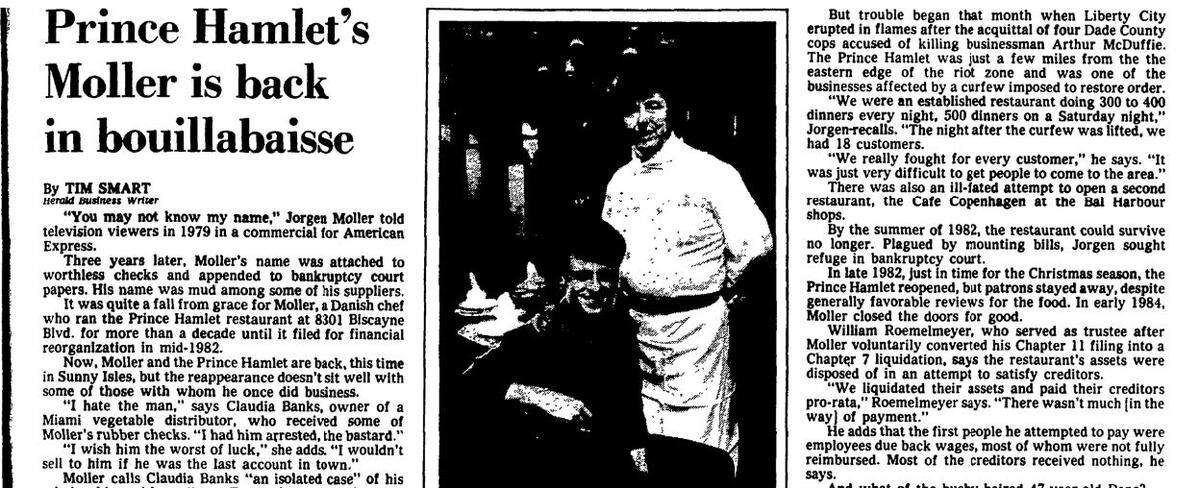
PRINCE HAMLET
Published Feb. 25, 1983
Mention the Prince Hamlet these days, and you’re likely to get a litany of complaints, or perhaps a wry comment about “something being rotten in Denmark.” Most of the complainers are former patrons who counted the restaurant as one of Miami’s finest.
Awarded four-star status by the Mobil Guide in 1981, a consistent Travel Holiday award winner for 10 years, and cowinner of the 1979 Ivy Award with New York’s Lutece, the Prince Hamlet admittedly fell on some hard times, and food and service plummeted to an abysmal level.
Well, it is time to forgive and give the Prince Hamlet a second chance.
After closing for the last half of 1982 and filing a bankruptcy petition, Jorgen and Monica Muller are back in business. And the resurrected Prince Hamlet, which officially reopened Dec. 15, shows a lot of the promise of the Prince Hamlet of old.
The smorgasbord is back in all its former glory. On a recent visit, five different varieties of smoked fish beckoned, along with at least three kinds of herring. There was a whole turkey, Chinook salmon, chopped chicken liver, a bowl of fresh boiled shrimp and caviar. All were excellent.
Two pasta salads were a bit boring, as was the room temperature Waldorf salad. But you could find heaven in the cheeses, stuff yourself silly on the steamed mussels in sour cream. If the fresh fruits were desultory -- a watermelon and hard-to-find bits of chopped apple -- at least they were present.
The only serious problem we encountered was slow service -- a long wait for our entrees and a long wait for coffee and the check. But our waiter was pleasant and knowledgeable about the entrees and the wines (a small list on a large, unwieldy plywood plank, which made squinting at the pasted-on labels a bit difficult).
Entrees include some of the favorites of old -- bouillabaise ($14.95), roast duck with apples and prunes ($13.95), veal Oscar ($16.95). The shrimp scampi ($16.95) was a mound of large shrimp, happily devoid of the greasy, buttery pool one so often encounters in this dish. Instead, the shrimps were headily spiced with just enough garlic to give them character and were served steaming hot. The plate was attractively presented, ringed with fresh green beans, carrots and new potatoes, and just one jarring touch -- fluted instant potatoes.
The brisket of beef ($11.50), recommended by our waiter, was a generous serving of tender beef, its rather listless flavor livened by whole mushrooms in a light wine sauce. A crisp potato pancake was accompanied by horseradish-spiked sour cream and apple sauce, and the sweet-and-sour red cabbage was still crunchy enough to please. Again, the only disappointment was the instant potatoes.
Other entrees include frikadeller ($9.95) a veal pattie sauteed golden brown and served with red cabbage and cucumber salad, Wienerschnitzel ($12.95), pepper steak ($16.95), pompano menuiere almondine ($14.50), red snapper with fresh fennel ($12.95) and salmon steak on a spinach bed with bearnaise ($15.95).
A loaf of crispy-outside, herb-brushed bread and a crock of sweet butter proved too good to pass up, despite the preponderance of food. Desserts also were too tempting to avoid. They were attractively displayed on a table near the smorgasbord -- cheesecake crowned with whole ripe strawberries, chocolate mousse and chocolate mousse cake, Danish cake and custard-filled pastry.
However, we found that the desserts looked better than they tasted -- the Danish cake was a bit soggy, the chocolate mousse cake was too rich, with chocolate in the cake, mousse and chocolate bits. And so we would recommend bypassing the calories in favor of fruit from the smorgasbord table.
It’s clear that the Mollers are trying earnestly to regain the favor of South Florida diners (Jorgen was very much in evidence the night we visited, seating diners and keeping an eye on the operation). If the food quality continues this high, and the service improves, the Prince Hamlet will once again play a leading role in the local dining scene.
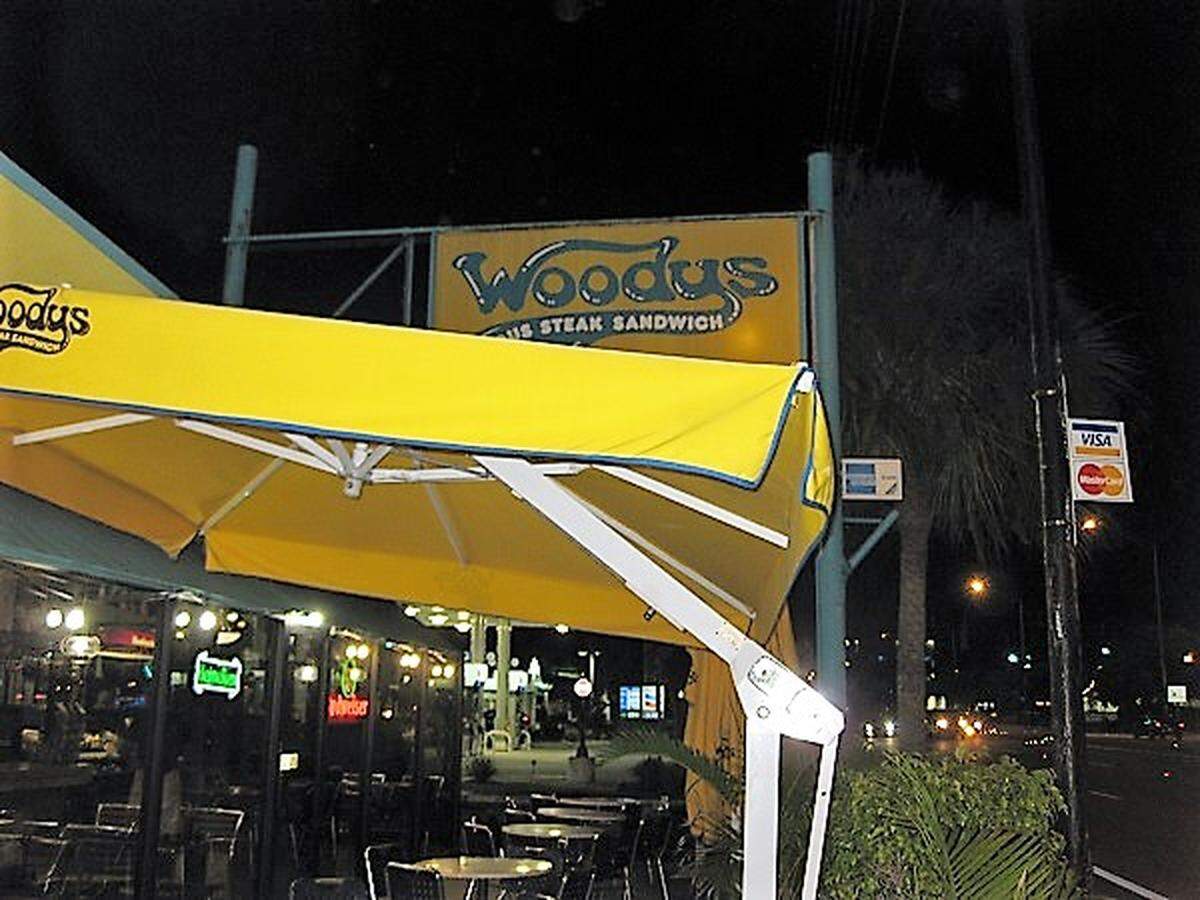
WOODY’S
Published Jan. 20, 1983
Fifteen years ago, Aime (Woody) Wood said to his wife: “We’ve got to do something with the business. Hamburgers are going down the tube.”
So they added two little dining rooms to their take-out burger joint at 13105 Biscayne Blvd. and switched to steak sandwiches.Since then, customers have eaten more than a million of Woody’s steak and cheese sandwiches. Business, he adds, is better than ever.
What is it that makes Woody’s World Famous Steak Sandwich so good?
Maybe it’s the way the heat from the thinly sliced quarter- pound steak melts the bed of provolone cheese.
Maybe it’s that the steak and cheese are held snugly in a bun lightly toasted on the outside, doughy fresh on the inside.
Or maybe it’s because it costs only $2.19.
The steak sandwich itself costs $1.89. For 30 cents more you can top it with provolone cheese, grilled pepper, lettuce and tomato or grilled mushrooms.
Mondays through Saturdays, 10 a.m. to 5 p.m., customers eat 200 to 300 steak sandwiches at Woody’s. Each day, Woody buys 15 to 18 dozen rolls from Marciano’s Italian Bakery in Hialeah.
In preparing the meat, Woody freezes it just enough to be able to cut it thinly. He buys his beef by the crate, from Nicaragua or Guatemala.
Domestic beef, Woody said, is not as good because the cows are “fed hormones that make the cattle grow ... but there’s no flavor.”
He talks as he slices, showing off palmfuls of bright red meat. The latest shipment came from Juigalpa, Nicaragua.
“Come here, I’ll show you the secret,” he says, stepping into the kitchen.
He grills only the outside of his rolls, so they’ll be crispy outside, soft within. He cooks the meat on a stone-plated grill that can be cleaned with the stroke of a spatula.
Woody’s two employes, Doris Casey at the grill and Olga Santiago at the register, also sell chili dogs ($1.05), French fries (58 cents) and malted shakes ($1.04).
Woody, 62, built the small restaurant in 1954. The place has picnic tables out front with a view of a tacky, busy, commercial stretch of the Boulevard.
“It’s not formal dining, to say the least,” says North Miami Deputy Police Chief Tom Flom, a Woody’s regular. “You have to appreciate the ambiance.”
Woody got into the restaurant business several years after a medical discharge from the Air Force. He was a World War II navigator whose back was broken during a plane crash in 1942 in North Africa.
The disability pay he gets from the Air Force, he said, helps him keep the prices reasonable on his sandwiches.
And his customers appreciate that, he said.
“A man came in here the other day and said, ‘You know, your steak sandwich is one of the nice things about Miami.’“
This story was originally published November 29, 2019 at 7:00 AM.