Judge appoints attorney to oversee Piney Point. He hopes to shut down troubled site
An emergency court order has turned control of the troubled Piney Point hazardous site over to a third-party operator who says he’s committed to finding the best way to shut the site down for good.
Judge Edward Nicholas approved the Florida Department of Environmental Protection’s request Wednesday. The action takes away oversight of the former phosphate processing plant from HRK Holdings, LLC, the property’s owner.
According to court documents, Nicholas appointed Herbert Donica, a Tampa-based bankruptcy lawyer, as the receiver. In an interview Thursday with the Bradenton Herald, Donica expressed his commitment to safely closing the site.
“I understand the complexities and the enormity of the problem. This can only be done by working with people,” he said. “This is more of a construction project than a case in court. It’s entirely different because the more we litigate, the more everybody loses. We need to get a plan and get the site controlled.”
The court ruling comes months after site operators at Piney Point alerted FDEP to a leak in a giant industrial pond that threatened to collapse and flood the area with contaminated water. State officials approved the emergency release of 215 million gallons of water to be released into Tampa Bay to prevent that disaster.
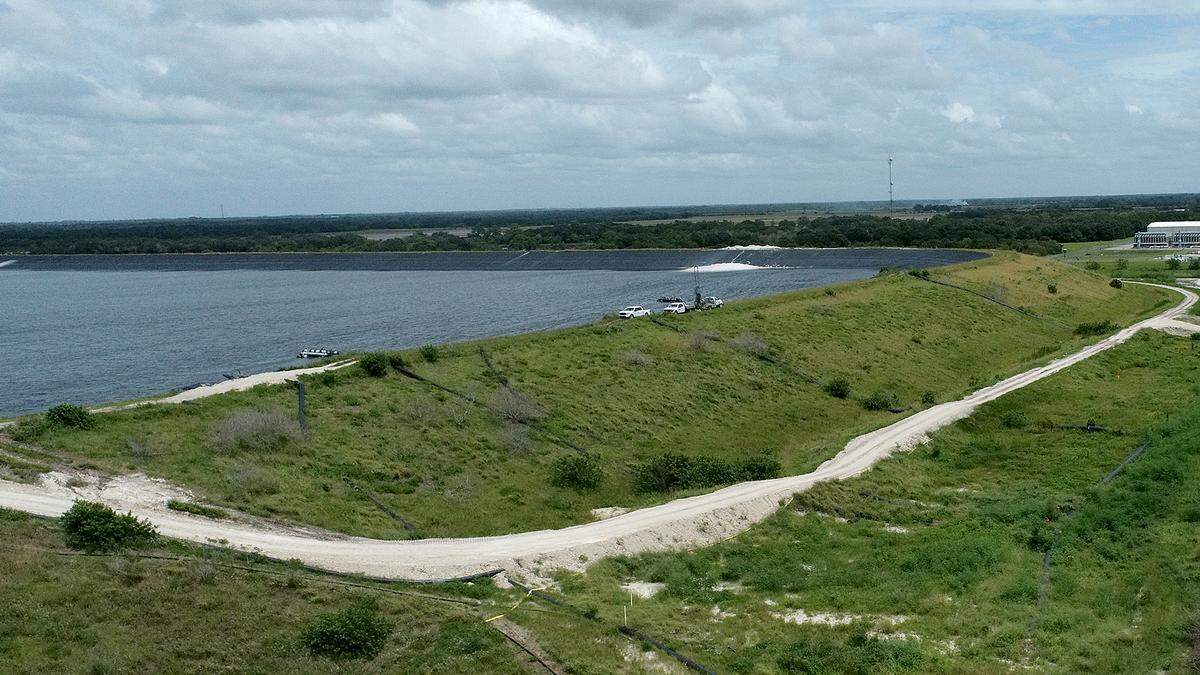
Since then, the rainy season has created another emergency at the site, with 170 million new gallons of water being collected in the massive ponds of contaminated water. In a lawsuit filed against HRK earlier this month, FDEP’s legal team warned that the site is quickly reaching maximum capacity and in danger of another spill.
What can Piney Point’s receiver do?
Donica is no stranger to the Piney Point problem. He was involved when Mulberry Corp. abandoned the property in 2001, serving as a bankruptcy trustee in the case. As a receiver, Donica will assume complete control of everything on the site, giving him a wide berth to make any decisions toward closing the site cleanup and closure.
FDEP officials are expected to provide the funds Donica will require in order to shut down Piney Point. As of mid-July, the state had already spent $46 million toward the site’s closure.
Even though the court order was only approved Wednesday, Donica said he has been in constant contact with FDEP leaders about the latest conditions at Piney Point. He said the agency reached out to him because of his past involvement in the site’s legal proceedings.
Opting to use him as a third-party receiver could go a long way toward actually shutting Piney Point down, Donica predicted, suggesting that HRK’s financial troubles and prioritization of corporate profits may have contributed to the disaster.
The Piney Point site is in the middle of foreclosure proceedings. As of March 2017, HRK had less than $100,000 in its bank account, according to court documents.
“The problem that FDEP realized is that notwithstanding, this is HRK’s responsibility. Even if (HRK) had the money, there’s a conflict there. They have an incentive to spend less money, not more,” Donica explained. “They have competing interests, whereas a receiver has one goal that’s fairly linear – get this thing under control and protect the community.”
Following the guidance of experienced scientists and engineers will be Donica’s priority, he said. Even then, a resolution to Piney Point will not come quickly. Ever since the site was abandoned by its former owners, state officials and local leaders haven’t been able to agree on the proper method for getting rid of the hazardous materials left on the property.
“I’m going to focus on the science and that’s where we’re going to stay to get a solution. If we let people sit in a circle and bicker instead of doing something, which has happened for 20 years, this is what you get.”
How did Piney Point happen?
For decades, Piney Point operated as an industrial plant that took in phosphate rock and extracted phosphorous, a key ingredient in fertilizers. When Mulberry Corp. went bankrupt and abandoned the site in 2001, it fell under the state’s jurisdiction.
Florida officials were left to deal with millions of gallons of contaminated water and a mountain of radioactive material. Gypsum, a byproduct of the extraction process, isn’t approved for any other purpose because of its slightly radioactive nature. At Piney Point and other phosphate processing plants around the state, gypsum is piled high into what are known as gypsum stacks.
Gypsum stacks are covered in a heavy-duty plastic liner to prevent the material from contaminated the surrounding area. Enormous ponds of process water sit on top of those stacks above the liner. That water, which was used to operate the machinery at the plant, is rich in nutrients that are dangerous to the environment.
Two of the main contaminants are nitrogen and phosphorous, both of which are known to fuel harmful algae blooms in local waterways. Because process water is nutrient-rich, it has to be treated before it can be released from the site.
What happens next at Piney Point?
Scientists have argued that the red tide that occurred in Tampa Bay after April’s emergency discharge is linked to that release. With the ponds approaching maximum capacity, FDEP hinted at future releases of wastewater in order to prevent the entire system from collapsing.
Compared to the wastewater that entered the bay in April, the process water on the site is much cleaner than before, according to a recent update from FDEP. The state agency says up to 99 percent of the harmful nutrients have been removed following innovative water treatment technologies.
Asked whether he foresaw ordering another wastewater discharge into Tampa Bay, Donica said he would meet with staff to determine the best short-term action.
“I haven’t had detailed conversations with scientists, but I am proceeding through those meetings and asking the questions I need to ask to figure what we can do immediately to make sure we’re safe,” Donica said.
After first becoming involved with the site more than 20 years ago, Donica empathized with some of the local conservation activists that argue state leaders didn’t do enough to resolve the Piney Point problem when they had the chance. In June, environmentalist groups filed a federal lawsuit against HRK and FDEP, alleging negligence against both parties.
“Here we are again,” Donica said. “I could’ve gone to sleep for 20 years.”
While efforts are being made to lower the water levels, FDEP and county officials hope to move forward with approving the permit for an underground injection control well that would pump the treated wastewater below the Floridian aquifer. Experts say that the water would undergo a natural treatment before reappearing in the Gulf of Mexico 100,000 years later.
A hearing for the permit required to build the well is expected to be held at the end of September, but no final decisions have been made on how to get rid of the treated wastewater at Piney Point. As he steps into the role, Donica looks forward to working with community leaders and residents alike when it comes to making those crucial decisions.
“I’m going to work very hard on this and keep an open mind and an open door,” he said. “Anybody with a suggestion, I want to hear it. It could be the missing piece of the puzzle, but primarily, I’m going with the scientists and engineers.”
This story was originally published August 26, 2021 at 3:37 PM with the headline "Judge appoints attorney to oversee Piney Point. He hopes to shut down troubled site."