
During this downtime, take a moment to reminisce; you won’t regret it
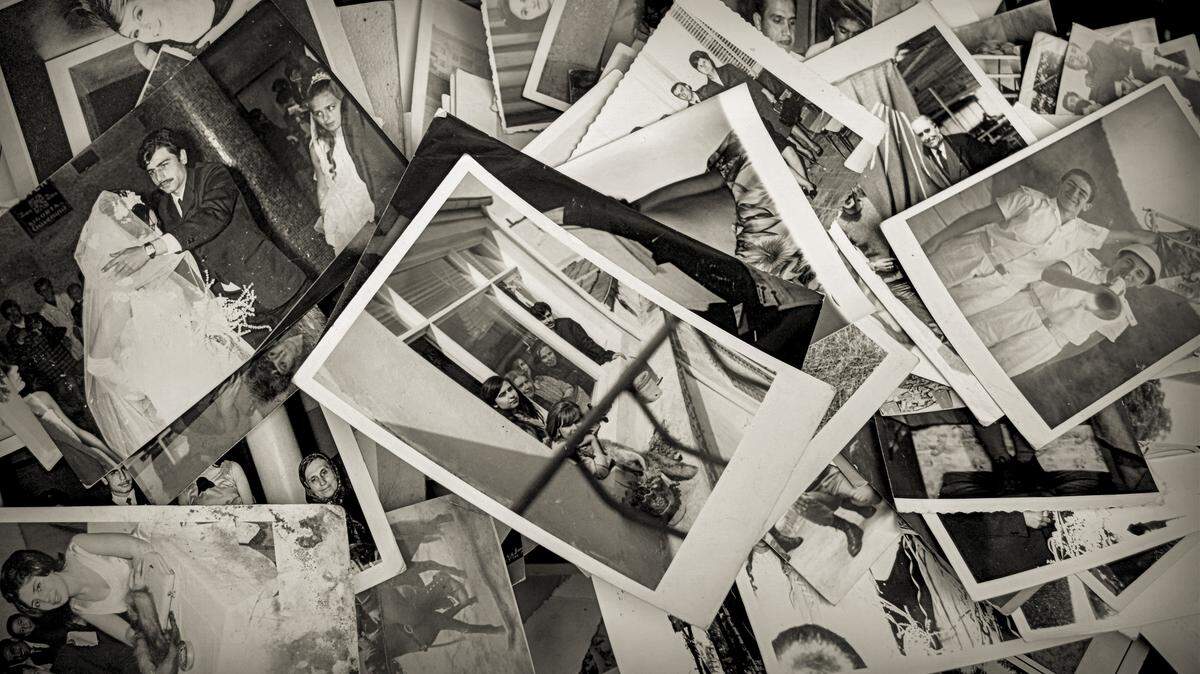
Plastic containers have been collecting dust under our bed for eight years, at least, since we downsized after the youngest left for college. But I’ve probably been in possession of their content for almost two decades.
Though I’ve always meant to sort and identify these goodies, I’ve never gotten around to it. Job and family responsibilities called, and like most projects that require hours of attention, I had neither the time nor the inclination.
But with the pandemic I now have both. The tempo of our lives has acquired its own surreal rhythm, and I’ve been approaching long-ignored matters with two thoughts: Why not? And, if not now, when?
So, I decided to tackle the Pandora’s box that is my mother’s collection of old photos last week. By old I don’t mean ones trapped in my smartphone or hanging around in the cloud. These pictures are ancient, from the beginning of the 20th century, and many don’t have names or dates on them, leaving me to wonder who these forgotten people are and what they were doing among my mother’s memories.
There’s something about old black-and-white photographs that turn me nostalgic; something about their scalloped edges that forces me to think about those who came before me. Even the muted colors of early 1960s pictures make my stomach knot and my heart thump. So many people in them are dead, so many gone before I ever thought of asking about their goals, their yearnings and disappointments.
In these pictures, everybody I once thought as decrepit now looks so heartbreakingly young. I am, in fact, older than they were at the time. Grandparents. Great uncles and aunts. My parents’ cousins. And all those assorted people who require a family tree to parse identity and relationship.
In one box, for instance, I discover a grainy 8-by-10 of my grandmother holding my aunt as an infant. I knew my abuela as a heavyset, wrinkled woman, but here her skin is unlined, her smile winsome. At the time she didn’t know she would live through the Spanish Civil War, be widowed within a decade and be forced to emigrate to Cuba along with two young daughters. I also find a photo of my mother’s father, a man I never knew, and one of his mother. He’s in a suit and tie, with a Panama hat at a jaunty angle: What a heartthrob! She looks like she’s sucking on a lemon.
The real jackpot, however, comes from the pile assigned to my mother. Maybe because I’m fast approaching the age she was when she died, maybe because Mother’s Day, with its accompanying cocktail of emotions, is upon us, I take my time with these pictures. With these I linger. I sit in a comfy chair and dredge up the details I know of her life, a life that, by any measure, was unfair and difficult but also full of joy and small pleasures.
Here she is in 1939, at 4 years of age, with her older sister in her hometown of Sitges, Spain. Here, in 1943, in her First Communion whites. And here, in an undated photo, at the steps of the Abbey of Montserrat in Catalonia with an uncle and aunt.
Later pictures show her at her bridal shower — by then in Havana — and at the beach and in the kitchen, two of her favorite places. But the photo that really gets me, the one that forces me to close my eyes and swallow hard is of her riding a bike down a street I vaguely remember. It was her mode of transportation before she learned to drive in exile, when her life was upended.
In a convoluted way, that one image makes me think of our current surreal times, of the uncertainty and fear we face. Back then, exile probably wasn’t too different, what with its unpredictability and longings for the past, but she got through it. We got through it. We overcame, we soldiered on, we thrived.
Now more than ever I should hold that truth close to my heart. We are all, in some way, riding that bike in an unfamiliar city, waiting, waiting, waiting to learn to drive.
(Ana Veciana-Suarez writes about family and social issues. Email her at avecianasuarez@gmail.com or visit her website anavecianasuarez.com. Follow @AnaVeciana.)