
Art week may be over, but these local ladies are still calling the shots for Miami’s cultural scene
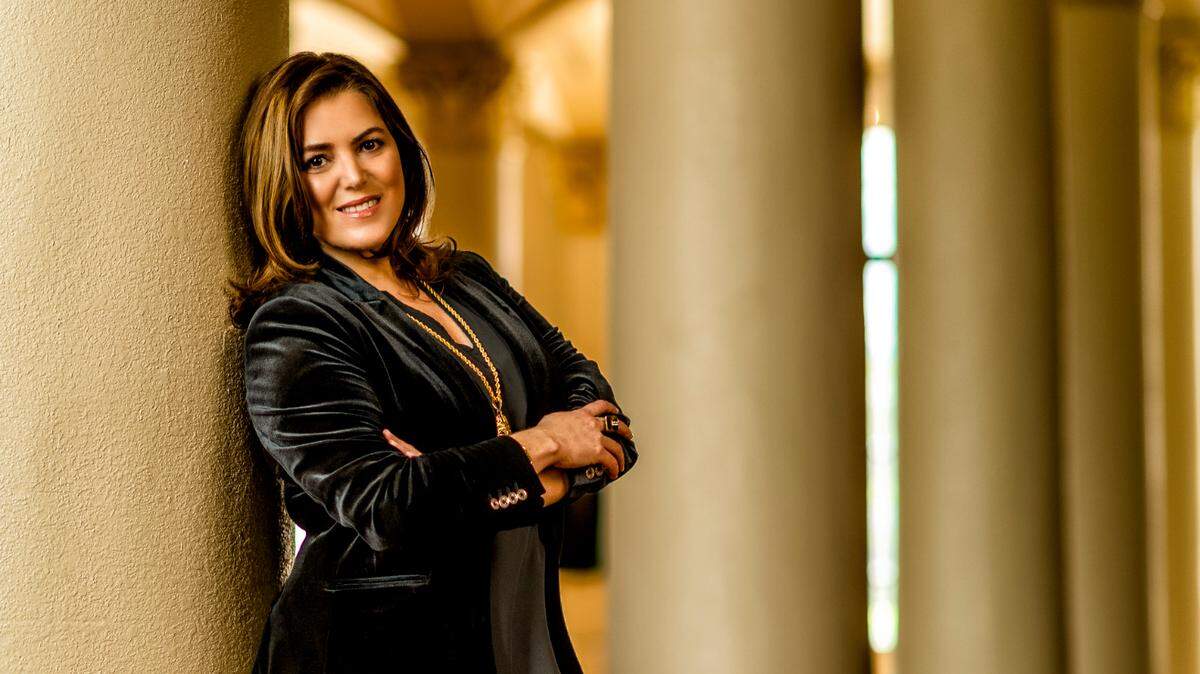
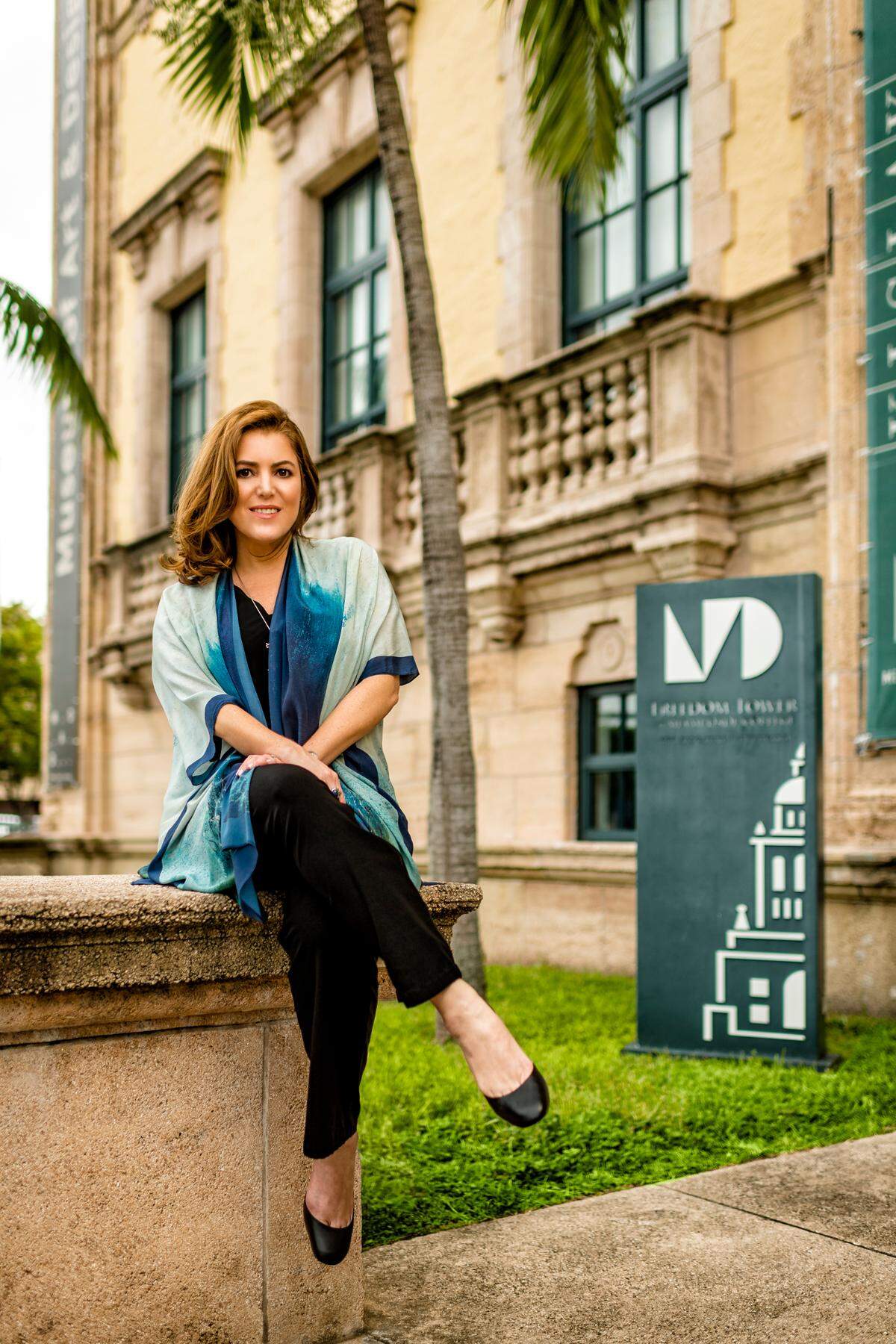
Natalia Crujeiras, executive director of the Cultural Affairs Division at Miami Dade College
Interview by Christie Galeano-DeMott.
The arts have always played a starring role in Natalia Crujeiras’ life. Growing up in Mexico City, she frequented her grandparent’s farm in Tabasco and fondly remembers her grandfather singing and playing the guitar after the family’s traditional Sunday dinners. Although she didn’t inherit the gift of song, Crujeiras grew up painting with acrylics, studied graphic arts and communication and most recently discovered baking as another way to express her creativity.
Before landing at Miami Dade College, Crujeiras’ impressive resume boasts stints at Univision and Telemundo as a journalist and as a lecturer at the University of Miami, where she also directed her alma mater’s broadcast operations and was instrumental in helping to develop and integrate social media and new media technology into the curriculum.
Within Miami Dade College’s cultural affairs division, Crujeiras oversees the operations and strategic direction of the Miami Book Fair, Miami Film Festival, Live Arts Miami, the Museum of Art & Design, the special collections galleries at the Freedom Tower, the Koubek Center and the Tower Theater Miami.
These cultural powerhouses are run by talented leaders so Crujeiras works tirelessly to support their creative process, respect their artistic freedom, advise them and help integrate each institution’s vision into the college’s mission of serving its students and our community.
“I see myself more as a facilitator. I want to create the conditions for my team of experts to be able to flourish and achieve their potential,” she says.
THE IMPORTANCE OF ART EDUCATION
Exposing children to the arts and creative activities can open up their world by introducing them to a variety of civilizations and thus teaching them critical thinking and social skills. According to Crujeiras, in Miami-Dade County almost half of third graders are not reading at grade level. Statistics like these are what fuel her passion to ensure that the Miami Book Fair not only continued as a fair but also maintain its yearlong programs. One of those, the Read to Learn Books for Free program, delivers 4,500 complementary books every week to about 65 bookshelves across the county.
ARTS IN OUR COMMUNITY
Crujeiras believes that cultural experiences are among the most impactful ways to affect social change. Art allows us as a community to explore ethnic and racial representations, reflect on our history and provides an opportunity for people from different backgrounds to come together in a shared experience.
“Arts and cultural institutions can help uplift, strengthen and unify people and celebrate the complexity of our humanity,” she says. “In dark times,I think artists not only bring light but create light and sustain light. They help us understand what makes us human in the face of uncertainty or fear. Artists give us the words, music, dance and images with which we can mourn or celebrate.”
As a community that is bursting with so many extraordinary cultures, art also allows us to enjoy that richness and enables us to find commonalities. As Crujeiras puts it, “art can harness the goodness of mankind towards a worthy goal.”
WINTER EXHIBITIONS
Crujeiras and her team have worked vigorously to ensure that the college’s institutions not only withstand this unprecedented pandemic but pivot in creative ways that enable them to flourish. While this was the first year in its 37-year history that the Miami Book Fair didn’t take place in downtown, the team was able to effectively move from a massive in-person event to a multimedia production. The virtual system that Crujeiras compares to Netflix but for books was created for the fair but will be complimentary and available to the public indefinitely.
The Museum of Art & Design and the Freedom Tower’s special collections gallery have been redesigned for safe viewing and are now open. The museum debuts The Body Electric, an exhibition that looks back at the last 50 years and comments on how technology has affected us. For those who prefer a virtual experience, the museum and the Freedom Tower have launched new websites: the former featuring artist panels, conferences and performances and the latter highlighting the monument’s significance with its collection of historical documents.
THE FUTURE OF THE ARTS
Crujeiras’ outlook is positive as she sees arts and culture organizations learning from this current climate and finding new and different ways to connect with their audiences.
“I believe that arts and culture can be bridges,” she says. “To me arts can foster transformation, can bring light to local and global struggles, can allow you to fight for justice, freedom. (Art) is beautiful, it moves you, it allows you to imagine, to create. I see this job as a privilege.”
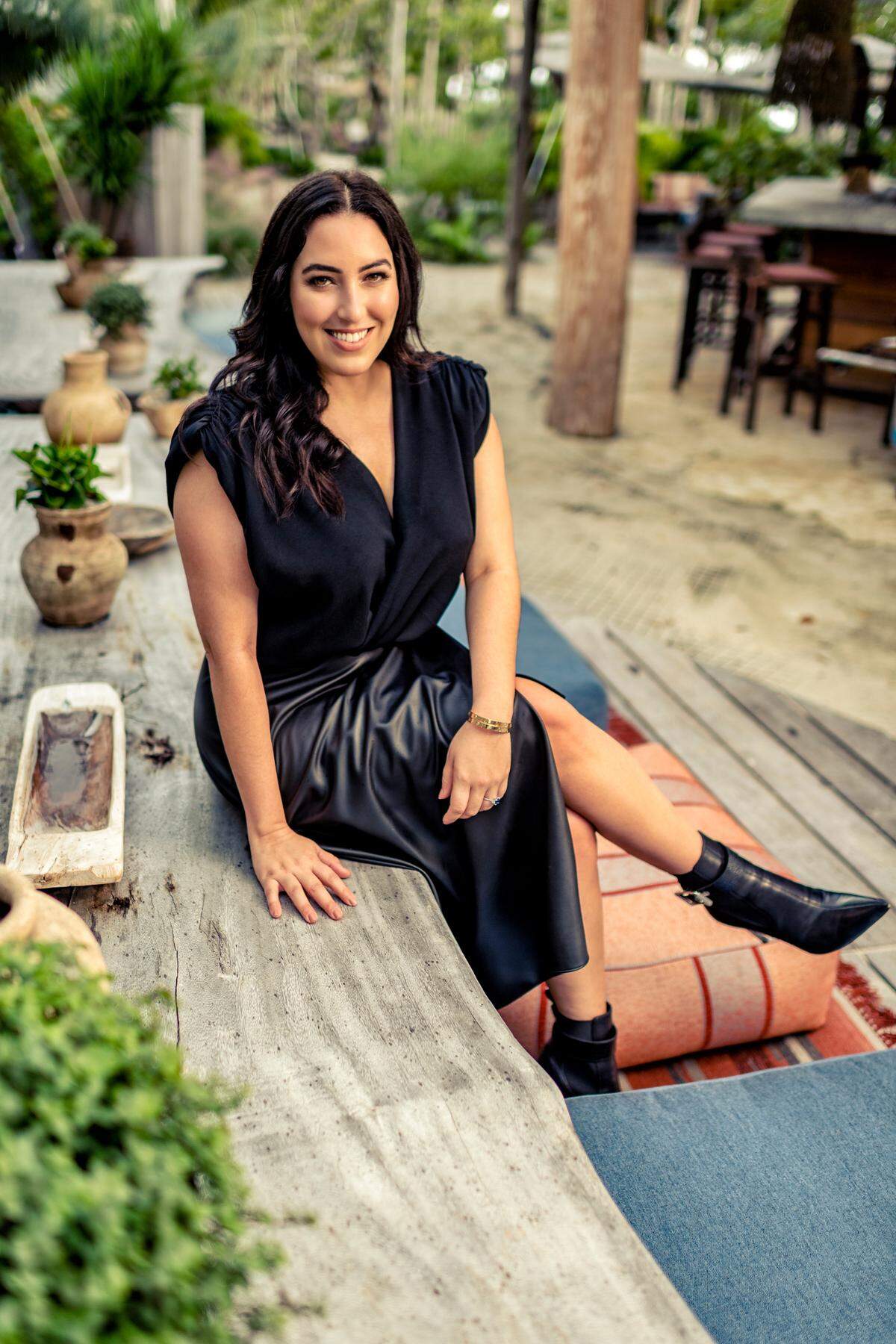
Shantelle Rodriguez, director of Superblue Miami
Interview by Alona Abbady Martinez.
Miami has gone from a culturally dormant community to a thriving art destination and now, there’s a new kid on the art block that aims to further electrify the city’s art landscape. The venue is called Superblue Miami and the goal is to introduce visitors to experiential art, an expression rooted in a fully immersive experience. Miami native, Shantelle Rodriguez, is the art center’s director. She explains the critical role visitors play.
“We like to say that the artists are creating the environment but really, ultimately, the experience and the art belongs to the people. The experience happens when the visitor actually steps into the room, into the visitor’s mind,” she says.
In essence, the work of art is not complete without you.
APPROACHING THE ASPIRATIONAL
Rodriguez, who grew up in a Cuban-American household without an affinity to art, understands how alienating approaching conventional works can be.
“I always felt studying it and getting into it later in life, that it’s very intimidating. It is sort of an elitist culture,” she says. “Superblue is making this the most inviting, welcoming environment you could visit so you don’t feel the way you may feel going into a gallery or museum...where you feel you don’t know enough,” Rodriguez adds.
The center opens Spring 2021 with 3 exhibits chosen to represent experiential art’s extraordinary bandwidth. James Turrell, whom Rodriguez defines as “the godfather of the movement,” will be showcasing “Ganzfeld” — a large-scale installation playing with light and space. Japanese-based teamLab, an interdisciplinary collective of 600 artists, programmers, engineers, and mathematicians — and one of the most recognized in the movement today — will exhibit, “Between Life and Non-Life,” a series of interconnected artworks exploring the relationship between humanity and the natural world. The third artist exhibiting is Es Devlin, a renowned stage designer for performers like Kanye West, Beyoncé and Adele. Her installation, “New Laybrinthine Mirror Maze,” takes viewers on a journey rooted in the human respiratory process — a timely, but purely coincidental theme for our current times.
“It’s showing the breadth of the movement. It really shows how expansive the medium is,” Rodriguez explains.
DESTINATION FOUND
The Allapatah location was thoughtfully chosen. Superblue defines itself as community-oriented and was drawn to the growing grassroots organizations in the neighborhood. “We’re already working closely with Motivational Edge and Esquina de Abuela. It’s a community that feels more like a family,” Rodriguez says. It’s also across from the Rubell Museum, with which there’s a close relationship.
The name was inspired by a pioneering movement of German Expressionism in the early 20th Century called “Der Blaue Reiter” or “The Blue Rider.” Spearheaded by Russian artist Wassily Kandinsky, the group introduced the avant-garde principle that color, in particular the color blue, carried a spiritual value — an ideology that would serve as a precursor to the abstract movement.
“They used blue as a super natural color and power to change the way we see the world,” Rodriguez says, before emphasizing the importance of experiencing art in an immersive fashion. “People with fresh eyes will give new meaning and hopefully people will be more interested in art and connecting to art.”
%20(1).jpg "Cropped_IMG_9604 (1) (1).jpg")
Alexandra Codina, documentary filmmaker
Interview by Erica Corsano.
Many a movie has been made about migrants crossing over the Mexican border into the United States, but perhaps none have examined the topic quite like Miami documentary filmmaker Alexandra Codina. Codina’s new film Paper Children chronicles the story of four Honduran siblings and their emotional rollercoaster ride with United States immigration.
“Most immigration stories hope to end the way ours begins...the majority of films on this issue are about the journey to the border and I think we need to talk more about what happens after the border,” explains Codina.
The film was one of nine documentaries nominated for the Miami Film Festival’s coveted Knight Made in MIA Feature Film Award, sponsored by Knight Foundation.
Paper Children begins with a family who is reunited as a real cohesive family unit and presents the question: will the system tear them apart? The film presents an intimate story of four kids who had to flee their home in Honduras because of gang violence and came to the United States to seek protection.
The YouTube Original shows viewers what’s its like after the children have arrived and are navigating the asylum process, while also trying to heal the trauma of the past.
A HEARTFELT MESSAGE
Codina originally pitched the project in 2017 at The Good Pitch (a New York- and London-based organization) to a room full of people who were interested in the intersection of documentary filmmaking and the making of social change. She then met the family featured in the film via Catholic Legal Services of Miami.
As a mother, and as the daughter of a Cuban immigrant father (who came to America unaccompanied by a parent), Codina was particularly touched by the influx of children arriving at the border and fleeing violence in Central America in 2014.
“As a mom reading these stories, they really shook me to the core. The idea that kids would have to experience such vicious violence but also as a mom being forced to have made the decision to leave my children in order to feed them.... and far more heartbreaking was the idea of thinking about what these kids had been through,” she explains.
As for the significance behind the film’s title, Codina says there’s a dual meaning.
“It points to the vulnerability of the children...there is so much in their lives which is fleeting. On the concrete side, its that they are reduced to a pile of papers as it relates to their fate in the system.”
BEYOND BORDERS
The most important takeaway the filmmaker wants viewers to leave with is for people to stop reducing this very complex issue to a question of politics and to really understand the human reality of why people are arriving at our border.
“I think that if we focus not on our political perspectives but more on the humanity, then we can actually have a more nuanced conversation and move towards a more sustainable, humane and working immigration system. It’s non functional right now.”
*Paper Children is available now on YouTube. More information can be found at paperchildrendoc.com.
%20Art%20Basel%20(1).jpg "Stefanie Reed (c) Art Basel (1).jpg")
Stefanie Block Reed, VIP relations representative of Art Basel Miami Beach
From the early days courting the revered Swiss art fair to Miami Beach to this year’s unprecedented pivot, bottling Art Basel’s ephemeral magic into a virtual experience, Stefanie Block Reed has been there through it all.
As a member of Art Basel’s VIP Representative Network, she paved the way for Art Basel Miami Beach’s inaugural fair in 2002 by connecting organizers with Miami’s top art collectors, like Craig Robins, Martin Margulies, and Carlos and Rosa de la Cruz, and arranging for Miami Beach city officials to visit Basel, Switzerland, where the fair has been an annual fixture of the art world since 1970.
A MASTERFUL START
A Kendall native, Reed grew up visiting New York City’s great art museums with her parents where a Picasso exhibit at MoMA moved her to pursue a career in the arts. She studied art history at the University of Pennsylvania before taking a position with Citibank in New York, where she advised private banking clients on their personal art collections. In 1993, an opportunity to open a Sotheby’s regional office in Miami brought her back to where it all started.
Reflecting on the early days of Art Basel Miami Beach, Reed says, “I’ll never forget walking that first fair. I was in total disbelief that this was happening in Miami.” Some of her favorite memories include showing artists from emerging galleries on the beach inside shipping containers with gallery walls from Switzerland, Karl Lagerfeld hosting a fashion show on Lincoln Road and an opening party at the de la Cruz’s private home on Key Biscayne. “We created a welcoming community where patrons of the arts wanted to be,” says Reed.
Routinely drawing upwards of 80,000 art aficionados, Reed’s watched as Art Basel’s evolved into the all-encompassing Miami Art Week with satellite fairs, parties and events galore. This year, she’s kept her network of international collectors close through the move to a completely remote experience.
BASEL 2.0
While the Miami Beach Convention Center was dark in early December for the first time in nearly 20 years, Art Basel Miami Beach did go on. From December 2-6, the international art fair premiered OVR: Miami Beach, a virtual “online viewing rooms” experience that patrons could stream from the safety and comfort of their homes free of charge on the Art Basel website.
Just as in years past, the fair kicked off with invitation-only VIP preview days where Reed accompanied collectors in online viewing rooms for conversations with gallery directors, much like she did at booths in the convention center.
“It’s a great learning opportunity to see the work and experience it,” says Reed. “It’s opened up Basel to a global audience for those who wouldn’t be able to travel to Miami.”
Looking back at what she’s fostered over the last 20 years with the arts in her hometown, Reed says, “It’s personally gratifying — to have grown up here and seen what it was like then and now. My children grew up in a community with art in their lives. It’s exciting to be a part of that.”