
Guatemala is now open to visitors, and a world of color and culture awaits
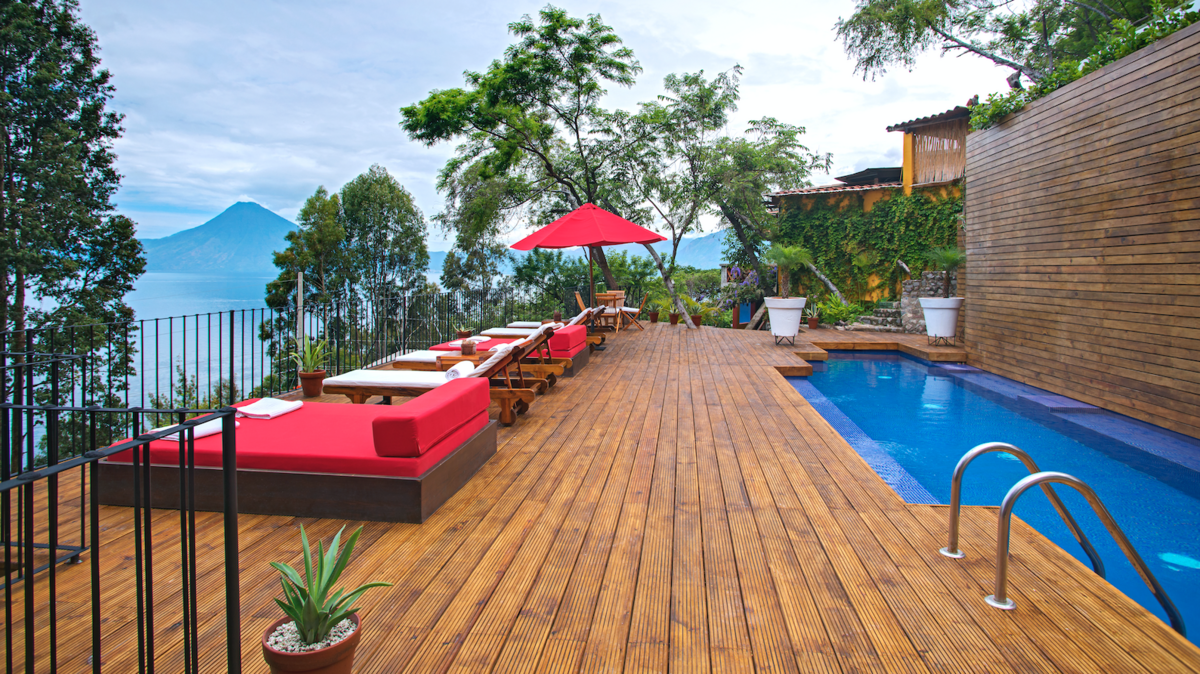
As I watched the shadowy mist and moody clouds craft a constant game of hide-and-seek with the impressive volcanos that ring Lake Atitlán, I finally allowed myself to rest in my decision to vacation in Guatemala. I had wrestled for weeks with “should I stay”, or “should I go”, before finally pulling the trigger on a ticket just days after the Central American country reopened its borders to visitors. For years, I’ve had my heart set on a stay at Casa Palopó, a remote luxury resort that rests on a cliff above vast and mystical Lake Atitlán, famous for its three majestic volcanoes, endless fern-covered hills, and intriguing Mayan communities. After numerous emails with the resort, I was finally persuaded by numerous safeguards in place to protect not only me, but the secluded villages untouched by the virus. What struck me most, though, was the resort’s urgency to help the local artisans who almost solely depend on tourism to survive. A six-month shutdown had crippled their main source of income, and they were desperate for support. Casa Palopó was offering hotel guests special vouchers, worth 10 percent of the nightly rate for each night of your stay, to be used to buy from locals. I decided the trip wouldn’t just be a vacation, but an opportunity for purposeful travel. Now, as I sat on my veranda in the company of those jaw-dropping views, I couldn’t imagine missing this culturally rich experience.
The Journey
While the flight from Miami to Guatemala City is only two hours, Lake Atitlán is a three-hour drive from the city, or a pricey 20-minute helicopter ride. I decided to break up the long trip with a stay in the beguiling city of Antigua, theatrically edged by three volcanoes, including active Fuego, which often (unsettlingly) rumbles and puffs smoke. The best way to get a feel for the colonial city is to freely meander its tidy cobblestone streets packed with landmark churches and beautiful parks; or book a walking tour to study its wealth of striking Moorish and Spanish-American baroque architecture. I was amazed by its tumultuous history of earthquakes and volcanic outbursts, evidenced in the cracked buildings and ruins scattered around the city. It was also my first chance to explore the authentic handiwork of local artisans.
Clad in traditional huipil blouses and wraparound skirts in endless color combinations – and all wearing masks and armed with hand sanitizer for shoppers – vendors showed off handmade goods from brightly hued blankets and clothing to delicate pottery and realistic artwork. Their sweet smiles and genuine “thank-you’s” for purchases, were a shot of medicine to my soul.
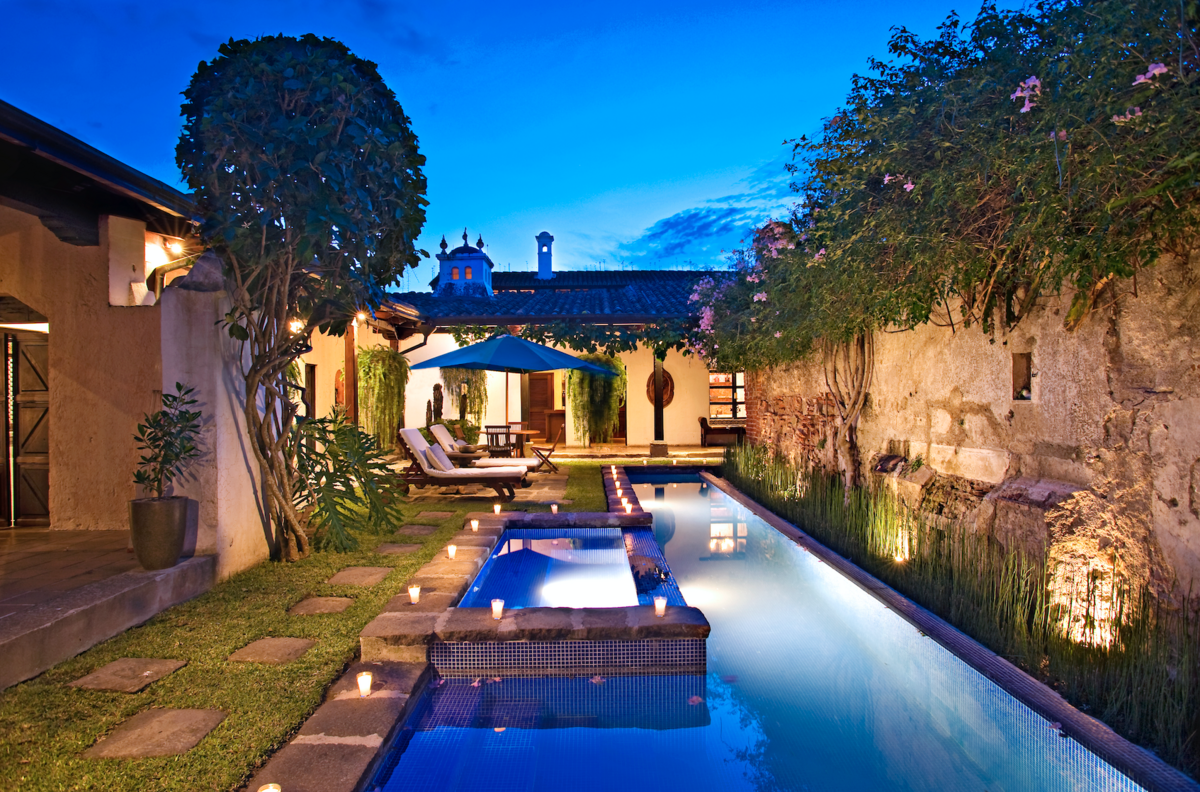
After timing a sunset stop at the famous Santa Catalina Arch, which frames the Agua Volcano like a dreamy picture, I retreated to stone-walled Villa Las Pilas, the sister property of Casa Palopó. Like an invite to someone’s extravagant home (it’s available only for private rental), I had free reign of the three-bedroom villa that opens to a courtyard presenting gardens and a long, heated pool. Rooms are grandly fitted with locally handcrafted decor and furniture, fireplaces, and king beds dressed in luxury linens; and house attendants are on standby to concoct drinks inside the home’s stunning Moorish-style bar and whip up a typical Guatemalan breakfast, served alfresco on the patio.
Waking up to the haunting church bells of the old city, I climbed the stairs to the villa’s rooftop for one last look at the surrounding city and volcanoes, before setting off on the drive to the highlands. While in good shape, the steep, winding roads to Lake Atitlán are not for the faint of stomach. Just as I began popping Dramamine and kicking myself for not splurging on the helicopter, a revealing glimpse into remote Guatemalan life began unfolding outside my window. Throughout the drive, I saw a man pulling a goat down the street, selling drawn-on-the-spot glasses of milk; roadside stands peddling everything from canned peaches and coffee to factories making cowboy boots and bricks; and ladies headed to the market, balancing baskets filled with wares on their heads.
Escape the Ordinary
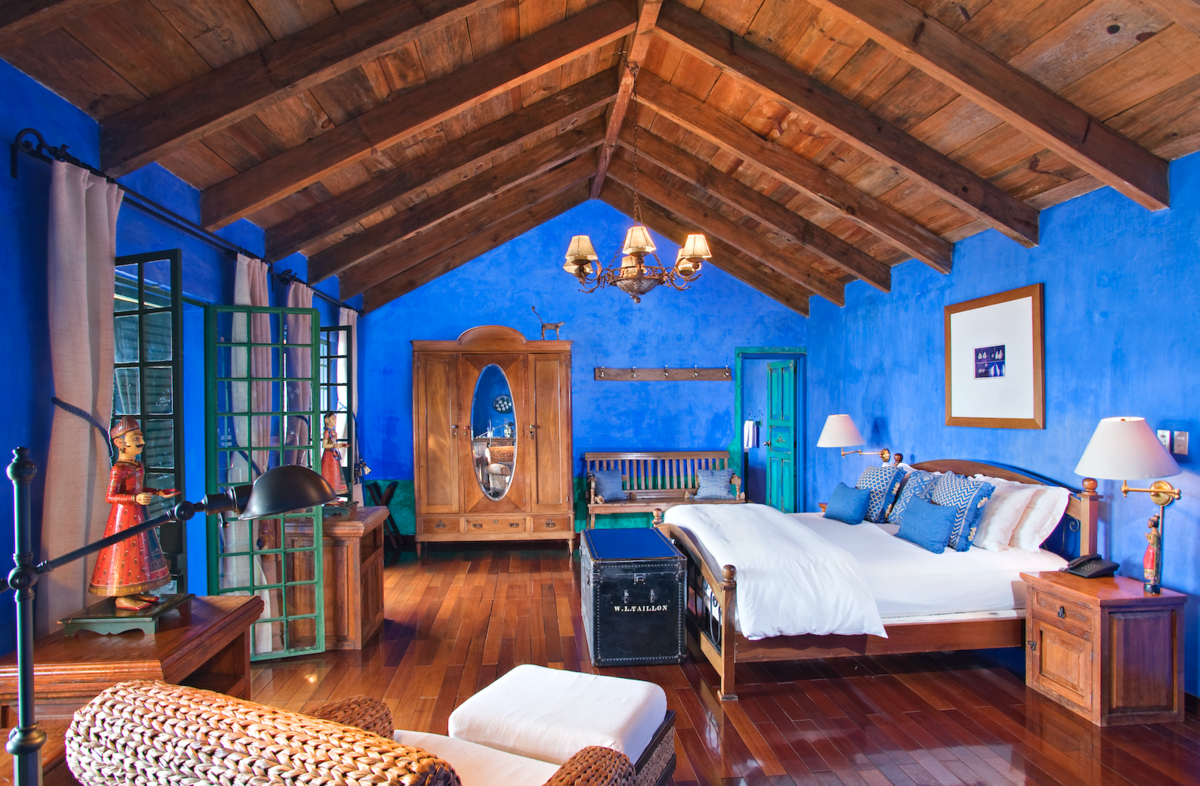
When the driver finally gunned it up the last hill to the entrance of Casa Palopó, my stomach settled and the fresh, cool air instantly revived me. (Guatemala is known for its year-round spring temperatures, and November through April is the best time to visit as it’s the dry season.) The private home that was transformed into a boutique hotel – and the only hotel in Guatemala under the luxurious Relais & Châteaux umbrella – grabs all your senses with its vibrant stucco walls and rooms layered in artwork, artifacts and handwoven textiles made by locals. Guests can choose from 12 rooms in the traditional main house — which is where I chose to stay — or three contemporary-style suites in the Villa addition perched at the top of the property.
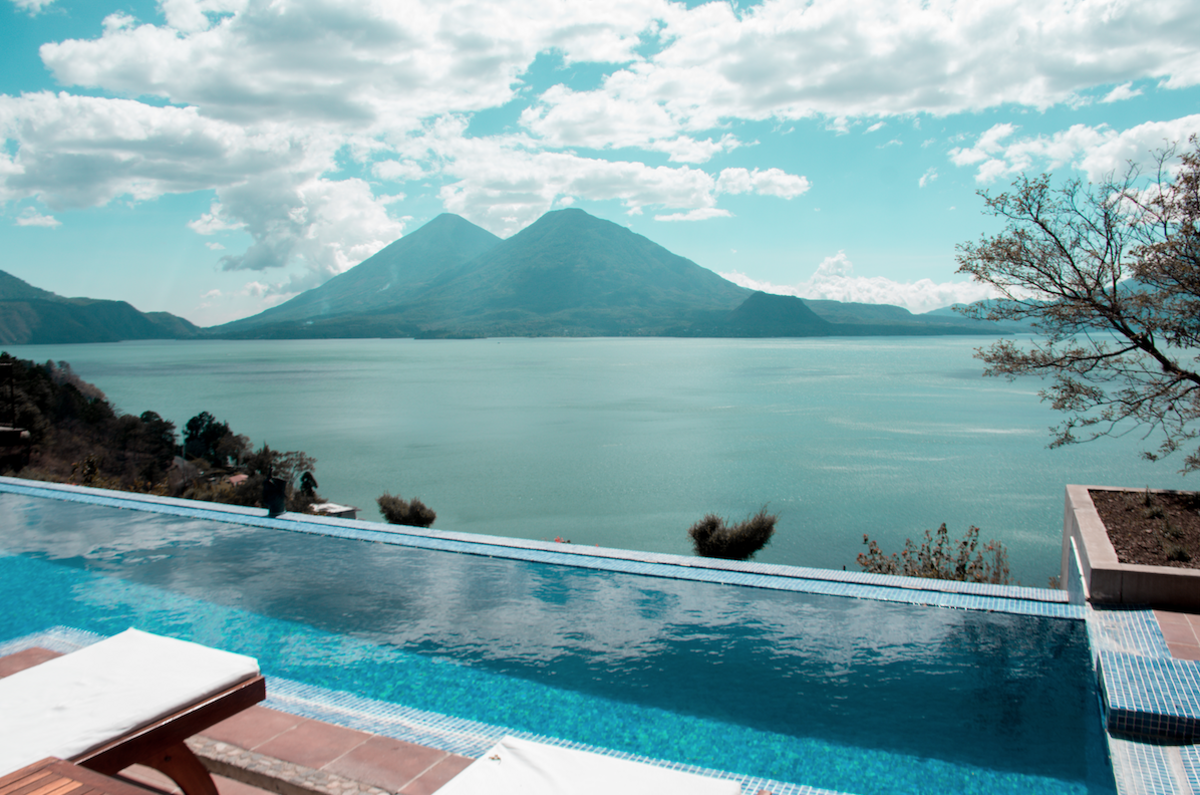
Of course, I was there for the hotel’s spectacular setting on Lake Atitlán. Quiet mornings were spent on my private veranda, watching the volcanoes appear and disappear in the clouds, boats crisscrossing the water, and paragliders braving the unpredictable winds. During the day, I gravitated to the sky-high infinity pool, which dramatically overlooks the property and lake, and where helicopters land and take off on the helipad below, adding to the spectacular show. New experiences have also emerged at the hotel since the pandemic, like a beautiful tea service in the afternoons, starring a tiered-tray dotted with vibrant flowers and Guatemalan delicacies that’s served at dreamy outdoor backdrops meant for social distancing. When night falls and the temperatures drop, staff strike a crackling fire, which affords a cozy setting for a pre-dinner drink.
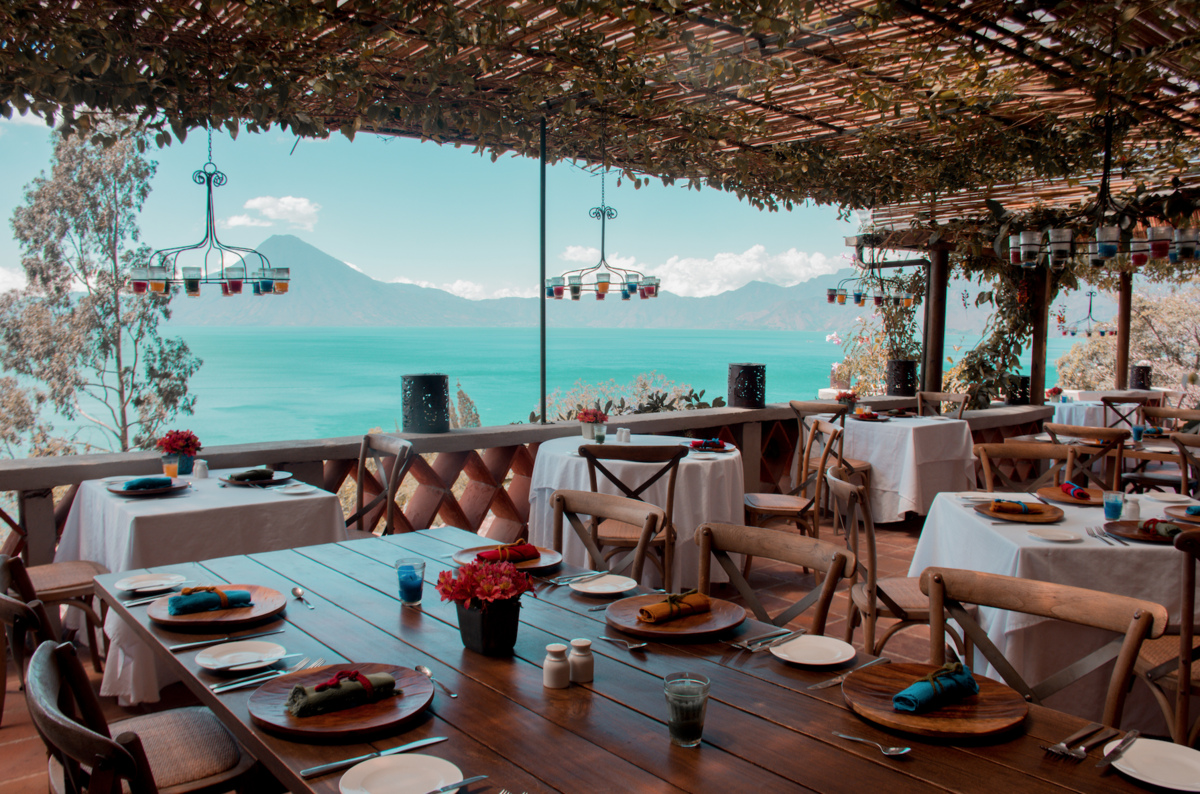
At restaurant 6.8 Palopó, intimate tables sprinkle the open terrace, where bright candelabras dangle from above. The menu is dictated by new executive chef Alvaro Perera, who injects knowledge and techniques from his nomadic life into modern-inspired Guatemalan dishes. Start with the simple black bean soup that comes with trimmings like fried dough, avocado and cheese; then move on to poached fish bathed in a corn; and potato cream sauce and finished with a layer of pickled baby corn, or a duck breast rubbed with cardamom, cinnamon and dried chilies, and touched with a hibiscus reduction. Something local is in every bite.
Purposeful Exploring
While most locals don’t swim in the deep-blue, volcanic lake – sadly, due to pollution and bacteria – travelers can experience the sparkling waters by paddle board, kayak or boat. I struck off on a lancha, a fishing boat turned water taxi, where I heard whisperings of a sunken Mayan city below and strained my eyes to make out the shape of Cerro de Oro, a hill that apparently inspired the elephant-eating boa constrictor in the classic book “The Little Prince.”
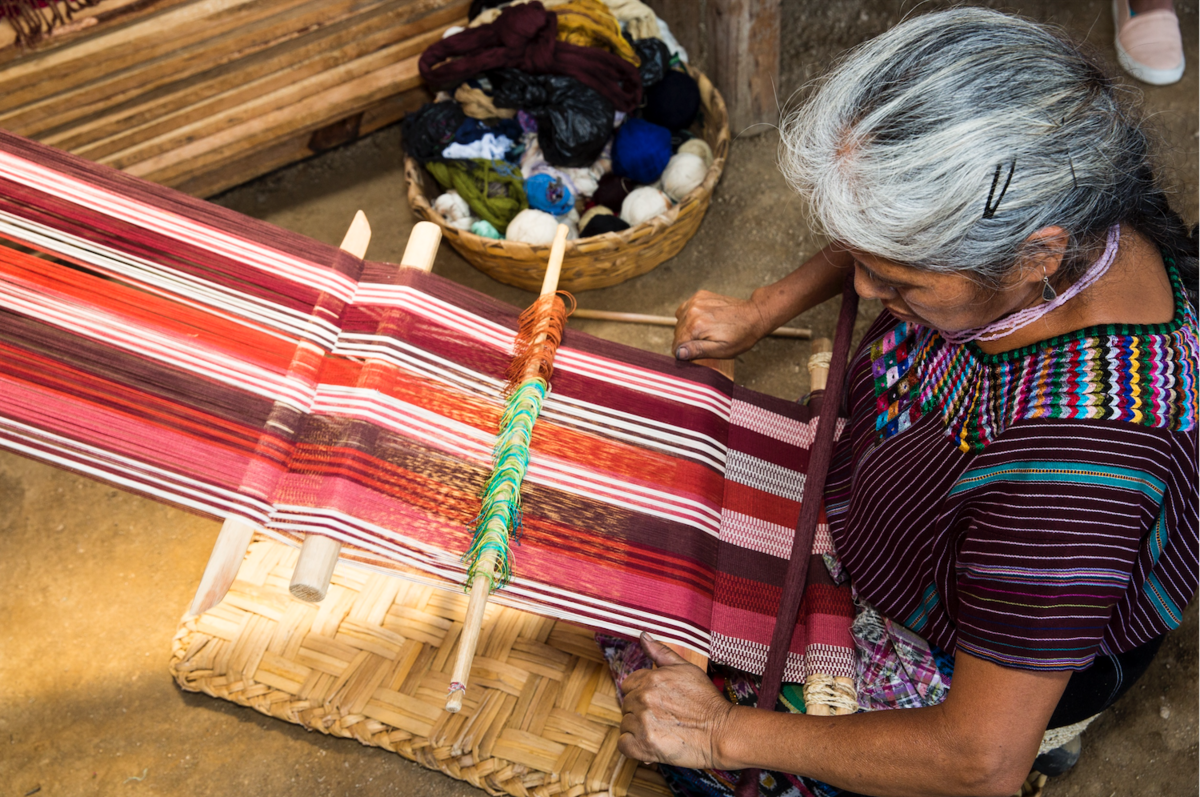
The most special part of the trip was docking at the towns and villages, each with its own character, that crawl up the lake’s hillsides. While some are still closed to visitors, the small town of San Juan La Laguna is welcoming tourists with safety precautions in place. Known for artwork that captures the colorful life and mysteries of the lake, and intricate woven textiles, this is the place to truly immerse yourself in the handiwork that makes Guatemala so unique. Popping in shops, women proudly illustrated the tedious process of dying cotton with local plants, spinning the cotton into thread, and the long work weaving on the backstrap loom. “How long did it take to make this?” I asked one of the women holding up an intricate table runner. “Maybe, 28 days, a month,” she answered. Her response further squashed any tendency to haggle prices, and by the time I walked down the hill to the boat, my hands were full of incredible finds.
When it came time to return home, my luggage was bursting with paintings featuring the life, people and landscapes of Guatemala, textiles that will be turned into pillows, brightly hued handbags with tassels and ikat patterns, and much more. A handmade tale that’s now weaved throughout my home as a constant reminder that travel can do so much for everyone – even in the middle of a pandemic.