
The flavors of Spain’s northern region can be found in the intricately curated menu at Leku
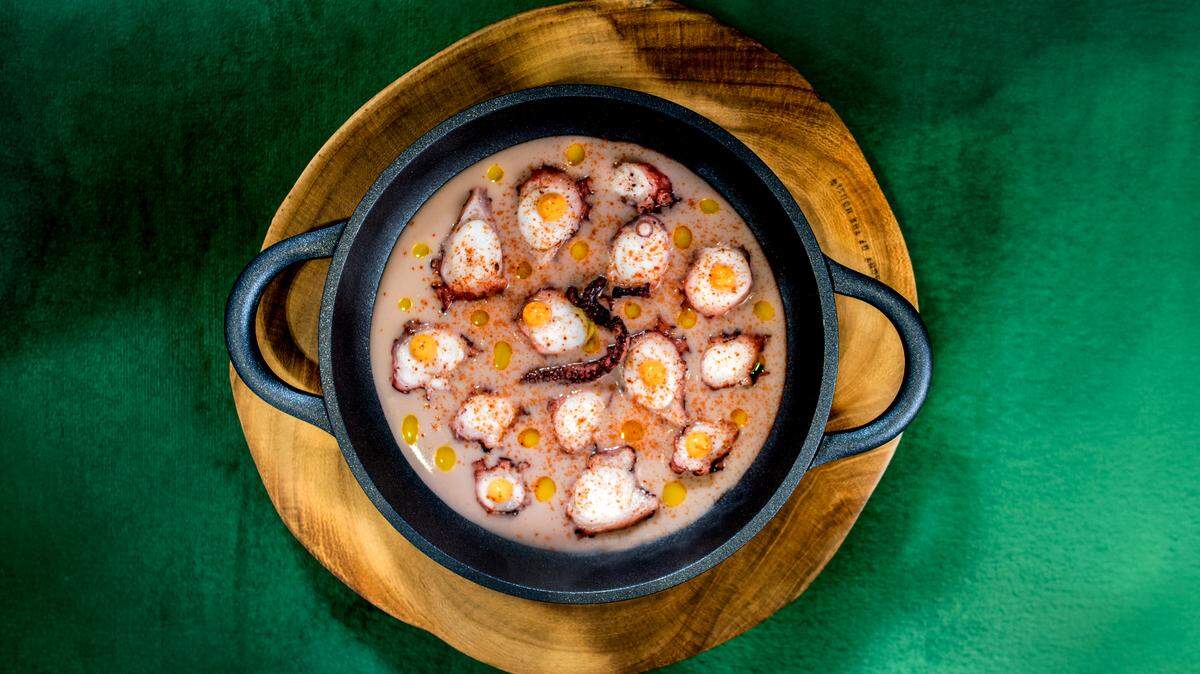
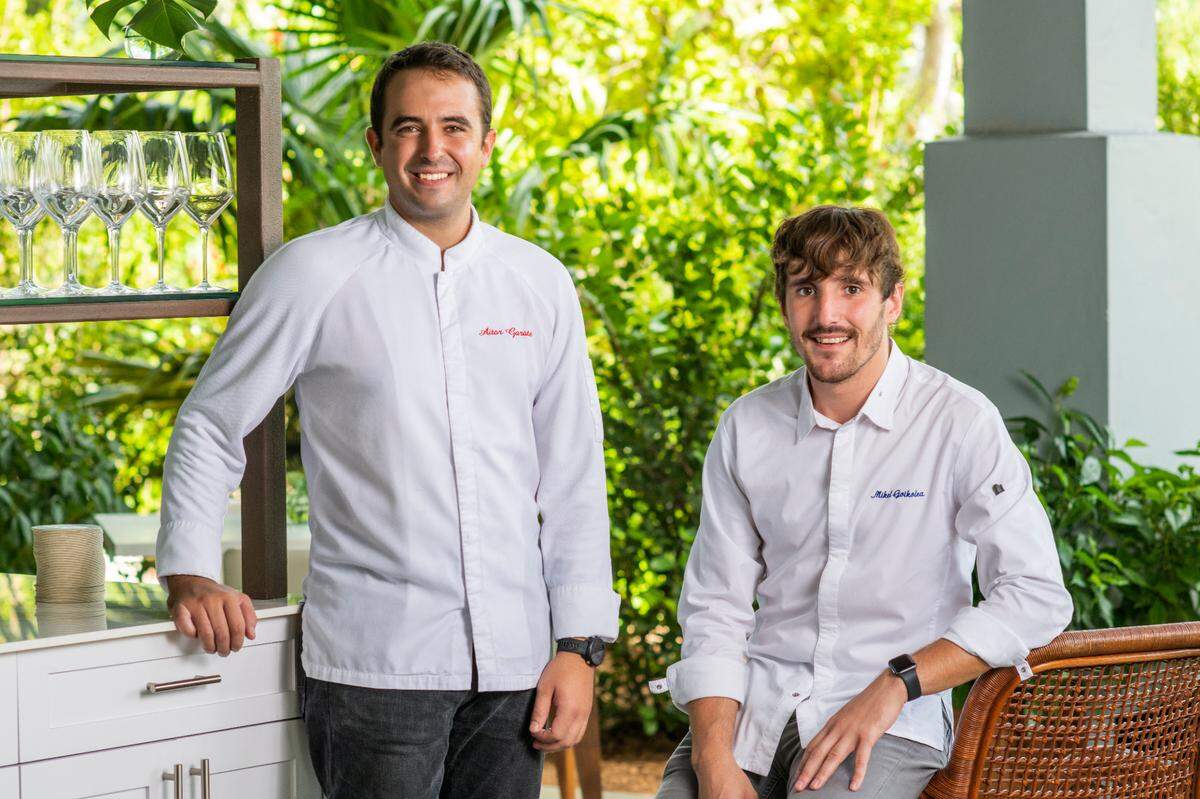
You might know Mikel Goikolea these days as possibly Miami’s hottest chef of the moment, running the kitchen at Leku with a flop of chestnut hair and a week-old-stubble beard that makes him look more like a garage rock bassist.
Picture him now instead at 10 or 12 years old, back in Spain, his family taking a road trip from their home in the Basque Country to a friend’s house in Galicia. They’d go during the summers, and the friend that put them up spent all day out to sea as a tugboat captain. The Goikolea family would get sun at the beach and soak in the iodine smell of the ocean at the harborfront home.
Then the captain would return. He had spent the day tugging ships into the harbor, and he’d show up with whatever the boats caught that day. Sometimes he’d have octopus, and they’d boil it until tender and serve on slices of boiled potato, like crackers, a sprinkle of the smoky-sweet pimentón de la Vera pepper over the top.
Diving into a delicacy
That Galician octopus is the inspiration for the dish here, something Goikolea says reminds him of those summer days spent smelling the salty sea air. It took Goikolea a few tries to perfect, working especially on the spoon-clinging consistency and undeniable taste of the sea in the sauce. He achieves it, and so can you, by cooking the octopus in a sealed plastic bag at exactly 203 degrees, capturing the juices that’ll later be used to make the potato cream.
At Leku -- the stunning open-air restaurant in the Rubell Museum with dishes as pretty as the artwork nearby -- Goikolea serves his pulpo in a gambas al ajillo- style shallow clay serving vessel. The dish has been all over Instagram these days, looking like a Michelin-starred cousin to that simple Galician version from Goikolea’s childhood. But it’s lighter, more refined, a texture in the sauce that’s original, full of the collagen from the octopus. Ethereal? Cloud-like? Perhaps more akin to the foamy sea that washes up on shore?
“If you follow the recipe,” Goikolea says in Basque-accented castellano, “it is simple to make, even though we make it with a lot of love and passion.”
Perhaps you didn’t spend your summers on the Galician coast, eating the octopus brought to shore that morning. But maybe this dish, once you make it yourself especially, will make it seem like you did.
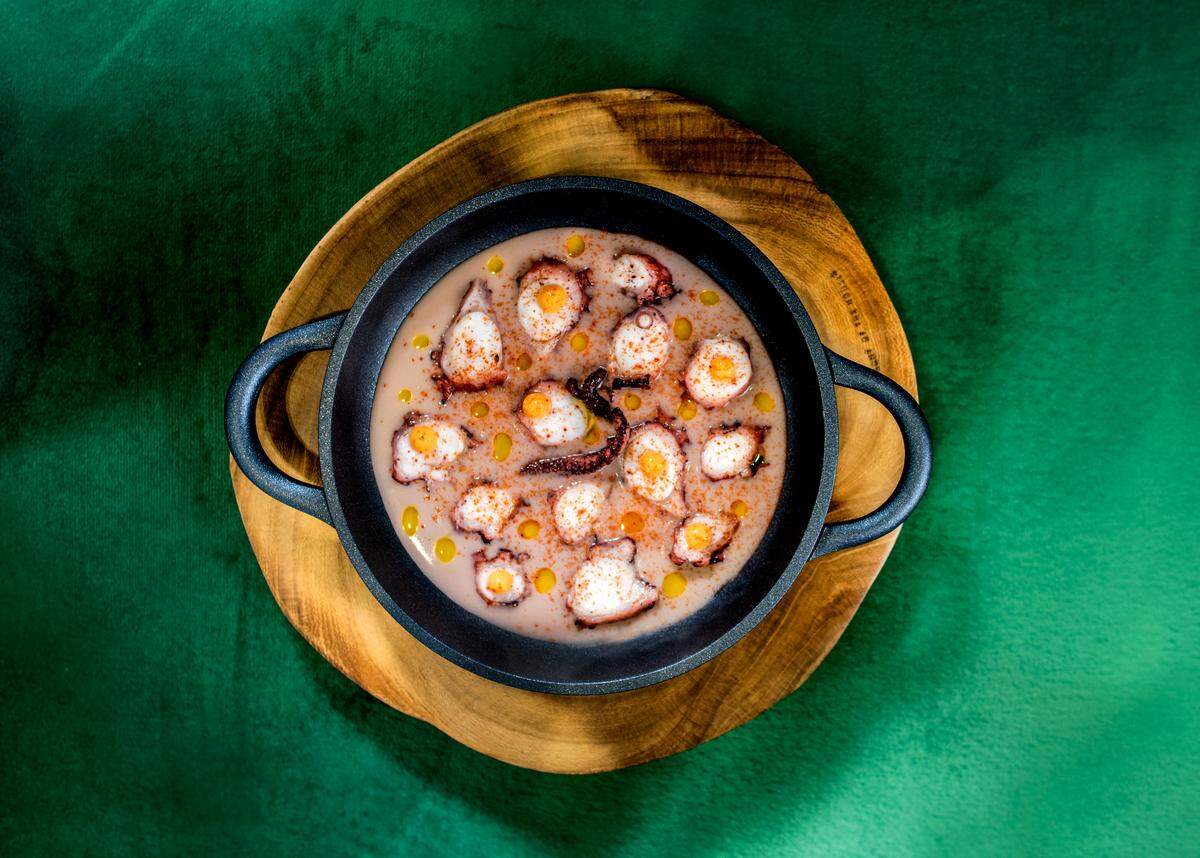
Leku’s “Traditional” Pulpo a la Gallega
(Serves two)
2 uncooked octopus tentacles, 7 oz each
1 oz butter
3 baked potatoes
3 tablespoons of extra virgin olive oil
Pimentón de la Vera (Spanish smoked sweet paprika)
1. Slice octopus into ½-inch rounds and place inside two plastic bags, one for each tentacle. Add 1 tablespoon olive oil to each bag and a pinch of salt. Vacuum seal bags and steam-cook, or sous vide, for 1 hour 5 minutes at 200 degrees.
2. Stop the cooking process by chilling bags in iced water, breaking down muscle fiber and making octopus more tender. Unseal bags and keep octopus in its juices.
3. Peel baked potatoes while hot and blend vigorously in a high-powered blender for 2 minutes with 2 tablespoons of octopus juices, 1 oz butter, 1 tablespoon olive oil, ¼ teaspoon white pepper and pinch of salt. Keep potato cream warm in a double broiler at low heat.
4. To plate, pour half potato cream in a shallow “Cazuela” bowl, arrange room temperature octopus rounds artistically and dust with pimentón de la Vera.