
Dare to prepare omakase at home with a few tips from the chef at this South Beach hot spot
Just out of college, Yasu Tanaka left Japan for an overseas volunteer program teaching middle school in Mozambique. He wasn’t there long when his students asked him about sushi. “They had no TV, no newspapers, no electricity, no gas, but they knew sushi,” Tanaka recalls.
He traveled five hours to the nearest fish market, and with no real knowledge of how to prepare sushi, he made his students a feast. It was right then that Tanaka realized what he should be doing with his life. When Tanaka returned to Tokyo, he enrolled in sushi school and spent a decade training and working his way up.
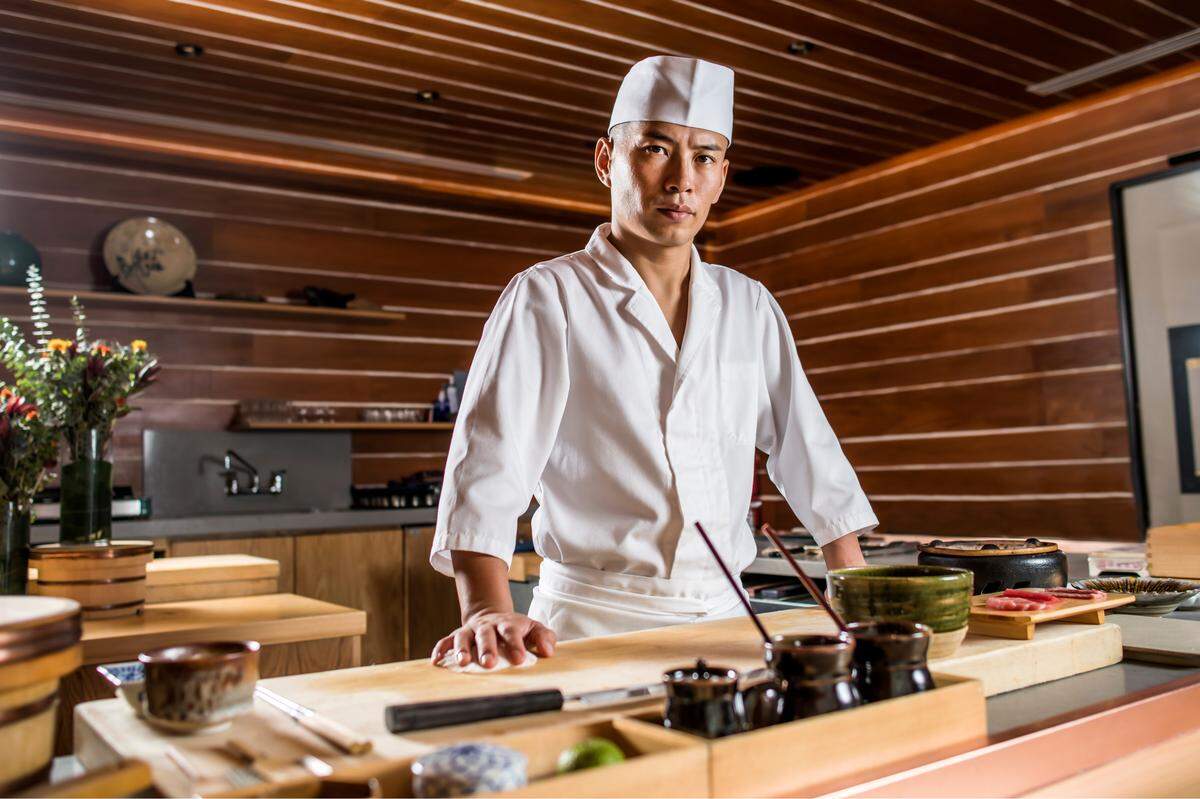
After three years at the Michelin-starred Azabu in New York, Tanaka now runs The Den, a hidden back room of South Beach’s Azabu location that serves up a traditional Japanese omakase, or small dishes and single pieces of sushi served one at a time. It’s among Miami’s most expensive dining experiences and also one of the most elaborate ways to dine. But Tanaka says any home chef can pull it off following a few key steps, creating what might be your most impressive and memorable dinner party yet.
THE RICE
The most important part of sushi isn’t the fish but the shari-kiri, or rice making. “If the rice is good, the sushi is good,” Tanaka says. That starts by sourcing the right sushi rice, a short-grain Japanese grain that looks more like a risotto (versions available in Asian markets will do). Cook one part rice and one part water in a rice maker, fluffing it gently with a spoon. Chef Tanaka then imparts the rice with a sweet- salty marinade made with 4 cups of rice, 1 cup of vinegar, 3 tablespoons of salt and 2 tablespoons of sugar –— all heated in a saucepan and later cooled.
THE FISH
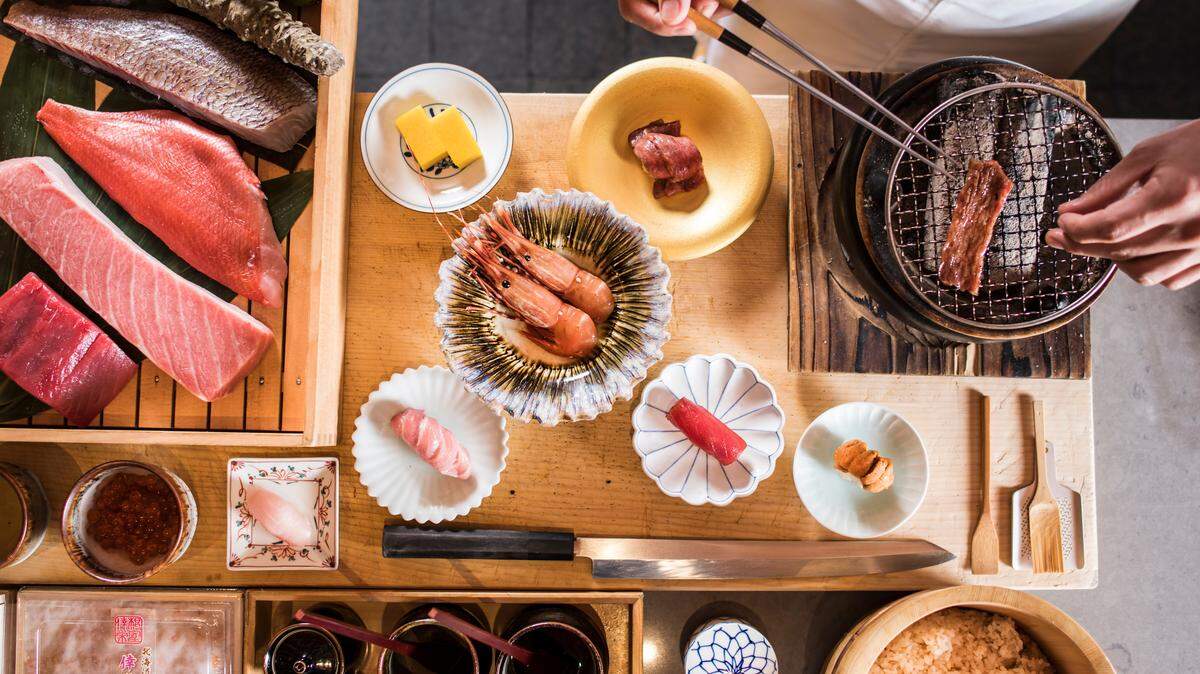
You’ll find sushi-grade cuts at good fish markets, and Tanaka says picking the fish is just about what you like. All the regular sushi fish is easy to prepare at home, like tuna, salmon, amberjack, snapper, bonito and scallops. Shrimp also works well; Tanaka cuts them into sugar-cube-sized pieces with a yanagi, a slender knife that looks like a mini samurai sword.
THE MARINADE
Much of the fish served at good sushi restaurants spends time in a light marinade first, a technique called edo-mae. Tanaka says the marinade pulls out moisture, increasing the flavor and boosting the umami, or meatiness. “The marinade is just about enhancing and not changing the flavor,” Tanaka says. His marinade is simple: 1 cup of mirin is brought to a boil in a saucepan to reduce alcohol. Add 1 cup of soy sauce and cool before adding approximately 20 pieces of fish to marinade.
THE TEMPERATURE
Maybe the biggest surprise you’ll have eating at an omakase counter is the temperature of the fish. Tanaka says the key is getting fish to at least room temperature. He does that by setting fish on a plate gently heated with charcoal. A shortcut used by many sushi chefs is the hand sandwich: put the slice of fish between your palms and press slightly, creating enough heat to bring up its temperature.
WAGYU AND UNI
Many fish markets can source a box of uni, or sea urchin. Serve it simple, as Tanaka does at the restaurant, with a few pieces on a plate, strips of seaweed to wrap it, and soy sauce for dipping.
And while you’re making the meal something extravagant, add a wagyu beef course. Freeze it to help in cutting it into paper-thin slices. Let the beef come to room temperature and then give it a 10-second trip over the high flame of a gas stove or grill. Drape it over a ball of sushi rice for one of the most decadent bites of food you’ll ever have.
TAMAGO
This is the bonus round, the home chef’s version of climbing Mount Fuji. During his training, Tanaka spent two years cooking tamago, a Japanese omelet, every day. He now has three notebook pages full of directions to make his. For the home chef, Tanaka recommends starting with a relatively simple recipe: 12 eggs, 3/4 cup of sugar, 4 1/2 tablespoons of honey, 2 1/2 tablespoons of mirin, and 1 tablespoon of dashi broth (except for pureed whitefish). His secret? A warmed tamago pan and an egg mixture that has been gently warmed before baking at a low 230 degrees for 20 minutes.
In Japan, customers use the tamago as a benchmark to gauge the skill of the chef, and Tanaka says it’ll also be a way to show you’ve mastered your omakase-at-home dinner party. “It is not easy, and you will probably fail many times,” Tanaka says. “But when you succeed, it will be worth it.”
Azabu Miami Beach, 161 Ocean Drive (inside the Stanton Hotel), Miami Beach; 786-276-0520; azabuglobal.com.