
As Miami’s real estate and cultural landscapes evolve, public art is springing up from the sands and sidewalks
%20HI%20RES(3).jpg)
Vibrant outdoor museums fill our city with color, life and delight. A simple walk down the street can transform into a stroll through a compelling gallery or fascinating design wonderland. Public art makes art accessible to all of us.
But Miami’s infatuation with public art isn’t new. Miami-Dade Art in Public Places program ordinance, established in 1973, is one of the first in the country and requires that 1.5% of the total construction budget be allocated to public art.
Today, with the help of social media, progressive regulations and private financial support, public art is exploding around us with diverse pieces from a variety of talented local and international artists. While we couldn’t highlight every neighborhood’s contribution to enhancing our city’s arts scene, we’re thrilled to be spotlighting a few of the leaders here.
MIAMI BEACH
As a city known for its beaches, Miami Beach has made impressive advances in cementing itself among the world’s art cognoscenti with the help of Art Basel and now the convention center’s $620 million renovation. The transformation included a $7 million expenditure, the largest single commission by a municipal percentage-for-art program in the country, according to Brandi Reddick, the city’s cultural affairs manager. Out of the 524 artists who applied, six were chosen —each creating a work of art representative of their personal style but also unique to Miami Beach.
“Our overarching theme is to commission site-specific art that relates to Miami Beach and speaks to who we are,” she says.
Public art has been invariably fundamental to the city, its residents and visitors. The first piece, the 1979 Roy Lichtenstein mermaid sculpture, was commissioned with the help of an arts grant in conjunction with private funds, and it still watches over The Fillmore and 17th Street.
Today, Miami Beach has 21 pieces inits public art collection and to date has invested $10 million in the commissioning of public art.In September the city increased the average budget allocation percentage for public art from capital construction projects from 1.5% to 2% —giving Miami Beach one of the most progressive public art programs in the nation, according to Reddick. For Miami Art Week, the city is collaborating with Argentinean artist Leandro Erlich on a temporary site-specific installation.
Lincoln Road has its own public art history. Created in 1912 by Carl Fischer as the FifthAvenue of the South and reimagined by illustrious architect Morris Lapidus in the 60s, the city’s famed pedestrian mall still evokes that midcentury modern era with its large central futuristic follies.
“Art is in the DNA of Lincoln Road, says Tim Schmand, director of the Lincoln RoadBusiness Improvement District (BID).
This winter, Lincoln Road is partnering with the Gary Nader Art Centre to bring the colossal figures of the legendary Colombian artist Fernando Botero to the district. The 13 bronze sculptures will be exhibited throughout the quarter until spring. And that’s just the beginning. The city is investing $67 million in a master plan by James Corner Field Operations, best known for New York City’s High Line. This will be enhanced by the BID’s approximate $16 million ten-year pledge for cultural programming.
MIAMI’S URBANSCAPE
Beautifying neighborhoods is one of Louis Wolfson III’s life ambitions. As the co-founder of Pinnacle, he also oversees the development company’s Art in Public Places program. A fourth-generation Miamian and member of one of the city’s most prominent and philanthropic families (think Wolfsonian-FIU Museum andMiami-Dade College), Wolfson is focused on creating art-centric urban neighborhoods that residents can be proud of.
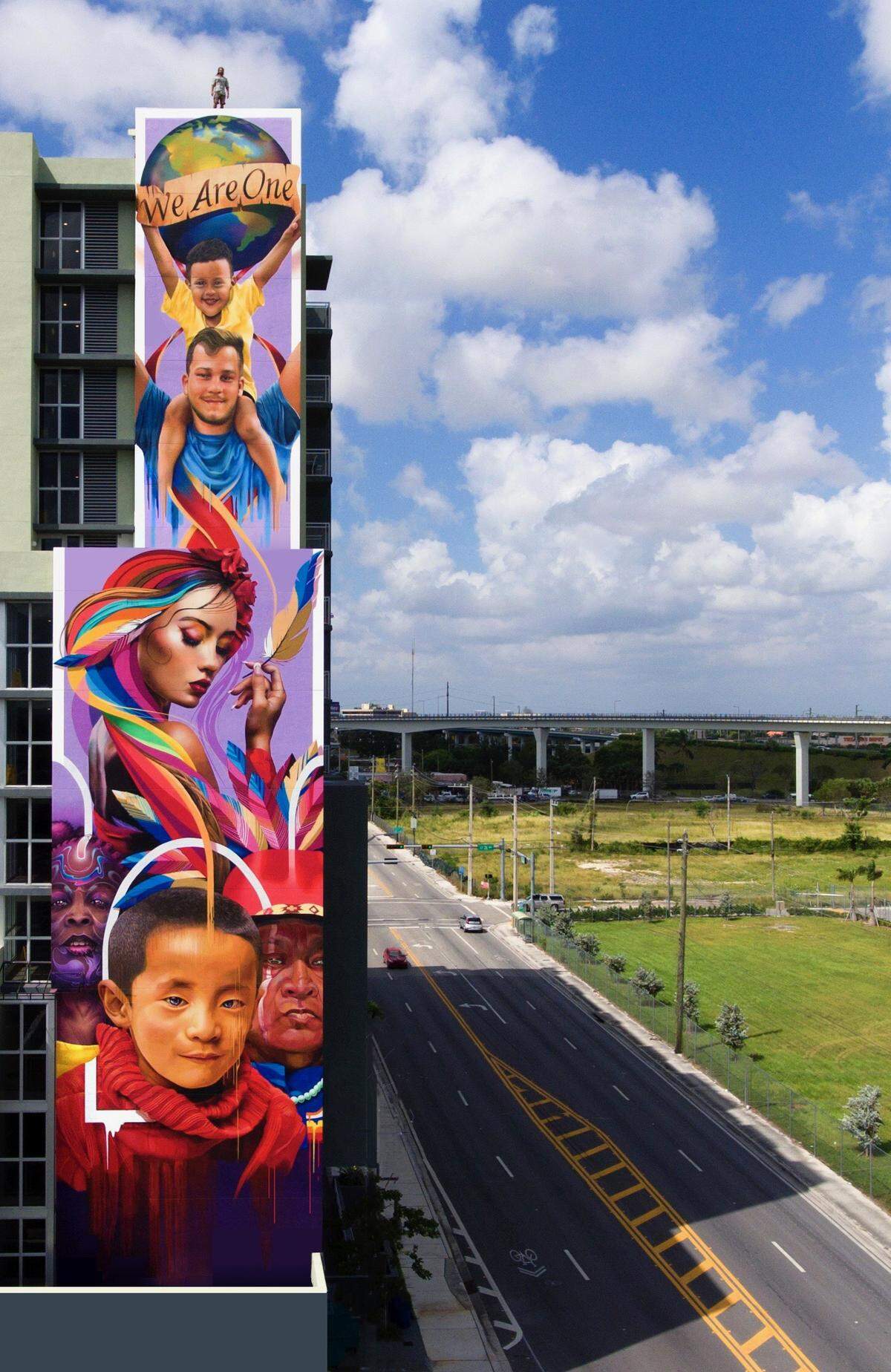
Ninety-three percent of Pinnacle’s projects are affordable housing developments, which host the majority of the company’s 60 public art pieces valued at nearly$3 million. One of Pinnacle’s most visible commissioned works is Romero Britto’s FloatingGirl off I-95 in Midtown. Two more recent murals include Declaration of Hope, by 25-year-old Rey Jaffet in Allapattah (at 13 stories, it is one of Miami’s tallest murals) and History of LibertyCity at Pinnacle Park by Kyle Holbrook.
“Everyone deserves art and no one should be left out,” he says.
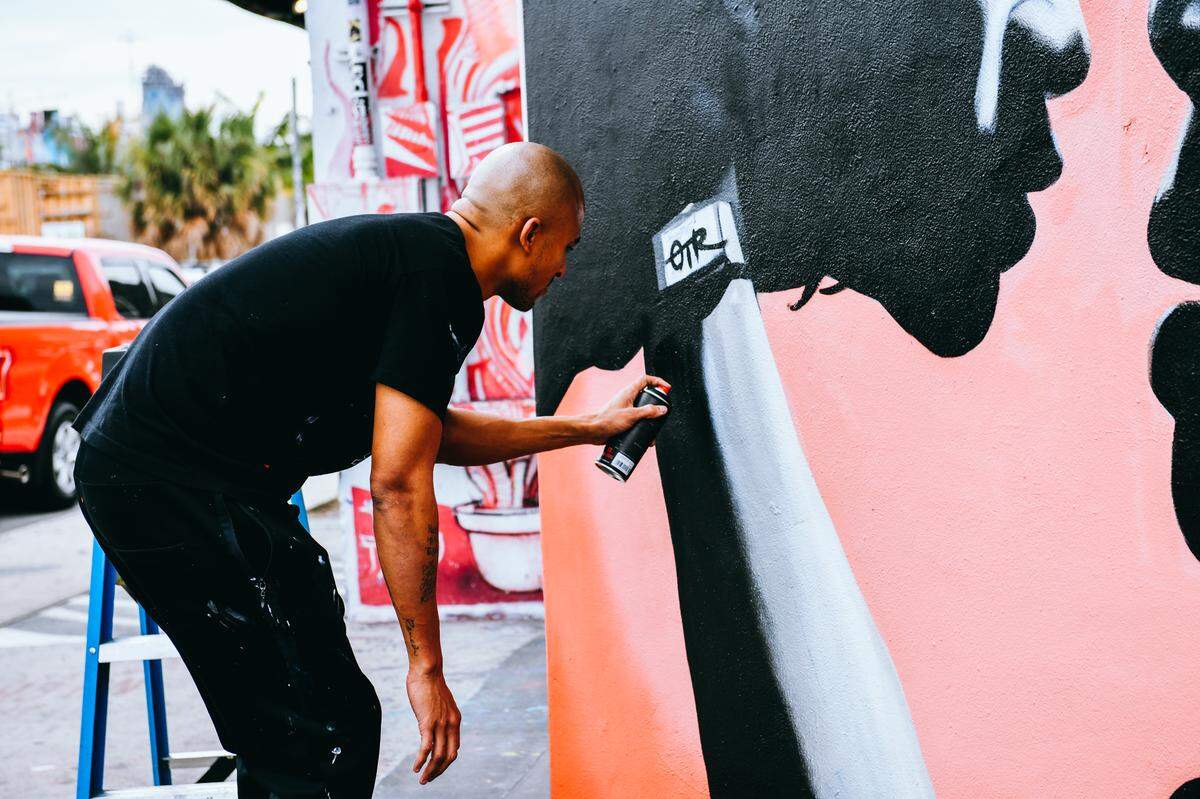
Wolfson’s passion for public art doesn’t stop at his developments. He has organized summer initiatives that unite local artists, local police officers and local kids, who are out of school, in painting murals. Wolfson and Pinnacle arealso sponsors of The Underline’s art in public places initiatives.
“I want to support artists any way I can,” he explains. “Miami is better off because of them.”
WYNWOOD
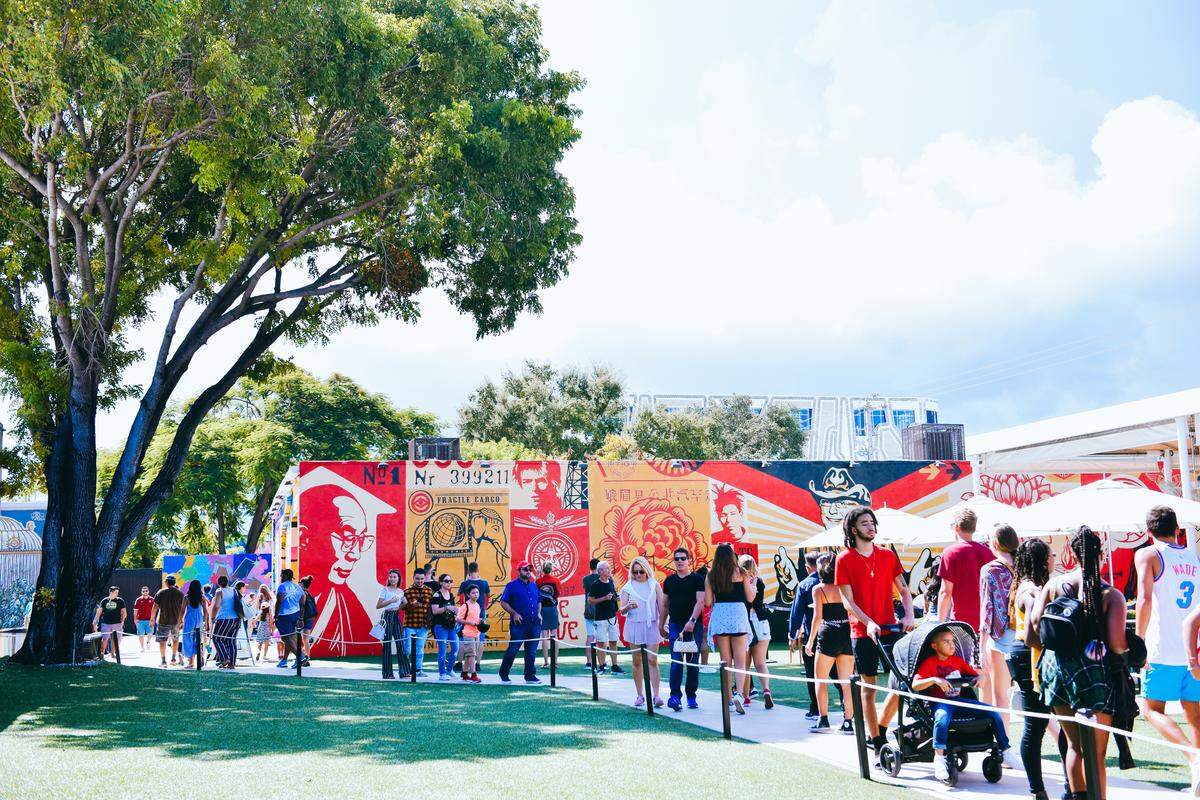
As a long-time property owner in Wynwood, Albert Garcia is committed to the neighborhood.As Wynwood’s BID chair, he’s focused on preserving its public art and planning for the area’s future. In the last six years the BID has made great strides in evolving Wynwood from an industrial manufacturing hub into the home of the largest concentration of street art in the nation, which welcomes nearly 3 million visitors a year.
“Art shouldn’t be locked up in storage,”he says. “Art is the most intimate form of expression and it’s meant to be shared. [Publicart] is an opportunity for people from all walks of life to share a common experience.”
During Miami Art Week, Wynwood hosts renowned fairs including Satellite Miami ArtFair, Pinta Miami and Red Dot Art Fair. This year it’s pleased to welcome a new one into the mix — the Contemporary and Digital Art Fair(CADAF). Focusing on digital and new media art, this international fair will bring art and technology leaders to Mana Wynwood.
Garcia explains that for any new mural or public art piece, a design review committee confirms the industrial character of the art so that the neighborhood’s spirit isn’t lost, but it never defines what art is or where a mural should go. The design and location are up to the property owner and artist to decide together.
The BID, made up of 400 property owners, manages a $1 million budget used to enhance the cleanliness and safety of the neighborhood, promote Wynwood, support community events and plan for the area’s future.
It’s currently working on redesigning Northwest Third Avenue into a shared street that is more pedestrian-focused and incorporates a linear park within two years. In addition, it is working on a larger streetscape plan that will transform other roads within the district into beautifully landscaped thoroughfares with plenty of new public art pieces.
“This is a place that’s truly about art. We want to protect the character of the neighborhood and ensure it continues to flourish,” he says. “We’re incredibly fortunate to be living in this moment in time and take that responsibility seriously.”
MIAMI-DADE COUNTY
From a sculptural marble slide in Bayfront Park by Isamu Noguchi or the Michelle Oka Doner’s terrazzo floors at the Miami International Airport, art is everywhere thanks to the support from the county. Simply put, the Miami-Dade Artin Public Places program ordinance requires developers building on land owned by the county or municipality within the county to include art in their spaces, including privately funded or private-public partnership funded projects, such as the Norwegian and Royal Caribbean port terminals.
Once a new project is planned, a call to artists is released and an advisory committee reviews the submissions, which must then be approved by the Art in PublicPlaces Trust governing board. On average, a public art installation takes two years to come to fruition, according to Amanda Sanfilippo, curator and artist manager for Art in PublicPlaces at the Miami-Dade County Department of Cultural Affairs.
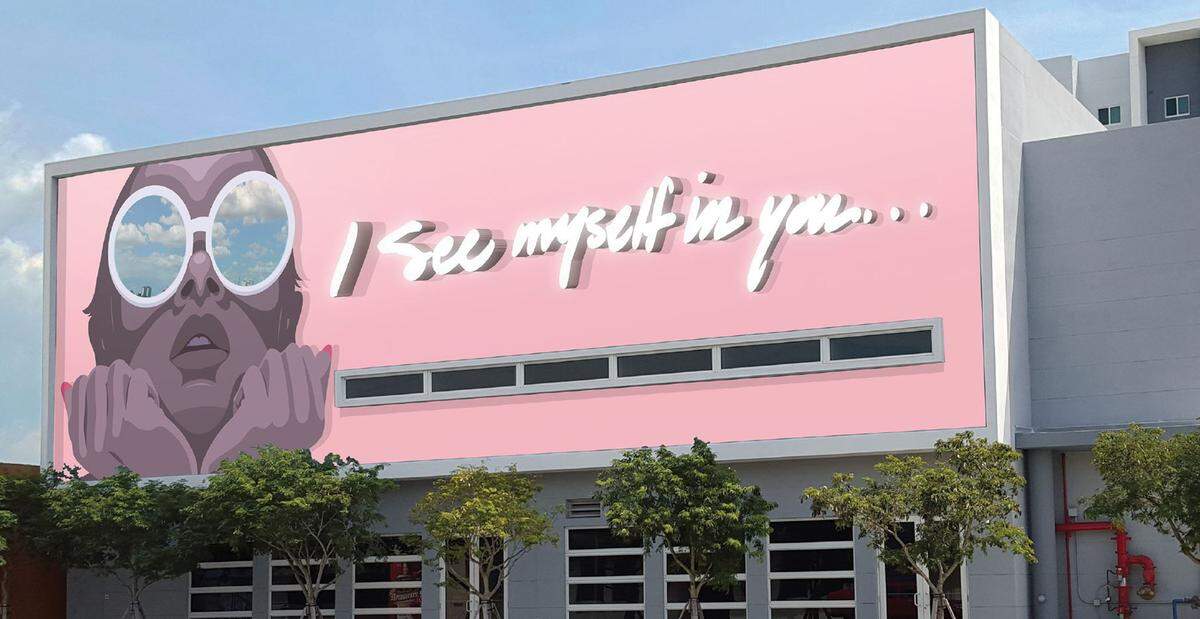
With an average yearly $6 million budget for public art, the city currently has 75 projects in progress with 25 in the planning phase. It also oversees all restorations for current pieces and commissions temporary public art pieces from time to time. One of the county’s most recent works of art, I See Myself In You... by HankWillis Thomas and Nekisha Durrettm is a three-dimensional mural located in Liberty City.
“We’re interested in working with artists and fostering their careers so they can flourish here,” she says.
COCONUT GROVE
Known and admired for its bohemian vibe, this historically quaint neighborhood is elevating its public art installations to improve the quality of life for its residents and tourists alike while adding value to the area.
“Public art is a way of expressing ourselves as a city,” says Commissioner Ken Russell, the BID’s board chair. “As changes come with developments and as high-rises move in we’re set on retaining our spirit.”
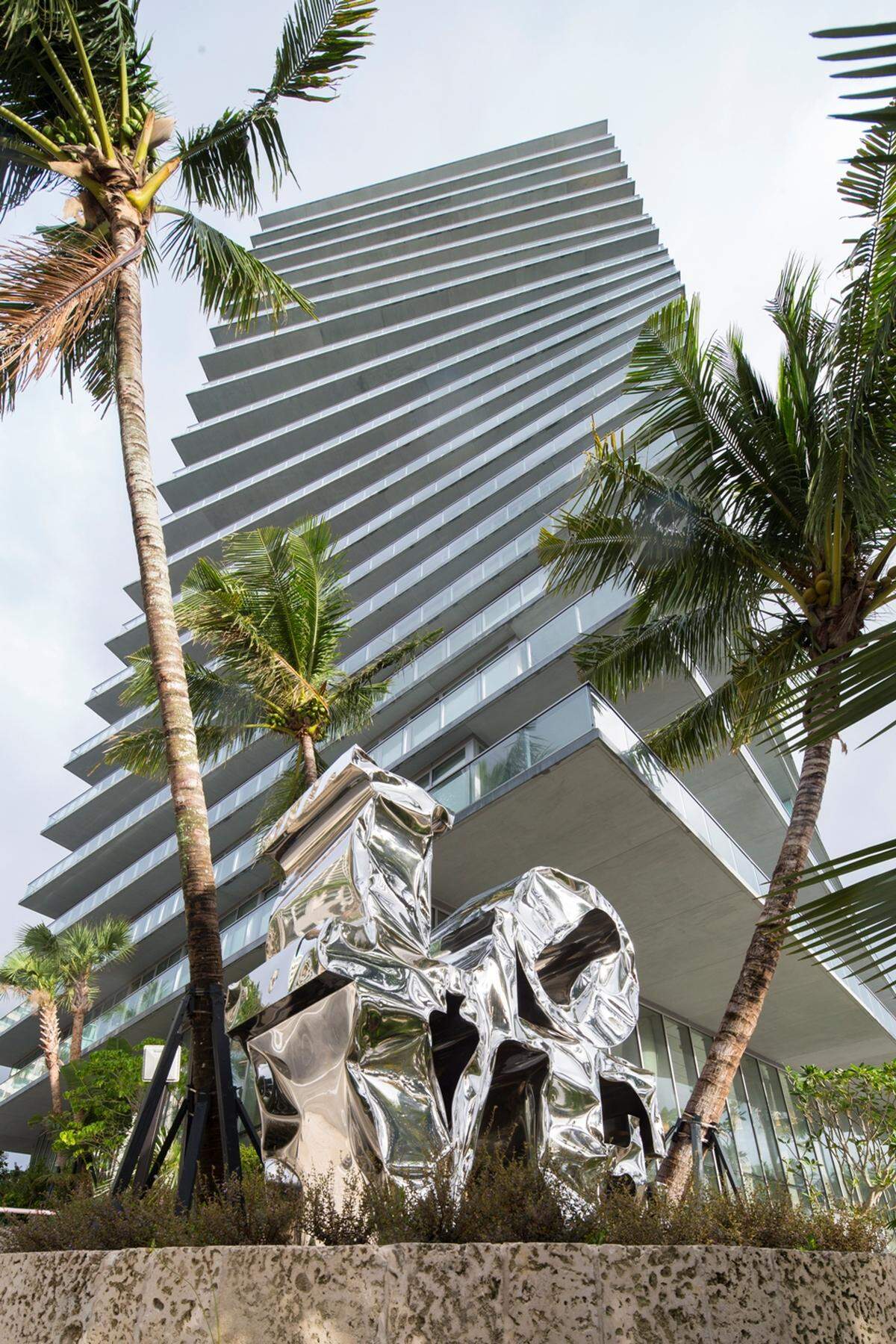
Coconut Grove’s nine-member BID oversees a yearly public art budget used to commission murals and installations, including 2,000 native orchids that are painting the non-floral trees throughout the city. Another piece is Korean artist Gimhongsok’s interpretation of Robert Indiana’s Love sculpture as a crumpled stainless-steel version.
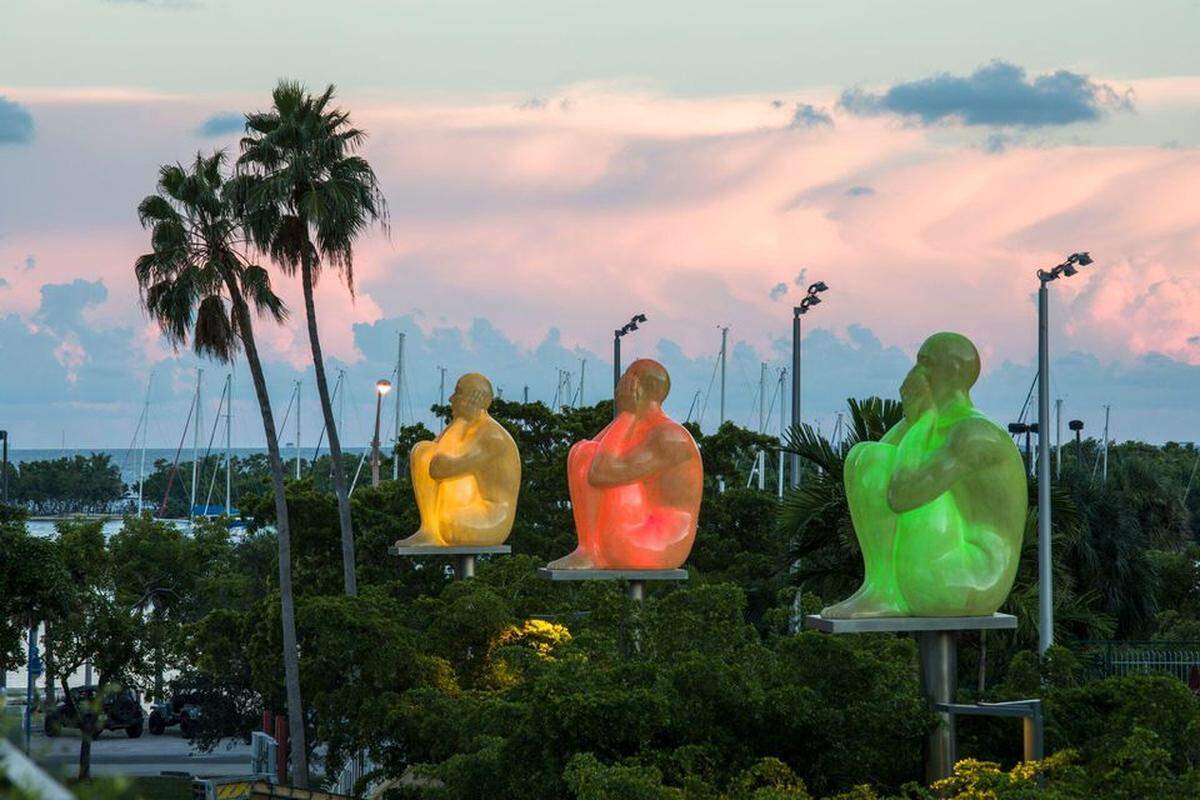
The neighborhood even sparkles in the evenings with two glistening light installation. Peacock Park’s trees are aglow with dozens of LED-lit spheres made from grape vines hanging from branches. Jaume Plensa’s The Poets in Bordeaux, located outside of Park Grove, are three resin sculptures that sit on top of 35-foot poles and alternate colors like beacons in the night.
The Grove has been a leader in supporting the local arts scene, decades before Art Basel and Wynwood, by hosting its annual arts festival for nearly 60 years. More recently it established a historic preservation district for 25 Bahamian wood-frame shotgun homes — just another way to preserve the city’s history and architecture.
This story was originally published November 28, 2019 at 2:01 PM.