
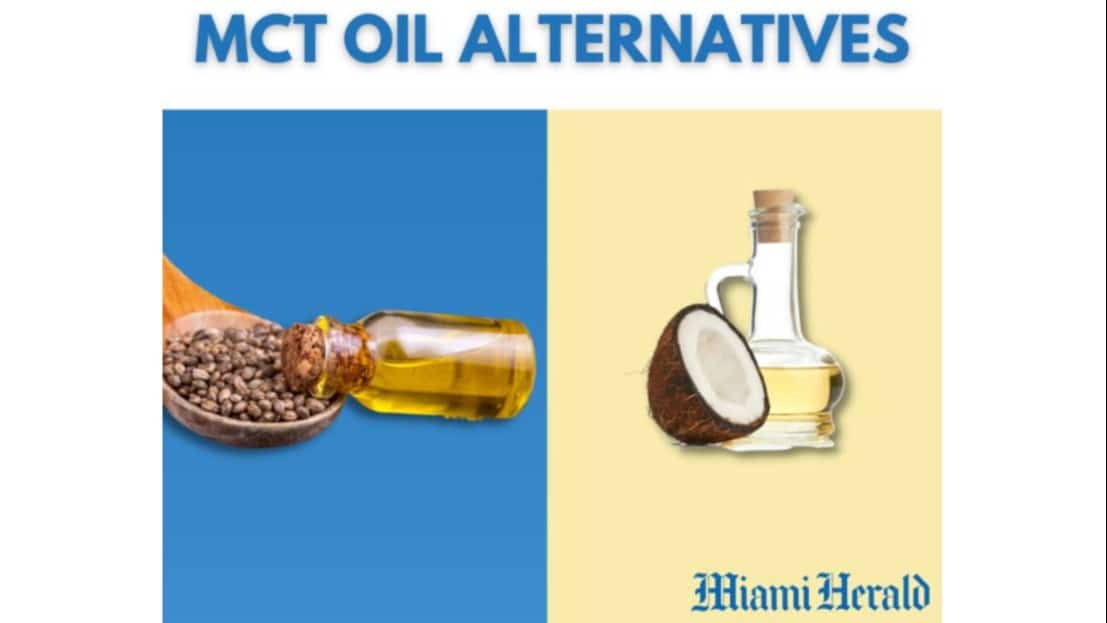
MCT oil has become a popular supplement for individuals on the keto diet or who just want a boost of energy with their morning coffee or smoothie. It’s easily digestible, which allows it to be turned into energy quickly for workouts and it contains no carbs. However, it may not be a viable option for everyone, and you may be looking for a substitute.
What is MCT Oil?
MCT oil stands for medium-chain triglyceride, which is a fat that is easily digestible and doesn’t require the production of bile to be digested. This makes it quickly absorbed into the muscles so that it can be used by the body soon after ingestion.
MCT oil can be naturally found in dairy products such as milk and yogurt but is commonly derived from coconut oil or palm seed oil and is liquid at room temperature with no odor or flavor, making it a perfect addition to beverages such as coffee and smoothies.
Why Should You Look For An MCT Oil Alternative?
There are a few reasons you may be looking for an alternative to MCT oil. The main issues that arise with MCT oil involve stomach issues. Some individuals may experience an upset stomach when they consume MCT oil as well as nausea or diarrhea.
Other possible reasons are that 100% MCT oil may cause an individual some sort of allergic reaction such as a skin rash. MCT oil can also be expensive and difficult to find while some substitutes are more easily accessible and affordable.
MCT Oil Alternatives
Here are some of the main alternatives to MCT oil that contain some of the same benefits or even more than pure MCT oil.
Coconut Oil
Coconut oil has a lot of the same benefits as MCT oil as it can be easily digestible to produce quick energy. MCT oil is actually derived from coconut oil and palm kernel oil, but is solely a medium-chain triglyceride. Coconut oil contains both medium-chain triglycerides and long-chain triglycerides so it isn’t as quick to digest as just MCT oil.
Although it can’t be digested as easily, coconut oil is still a common supplement used in the keto diet as it contains no carbs and still contains enough of the quickly digestible fatty acids to promote weight loss when properly implemented.
Coconut oil also has more benefits than 100% MCT oil outside of diet. It is perfect for culinary purposes as its smoke point is higher than MCT oil and can therefore be used for stove top cooking and baking. Its scent and flavor makes it a delightful addition to dishes and can still be added to a cup of morning coffee for added flavor and energy.
Coconut oil also serves as a popular beauty product due to its health benefits. It can be used as a skin or hair product as it moisturizes and promotes the health of both areas of the body. Coconut oil is also commonly used for “oil pulling,” which promotes dental health by pulling out plaque and tartar from the teeth.
Extra Virgin Olive Oil
Considered one of the healthiest cooking oils out there, extra virgin olive oil is a great substitute for MCT oil. Much like coconut oil, extra virgin olive oil doesn’t provide all of the benefits that 100% MCT oil can provide, but it serves as a healthy alternative with other benefits.
Extra virgin olive oil is good for your heart and cardiovascular health as it lowers your intake of cholesterol and contains monounsaturated fats, which are connected to better heart health. This adds to improved blood pressure and can actually be beneficial to your joint and brain health.
Extra virgin olive oil also has anti-inflammatory properties, which is what can aid in joint health. This oil is all around a healthy alternative to MCT Oil, although it does not deliver the same kind of quick energy.
Hemp Seed Oil
Derived from the hemp seed, hemp seed oil contains many healthy fats including Omega 3 fatty acids, which help promote brain and joint health. Although not a viable oil for cooking with, hemp seed oil has a neutral taste and flavor, which makes it a great addition to beverages or salads in the same way pure MCT oil can be used.
Aside from providing medium-chain triglycerides, hemp seed oil also contains monounsaturated fats, which provide anti-inflammatory properties and also contains vitamins such as A, D, and E. This makes hemp oil a great addition to your diet for more varied health benefits.
Palm Kernel Oil
This oil is also where a majority of 100% MCT oil is derived from and much like coconut oil contains long-chain fatty acids as well. It has a wide variety of uses, hence its mass production. Like the previous oils, palm kernel oil’s high smoke point makes it a popular oil for cooking and baking.
Palm kernel oil contains not only medium-chain triglycerides, but also monounsaturated fats as well as various vitamins that make it a healthy substitute. Like other oils it contains long-chain fatty acids that make it harder to digest than 100% MCT Oil, but are still a viable option for low cholesterol energy.
Palm kernel oil is also a popular ingredient in cosmetic products as well as skin and hair care products due to its moisturizing properties. It is also used in industrial products like fuels and lubricants.
The main issue with palm kernel oil is how it is produced and it has ecological ramifications. Palm kernel oil is derived from palm which is found in the rainforest and its production results in the destruction of these very treasured areas. This means finding palm kernel oil that is sustainability produced is important if you are seeking this particular substitute out.
Fish Oil
Fish oil can be consumed as straight oil or in pill form and is a popular oil due to its Omega 3 fatty acid content. Fish oil promotes brain and joint health as it has anti-inflammatory properties. It also is attributed to better bone health as well as reduced stress.
Unlike other oils on this list it isn’t used as a cooking oil and is commonly ingested in capsule form to provide its benefits.
In terms of a use for energy, fish oil may not be the best substitutes as it doesn’t digest as quickly as pure MCT oil, but its long-term health benefits make it a great addition to your diet whether you take MCT oil or not.
Conclusion
MCT oil is found in many products including coconut oil, palm kernel oil, and most dairy products like milk and yogurt. This means you can get MCT oil through a well balanced diet, but if you are looking for the immediate effects of the product getting 100% MCT oil is the way to go. If you are looking for substitutes pure coconut oil, palm kernel oil, extra virgin olive oil, hemp oil, and fish oil are fantastic alternatives.
Disclaimer: This article does not provide medical advice.
The information, including but not limited to text, graphics, images, and other material contained in this article, is for informational purposes only. No material within this article is intended to be a substitute for professional medical advice, diagnosis, or treatment.