
If you’ve heard the term hyperbaric chamber and wondered what it actually means, you’re not alone. Hyperbaric oxygen therapy has gained attention both inside and outside medicine, but many people aren’t clear on how it works, why it’s used, and what the science behind it really says.
At its core, hyperbaric therapy uses a pressurized chamber to expose the body to hyperbaric oxygen—oxygen breathed at levels higher than what you’d find in normal air. This isn’t just a wellness trend. The method originated as a medical treatment with well‑documented effects on healing, blood flow, and oxygen delivery to tissues.
Let’s unpack what a hyperbaric chamber is and how it can help.
Key Takeaways
- A Hyperbaric Chamber Uses Pressurized Oxygen: It delivers pure oxygen at higher-than-normal air pressure to help the body heal more effectively.
- HBOT Enhances Oxygen Delivery: Breathing oxygen in a pressurized chamber allows it to dissolve into body fluids, reaching tissues with poor blood flow.
- Used for Medically Approved Conditions: HBOT treats decompression sickness, carbon monoxide poisoning, radiation injuries, diabetic foot ulcers, and more.
- It’s Backed by Science: Hyperbaric therapy supports healing by boosting immune response, promoting new blood vessel growth, and reducing inflammation.
- Safe When Supervised: While generally low-risk, it should always be administered by trained professionals to avoid complications like ear pressure or oxygen toxicity.
What Is a Hyperbaric Chamber?
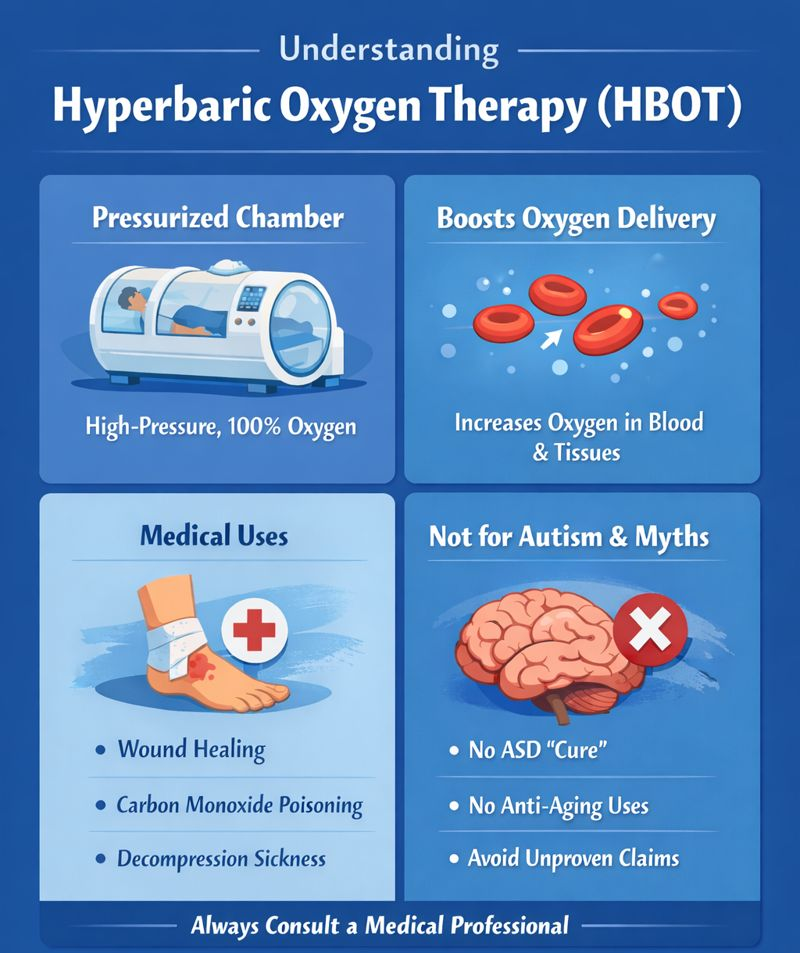
A hyperbaric chamber is an enclosed, sealed space designed to maintain an elevated air pressure above standard atmospheric conditions. The pressure inside the chamber is carefully controlled to be greater than normal air pressure—often between 1.5 and 3 times greater—so that when a person breathes pure oxygen within this environment, more oxygen dissolves into the blood and circulates into tissues throughout the body.
There are two main types used in clinical settings:
- Monoplace chamber: A tube‑like chamber that fits one person at a time. The entire space is pressurized with oxygen.
- Multiplace chamber: A larger chamber that can hold multiple people. These chambers are pressurized with air, and patients breathe pure oxygen through masks or hoods.
Both types create what’s called a hyperbaric environment, which facilitates increased oxygen intake and distribution.
How Hyperbaric Oxygen Therapy Works
To understand how hyperbaric oxygen therapy works, it helps to think about how oxygen usually gets into your tissues. Under normal conditions, the lungs transfer oxygen from the air you breathe into the bloodstream, where it binds to red blood cells. These cells then deliver oxygen to tissues throughout your body.
In a hyperbaric chamber, two things change:
- You’re breathing pure oxygen instead of the ~21% oxygen found in normal air.
- You’re doing it under higher pressure, which allows oxygen to dissolve directly into body fluids, including the plasma, lymph, and even the spaces between cells.
The net effect? The amount of oxygen available to tissues increases dramatically—even reaching areas with poor blood flow or damaged blood vessels.
This isn’t just theoretical. Clinical research shows that more oxygen in tissues can help with healing, reduce inflammation, and support cellular functions that depend on oxygen supply.
What Conditions Are Treated With HBOT?
Hyperbaric oxygen therapy (HBOT) is approved or widely accepted for several specific medical conditions. Some of the most well‑studied and frequently cited uses include:
1. Decompression Sickness
Often associated with scuba diving, this condition occurs when dissolved gases (mostly nitrogen) form bubbles in the bloodstream during rapid ascent. HBOT helps reduce bubble size and improves oxygen delivery to affected tissues.
2. Gas Embolism
Air bubbles in the bloodstream can block blood flow. Increasing pressure and oxygen reduce bubble volume and support recovery.
3. Carbon Monoxide Poisoning
One of the classic uses of HBOT, breathing pure oxygen under pressure, helps displace carbon monoxide from hemoglobin more quickly than standard oxygen therapy.
4. Non‑Healing Wounds (e.g., Diabetic Foot Ulcers)
Chronic wounds with poor blood supply benefit from the enhanced oxygen delivery, which can help stimulate new blood vessel formation and support tissue repair.
5. Radiation Injuries
Radiation therapy can damage healthy tissues, leading to poor healing and fibrosis. Hyperbaric oxygen therapy may improve blood flow and oxygenation in these areas.
| Condition | Why HBOT Helps |
|---|---|
| Decompression Sickness | Reduces nitrogen bubbles and improves oxygen delivery to damaged tissues |
| Gas Embolism | Shrinks air bubbles in the bloodstream and restores proper circulation |
| Carbon Monoxide Poisoning | Displaces carbon monoxide from hemoglobin faster than breathing room air |
| Diabetic Foot Ulcers | Enhances oxygen delivery to promote wound healing and fight infection |
| Radiation Injuries | Reoxygenates damaged tissue and supports the regeneration of blood vessels |
| Certain Infections (e.g., necrotizing fasciitis) | Supports immune function and tissue repair in severe or resistant infections |
| Skin Grafts & Flaps at Risk | Improves blood supply to compromised tissue to increase survival chances |
Other applications include treatment for certain infections, traumatic injuries, and conditions involving compromised blood flow or oxygenation. However, it’s important to note that while research continues to explore new uses, not all proposed applications are strongly supported yet.
The Science Behind It
So what actually happens inside your body when you undergo HBOT?
- Increased oxygen dissolved in plasma: Even tissues with limited blood supply receive oxygen through diffusion.
- Enhanced white blood cell function: More oxygen can support immune responses in infected or injured tissues.
- Stimulation of angiogenesis: Exposure to high oxygen levels can help promote the growth of new blood vessels, which is particularly valuable in chronic wounds.
- Reduction in inflammation and edema: Oxygen can modulate inflammation and improve fluid balance around injured tissues.
- Support of healing processes: Many cellular healing pathways function optimally in well‑oxygenated environments.
These effects are why HBOT is considered a valuable tool in hyperbaric medicine—a medical specialty focused on conditions that benefit from raised oxygen delivery.
What It Feels Like
Entering a hyperbaric chamber can feel similar to riding in an airplane:
- You may notice changes in ear pressure as the chamber pressurizes and depressurizes. This can feel like the pressure shifts you experience during takeoff or landing.
- Sessions (often called “dives”) can last from around 60 minutes to several hours, depending on the indication and protocol.
- Most people relax, read, or listen to audio during treatment. Serious discomfort is uncommon, but middle ear pressure is the most frequently reported sensation.
Medical staff trained in hyperbaric therapy monitor patients throughout to ensure safety and comfort.
Safety Considerations and Side Effects
Hyperbaric oxygen therapy is generally considered safe when administered in a clinical setting under the guidance of trained professionals, such as those certified by the Undersea and Hyperbaric Medical Society (UHMS). However, like all medical treatments, it carries potential risks:
- Middle ear injuries: Barotrauma from pressure changes can affect the middle ear.
- Oxygen poisoning: Though rare in controlled settings, breathing very high concentrations of oxygen at high pressure can, in extreme cases, affect the central nervous system or lungs.
- Low blood sugar in diabetics: Patients with metabolic conditions may need monitoring.
- Lung issues in susceptible individuals: People with certain lung diseases may require tailored protocols.
Clinicians carefully assess each patient’s health before starting therapy to minimize risks and maintain safety throughout treatment.
What Hyperbaric Oxygen Therapy Does Not Treat
It’s important to be extremely clear about this: hyperbaric oxygen therapy is not a cure‑all, and it should never be used for conditions where there is no credible medical evidence of benefit, especially when those uses risk harm, distress, or exploitation.
Despite claims made by some clinics or wellness influencers, HBOT does not treat, reverse, or “fix” the following conditions, as outlined by the Cleveland Clinic:
- Autism spectrum disorder (ASD)
- Cerebral palsy
- Stroke recovery beyond approved indications
- Depression or other psychiatric conditions
- Migraine headaches
- Sports injuries outside specific, approved wound indications
- Hair loss (alopecia)
- HIV or AIDS
- COVID‑19 or post‑viral syndromes
- Age‑related symptoms or so‑called “anti‑aging” uses
Using hyperbaric therapy for these purposes is not supported by rigorous clinical evidence and is not approved by major medical authorities.
A Critical Ethical Note on Autism and Neurodevelopmental Conditions
Subjecting autistic children to invasive or uncomfortable medical procedures in an attempt to alter their neurodevelopment is ethically indefensible, particularly when there is no proven benefit. Hyperbaric chambers involve confinement, pressure changes, sensory overload, and loss of control—conditions that can be intensely distressing, especially for autistic individuals.
Major medical organizations do not endorse HBOT for autism or other neurodevelopmental conditions, and claims suggesting otherwise should be treated as red flags.
Why These Claims Persist
So why do these claims exist at all?
- HBOT does increase oxygen delivery, which makes it easy to oversimplify its effects
- Some conditions fluctuate naturally, creating false impressions of improvement
- Desperation can make families vulnerable to unproven interventions
- The wellness industry is poorly regulated compared to clinical medicine
None of these claims justify using a medical intervention without evidence, especially on children or vulnerable populations.
Hyperbaric Therapy: Consumer vs. Clinical Contexts
It’s worth noting that there’s a distinction between medical hyperbaric chambers and consumer or wellness devices marketed for general use. Medical chambers are regulated and used in professional settings with established protocols, whereas some consumer versions make broader claims without rigorous backing.
A key takeaway? Always consult a healthcare professional if you’re considering hyperbaric therapy for medical reasons.
Final Thoughts
So, what is a hyperbaric chamber? It’s more than a pressurized box; it’s a medically refined tool that leverages increased oxygen and pressure to help treat specific conditions rooted in compromised blood flow and oxygenation. When used appropriately, hyperbaric oxygen therapy can improve tissue healing, support recovery from certain poisonings and injuries, and enhance overall oxygen delivery in ways that normal breathing simply can’t.
Like all medical treatments, its effectiveness depends on proper indication, professional oversight, and individualized care. Research continues to evolve, and clinicians regularly review new findings to ensure that hyperbaric medicine remains both safe and evidence‑based.
FAQs
A hyperbaric chamber is a sealed, pressurized space where patients breathe pure oxygen to improve healing and oxygen delivery throughout the body.
HBOT is used to treat conditions like carbon monoxide poisoning, decompression sickness, radiation injuries, and chronic wounds with poor circulation.
Yes, when supervised by medical professionals. Risks like ear pressure changes or oxygen toxicity are rare but monitored closely.
Most people tolerate it well. You may feel ear pressure changes similar to flying in an airplane, but it’s usually manageable.
Yes. It’s a well-researched medical treatment with documented effects on blood flow, immune response, and tissue repair.