If you were anywhere in the U.S. in January 2026, you probably noticed how seriously a power outage can disrupt your life.
According to the NOAA National Weather Service, recent winter weather pushed the grid hard across large parts of the country. Over one million people lost power and ended up sitting in the dark, charging a phone in the car, worrying about food staying cold, or trying to keep essential devices running. It is the kind of experience that sticks, especially for households with children.
A solar generator can help during outages, save money over time, and reduce reliance on the grid, but not every system is a one-size-fits-all solution. The right setup depends on how you actually use electricity. In this breakdown, I walk through the best solar generators across real-world use cases, so you can choose a setup that actually fits how you use power (not just whatever Reddit tells you to get without knowing your needs).
Top Solar Generators At A Glance
- Best For Whole-Home Backup: EcoFlow DELTA Pro Ultra Intelligent Kit + Solar Panels
- Best For Full-Size Refrigerators: Goal Zero Yeti 3000X + Boulder 200
- Best For CPAP Machines: Anker SOLIX C1000 Gen 2 + 100W Solar Panel
- Best For Camping & Outdoor Trips: Jackery Explorer 1000 v2 + SolarSaga 100
- Best For RV Power Systems: BLUETTI AC180 + 2 × 200W Solar Panels
- Best For Lots of Ports & Mixed Devices: EcoFlow DELTA 3 + 110W Portable Solar Panel
- Best For Small Off-Grid Power: Renogy Cabin Solution (1280W | 9.6kWh Solar System)
- Best For Customizable / Modular Systems: Inergy Flex 1500 + Expandable Solar Setup
Best Solar Generators Comparison
| Feature | EcoFlow DELTA Pro Ultra | Goal Zero Yeti 3000X | Anker SOLIX C1000 Gen 2 | Jackery Explorer 1000 v2 | BLUETTI AC180 | EcoFlow DELTA 3 | Renogy Cabin Solution | Inergy Flex 1500 |
|---|---|---|---|---|---|---|---|---|
| Price Range | ~$2,000-$5,000 | ~$1,800 – $3,000 | ~$600 – $900 | ~$900 – $1,300 | ~$650 – $950 | ~$500 – $900 | ~$4,200 – $5,500+ | ~$800 – $2,000+ |
| Use Case | Whole-home backup | Full-size refrigerator | CPAP overnight | Camping & weekends | RV power (no AC) | Many devices at once | Small off-grid living | Modular expansion |
| Battery Capacity | Scalable 6–90kWh | 3032Wh | 1024Wh | 1070Wh | 1152Wh | 1024Wh | 9.6kWh | Expandable |
| AC Output | Up to 21.6kW | 2000W | 2000W | 1500W | 1800W | 1800W | 3500W | Varies by build |
| Solar Input Capacity | Very high, expandable | Moderate | Moderate | Entry-level | High for size | Moderate | Roof-mounted array | Depends on panels |
| Panels Included | Varies by kit | 1 × 200W | 1 × 100W | 1 × 100W | 2 × 200W | 1 × 110W | 4 × 320W | Optional |
| Port Variety | Full home circuits | Standard | Standard | Basic | Standard | High | Hard-wired | Varies |
| Expandable Batteries | Yes | No | No | No | No | No | No | Yes |
| Portability | Stationary | Stationary | Portable | Portable | RV-portable | Portable | Fixed install | Modular |
| Typical Setup Style | Installed system | Stationary backup | Bedside / medical | Grab-and-go | RV storage | Desk/backup corner | Permanent off-grid | Build-as-you-go |
Best for Whole-Home Backup Power: EcoFlow DELTA Pro
Whole-home backup is what people picture when the power goes out, but lights stay on, and the AC doesn’t cut out. You’re not picking which rooms get how much power or timing when you can cook. That’s the difference between “backup” and actually running a house.
This category is for households that want a solar-powered generator with as much coverage as possible. It’s for long outages, heavy appliances, and homes that don’t want to think about load juggling. It’s not for budget setups or portable use. This is about capacity, output, and staying powered without constant compromises.
- Minimum Daily Power Needs: ~8–15 kWh for an average household
- Load Behavior to Handle: high surge appliances, mixed continuous loads, 240V circuits
- Battery Size to Aim For: 20kWh+ with solar support for long outages
Solar Generator Kit: EcoFlow DELTA Pro Ultra Intelligent Kit
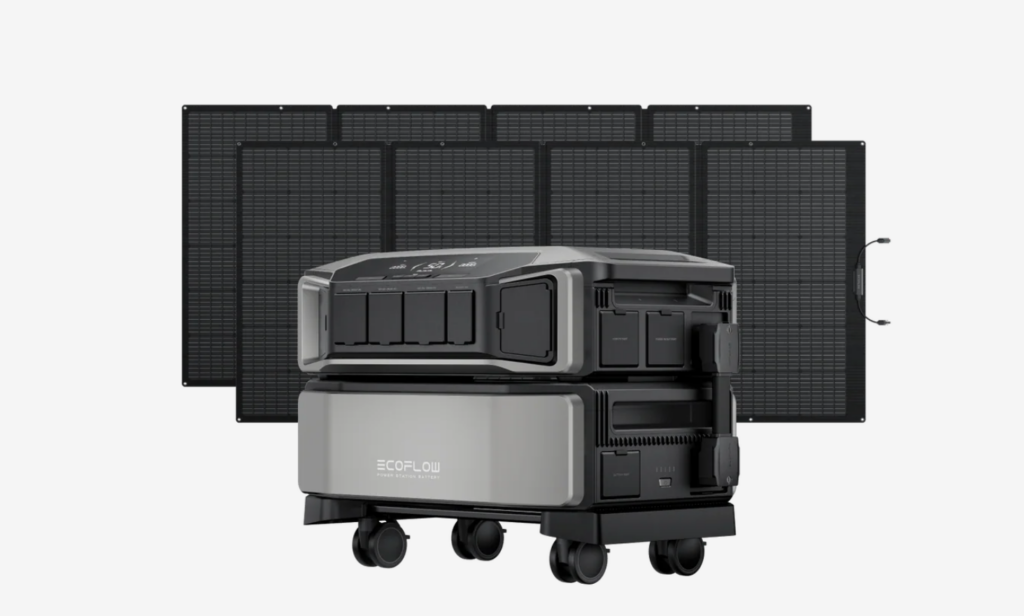
What I like about this EcoFlow system is that it is built for real home use, not just emergency basics. Output starts around 7kW and can scale to over 20kW depending on the configuration, which is enough to run a refrigerator, lights, outlets, internet equipment, TVs, and most everyday kitchen appliances simultaneously. Higher-draw appliances like stoves, ovens, washers, and dryers can be used, but running multiple heavy loads still takes some planning.
Where this system stands out is in runtime and scalability. Battery storage starts at about 6kWh and can expand to roughly 90kWh, which is enough to support essential household loads through extended outages with careful use. Solar input can scale from about 5.6kW up to 16.8kW, allowing strong sun to replace much of a full day of normal home usage rather than just slowing battery drain.
This is not a true whole-house free-for-all, but it is one of the few solar generator systems that keeps a home feeling livable during longer outages without constant trade-offs.
Model Features
- What It Can Power: Washer, dryer, fans, TV, lights, phones
- AC Output: 7.2kW per inverter, up to 21.6kW system output
- Battery Capacity: 6–90kWh scalable LFP storage
- Ports Available: 120V and 240V AC, USB-A, USB-C, DC
- Energy Management Panel: Smart Home Panel 2 included
(Solar panels are not included and are purchased separately) - Weight and Portability: Stationary home system for garage or utility placement
Pros
- Runs most household circuits with minimal load juggling
- Handles large surge appliances and mixed loads well
- Scales battery and solar for multi-day or extended outages
- EcoFlow app shows real-time power use and battery levels
Cons
- High upfront cost compared to partial backup systems
- Requires planning, installation, and dedicated space
Real User Feedback
zigziggityzoo
💬 “Have only had mine for about two months. We had one power outage already for a few hours, plus I decided to run my house for about 8 hours just to see how things went. Turns out I can mostly run my house without changes to day-to-day activities. I likely can’t run my dryer while baking a cake in the oven, but as long as I’m cautious about simultaneous use, it’s just fine. It runs my 2-ton heat pump A/C no problem.”
Best for Full-Size Refrigerators: Goal Zero Yeti 3000X
Refrigerators are one of those appliances you don’t think about until the power goes out, and suddenly everything in them is on a timer. They run all day, cycle constantly, and quietly pull more energy than people expect during longer outages. That’s why fridge backup is less about big wattage numbers and more about having enough battery to last and an inverter that doesn’t freak out every time the compressor kicks on.
If your main concern is not losing a fridge or freezer full of food, this category is about keeping things cold for days, not just getting through a few hours.
- Minimum Daily Power Needs: ~1–2 kWh
- Startup Surge to Handle: 600–1,200W
- Battery Size to Aim For: 2,500–3,500Wh
Solar Generator Kit: Goal Zero Yeti 3000X + Boulder 200
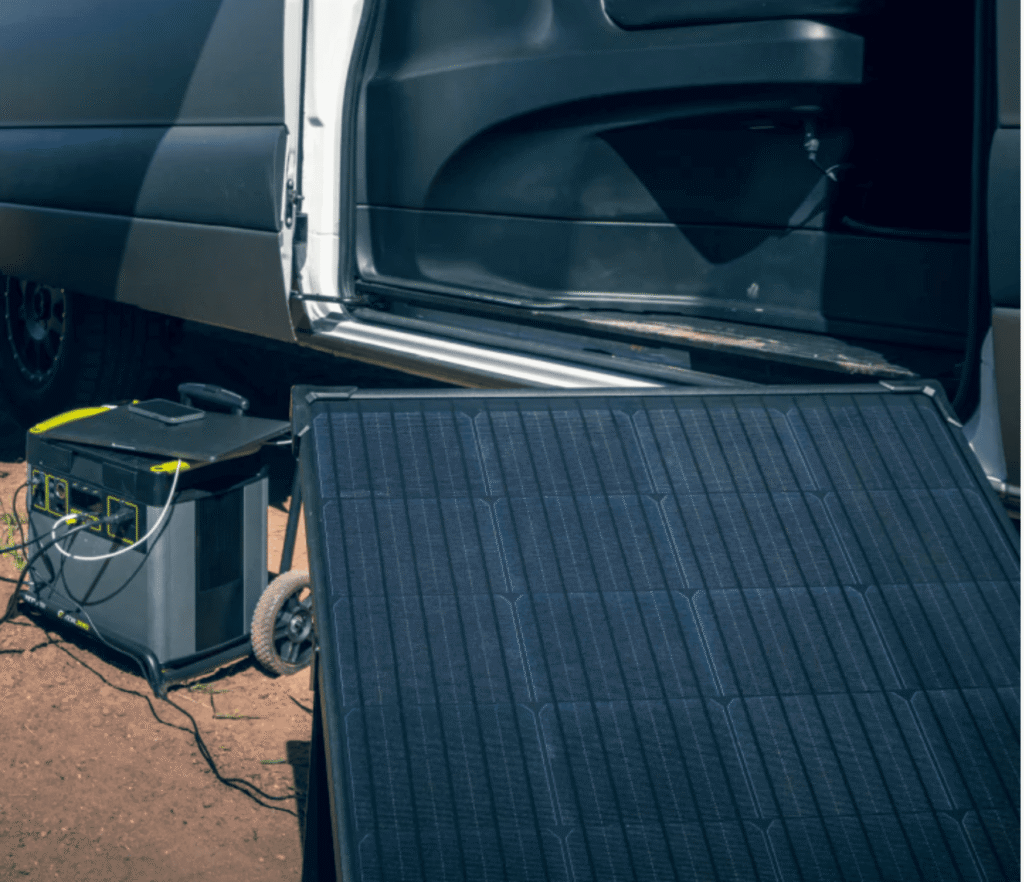
The Yeti 3000X works here because it doesn’t struggle with fridge behavior. You plug it in, the compressor cycles like normal, and nothing trips or needs babysitting. With around 3,000 watt-hours of usable battery, it can keep a full-size refrigerator running for roughly 40+ hours on battery alone, which is enough to get through most short outages without stress.
The Boulder 200 panel helps, but it’s not a reset button. With 200W of solar panel input, solar mainly slows the drain during the day instead of refilling the battery outright, especially outside peak sun. Add in the weight, and this clearly isn’t a move-it-around setup. It’s best treated as a stationary backup where wall charging handles full recharges, and solar just stretches how long everything stays cold.
Model Features
- What It Can Power: Refrigerator, lights, Wi-Fi router, phones, and laptops
- AC Output: 2000W continuous, 3500W surge
- Battery Capacity: 3032Wh usable lithium-ion battery
- Ports Available: AC outlets, USB-C, USB-A, 12V DC
- Panels Included: 1 × 200W Boulder 200 panel
- Estimated Solar Recharge: Full recharge typically takes 18–36 hours of strong sunlight
- Weight and Portability: ~69 lbs for the power station alone; most users leave it stationary or use a cart
Pros
- Compressor cycling stays stable with no inverter dropouts
- Battery capacity fits 1–2 day fridge runtimes comfortably
- Solar aligns well with daytime cooling cycles
Cons
- Extra fridges or freezers reduce buffer quickly
- Limited flexibility for running cooking appliances at the same time
Real User Feedback
User Review
💬 “We have 3 Yetis (2 1400’s and 1 3000, none of them are the newer X version). We charge from solar (90% and from driving 10%). The 3000 is our main ‘house’ battery that we use primarily for cooking. It handles the induction burner, instant pot, kettle, coffee maker, toaster, hair dryer, and anything that we ‘plug in, plus charging our iPhones and iPads. We use the other 2 for our 12v stuff (fans, heater, fridge, lights, etc.). We don’t really need the 3, but the 3rd one was on clearance at REI and we couldn’t pass it up”
Best Modular Solar for Customization: Inergy Flex 1500
Some people don’t want a finished system; they want a starting point. This category is for anyone who knows their power needs will change over time. Maybe you are adding more devices, increasing daily usage, or planning for future expansion without knowing exactly what that will look like yet. Instead of locking into one battery size or solar layout, you want the freedom to build gradually as your needs become clearer.
This is not for someone who wants everything solved on day one. It is for people who want control and flexibility, with the ability to expand storage or solar later without replacing the core system. If you expect your setup to evolve, this approach makes more sense than committing to a fixed configuration upfront.
- Minimum Daily Power Needs: varies by build
- Load Behavior to Handle: mixed and evolving
- Battery Size to Aim For: scalable over time
Solar Generator: Inergy Flex 1500 Power Station
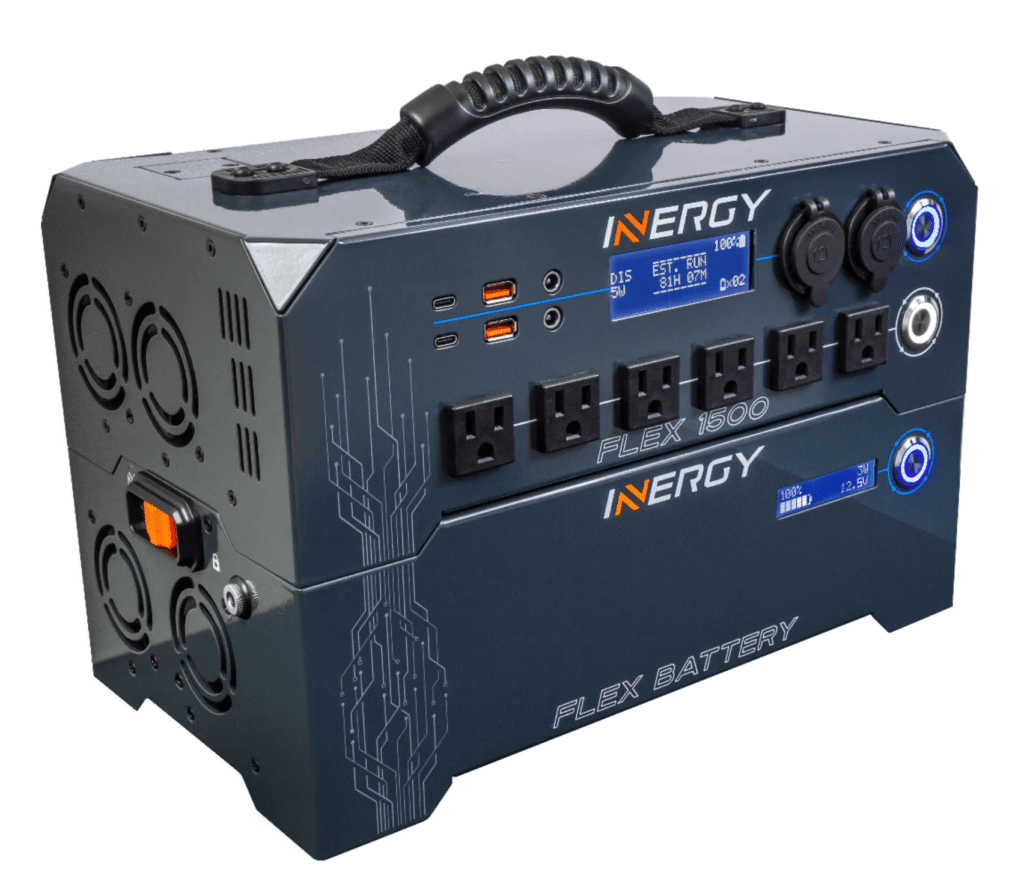
What stood out to me with this model is how everything centers around the base unit. Instead of feeling like a finished product, it feels more like a control hub that you build outward from. The core unit handles power management, and additional batteries or solar cells are added only when you need them. That makes it easier to start without overbuying and avoids committing to a final system size too early.
The base unit provides about 1,500 watts of power, which is enough to run a fridge, lights, outlets, and electronics, with more batteries or solar added to extend its runtime. The downside is that it demands more involvement. This is not a plug-and-play setup you install once and forget. Expansion requires planning how many modules you want, where they go, and how they connect, and costs add up as you scale. If you prefer a system that grows alongside your needs instead of locking everything in upfront, this model aligns well with that approach.
Model Features
- What It Can Power: Phones, laptops, large tvs, small fridges
- AC Output: multiple AC outlets
- Battery Capacity: modular and expandable
- Ports Available: AC, USB-A, USB-C, 12V
- Panels Included: 4x 400W Panels
- Weight and Portability: modular, movable components
Pros
- Fully modular and expandable over time
- Adapts well to changing power needs
- Works across RV, cabin, workshop, and hybrid setups
Cons
- Requires more decision-making as the system grows
- Performance depends heavily on how modules are configured
Real User Feedback
User Feedback.
💬 “After some research, I went with the inergy flex system. The ability to add expansion batteries on the system is intriging.”
Best for CPAP Machines Overnight and Multi-Night With Solar: Anker SOLIX C1000 Gen 2
CPAP backup is one of those needs you do not want to guess on. If power cuts out overnight, you either wake up miserable or you stop therapy mid-sleep. The annoying part is that CPAP power draw changes a lot depending on the humidifier and heated tubing, so a setup that feels fine on paper can still fall short in real use.
This category is for people who want a portable power station that can consistently cover one full night, then recover enough solar power to repeat the next night. It isn’t for running high-draw home backup loads simultaneously.
- Minimum Daily Power Needs: ~0.3–0.8 kWh
- Startup / Load Behavior to Handle: steady draw, higher draw with heat features
- Battery Size to Aim For: ~1,000Wh for overnight buffer
Solar Generator Kit: Anker SOLIX C1000 Gen 2 + 100W Solar Panel
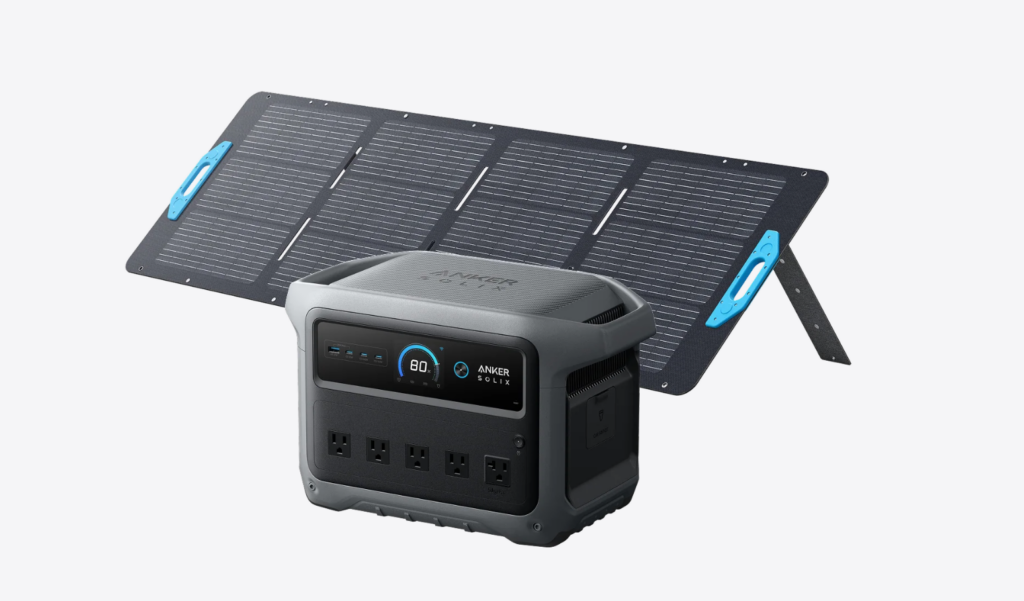
If you’re running a CPAP, the main thing you care about is making it through the night without surprises. This setup is sized right for that. The battery capacity is enough to cover a full night with room to spare, even if you’re using a humidifier or heated tubing, and the inverter capacity is more than stable enough for CPAP machines and other sensitive electronics. It works well as a single portable power station you can keep nearby without rearranging your space or unplugging things constantly.
Where it slows down is solar. A single 100W solar panel is useful for topping off during the day, but it’s not meant to fully refill the battery quickly on its own. This works best when you’re charging consistently, mixing solar power with fast wall charging, and focusing on uninterrupted power overnight rather than full off-grid living.
Model Features
- What It Can Power: CPAP, phones, small devices
- AC Output: 2,000W continuous, 3,000W surge
- Battery Capacity: 1,024Wh usable
- Ports Available: AC outlets, USB-C, USB-A
- Panels Included: 1 × 100W
- Weight and Portability: about 25 lb, easy to move
Pros
- Consistent overnight runtime even with humidifier use
- Clean power delivery for sensitive medical equipment
- Easy to reset daily with mixed charging methods
Cons
- Shared use with other devices shortens the overnight buffer
- Solar recovery speed depends on the daytime sun window
Real User Feedback
User Review.
💬 “The Good: Charging speed is legit. I hit 100% in just under an hour via AC. The flat top design is actually useful for stacking stuff in the car (unlike units with handles on top). App connectivity has been stable for me.
The Bad: It’s dense. Heavier than it looks for its size, but manageable. My biggest gripe is the lack of a built-in light bar. Also, there’s no option for expansion batteries. You’re committed to the internal capacity…”
Best for Camping and Weekend Trips: Jackery Explorer 1000 V2
Camping power is usually a bunch of small stuff that adds up. Phones, lights, fans, laptops, maybe a small fridge, and suddenly you are out of battery on night two. The biggest mistake people make is buying a unit that is either too tiny to last or so big it becomes a pain to pack and move.
This category is for portable solar generators that feel realistic for car camping and short trips, where you want portable solar to stretch battery life without hauling a whole home backup setup. It is not for job site tools or air conditioners.
- Minimum Daily Power Needs: ~0.5–1.5 kWh
- Startup / Load Behavior to Handle: mixed small loads, occasional surge
- Battery Size to Aim For: ~1,000Wh
Solar Generator Kit: Jackery Explorer 1000 V2 + 1 × SolarSaga 100
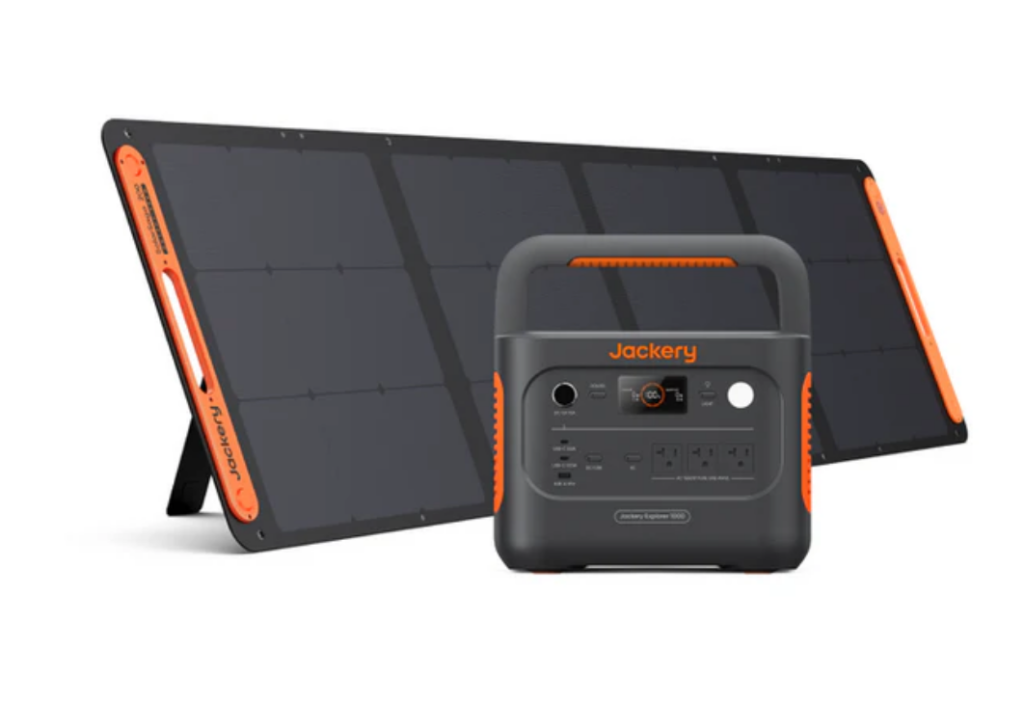
Camping setups fall apart when power feels either too tight or too bulky. This one avoids both problems. It’s light enough to toss in the car without thinking about it, but the battery is still big enough to carry you through night one without anxiety. In real use, it handles the usual campsite mix just fine, lights, phones, fans, laptops, and even a small fridge if you’re reasonable about runtime.
Solar is where expectations matter. One 100W panel keeps things moving during the day, but it’s more about slowing battery drain than resetting everything from empty. This works best when you treat solar as a helper, not a guarantee. If you want fast refills, you add panels. If you want simple, grab-and-go weekend power, this setup stays easy.
Model Features
- What It Can Power: lights, phones, laptops, fans, a small fridge
- AC Output: 1,500W rated, 3,000W surge
- Battery Capacity: 1,070Wh usable
- Ports Available: AC outlets, USB-C, USB-A, car port
- Panels Included: Yes, 1 × 100W
- Weight and Portability: about 24 lb, easy carry
Pros
- Battery size works well for typical weekend loads
- Handles mixed small devices without stress
- Simple solar setup extends runtime naturally
Cons
- Extended trips require disciplined power use
- Limited margin if you add high-draw gear
Real User Feedback
User Review.
💬 “I LOVE MY JACKERY WORKS PERFECT!!! I have two 1000w The only issue I had is the solar panels are overpriced and aren’t water proof but everything else is amazing and works great.”
Best for RV Power Without Full RV AC: BLUETTI AC180
RV power is where people get surprised. Even if you are not running air conditioners, you still have a fridge, lights, outlets, and constant small loads that chew through energy storage. The goal is a setup that can run your basics, then recover enough with solar panels to keep the pattern going.
With decent sun, solar can realistically refill a good portion of the battery during the day, which makes multi-day off-grid stays possible without constantly worrying about running out of power.
- Minimum Daily Power Needs: ~1–3 kWh
- Startup / Load Behavior to Handle: cycling fridge, mixed loads, moderate surge
- Battery Size to Aim For: ~1,000–2,000Wh
Solar Generator Kit: BLUETTI AC180 + 2 × 200W Solar
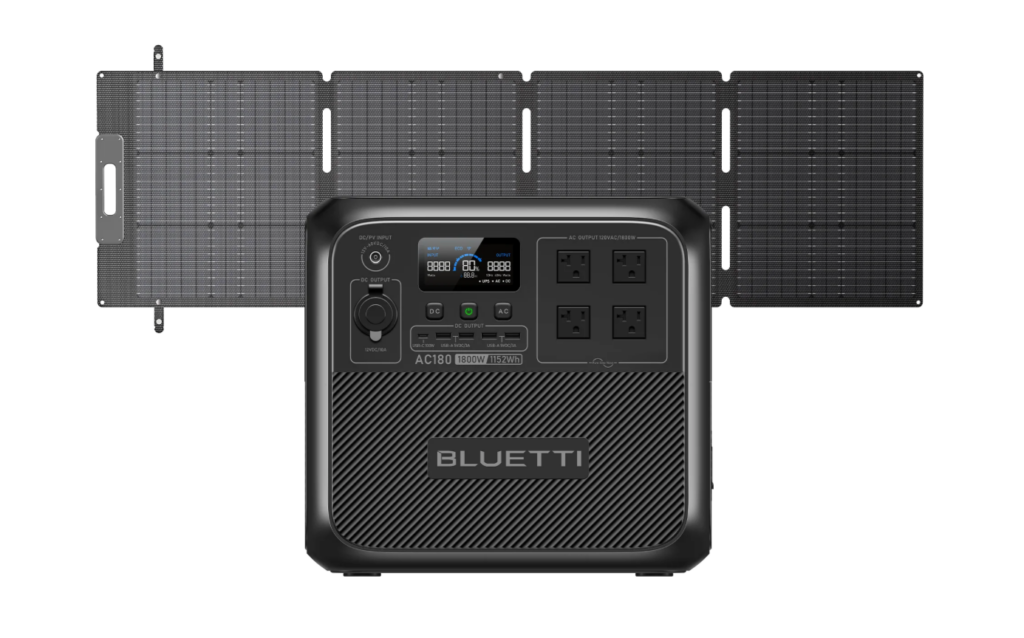
What stood out to me here was the solar side. When I compared RV-friendly setups, 400W of panel input was the point where solar stopped feeling symbolic and started doing something useful. It is enough that, in good sunlight, you are actually replacing a chunk of what you use during the day instead of just slowing the battery drain. That matters for RV use, where you want to stay parked without relying on hookups or a generator.
Paired with the AC output, it makes sense for typical RV loads like a refrigerator, lights, outlets, device charging, and internet gear. However, the line is drawn at heavy loads. It can handle short bursts from a microwave or coffee maker, but it is not built to run a rooftop RV air conditioner continuously or act like a whole-home system such as the EcoFlow Delta Pro. It also weighs more than smaller 1kWh units, so it works best as a stay-put RV power source rather than something you move around camp.
Model Features
- What It Can Power: RV fridge, lights, outlets, devices
- AC Output: 1,800W continuous
- Battery Capacity: 1,152Wh usable
- Ports Available: AC outlets, USB, DC options
- Panels Included: 2 × 200W
- Weight and Portability: about 35 lb, stows in RV
Pros
- 400W solar input supports daily fast charging patterns
- Output matches fridge and outlet loads well
- Balances storage and solar better than most RV setups
Cons
- Not a full RV AC solution
- Heavier than most camping-class power stations
Real User Feedback
User Review.
“The AC180 is impressively capable as backup power when you need it. It runs just about anything that runs off a standard 15A outlet. It charges quickly and holds a decent amount of battery power. It was amazing for me as portable power during the hurricanes in Florida last year.”
Best for Lots of Ports and Mixed Devices: EcoFlow DELTA 3
Some setups fail for one reason: not enough ports. You end up swapping cables, using splitters, or choosing which device gets charged. If you are running a mix of laptops, phones, routers, cameras, and small appliances, port layout matters as much as battery capacity.
This category is for people who want a portable power station that can plug in many devices at once with minimal juggling, especially for home backup corners, RV desks, or gear-heavy weekends. It is not for heavy-duty appliances that need high continuous output.
- Minimum Daily Power Needs: ~0.8–2 kWh
- Startup / Load Behavior to Handle: lots of small loads, occasional surge
- Battery Size to Aim For: ~1,000Wh
Solar Generator Kit: EcoFlow DELTA 3 + 110W Portable Solar Panel
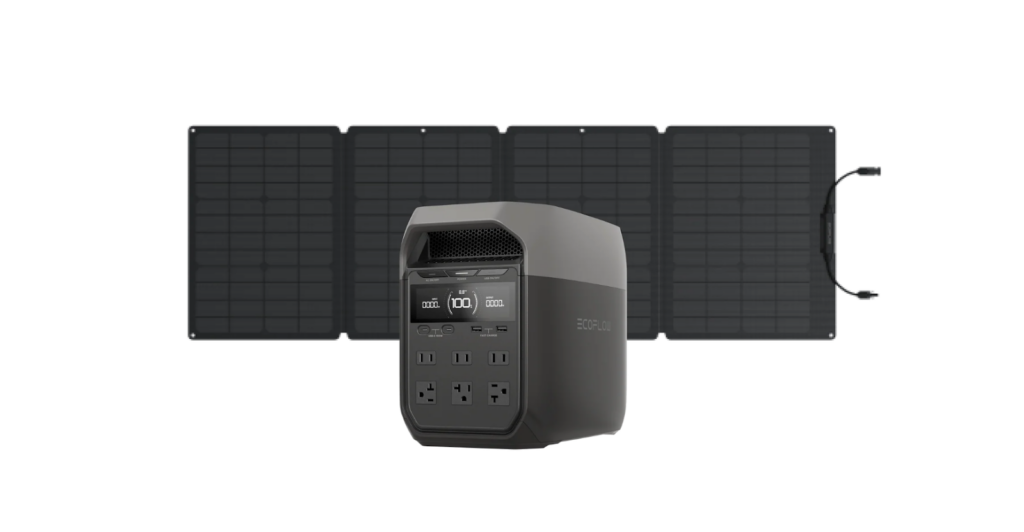
I tend to notice port limitations pretty quickly, and that’s where this setup makes things easier. When you’re juggling laptops, phones, routers, and a few small appliances, constantly swapping plugs gets old fast. The port layout here lets everything stay connected without much thought. Between the AC outlets and the mix of USB-A, USB-C, and DC ports, it lines up well with the kinds of devices people actually use day to day.
I think this makes the most sense if your setup is more “a lot of little things” than one big load. It’s not trying to be huge or extreme; it just keeps everything working without you having to think about it much. If juggling cords usually drives you nuts, this fixes that quietly. Just don’t expect it to handle things like a fridge, stove, or microwave.
Model Features
- What It Can Power: laptops, phones, router, lights, small appliances
- AC Output: 1,800W total, 3,600W surge
- Battery Capacity: 1,024Wh usable
- Ports Available: 6 AC outlets, USB-C, USB-A, car, DC ports
- Panels Included: Yes, 1 × 110W
- Estimated Solar Recharge: slow with one panel, improves with higher solar input
- Weight and Portability: about 28 lb, easy to carry
Pros
- Port layout supports many devices simultaneously
- Strong inverter for a mid-size system
- Reduces cable swapping and device prioritizing
Cons
- Running multiple heavy appliances tightens capacity fast
- Not designed to absorb sustained high-draw loads
Best for Small Off-Grid Living: Renogy Cabin Solution
This category is for people who live off-grid full-time rather than use power occasionally. In these setups, electricity is part of the daily routine. Refrigerators run all day, lights are used every night, and appliances need to work consistently without much thought.
This is not a portable or flexible system meant to be moved around. It’s designed for cabins, rural homes, sheds, or tiny houses where power needs are predictable and steady, and you want something that runs quietly in the background day after day.
- Minimum Daily Power Needs: ~5–10 kWh
- Load Behavior to Handle: continuous daily household use
- Battery Size to Aim For: 8kWh+
Solar Generator System: Renogy Cabin Solution (1280W | 9.6kWh)
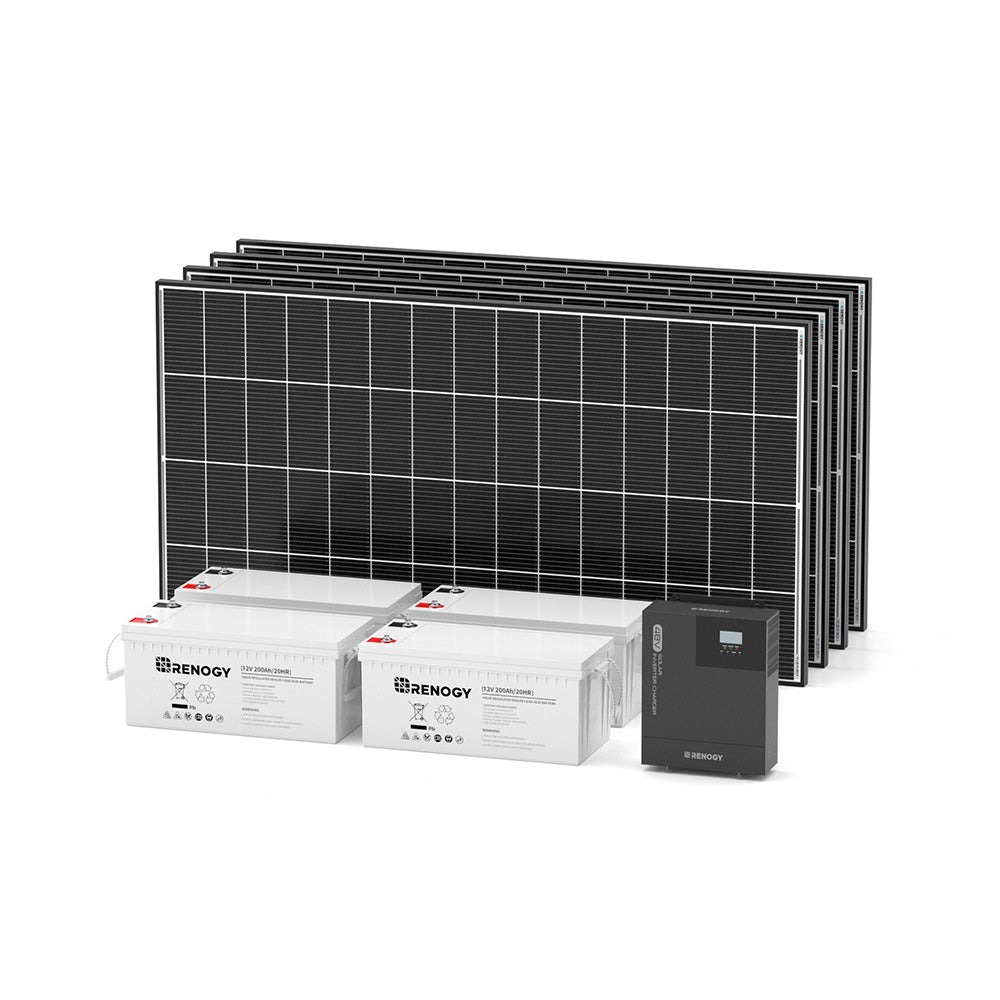
This system works more like a small, fixed solar power setup than a generator you manage day to day. Once the roof panels are installed, they stay in place and run automatically. You are not switching loads on and off or timing usage constantly.
With a 9.6kWh battery bank and 1,280W of solar, it can realistically run a refrigerator 24 hours a day, power lights in the evening, and handle laptops and small appliances daily. With steady sun, the system can recover most of what it uses each day, supporting essential loads for around 7 days through daily solar recharge. It is not whole-home power, but it is well-suited for a small off-grid cabin or tiny home with predictable use.
Model Features
- What It Can Power: fridge, lights, microwave, coffee maker, fans, laptop
- AC Output: 3,500W inverter
- Battery Capacity: 9.6kWh AGM bank
- Panels Included: 4 × 320W roof-mounted panels
- Weight and Portability: fixed installation
Pros
- Supports consistent daily appliance use
- Battery size buffers cloudy or low-production days
- Feels like permanent household power
Cons
- System is fixed once installed
- Not flexible if power needs are charged significantly
Worth a Look: Other Solar Power Options
These did not make the cut for our best solar generators, but may be worth considering for basic or occasional power needs.
- FlashFish A501 / A301 (light emergency power)
- OUPES 1200 / 2400 (mid-range portable backup)
- MARBERO M82 / M87 (small-capacity portable power)
- Patriot Power Cell‑CX Power Bank (compact solar power bank)
- BigBlue 28W Solar Charger + Battery Packs (panel with USB output)
My Final Thoughts
Solar generators are becoming a popular and practical option for home backup, off-grid use, and everyday power needs, but choosing the right one matters. In my experience, you need a system that actually fits how you use power day-to-day. Whether that means keeping food cold, running medical equipment, supporting daily off-grid living, or avoiding another stressful outage, the right setup comes down to real usage, not specs on paper.
These recommendations are meant to help you narrow your options, understand the real differences between systems, and choose a solar generator that fits your life instead of forcing you to adapt to it.
FAQs
A solar generator is a portable power station that stores electricity in a battery and recharges using solar panels. It provides clean, quiet, renewable energy for powering devices during outages or off-grid use.
It depends on what you plan to run. A small setup can power phones and lights, while a full home backup system requires much higher battery capacity and output.
Solar input capacity is the amount of solar power a generator can accept from panels. Higher input lets your system recharge faster, especially during long power outages or off-grid use.
Some of the best solar generators can run high-draw appliances if they have strong inverter capacity and enough battery storage. Always check the output specs before connecting heavy loads.
Many portable solar generators support expansion batteries and extra solar panels. This helps grow your backup power system as your needs increase.