South Florida artists scale up for Orlando Museum’s Florida Prize
A trio of vibrant pyramids, built from almost 100 canvases, tower from floor to ceiling. Photographs explore motherhood and the American landscape. A bed of dried rose petals bears the imprint of a body. Walls are covered in hand-drawn sacred symbols. A pink installation of sculptures made of goat’s milk soap is built around intimacy and well-being.
One gallery after another at the Orlando Museum of Art belongs to a Miami-Dade County artist in this year’s Florida Prize in Contemporary Art, making the state’s premier contemporary art exhibition feel unexpectedly close to home for Miami audiences.
Eight of the exhibition’s 12 artists and artist duos have South Florida ties, including Miami artist Francisco Masó, whose “The Coronation of Gladiolus” received the exhibition’s $20,000 top prize.
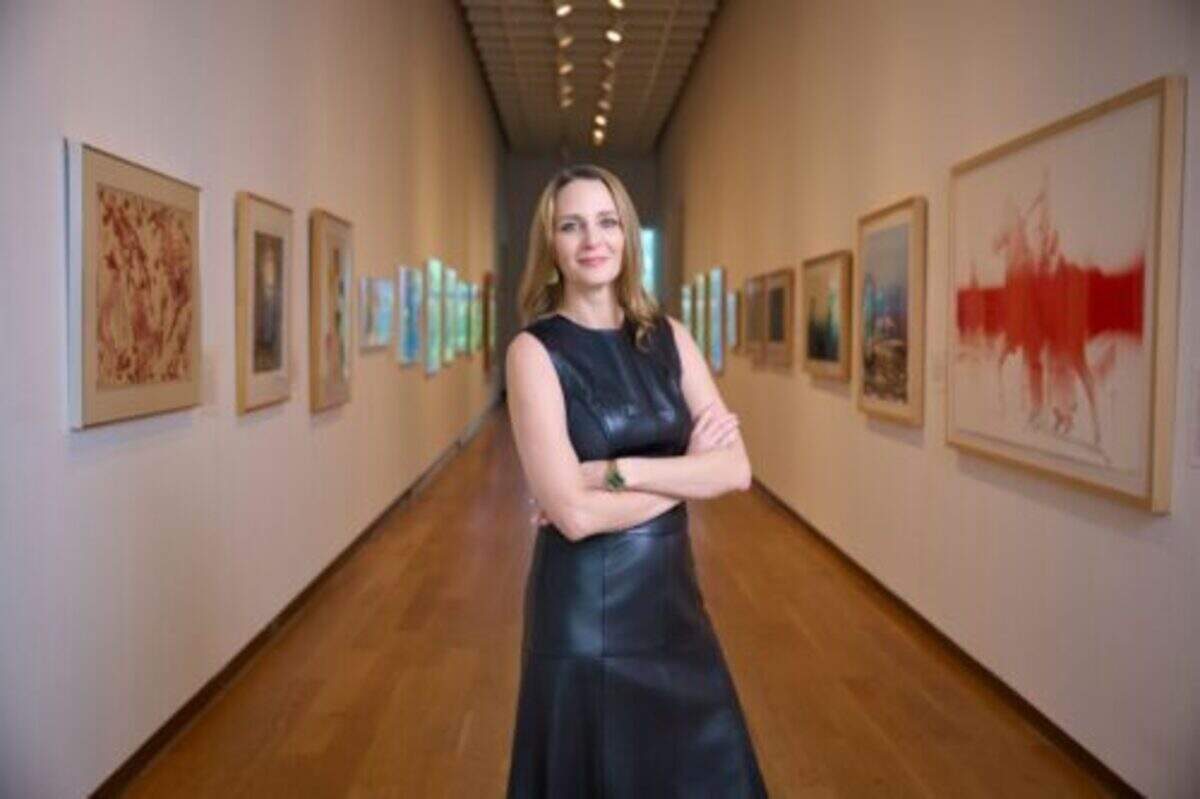
Coralie Claeysen-Gleyzon, senior curator at the Orlando Museum of Art, who organized the exhibition with associate curator Katherine Page, credits what she calls the county’s “ecosystem for artists” as one of the reasons that so many are from Miami.
“Miami has just this incredible pool of artists, but those artists are there because there’s a great support system for them,” she says, pointing to organizations such as Bakehouse Art Complex, Locust Projects, Oolite Arts, Bridge Red, and other spaces that provide exhibition opportunities, studios, and a community that allows practices to develop over time.
“When you think about Miami as this ecosystem for artists, you have incredible spaces for creation,” she says.
Once selected for the Florida Prize, artists are given something many times unavailable to them: room to create, to push their ideas and to mount something that can be seen for an extended period of time by a range of visitors.
“When you give artists the space to create, a lot of them want to scale up,” Claeysen-Gleyzon says.
While Miami may have studio complexes, what the Orlando Museum of Art offers with its Florida Prize is that local artists basically get the chance to exhibit in what amounts to solo shows in a major museum.
Page, who started at the museum six months ago, says she and Claeysen-Gleyzon immediately started working on finalizing the artists that would be selected for this year’s exhibition.
“When we are thinking about the artists to select, we think about what spaces will work best for their work, what will highlight their work. They have room and space to grow and we work with them to figure out what that means. Many of them already have something in mind that they’ve been dreaming about,” she says. “It’s really great to be a part of that dream.”
Artists aren’t selected through an open call. Instead, the Florida Prize is built through years of studio visits, exhibition research and conversations as curators follow artists’ careers before extending an invitation.
“The process to select the artists for the Florida Prize is actually something that takes several years,” says Claeysen-Gleyzon.
Dreaming Bigger
When Mette Tommerup first visited the Florida Prize in Contemporary Art, she looked at the soaring gallery walls and hoped one day she would be invited.
This year, the Danish-born, Coconut Grove-based artist got her wish.
Across a 90-foot wall at the Orlando Museum of Art, Tommerup assembled three monumental pyramids built from canvases dragged through the ocean and Biscayne Bay, dried in flowering trees and tossed from rooftops at dusk, surrendering part of the creative process to nature itself.
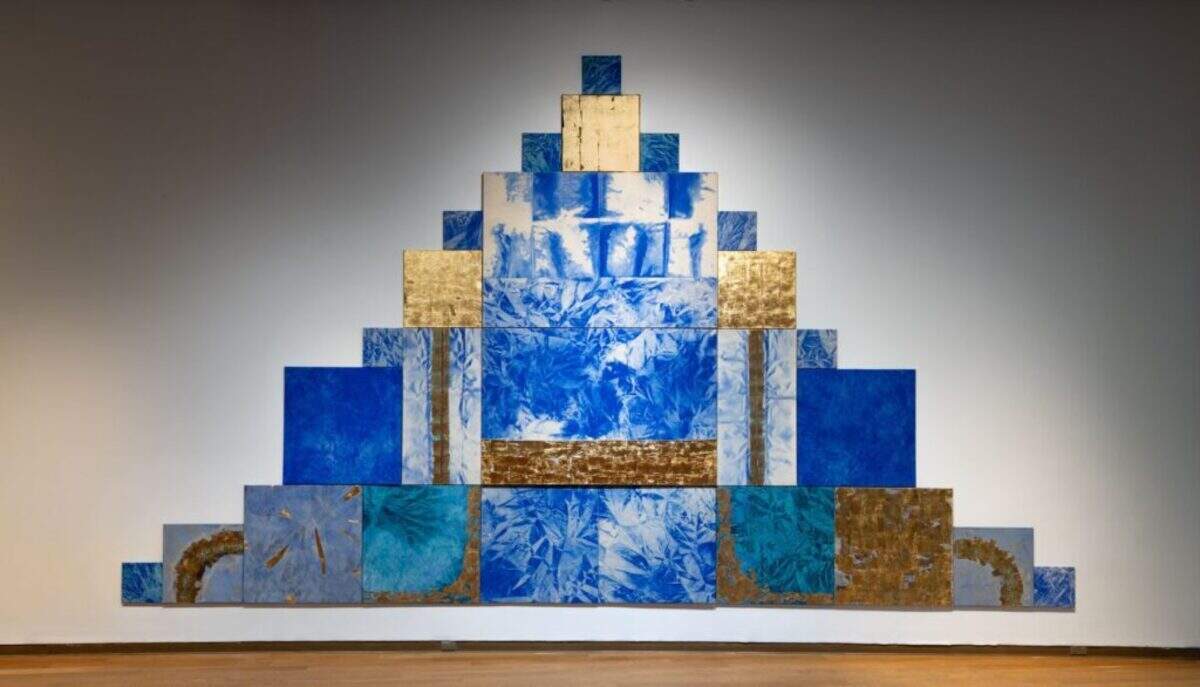
Each pyramid has a color that represents the three elements of ocean, earth and air with newly introduced gold leaf accents. The canvases, carefully arranged in structured compositions, rise in the gallery like geological formations or ancient architectural monuments, according to Claeysen-Gleyzon.
“I try to relinquish authorship, so my work is not all about me,” says Tommerup. “I try to listen to the canvases.”
The opportunity to be selected and work with curators to realize ambitious projects is what makes the Florida Prize such a milestone, Tommerup says.
“The Florida Prize is a significant invitation in an artist’s career to be trusted to take on these large gallery spaces at a substantial museum,” Tommerup says. “This is, for most artists, the highest level of achievement in the state of Florida for an annual contemporary art survey show.”
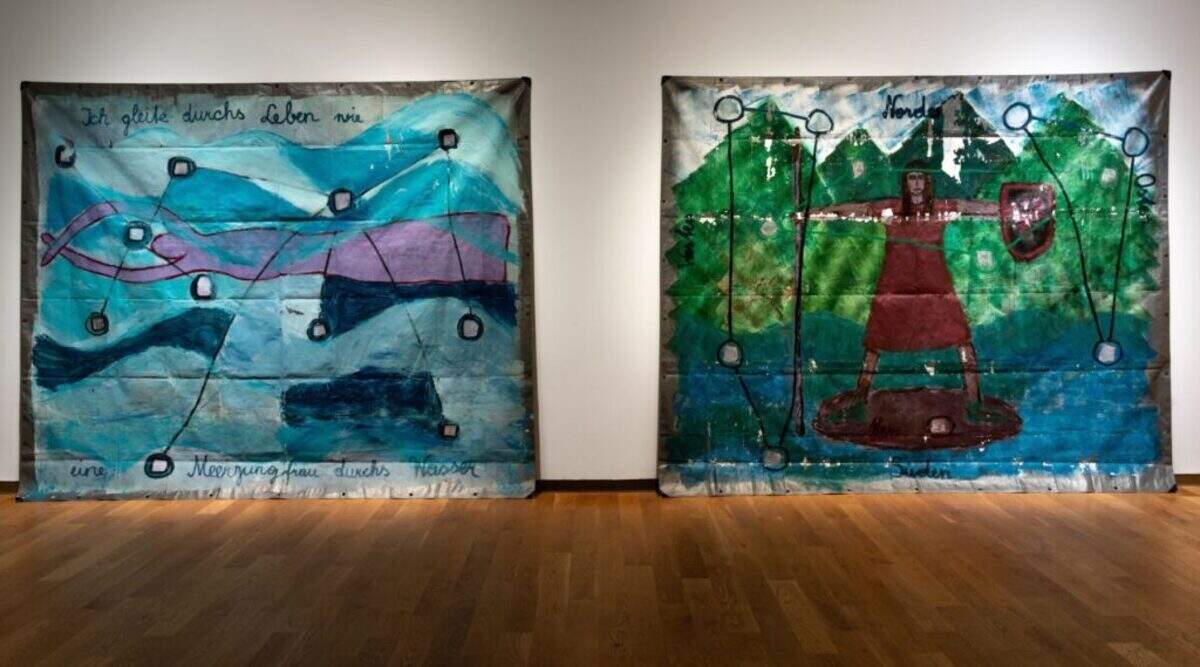
The exhibition also gives artists the freedom to experiment with new materials and approaches.
Maria Theresa Barbist embraced a new process, replacing traditional canvas with industrial tarps that allowed her to work on a larger scale while embedding transferred Polaroid photographs collected over years in Miami and Austria.
“This is the first time I’m painting on tarp,” Barbist says.
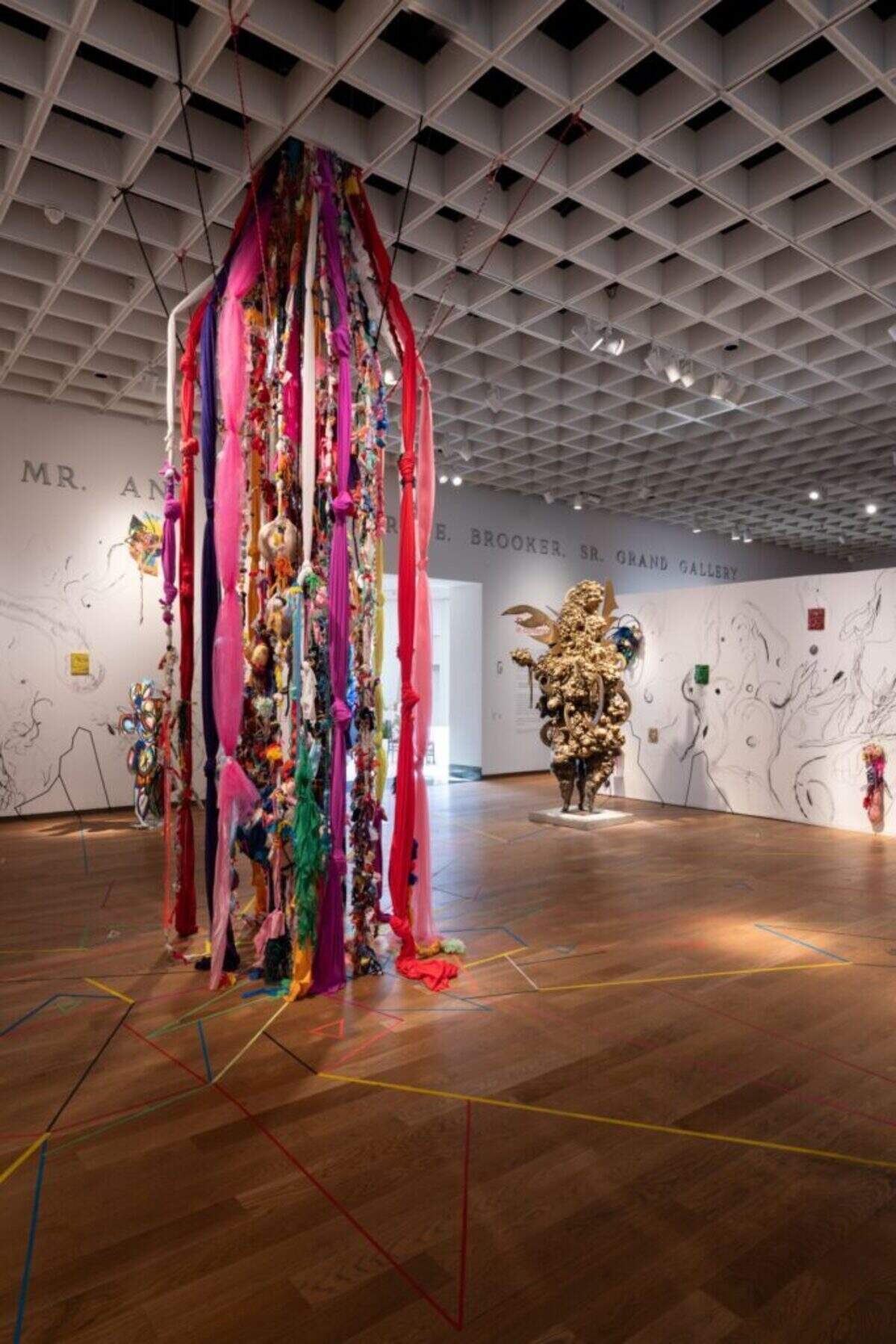
For Charo Oquet, the exhibition became an opportunity to unite works dating back to 2014 with sweeping wall ink drawings created specifically for the museum show. Surrounding sculptures, assemblages and brightly colored forms make the space feel part sanctuary, part dreamscape. The drawings mark the first time the artist has worked directly on gallery walls, she says.
“I’m interested in the language of the sacred,” says Oquet, who has spent nearly four decades researching Afro-Dominican spirituality. “I don’t want to do exactly the religious thing,” she says. “I want to take that idea and bring it to contemporary art.”
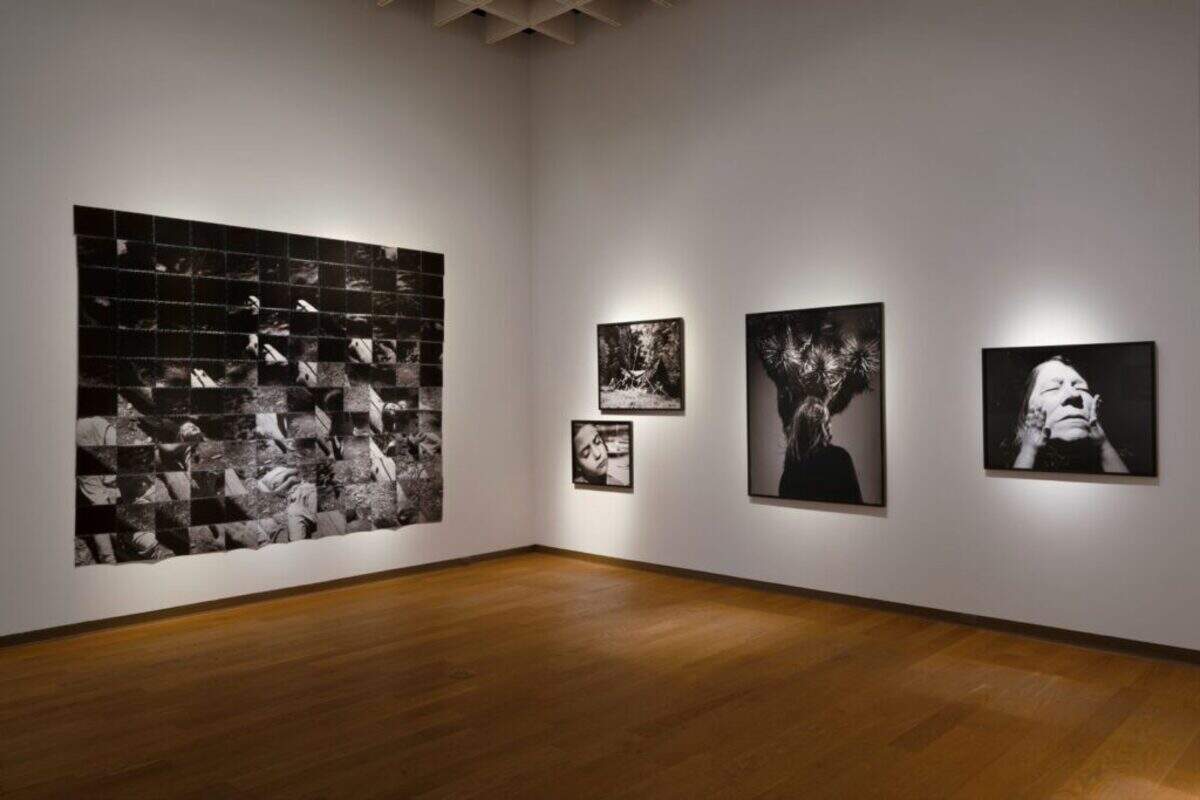
Rose Marie Cromwell, who makes bodies of work about different geographies having worked in Panama, Cuba and Miami, likewise expanded her practice beyond its usual boundaries. Her gallery combines monumental photographs with the idea of what the American West looks like through a feminist approach to landscape photography. For one large piece, she hand-stitched photographs together.
In another room an installation video shows her mother and her daughter climbing on rocks juxtaposes bodies and how they age. All of the work grew out of documenting her postpartum experience during the pandemic, then turning her attention to motherhood, generations and the American landscape.
“I realized that there was some power in sharing a story about motherhood with the world,” Cromwell says. “I had never turned the camera really onto myself or my own body or my own life. I realized as my daughter was getting older, my mother was in her 70s, and I suddenly felt at the beginning of my 40s, kind of on this hill of life that I have never really been on before, where I could more clearly see the beginning and the end.”
Room To Experiment
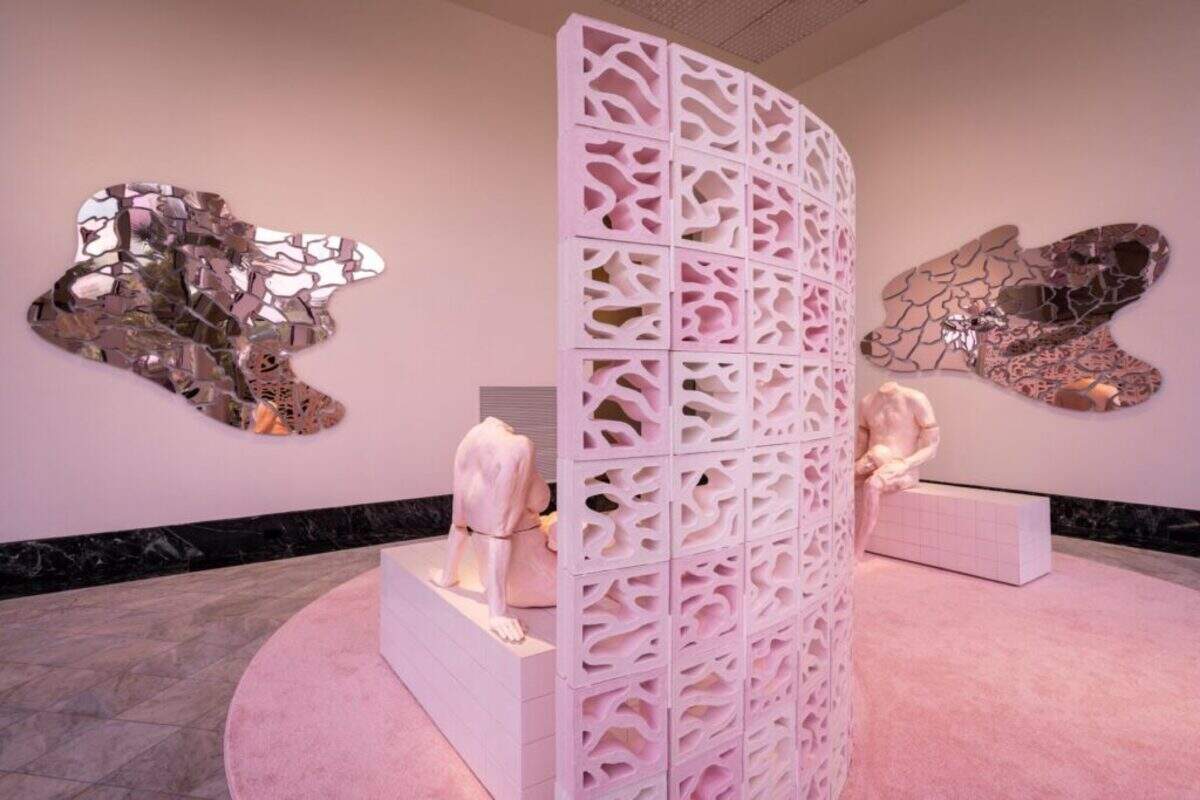
We Are Nice ‘n Easy transformed a gallery into a glowing pink environment built around intimacy, vulnerability and care. Husband-and-wife artists Allison Matherly and Jeffrey Noble cast their own bodies in goat’s milk soap, embracing a material that changes over time. In each sculpture, the figure holds its head in its lap.
“A lot of our work in previous years has become more controlled and manufactured looking. We wanted to introduce a medium that had more variables,” says Noble, welcoming the unpredictability of a process that echoed the themes of the installation itself.
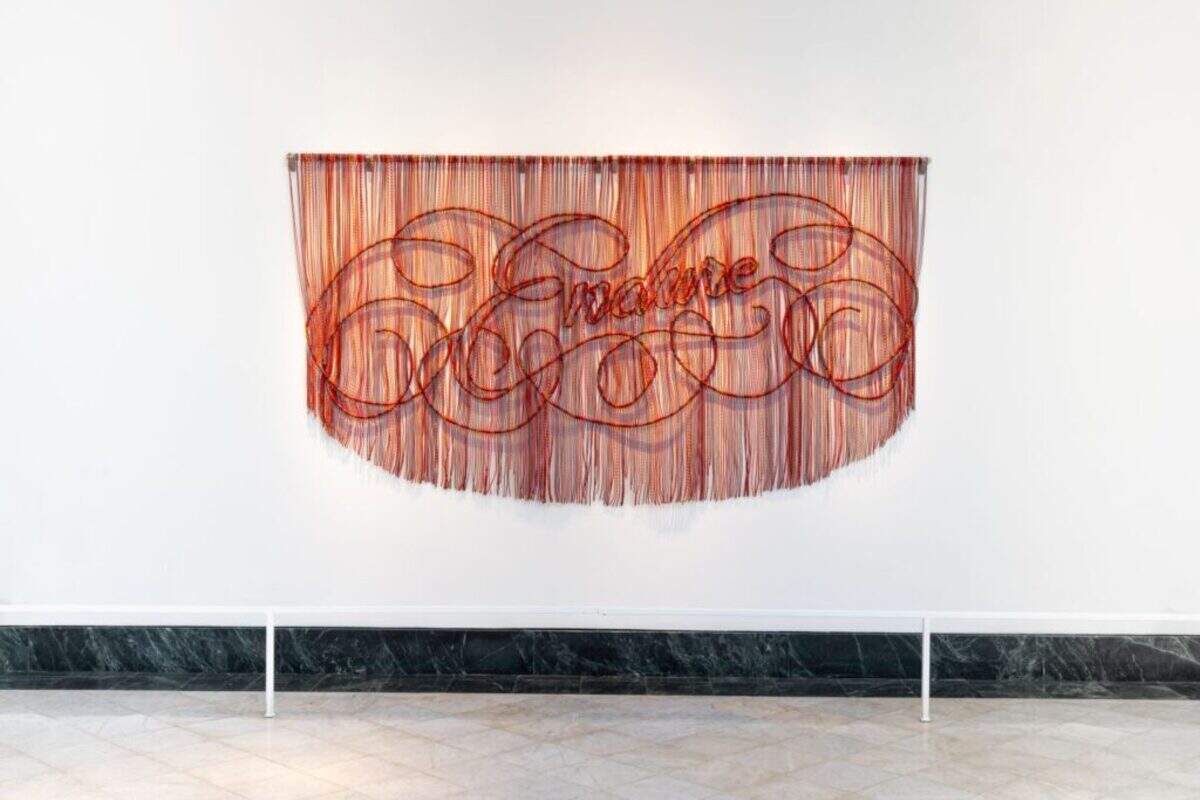
In Jessy Nite’s exhibition, the gallery became a warm apricot-colored environment where language intersected with sculpture. Bold phrases are stretched across walls, while monumental paracord textiles and a suspended woven vessel invite visitors to linger over words such as “Retreat,” “Endure” and “Siempre.” Working with durable synthetic materials and intricate knotting techniques, the Miami artist explored resilience, preservation and the ties that bind communities together, turning simple text into quiet moments of reflection.
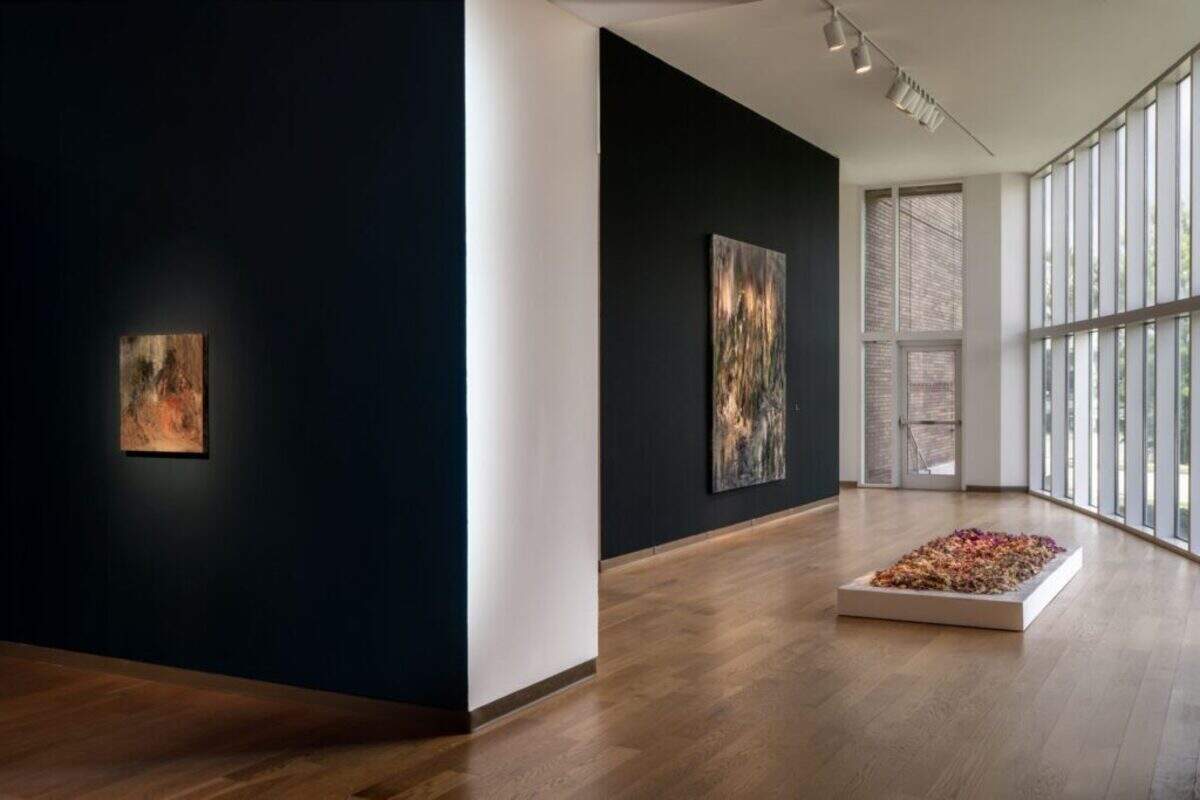
Ema Ri took a more contemplative approach, filling a darkened gallery with intimate paintings that were a meditation on transformation, grief and renewal. Beneath one canvas, a pedestal covered with dried rose petals featured an impression of the outline of the artist’s body, extending the paintings into a reflection on mortality and resilience.
St. Petersburg artist Jason Hackenwerth, whose massive, suspended balloon sculpture greets visitors in the museum’s rotunda, and the collaborative duo of Meredith Laura Lynn of Tallahassee and Katie Hargrave of Chattanooga, Tenn., bringing perspectives from riffs on naturalist explorations in a multi-media installation, rounded out the exhibition.
The range of work presented a challenge for guest juror Jade Powers, curator of contemporary art at the Birmingham Museum of Art, who spent an afternoon studying the exhibition before selecting the recipient of the Florida Prize’s $20,000 award.
“I appreciated how each artist engaged with relevant contemporary questions,” Powers says. “Whether addressing religion, censorship, aging, the body, historical narratives, or personal and collective trauma, every installation approached these subjects in a distinct and thoughtful way.”
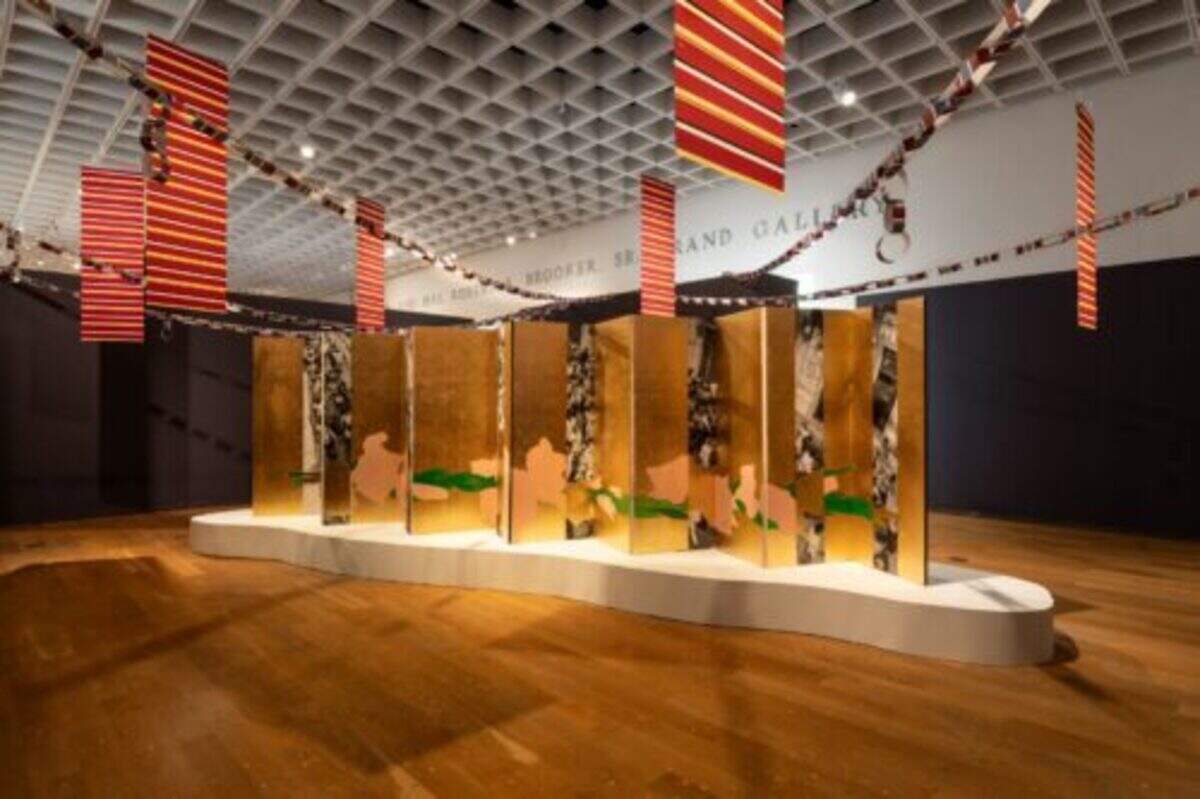
She ultimately selected Masó’s “The Coronation of Gladiolus,” an installation that first appears celebratory. Gold folding panels, hanging banners and historical imagery seem almost ceremonial. A constant drumbeat and the scent of gunpowder are meant to evoke an atmosphere of a public gathering before revealing references to surveillance, repression and resistance in Cuba.
The striped abstract paintings throughout the installation are based on polo shirts worn by Cuban state security agents who blend into crowds during protests, while gladiolus flowers reference the Ladies in White dissident movement. Gold folding panels
For Masó, the work is meant to make hidden systems visible.
“For me, art should be useful,” he says. “I’m giving you the tools for understanding.”
Powers says selecting a single winner is a tall order. “(It) is never easy, particularly when the overall quality is so strong, but spending time with both the artworks and the artists’ ideas helped clarify the strengths of each presentation.”
A Conversation Across Galleries
Page says there’s a deliberateness in giving over most of the museum to the show. It invites visitors who may not be frequent museumgoers into something more accessible. Visitors can also cast a People’s Choice vote for their favorite Florida Prize artist.
“It really invites a deeper kind of thinking about the work and about which artists visitors find they connect with the most. I think that is very special.”
Despite the artists’ varied approaches, Claeysen-Gleyzon says the exhibition’s conversations emerge naturally.
“The works aren’t supposed to talk to each other,” she says. “But somehow they do.”
It is inevitable that intentionally or unintentionally, the exhibition creates a conceptual content conversation and that becomes the most intriguing component of this year’s Florida Prize. To get the true sense of where contemporary art in Florida stands in 2026, the Orlando survey show does just that.
If you go:
WHAT: 12th Annual Florida Prize in Contemporary Art
WHERE: Orlando Museum of Art, 2416 N. Mills Ave., Orlando
WHEN: 10 a.m. to 4 p.m., Tuesday through Friday; noon to 4 p.m. Saturday and Sunday; closed Mondays. 10 a.m. to 8 p.m. third Thursday of each month. Through Sunday, Aug. 23.
COST: $20, $12, seniors 60 and older, $10, students with ID, $8, children ages 6 to 17; children 5 and younger and museum members free admission.
INFORMATION: (407) 896-4231 or omart.org.
ArtburstMiami.com is a nonprofit media source for the arts featuring fresh and original stories by writers dedicated to theater, dance, visual arts, film, music and more. Don’t miss a story at www.artburst.com.