
Documentary captures life of Cuban painter Orlando González Naranjo
In May of last year, 89-year-old Cuban artist Orlando González Naranjo was told he had to leave the Flagler Street studio where he had worked and lived for nearly 30 years. He always paid rent on time, even sending an extra $50 every month, but suddenly he was told if he didn’t leave, the landlord would evict him.
A documentary about the artist made by Cuban filmmaker Jorge Soliño that screens Friday reveals that though Naranjo is sad, he is by no means a defeated man. Soliño along with actress and theater director Flora Lauten, have become Naranjo’s champions.
In the film, Soliño, who has directed documentaries about Cuban and exile legends like Willy Chirino and Paquito D’Rivera, captures the story of an artist who is not the classic success story — but in his imperfections lies the charm.
Soliño was moved the first time he saw Naranjo among boxes in this new place in northwest Miami. Lauten had come to help Naranjo get back on his feet and had asked a documentarian for help.
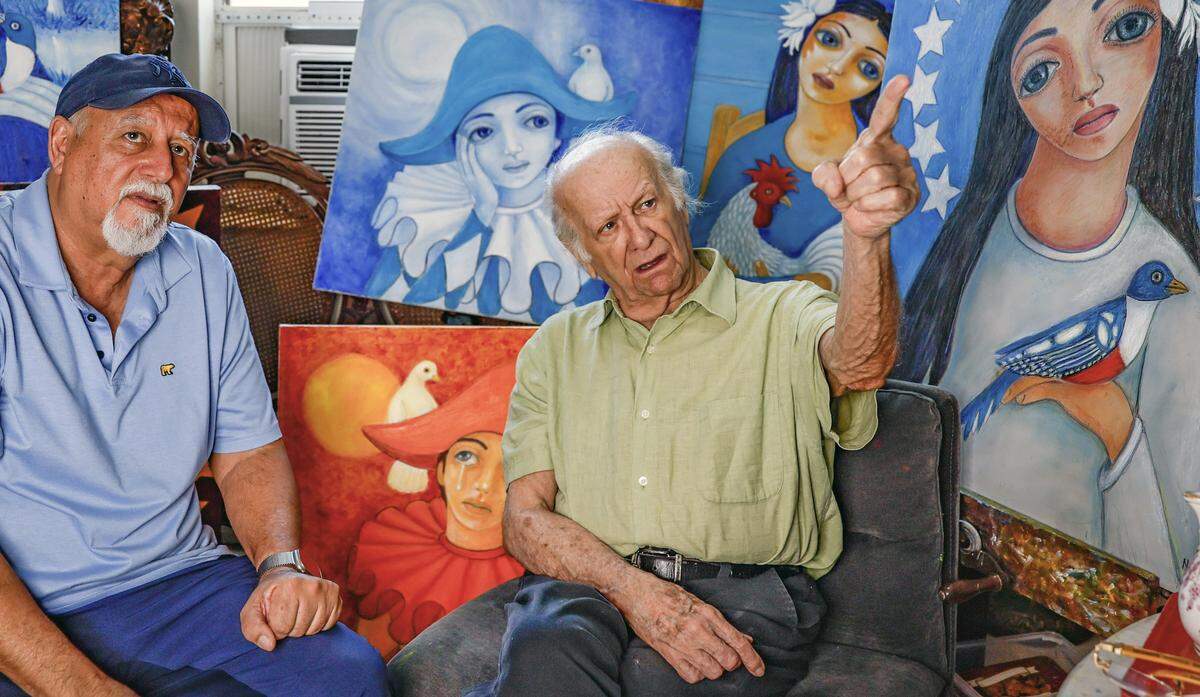
“He always had many plans and life played a dirty trick on him, from bad advice, from ignorance, from whatever,” Soliño says, about what becomes the essence of the documentary, summed up in the John Lennon quote the filmmaker chooses as an epigraph: “Life is what happens to you while you’re busy making other plans.”
Naranjo is known for capturing with special sensitivity the beauty of the Cuban woman, like the harlequin from his “blue period,” because his work, full of color like the Calabazar de Sagua countryside where he was born, sometimes turns monochrome. His signature style presents women with sad, slightly drooping eyes that sometimes shed a tear.
“The paintings were kind of piled up and those faces were looking at me saying: what are you going to do about us? How can you help us? It was as if they were all demanding something from me,” Soliño remembers, and when Naranjo couldn’t paint because of pain he would bring him a medicine that relieved him.
An atypical Cuban
Naranjo grew up in extreme poverty in pre-Castro Cuba, living in a bohío, a shack, with a dirt floor. There were days he couldn’t go to school because he had no lunch to take or shoes to wear. He earned five cents carrying lunch to the workers of the Purio central. He ran errands for his teacher, who made the first underwear he ever wore when he was in fourth grade, the last year he attended school.
“In 1953 it was my teacher who gave me my first book, “Camino del saber” (The Path of Knowledge),” says Naranjo. He sometimes gets tongue-tied remembering an episode of his life, but then picking it up again in lavish detail, even naming those involved.
He never had store-bought toys, only the ones his father made for him. Nor colored pencils and certainly no brushes, but they always sent him to draw with chalk on the blackboard, and he won several writing contests.
“My first poem was published in the newspaper El Comercio of Cienfuegos; I was 14 or 15 years old,” says Naranjo, who attributes his artistic abilities to curiosity. “It’s inside you. As a child I was crazy running around everywhere; I loved going to town.”
Perhaps the roots of a self-taught artist like him lie in remembering the scene of his grandfather — who was nearly blind from cataracts and there was no money for surgery — sitting on a stool at the doorway of the bohío, enjoying the cool air before the midday sun arrived.
“Sometimes it makes me sad because I used to play a lot of tricks on him, I’d move his things so he couldn’t find them, but I also think I was the only one who noticed him because he was very lonely,” he recalls.
Naranjo loves to talk about the six bridges Calabazar de Sagua had, about his church, about the bandstand, and about the first time he saw the four-year-old girl who would later become his wife.
“I grabbed her in the street and kissed her,” he says, clarifying that he was later punished.
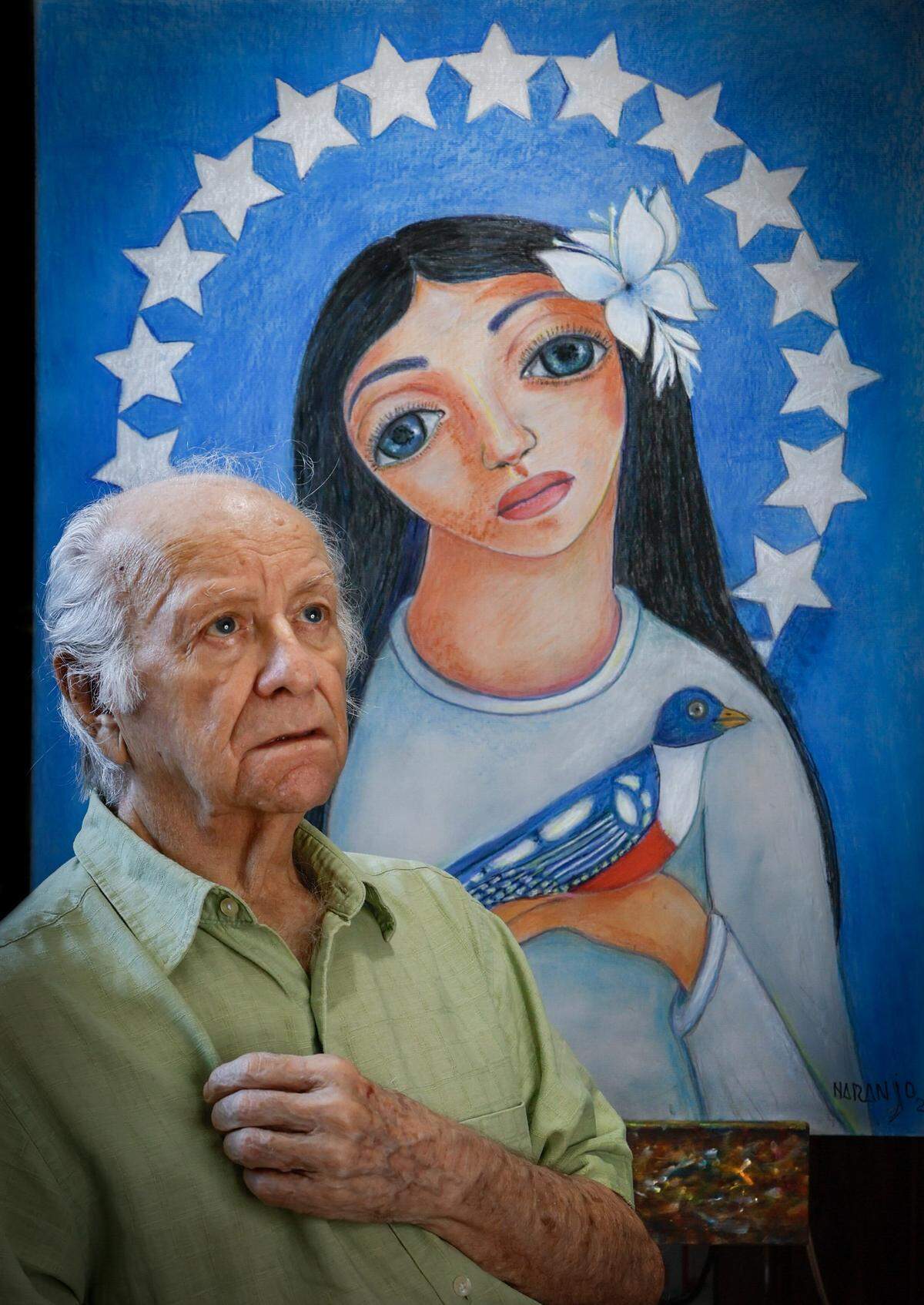
Naranjo arrived in Havana at 18 and began his career as a designer and draughtsman on projects across the island. He worked in the workshops of the El Encanto store, which was the most luxurious in Cuba. He also did the interior decoration of the Hotel Capri in Vedado and the Hotel Ricardo (now Vueltabajo) in downtown Pinar del Río. When he designed the Gran Hotel Santa Clara facing Parque Vidal, he hung one of his own paintings on every floor by the elevators.
His desire to see the world, to travel and reach the pyramids of Egypt—the impulse that led him into exile in 1984—was not fulfilled. The painter has never seen New York, but he did live in Tampa for six years, which he finds quieter and friendlier than Miami.
Naranjo has exhibited in countless shows in galleries in Miami and Coral Gables, and in group exhibitions in Havana and the United States. At the same time he carries that air of the marginalized artist that comes from spending two decades without a determined legal status, as we learn in the documentary.
His work was the subject of many forgeries, but Naranjo showed them grace. At one point, he counted five different forgers, he said with a certain amount of pride. Someone informed Naranjo about a particular forger, but the man was so skinny, and he told Naranjo that his mother had died. Naranjo responded: “I’m not going to ask him for a cent.”
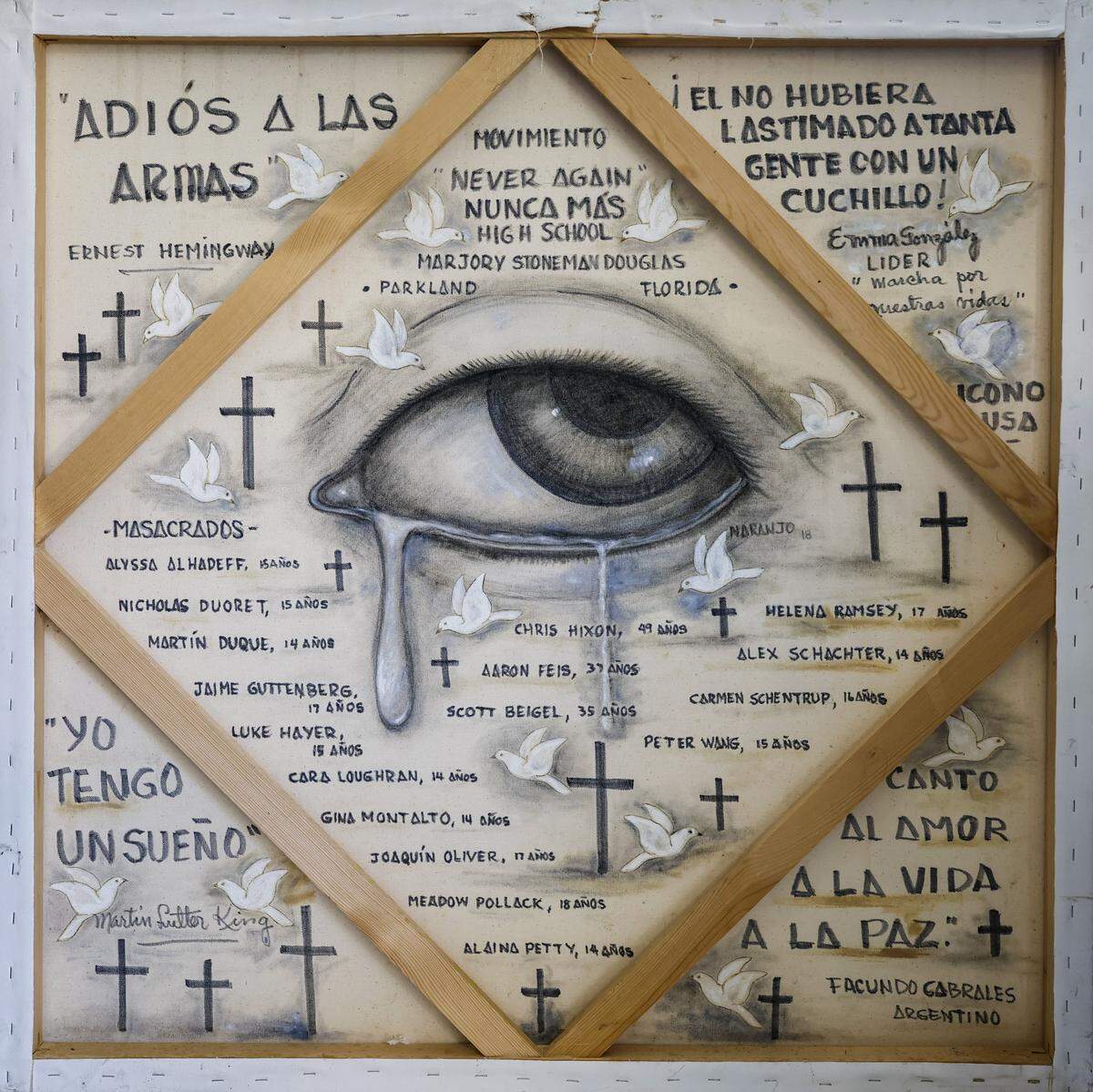
“Humanity was born with me, just as painting was born with me,” Naranjo says. Since then, he signs his paintings on the back with a huge eye that sometimes cries. Around it, he puts phrases from the news, from the events of the moment, because “the artist is a witness of his time,” he says.
The documentary Naranjo is presented on Friday, May 22, 7 p.m., at Koubek Center, 2705 SW 3 St. Free admission and parking. Confirm attendance at https://miamifilmfestival.com/program/event/naranjo/
