
For MOCA, a splendid re-introduction
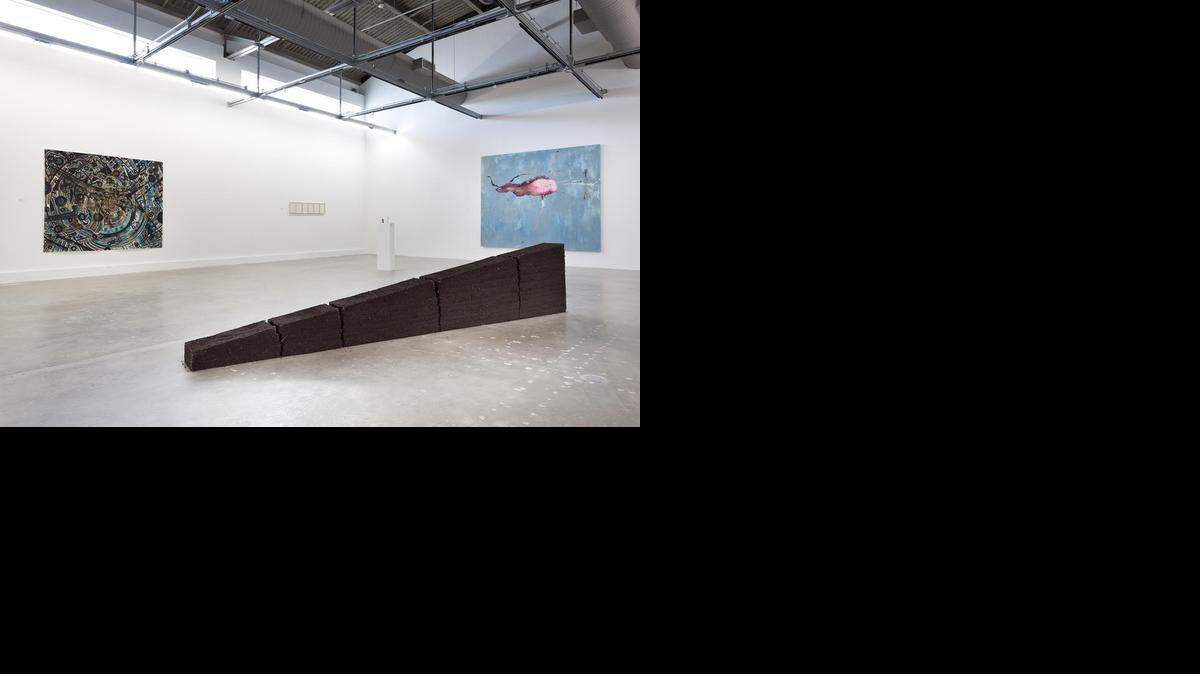
The large crowd milling about on the night of Sept. 25 at the Museum of Contemporary Art in North Miami was refreshing: young and old, from every ethnic background, some visiting the museum for the first time and harboring the kind of curiosity that jaded art openings often discourage.
After the bitter break-up of MOCA over the last year, two entities have thankfully arisen from the ashes, and the exhibit “Third Space: Inventing the Possible” is a great inaugural re-introduction for the one half that resides in the original building.
It’s a cleanly curated exhibit of local artists, with work familiar and unfamiliar picked out by well-known artists and art practitioners William Cordova and Gean Moreno. Although 23 artists who work in a wide variety of media are represented, the pieces all mesh well together. Many are muted in coloring, in browns, off-whites, grays, almost as though they don’t want to shout across each other and instead desire to co-exist harmoniously. It’s hard not to think of a message here, after the at-times acrimonious past year that MOCA has experienced.
Some of the names and the works will be immediately recognizable, such as the charcoal drawings from José Bedia and the small video from Ana Mendieta; or the powerful triptych that welcomes you to the first main gallery from Maria Magdalena Campos-Pons. All three of these works were made before the year 2000, suggesting that this trip around MOCA is also a compact survey of art made in Miami over several decades.
In a cordoned-off space at the front, three videos do in fact have an intentional dialogue. From Charo Oquet, who is often known for her multi-colored sculptures, they were filmed at the border of Haiti and her native Dominican Republic. These moving and also witty films made in 2014 depict the transient life of Haitians with no real home, wanderers in life.
The theme of wandering, of transience, is palpable here; not a surprise, as so much of Miami is made up of those transplanted and uprooted. Says Cordova, “I was thinking of recovery, of healing, of a spiritual journey” of those who have literally journeyed to get where they are, he says.
Like Oquet’s, another piece departing from the artist’s norm comes from Cuban-born Jorge Pantoja, whose small, haunting narrative paintings are what we are most used to. Here, he has a milk jug sculpture called Laurel and Hardy, first created in 1998 but remade for this exhibit. A large graphite painting from Glexis Novoa takes over most of one wall in the back gallery, with a nice 2012 series called Forms in the Garden from Aramis O’Reilly as its neighbor.
Two sculptures are particular attention grabbers: the small, exquisite celluloid (film stills) on plexiglass that stand on pedestals from Ena Marrero, and the large ramp made from compacted black soil dug up out of the Everglades from Ralph Provisero — you’ll want to touch it, but please don’t.
However, trying to pick and choose highlights here is unfair. What comes across overall is the breadth and quality of what has been created here in Miami for some time now, both in front of our eyes but at times also hidden from them. A perfect show to re-introduce the museum.
If you go
What: “Third Space: Inventing the Possible”
When: Through Nov. 2
Where: MOCA, 770 NE 125th St., North Miami
Info: www.mymoca.org
This story was originally published October 17, 2014 at 8:24 PM with the headline "For MOCA, a splendid re-introduction."