New photo exhibit captures South Florida neighborhoods experiencing gentrification
Smith Durogene sees beauty where others don’t.
The vibrant pastel-colored houses. The radiant hurricane shutters. The texture of burglar bars on doors.
“You’re not going to see that anywhere but down here in South Florida,” said Durogene, a 34-year-old photographer raised in South Florida.
Showcasing that beauty amid gentrification is the objective of Durogene’s new exhibit “Here Today, Gone Tomorrow,” which debuts Thursday evening in Liberty City. The project, which earned Durogene an Ellies Award from Oolite Arts in 2022, consists of images taken in Liberty City, Overtown and other primarily Black neighborhoods across South Florida that showcase the architecture and the character as gentrification of all types alters the very fabric of the community.
“There’s so much beauty within these communities,” Durogene said of neighborhoods like Liberty City, Opa-locka and Pompano Beach.
Among Durogene’s pictures is the Neo-Moorish inspired Opa-locka City Hall; a ranch-style home with an above ground pool that contains a unicorn floatie in Brownsville; a full moon shining over light blue and brown homes that make up what was once the Pork ‘n’ Beans in Liberty City.
“There’s so much more character, so much texture and before you know it,” Durogene said, “it’s going to be gone.”
“Miami is constantly demolishing itself every five, six years,” added Esther Park, Oolite Arts’ vice president of programming. Durogene’s work is “archival. It’s historic.”
The project’s origins date back to 2019 when Durogene went to photograph the Flea Market USA in West Little River and noticed it was gone. He didn’t understand why until doing his research while continuing to shoot in different neighborhoods. Durogene saw how they were changing, what was being demolished and what was replacing it. He then learned about climate gentrification, or the displacement of communities due to climate change. Liberty City is one such place that’s undergoing a rapid change as developers seek to capitalize on its higher elevation.
Once he became aware of climate gentrification, Durogene said, he knew he needed to act fast.
“I don’t want my message to get lost,” Durogene added, explaining this project was about “raising awareness about climate gentrification and just appreciating South Florida for what it is before it’s gone.”

A native of West Palm Beach, Durogene has lived throughout South Florida. He moved around a lot in his youth, something he called “bittersweet” as it also connected him to various neighborhoods from Palm Beach to Miami-Dade County. He first picked up a camera when he was 16. There was something about having the ability to capture a memory that really appealed to him in part because he didn’t have a lot of photos from his childhood. “Here Today, Gone Tomorrow” provides a chance for him to document South Florida history as well as his own.
“I grew up in these communities,” Durogene said. “That’s probably why I feel so much when you start to see these things disappearing and what not. It’s a part of me being taken away. And if I feel like this, I can only imagine what the people that are still residing in some of these communities are feeling right now.”
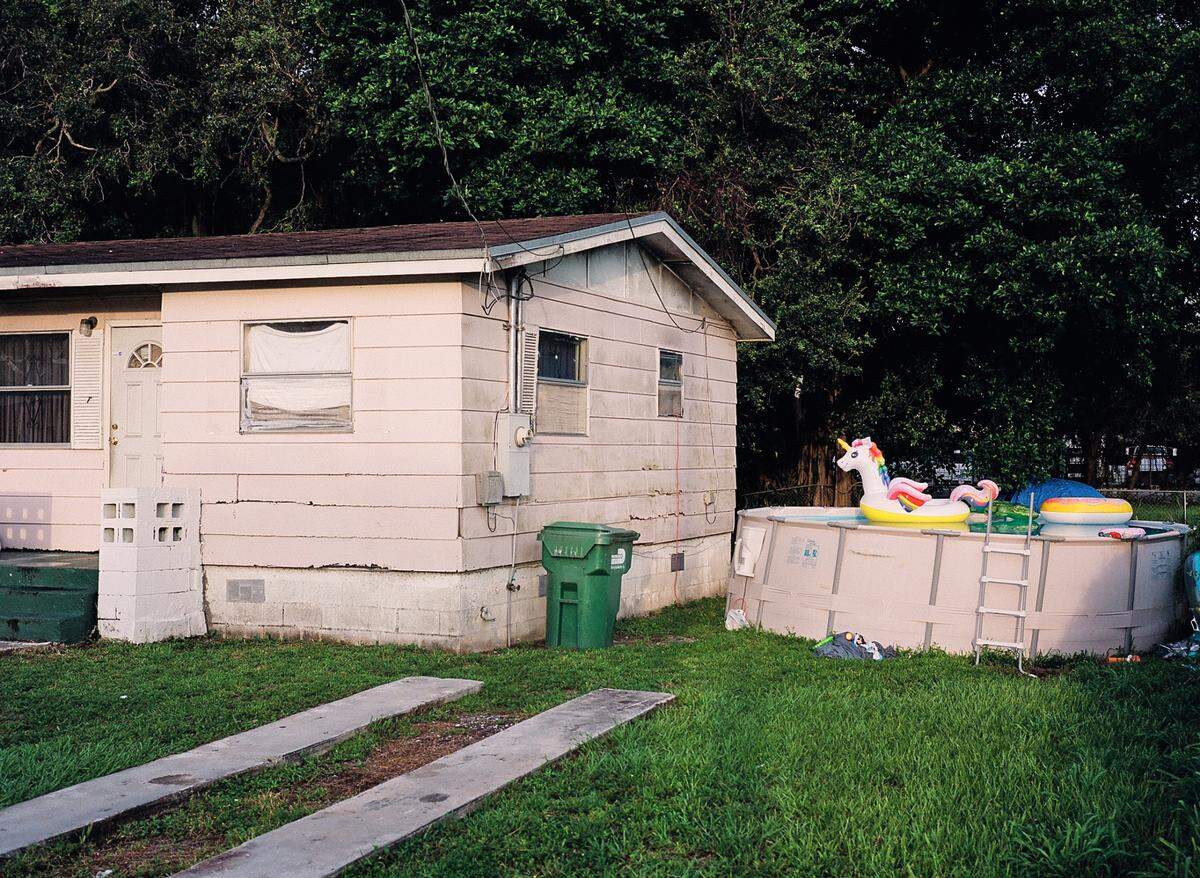
Durogene added: “Let’s say, for instance, you take away Liberty Square. What else are you taking away? You’re taking away that verbiage. You’re taking away the schools around there. You’re moving away the Black kids. That culture is not there anymore.”
The self-taught photographer ultimately sees “Here Today, Gone Tomorrow” as an opportunity to raise an alarm. The very people that give the Magic City its magic, he says, are disappearing. Once they’re all gone, now what?
“Outside looking in, if you think South Florida culture, you’re going to think Miami, you’re going to think the beach, clubs, nightlife,” Durogene said. “It’s important that they know it’s bigger than that.”
IF YOU GO
What: “Here Today, Gone Tomorrow” exhibit
When: 7 p.m. Thursday or by appointment until September 8th
Where: 5600 NW Seventh Ave., Miami
Cost: Free
This story was originally published August 31, 2023 at 11:56 AM.