
In Kyiv, their gallery is now a bomb shelter. From Miami, they plan to help even more
Before Russian forces invaded Ukraine, Voloshyn Gallery in Kyiv was preparing an exhibition of artworks by Oleksiy Sai. Though the gallery didn’t know it at the time, the works on display would be eerily relevant. They depicted bombed areas in Ukraine.
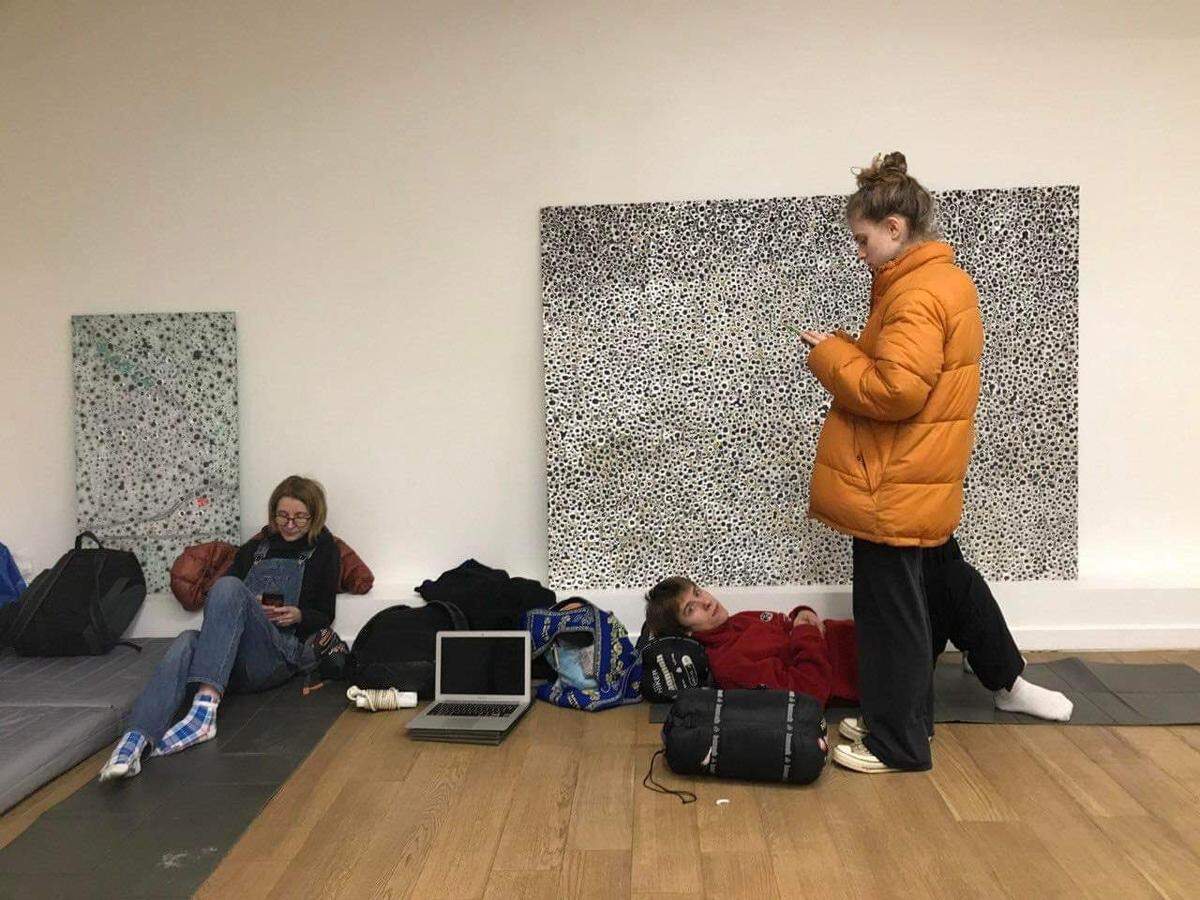
Soon the gallery was full of people, but not for opening night of Sai’s show. Artists, colleagues and family members laid out mattresses and bags next to the artwork. They were using the gallery as a bomb shelter.
Over 5,600 miles away in Miami, the gallery owners, Max and Julia Voloshyn, stood in a space where they’re hosting a pop-up exhibition entitled “The Memory on Her Face.” As their 2-year-old daughter Daniella watched cartoons in her stroller, Max scrolled through the photos of his family’s gallery back in Kyiv on his phone. History was repeating itself. The building the gallery is located in was a bomb shelter during World War II, Max and Julia said.
“It’s hard now,” Julia said. “In one day, everything changed.”
The pop-up show in Miami features paintings, digital work, video and sculptures by five artists: Nikita Kadan, Lesia Khomenko, Oleksiy Sai, Nikolay Karabinovych and Maria Sulymenko. The politically charged works on display, which reflect Ukrainian life in recent years, have taken on a new meaning since the war began. The couple decided to extend the pop-up until March 28 in protest of the war and look for ways to help their artists and fellow Ukrainians while they wait out the war in Miami.
One of Sai’s pieces from his “Bombed” series can be seen at the pop-up. It’s a large green and yellow work on aluminum that looks like it had been riddled with bullet holes. The piece depicts a bird’s eye view of the Donbas region, an area in eastern Ukraine which was invaded by Russian forces in 2014. Now the piece represents the entire country, the couple said.
“This show has become very timely,” Julia said. “All the works are really related to what’s happening right now in Ukraine.”
“Especially this work by Nikita Kadan,” she said, pointing to a photo of a partially destroyed building in the Donbas. Kadan took the photo of the building, printed it onto a silkscreen and mounted it to a dark metal shield like a curtain.
The bleak black-and-white image printed onto the silk moves delicately as a person walks by or a gust of wind blows. It’s a reminder of how vulnerable democracy is, Julia explained.
“When it’s moving, you can see how fragile our life, how fragile our country is,” she said. “And not just Ukraine, but everybody.”
Kadan’s artwork, called “Broken Pole,” was one of a couple pieces in the pop-up that were sold. The client who bought the piece donated $1,000 to a Ukrainian charity, Julia said.
After extending the pop-up, Max and Julia have been working on a “part two” in another venue, possibly in the Design District, and other opportunities to secure residencies for the artists they represent. They’re hoping for more visitors, sales and donations for charity.
“Americans who come to the exhibition all want to support somehow,” Julia said.
An extended stay
Julia and Max opened their first gallery, which focused on classical Ukrainian art, as college students and ran it for about 10 years. They later grew interested in contemporary art and opened Voloshyn Gallery in 2016. The chic exhibition space, located in a historic building, is near Kyiv’s cultural city center and is walking distance from a park, museums, cafes and bars.
The gallery participated in several international contemporary art fairs, including NADA Miami and UNTITLED Art Miami Beach late last year. After a busy Miami Art Week, the family got sick with COVID-19, delaying their return home. They then found a small warehouse in Allapattah to host “The Memory on Her Face.” The pop-up aims to create a bridge between Ukrainian artists and the United States, said Omar Lopez-Chahoud, curator of the pop-up as well as UNTITLED.
“They are putting a lot of effort, especially now, to really support the ecosystem,” he said. “It’s not only the artists, it’s everything that is connected to Ukrainian art and history.”
Julia and Max never planned to stay in Miami this long. They were going to finish the pop-up in late February to fly home in March. Though there had been reports of a potential war, Russia’s sudden invasion took them by surprise.
Julia was up late on Feb. 23 and had just put Daniella to sleep. She opened her laptop to get some work done when she noticed that all of her Facebook friends were online even though it was 5 a.m. the next day in Ukraine. Even her mother was awake.
Their friends were posting about hearing explosions and seeing planes in the sky. Her mother, who lives near an airport, said the explosions shook the windows of her house. The couple said they’re especially concerned for the civilians, including children, who have been targeted by Russian missiles.
“It’s quite criminal,” Max said.
“It’s fascism,” Julia added.
‘Do something bigger’
The Voloshyn’s story resonated with Fredric Snitzer, a longtime Miami gallerist who read about their show in The New York Times. He noticed that the pop-up’s venue looked familiar. They were practically neighbors, he said.
He went over to the pop-up and offered space at his nearby gallery to work out of for a couple months. Now, the galleries are collaborating on a fundraising exhibition for April to send support to Ukrainian relief organizations as soon as possible, he said. The show will feature both Ukrainian and American artists.
“Our solutions to everything is to write a check, so I thought it’d be good to do something bigger,” Snitzer said.
Snitzer’s gallery plans to reach out to local artists to donate a limited number of pieces for the show, he said. Clients who buy an artwork from the exhibition will make the check directly payable to a Ukrainian charity or organization.
“We feel that we can do more things to help from here,” Max said.
When asked if they would ever return to their home country, the couple didn’t hesitate. Of course they will, they said. Their American friends have suggested applying for political asylum, but they’re not convinced.
“We love Ukraine,” Max said.
Their plan to go home remains. For now, it’s a matter of when.
The Memory on Her Face
Info: Email voloshyngallery.miami@gmail.com to schedule a free visit.
On view until March 28, 2022.
This story was produced with financial support from The Pérez Family Foundation, in partnership with Journalism Funding Partners, as part of an independent journalism fellowship program. The Miami Herald maintains full editorial control of this work.