
Arva Moore Parks: the very embodiment of Miami
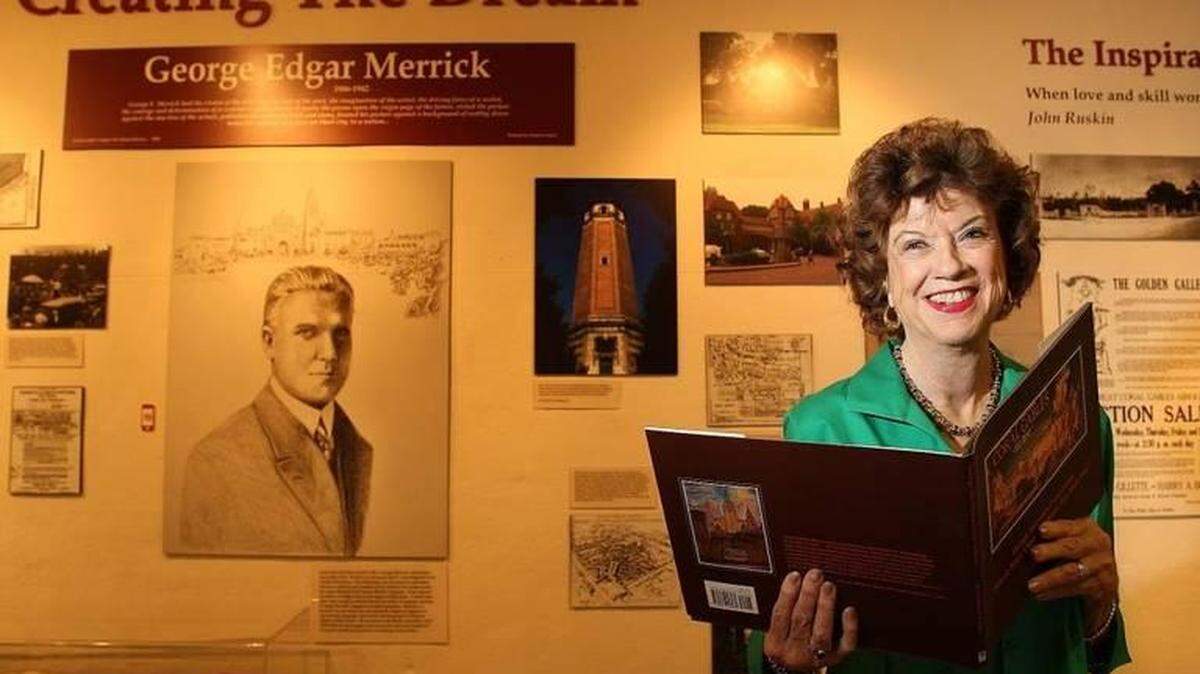
Her name was Arva Moore Parks McCabe, but her email address said it all: arvamiami@bellsouth.net. Arva was a daughter of Miami, from the day she was born until the day she died. No one, I venture to say, has ever lived and breathed Miami the way she did. Even through the hardest times — the death of her husband, the death of her son — Arva was more integral to Miami, to South Florida, than anyone I’ve ever known. She was passionate about this place, especially about the earliest parts, and most particularly about Coral Gables and Coconut Grove.
I’d venture to say there wasn’t much that she didn’t know about the Gables and the Grove. She lived and breathed the history here, but she did so with a clarity — with the fastidiousness of a scholar and the fervor of a novelist (though she never made anything up).
Those of us who care about architecture, historic preservation, neighborhoods, cities and even about the integral link between past and present owe her an enormous debt of gratitude.
I’m one of many in this respect. But here’s something I’ve never-before revealed: In the years I was The Herald’s architecture critic (officially 1979 to 1993 but as a contributor, that era lasted till 2013), Arva was one of my best, if secret (think Deep Throat), sources. She tipped me off to stories that might have remained uncovered, allowing bad deeds to go unnoticed. One that springs to mind was the misbegotten plan by St. Stephen’s Church to tear down its earliest building, the original 1912 church building and cloisters. (They did so despite her efforts and my implorations.)
Arva’s preservation causes were many and far-reaching — I’d say they ranged from the Barnacle (1891 and a National Historic Landmark) to the Babylon (1982 and demolished just last year). She cared not just about what could be called “flat history” confined to the pages of books but living history as embodied in the buildings and places that tell us of the past. As a historian, she also brought the past to life through the people who made it. As she researched her biography, “George Merrick: Son of the South Wind,” about the poet turned developer who created Coral Gables, she channeled Merrick, traveling to places he’d lived, or his parents had lived, basically trying to walk in his footsteps to understand him.
In that way, she was incurably romantic. But in others, she was extremely clear-eyed. She liked to cut to the proverbial chase. One day, she called me up, and without formalities (she had a very recognizable voice with a mellow “Miamuh” accent) and said, “Why do we call it Mediterranean REVIVAL architecture? There never was a Mediterranean style till it was invented in Florida. There was nothing to revive!” She was right. And I never again — at least that I can recal l— used the term Mediterranean Revival.
In her private life, she was a teacher, a mother, a wife (her husband Robert McCabe was president of Miami-Dade College and a MacArthur Genius Grant recipient), a volunteer, a feminist, a civic activist, a leader. She founded the Coral Gables Museum, led the preservation board in the Gables, chaired the Miami planning and zoning board, served as a trustee to the National Trust, co-founded the Florida chapter of the International Women’s Forum, a prestigious women’s leadership organization with members who span the globe. She was well spoken and almost always ladylike (except when pushed to the extreme, usually in a dispute over saving a building she deemed precious).
During the years I wrote architecture criticism for The Herald and later as editor-in-chief of the magazine Home Miami, I would always know that something was up if I opened my email and saw that return address, arvamiami. I just looked back now, over more recent emails, and saw the most recent one. I’d been going through the mountainous stacks of saved newspapers and clippings from the years I worked at The Herald. I found a story I’d done about “Miami: The Magic City,” the Junior League-produced documentary film Arva had conceived and written in collaboration with filmmaker Carl Kesser in the early 1980s. Carl immediately suggested that the three of us work on an update, and Arva wrote back, almost instantly, “I’d love to.”
I just now reread my review of the film, and the last sentence gave me chills. “The message,” I wrote, “is that the people make the place, as well as its history.” For years, my private nickname for her has been that email moniker, arvamiami. I don’t think there’s a better one.