‘A different perspective.’ Miami church spotlights homelessness with photo exhibit
For over 40 years, unhoused people living in downtown Miami have turned to a nearby Methodist church for a meal, a cup of coffee and a hot shower.
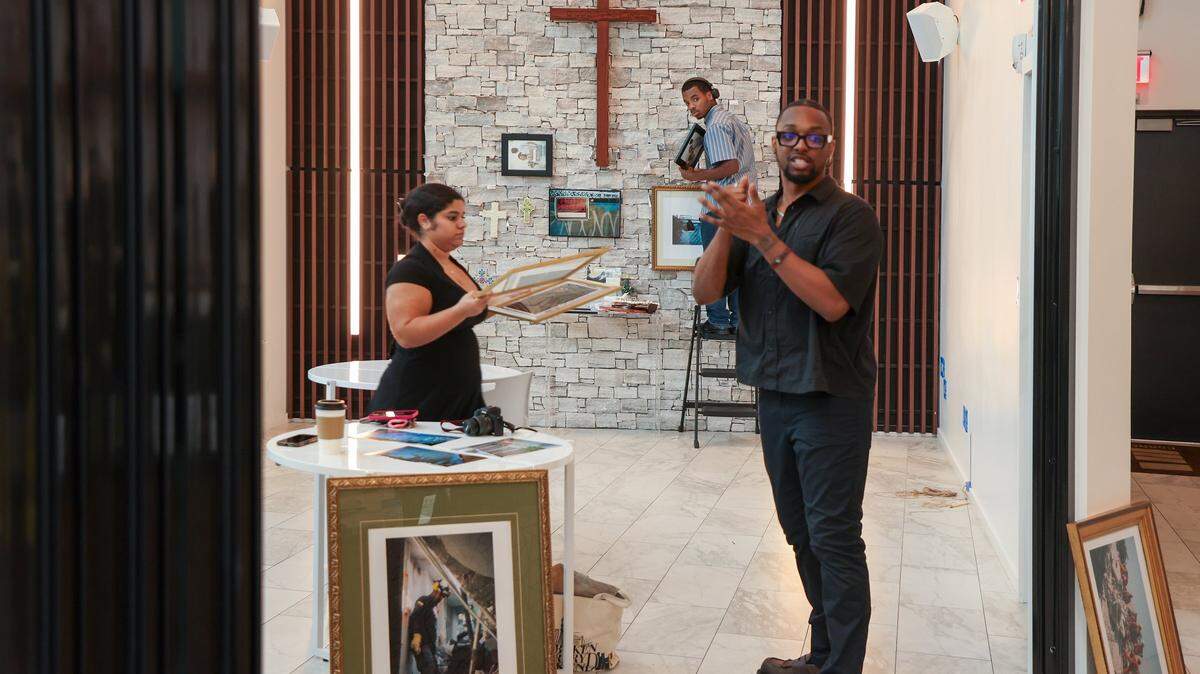
It’s a ministry project that First Church Miami calls “The Breakfast Club,” and it operates three mornings a week, serving over 150 homeless men and women living in the streets of Miami. This year for Miami Art Week, some of the club’s youngest volunteers are showcasing a new exhibit that asks: What does Miami look like through the eyes of the homeless?
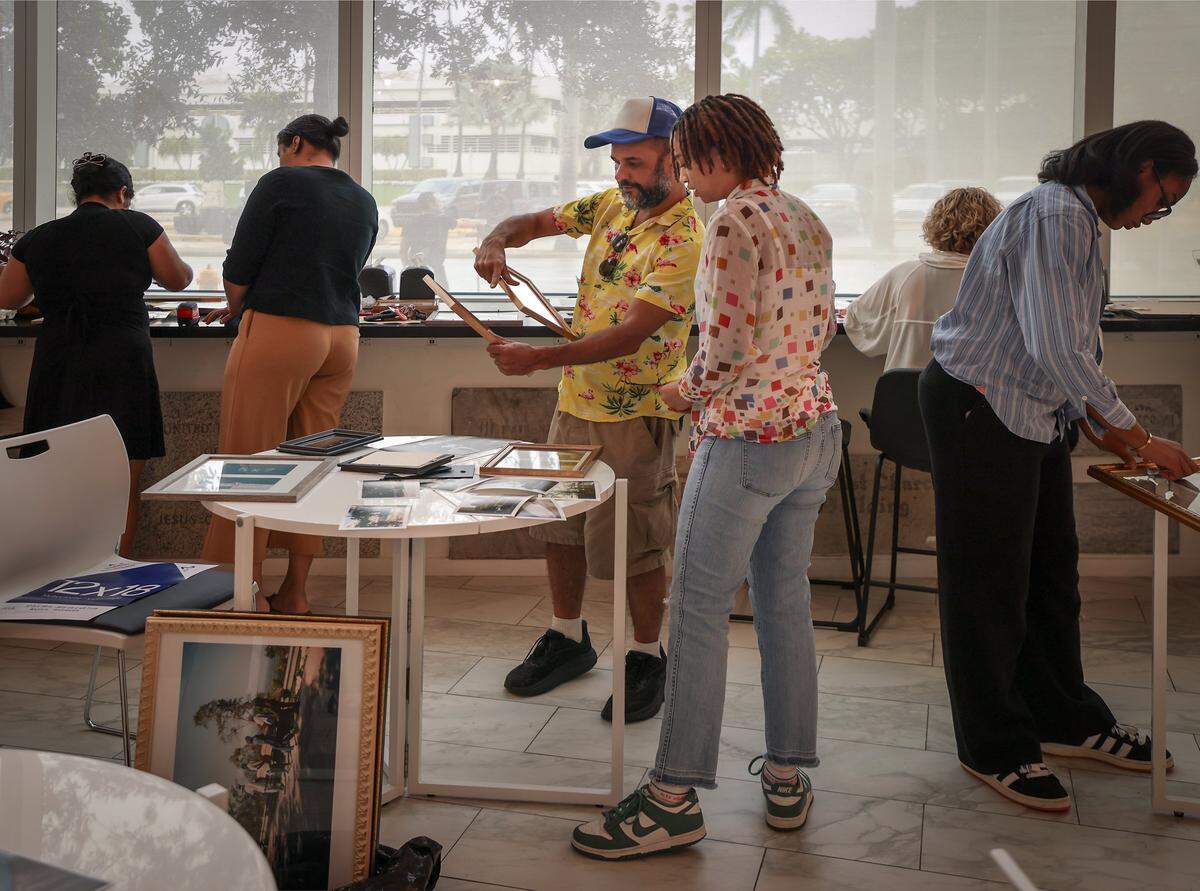
The exhibit, called SPARROW, features street photography of Downtown Miami and Overtown taken by six locals navigating homelessness — identified as Blue, Chris, Timeless Jubilee, Reese, and Thor. The show, which premieres this week in the micro gallery of the church’s first floor coffee shop, was curated by four local high school students who are also members of First Church Miami — a United Methodist congregation as old as the city of Miami itself.
It’s a project that’s meant to elevate both student artists and the perspective of some of Miami’s most vulnerable, said Rev. Nyya Toussaint, the lead curator of the exhibition.
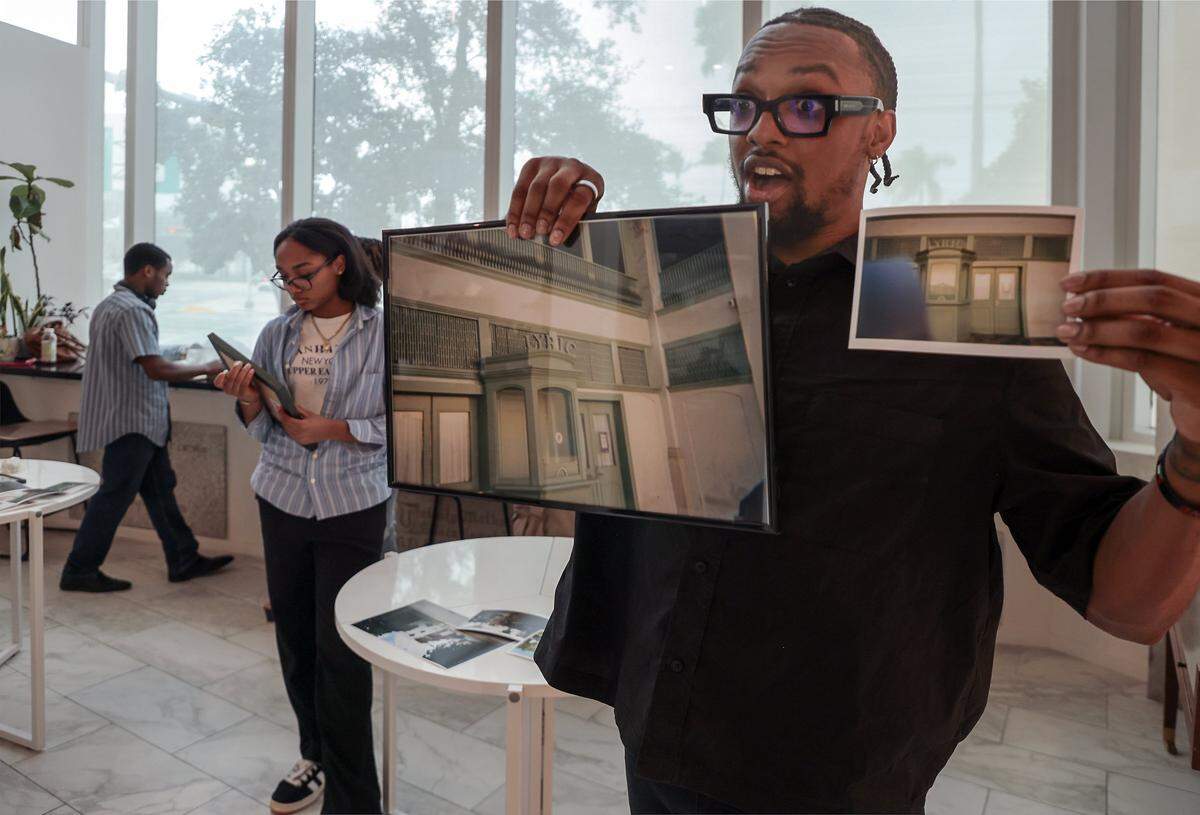
“The unhoused are the best people to document the lives and the views of those who are unhoused,” Toussaint said. “We, one, don’t document their lives and at the same time, almost gate keep their lives from being documented through these conversations around ethics.”
Toussaint brought on Miami artist Christopher Mitchell to help teach photography basics to the unhoused participants, leading workshops on ethical street photography. He also worked with the youth, teaching them the art of photography curation.
Mitchell said working with the unhoused population was a “beautiful experience.” The final images, he said, exceeded his expectations.
“Everyone has an ability to be creative, and all I did was just provide the tools and instructions. They’re fast learners, and there was a lot of enthusiasm,” Mitchell said. “Everybody came out learning something, everyone came out a better version of themselves.”
In a time when street homelessness is on the rise in Miami-Dade, SPARROW captures those who are often overlooked in Miami’s urban life.
The church is located in the heart of downtown Miami, a city with the highest count of homeless people in the county, according to recent Miami Herald reporting based on data from the Miami-Dade County Homeless Trust. Though it doesn’t offer any solutions for Miami’s homelessness problem, the exhibit does require the viewer to have a level of empathy for a population that many in Miami vilify, Toussaint said.
“We’re pushing against all the Facebook posts that I see every day about ‘the homeless are taking over Brickell and, oh my gosh, this is getting out of hand,’” he said. “We’re not saying we have the solution to homelessness in our city, but we are saying that we will feed them, we will give them hot showers, we will worship with them.”
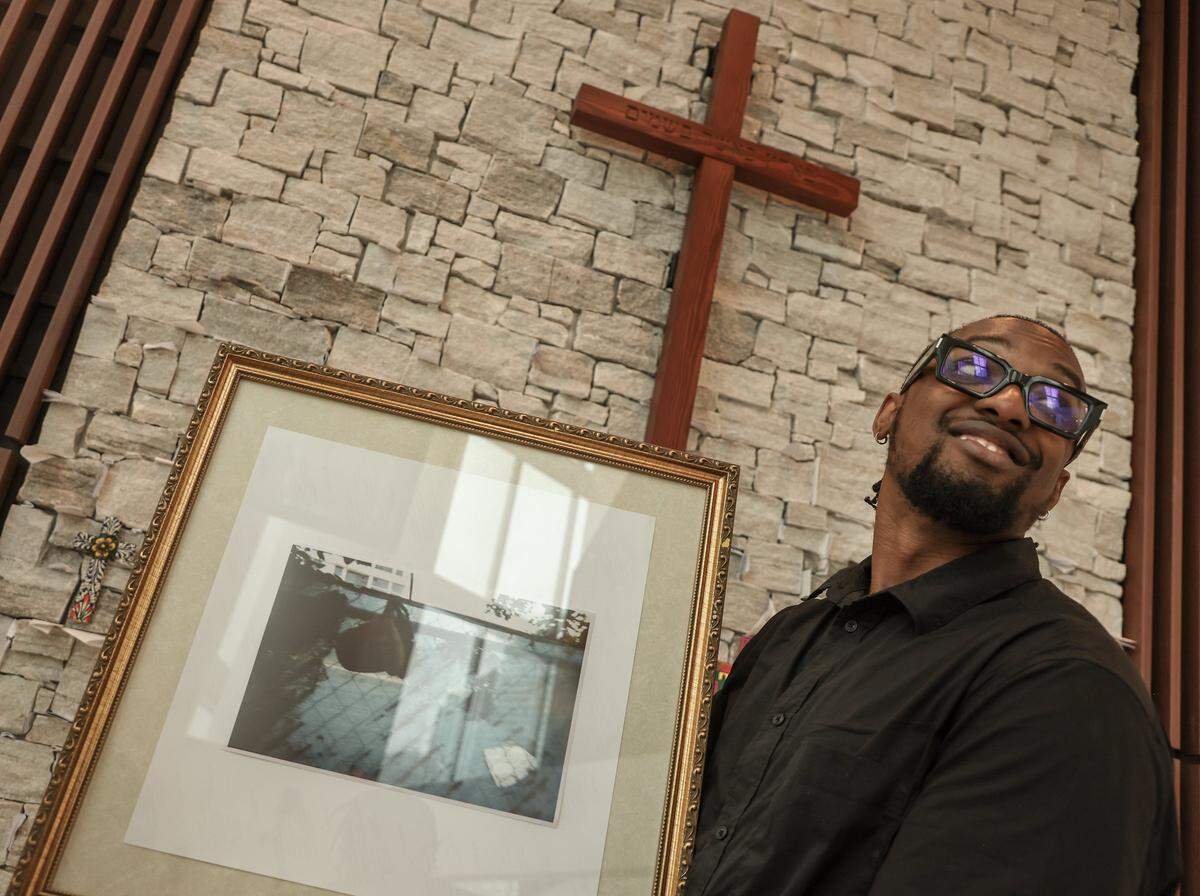
The idea for the exhibit came to Toussaint during a Breakfast Club outing when he was trying to take a video of one of its board members, Mama Julie, serving the homeless. A bystander incorrectly assumed Toussaint was trying to take photos of the unhoused and reprimanded him for not securing release forms for the subjects, he said.
The interaction made Toussaint think about ethical photography, and how not including the unhoused in photos of Miami might result in erasure of their experiences.
“It made me question, had we lost the plot? Had we really lost the reason why we had these policies in place to protect people with cameras?” he said.
The exhibit is also meant to call attention to the work of notable Miami artist Purvis Young. Young, a self-taught Bahamian artist became known for his work transforming trash into works of art and painting murals of inspiration in Overtown, the historically black neighborhood where he lived in the 1970s.
Young experienced homelessness himself after his release from prison at the age of 21. His early installations in Goodbread Alley — named after the Jamaican bakeries that once occupied the street — became symbols for his community’s struggles and endurance.
“There’s no Wynwood, there’s no Basel without Purvis Young. And really what we’re saying is there’s no Miami without those who know these streets,” Toussaint said.
Seeing Miami in a new light
After training the unhoused photographers, Toussaint and Mitchell gave them each two disposable cameras and led them on photo walks around Downtown Miami with the students.
For 17-year-old curator Shayna Lewertow, the experience helped her see parts of Miami — a city she’s lived in all of her life — in a different light.
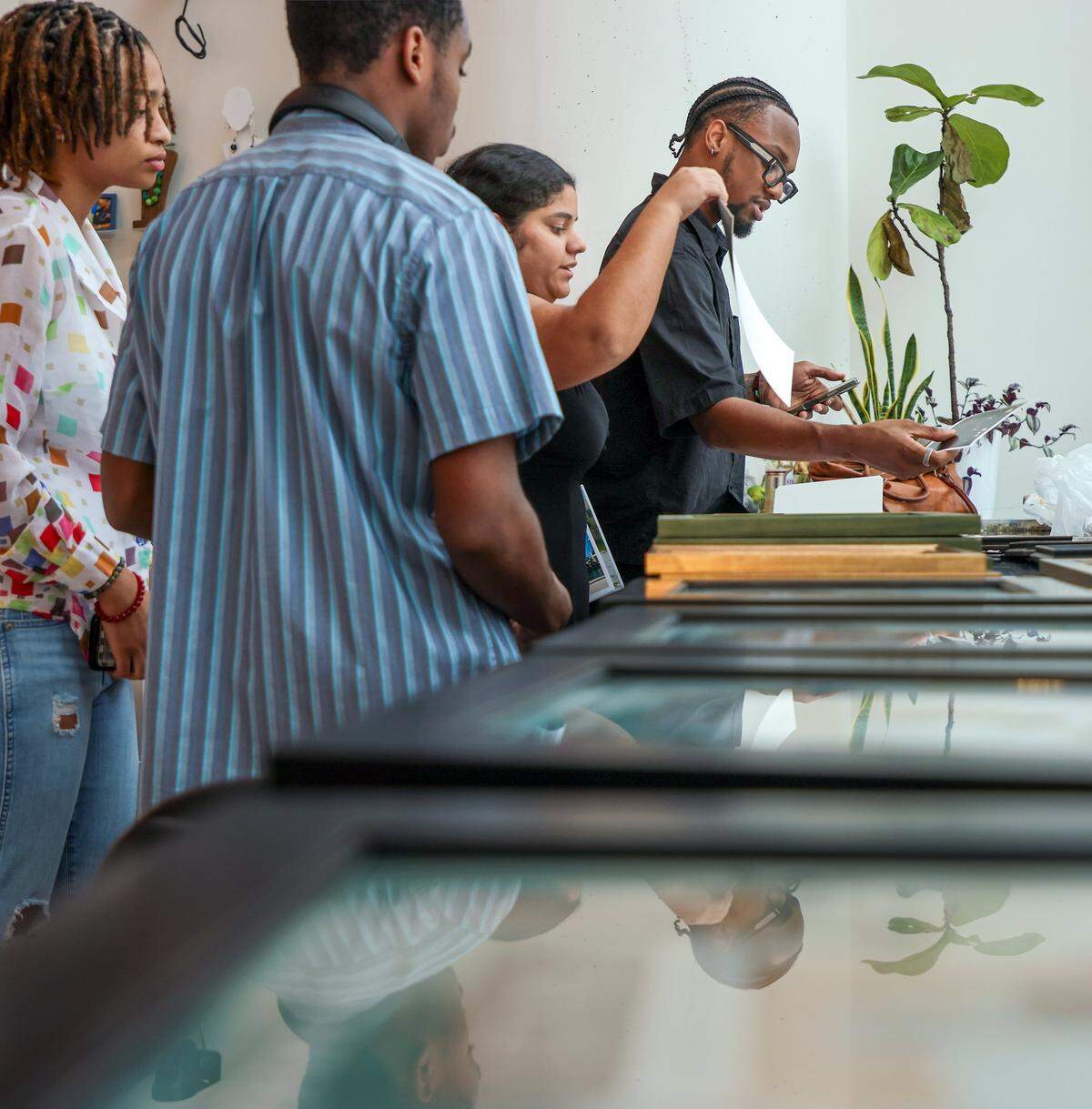
“It was interesting to see, through their lens, parts of Overtown that I don’t usually look at,” said Lewertow. She said the process and her volunteer work at the Breakfast Club has changed her understanding of what it means to be homeless.
“I have a greater understanding of the homeless people. You can be homeless based on so many different circumstances,” she said.
The youth also got to know the stories of the homeless photographers they worked with.
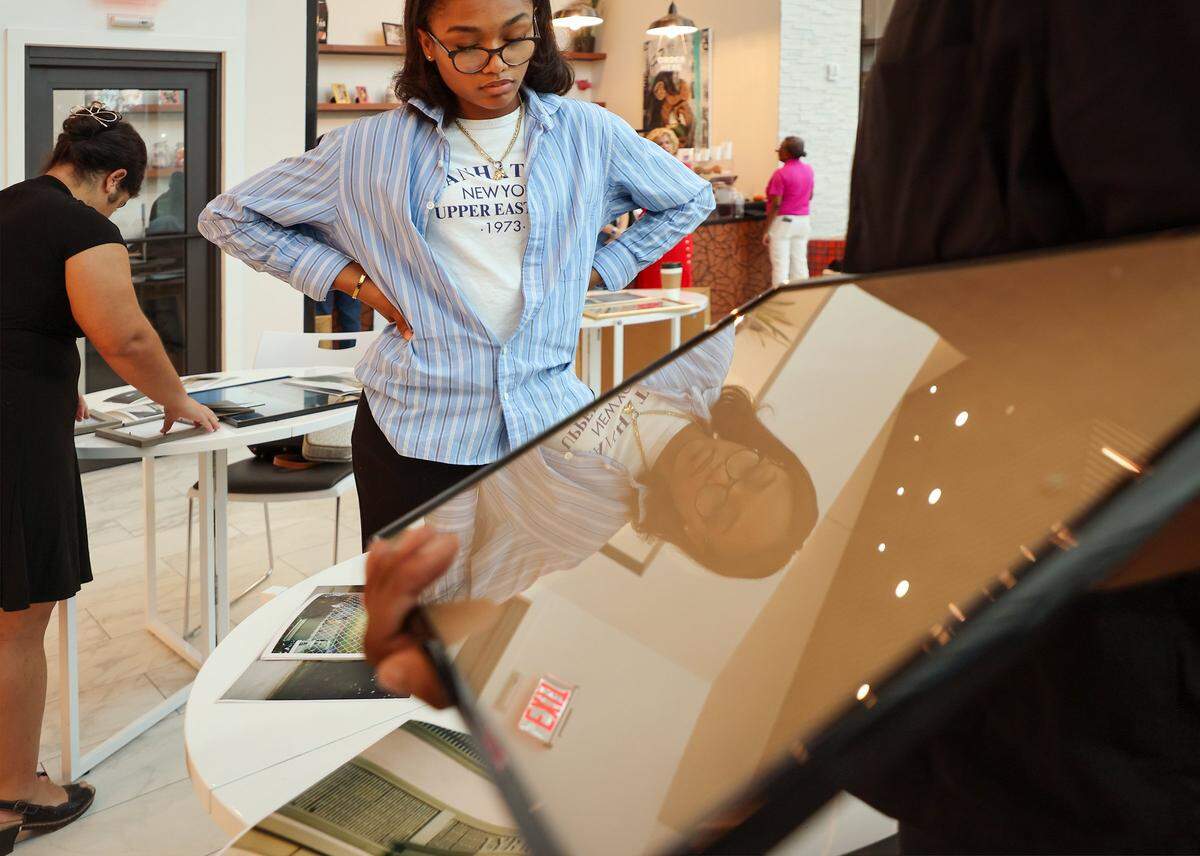
Cade Hardy, 16, said she was fascinated by each person’s “artistic viewpoint.”
“It was really interesting to see how all of them worked in their own ways and how it all came together at the end,” she said.
One participant, Blue, said he welcomed the opportunity when the church approached him. He called it “a learning experience,” and was grateful for the ability to take photos, something he hasn’t done in a long time.
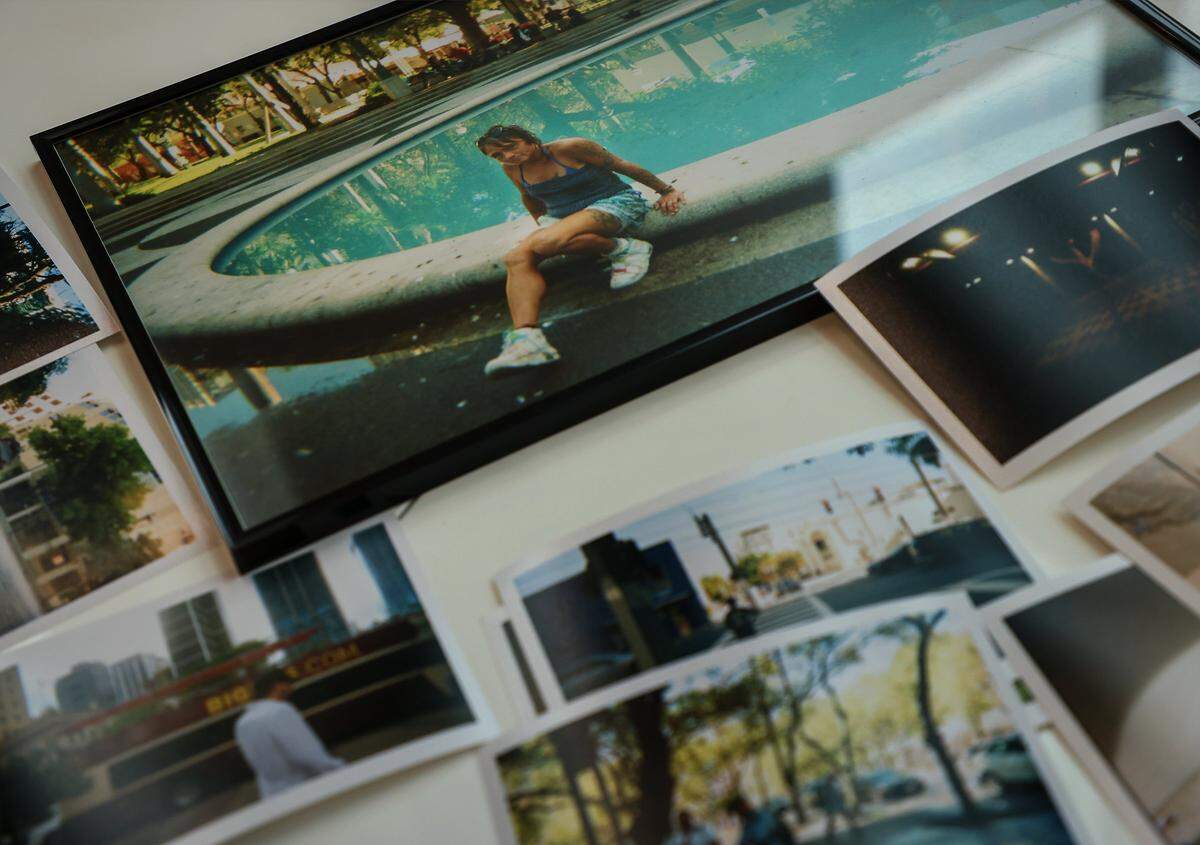
“I missed it,” he said in a video interview shared with the Herald. “It’s great when you start to want more of something you used to have.”
Blue said in his photos, he thought a lot about how lines can frame an image.
“I’m still in love with the lines,” he said. “I photograph lines. I love lines when I take my shots ... they create art.”
After the photo walks, the curation team narrowed down the images from 270 to 40 final photos. The students then came up with four themes — solitude, history, migration, and exclusion — to help tell the story of the homeless experience.
Student curator Alford Archer, 15, thought about the way public and private land in Miami-Dade is used. His theme, exclusion, looks at anti-homeless architecture, or public spaces that deter the unhoused from sleeping or existing on benches and parks.
“Since a lot of my pictures are on private property, I wanted to talk about how homeless people can feel pushed away or excluded from areas they could possibly sleep just due being seen as a trespasser,” he said.
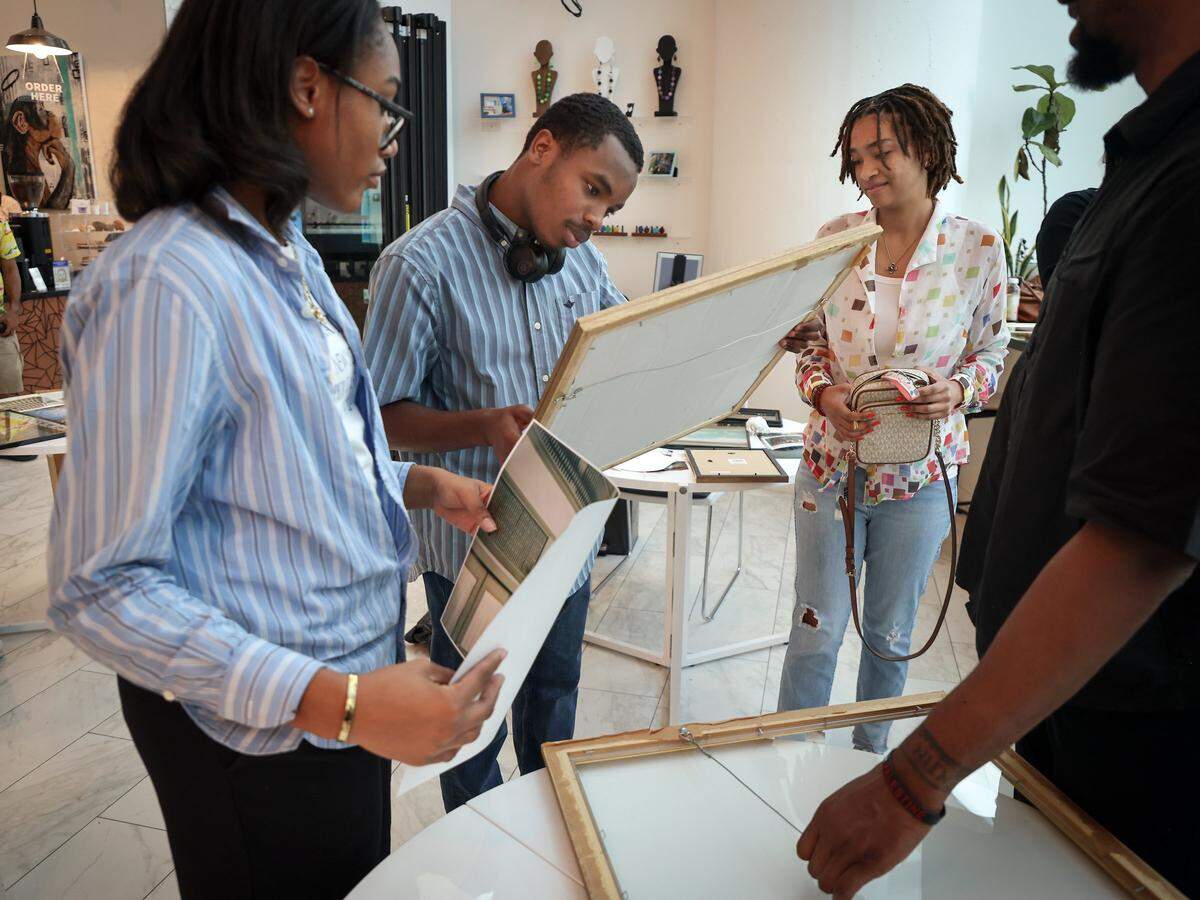
Hannah Cabrera, 17, said her favorite photo from the show is one depicting a homeless person’s luggage and belongings. The image, she said, represents her chosen theme of migration and how the unhoused have to remain flexible to be able to move from place to place.
“It connects back to the theme about how the seaside sparrow was forced to migrate from its habitat, to go to a better place, to find new opportunities,” Cabrera said. “I had to move from my country so my family could find better opportunities to go and work … It reflects how [the homeless] are kind of forced to move around and migrate to be able to be here in society.”
Blending art and religion
The project organizers said it was also important to compensate both the unhoused and the youth for their time and contributions. That was possible with funding help from the Konbit Arts & Faith Project at the Center for Religion and Culture at Flagler College.
It’s an initiative that blends art and religion while providing opportunities to support young people in the arts, said Carmelle Beaugelin Caldwell who leads the initiative.
“We can make faith matter to young people when what matters to them actually matters to us,” Caldwell said, adding that art is the bridge to having tough conversations about religion and society.
“In this world where people, young people, adults, are suspicious of religion and suspicious of the divisions that are often caused and talked about in the name of our various faiths and our understanding, that art is extremely humanizing in the background of these divisions,” she said.
The work at the Center for Religion and Culture pairs well with what First Church is doing in terms of their ministry work with the unhoused. The pairing of art, faith and service is something that the church models year round. The exhibit, for example, is hosted out of a micro gallery inside the church’s coffee shop — Corner Coffee — where all proceeds support The Breakfast Club.
The youth are all heavily involved in the church’s service work — some were even baptized there as babies.
In interviews with the church, some of the street photographers said they wanted people to know about the challenges of homelessness.
Chris, who was born in Jamaica, said the experience was the first time he was able to appreciate the street art and murals he walks by almost every day.
“I’ve been here for a while. And I’ve never seen Miami from an artistic standpoint,” he said. “It just gave me a different perspective like, there is beauty, it’s just that, we’re so stressed everyday that we don’t actually see it.”
IF YOU GO:
WHAT: Opening reception for SPARROW, a community-centered Art Week exhibition honoring legendary Black Miami artist Purvis Young.
WHERE: Fifth and Biscayne Micro Gallery. 398 Northeast 5th Street #Suite 100 Miami, FL 33132
WHEN: Opening reception Thursday, December 4, 2025, from 6:00 p.m. to 8:30 p.m. Exhibit on display December 2025 - February 2026
COST: Free and open to the public with RSVP and promo code ‘ FREETIX ‘
INFORMATION: https://www.eventbrite.com/e/sparrow-miami-art-week-exhibition-tickets-1968280638374
This story was produced with financial support from Trish and Dan Bell and donors in South Florida’s Jewish and Muslim communities, including Kahlid and Diana Mirza and the Mohsin and Fauzi Jaffer Foundation, in partnership with Journalism Funding Partners. The Miami Herald maintains full editorial control of this work.
This story was originally published December 2, 2025 at 5:30 AM.