Review: Layon Gray’s ‘Willie Lynch’ finds a comfortable home at M Ensemble
Three generations of the Foster family inhabit the same home at different points in time in Layon Gray’s “Searching for Willie Lynch” at M Ensemble through Sunday, April 26. Gray wrote, directed and stars in the production, which he has been evolving for more than a decade.
It premiered at the National Black Theatre Festival and has since been reworked through readings in New York and San Francisco, a full production in Pittsburgh and an Off-Off-Broadway run last year. With a mostly local, professional cast, one out-of-town actor has been with the play almost since its inception. Gray, originally from Alexandria, Louisiana, is based in New York City.
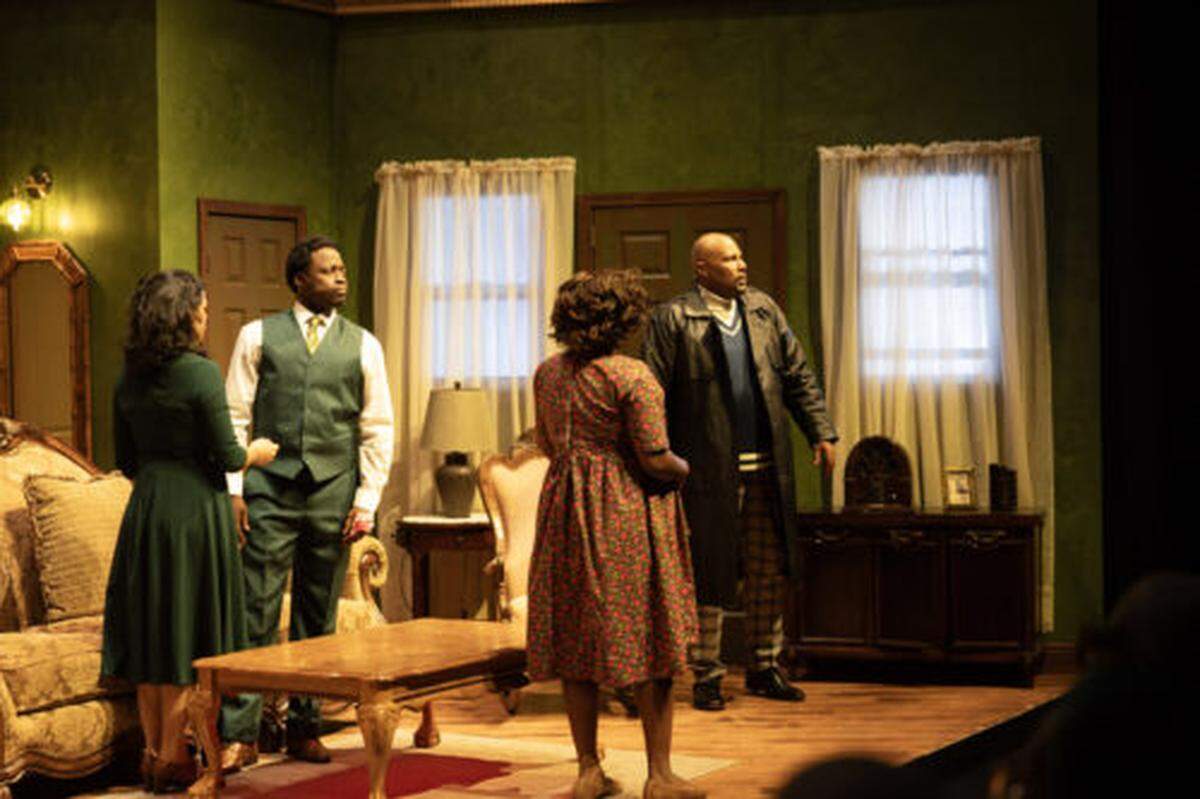
The ensemble and the current production are as comfortable at M Ensemble as the overstuffed couch at the center of the play’s set.
Miami has been steadily building a reputation as a place where new work can grow, and this is a solid example.
“Searching for Willie Lynch” follows three generations of the Foster family across different eras, all unfolding in the same Louisiana house in different “moments in time” on a single day: Nov. 4. The day carries weight from family birthdays to presidential elections that can have a lasting impact on the lives of the Fosters.
At first, the way Gray has structured his two-hour play (there’s a ten minute intermission between the two-act play) between eras – 1930, 1965, 2008 – may seem disorienting. Characters from different times inhabit the same space without clear separation, and it isn’t immediately obvious how the timelines connect. But that’s where the magic becomes clearer. The smart, intentional device Gray employs allows the connections to unfold, and what seems unclear early on comes together in a way that establishes the generations. For those in the audience, it’s like being let in on a family secret.
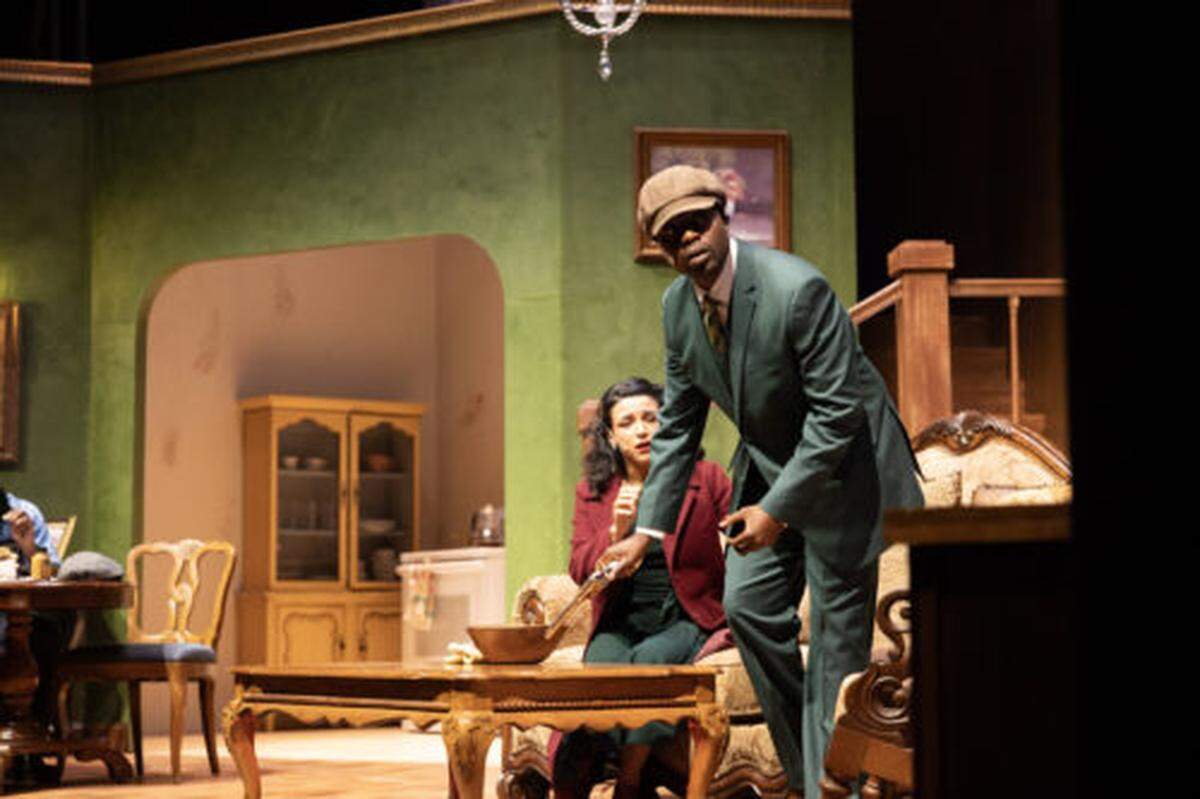
The timelines also overlap and echo each other. Moments in one era respond to something that happened decades earlier, even if the characters themselves aren’t aware of it. Over time, patterns emerge within each family, and conflicts and choices often lead to the same consequences for family members despite their years apart.
Then there’s the house that’s central to the story, where memories of generations weave in and out, where ghosts live within the walls, and the home itself is meant to move the storytelling forward.
Time periods don’t just shift in and out — they exist together, with characters from different eras moving through the same rooms as if time isn’t fully separated. It’s a difficult device to pull off, but Gray’s direction and the tight-knit ensemble make it believable.
The set design by Mitchell Ost, along with details like family photos and small African statues (set dressing by Patricia E. Williams), helps ground the story while allowing the timelines to intersect. A worn, overstuffed couch and chair are at the center, with an antique radio nearby. A modest chandelier hangs over the living room. The décor has obviously remained largely unchanged over decades. A kitchen upstage right is visible, with a small stove and refrigerator, and the director has made good use, too, of that space.
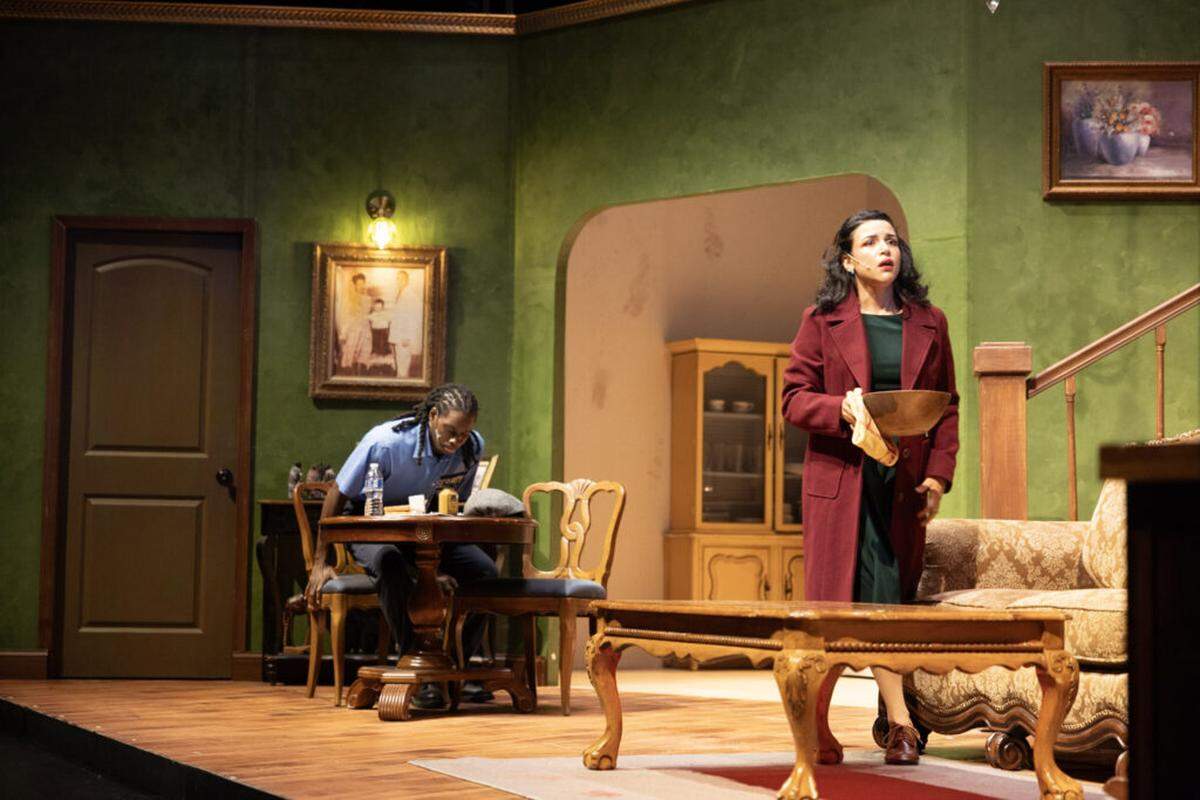
Projections of constant rain hanging high on the back walls reinforce stormy times. Enhanced by Aidan Cole’s thunderclaps, along with music underscoring key monologues, the sound design helps bring everything together.
In one opening scene, a character turns on the radio to a song by the Temptations, “I Want a Love I Can See.” Music plays a role in the play and especially in a segment where Phibe (Andrea Garcia) and Charlene (Sheena O. Murray) gloriously sing together, each from different eras, the African-American spiritual “Wade in the Water.”
Garcia plays Rahman’s wife in the 1930 storyline. Jean Hyppolite (an actor who has proven he can play any role) is a man whose life is unraveling after a homicidal scuffle on the street, and police are closing in on him.
The 1965 section centers on Basil, played by Gray, alongside Murray, who has a knack for shifting effortlessly between humor and seriousness that commands attention. Their storyline, with Charlene obviously in the last stages of her pregnancy, creates a domestic urgency that’s shaped by anticipation of a baby boy on the way but also adds to their financial strain.
In the 2008 storyline, Peanut (Jarryd Joseph) is part of the family, having been befriended by Cricket Foster (Roderick Randle) when both were in elementary school. As single dad Mo, Daniels returns to a role he originated in earlier productions, bringing a solid, deeply rooted, lived-in performance. He’s also appeared in Gray’s Off-Broadway play “Black Angels Over Tuskegee.”
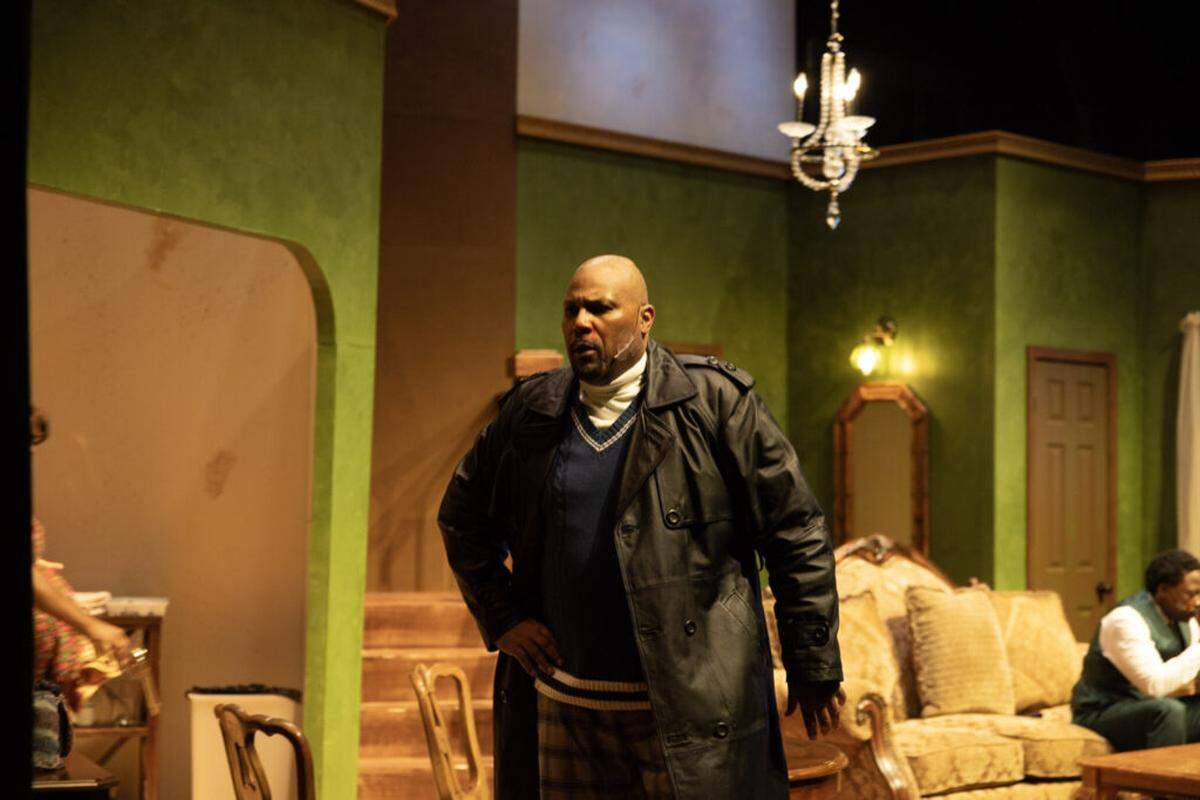
Thaddeus Daniels, right, talks to Jarryd Joseph as Peanut in M Ensemble’s production of “Searching for Willie Lynch” now at the Sandrell Rivers Theatre. (Photo by Seven Fleurimond, Studio Seven Miami)
This trio of characters live in the most current of the time periods, unfolding on the day of the presidential election that will bring Barack Obama to victory; it’s a historical marker that brings home the Fosters’ hopes for their future. Here, Mo’s financial struggles come into focus as his failure to keep up payments leads to a possible loss of the house, bringing in Melvin Huffnagle as real estate tycoon Davis Harlan, who is buying the home. An unusual and surprising revelation shifts the villainous character in a more sympathetic direction.
Roderick Randle has one of the most difficult tasks as Cricket, delivering a long monologue that explains the family’s ancestry. With strong control of the words and emotional clarity, he finds a way to navigate its shifting tone — from brutal history to intimate family memory — with a grounded presence that keeps the story coherent and compelling.
One directing note was Gray having the monologue entirely delivered to the audience, which seemed a bit awkward as he never turns to Peanut, who is intently listening on the couch. A bit of acknowledgment of the person in the room may help add nuance to the monologue, with the reaction of the second character to the incredible story.
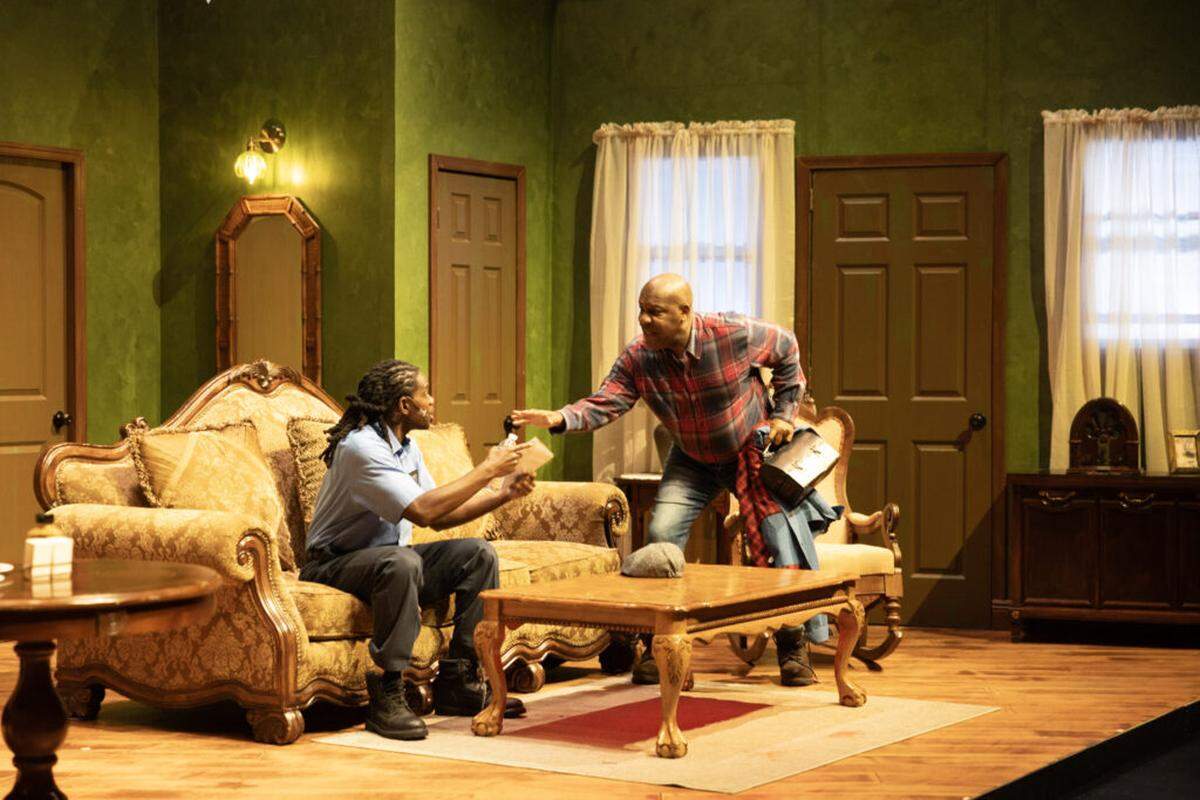
Costume design by Shirley Richardson and Dunia Pacheco shapes the production’s sense of time and character. The earlier generations appear in earthy green tones and period silhouettes that evoke their respective eras. One character wears a newsboy-style cap, grounding the 1930s setting in working-class detail. The 1965 sequence brings Basil in a vintage sweater and trousers that reflect a more contained domestic life, while the 2008 storyline dresses Mo in workwear tied to his job at a sugar cane factory, emphasizing labor and economic pressure across generations.
Gray’s ability to manage the demands of writing, directing, and performing in the same production is evident throughout. It’s difficult to navigate the triple role, but it’s evident that it helps that, as the playwright, he understands how to direct the actors and deliver the story to hold together the structure that constantly shifts across time periods. He helps his ensemble understand how to maintain clarity and emotional continuity across the ensemble.
Beyond the family drama, the play also expands into something mythic — that they are all connected not only across generations, but through a deeper ancestral line tied to an African king (Chat Atkins plays both early ancestors, Peter and the King).
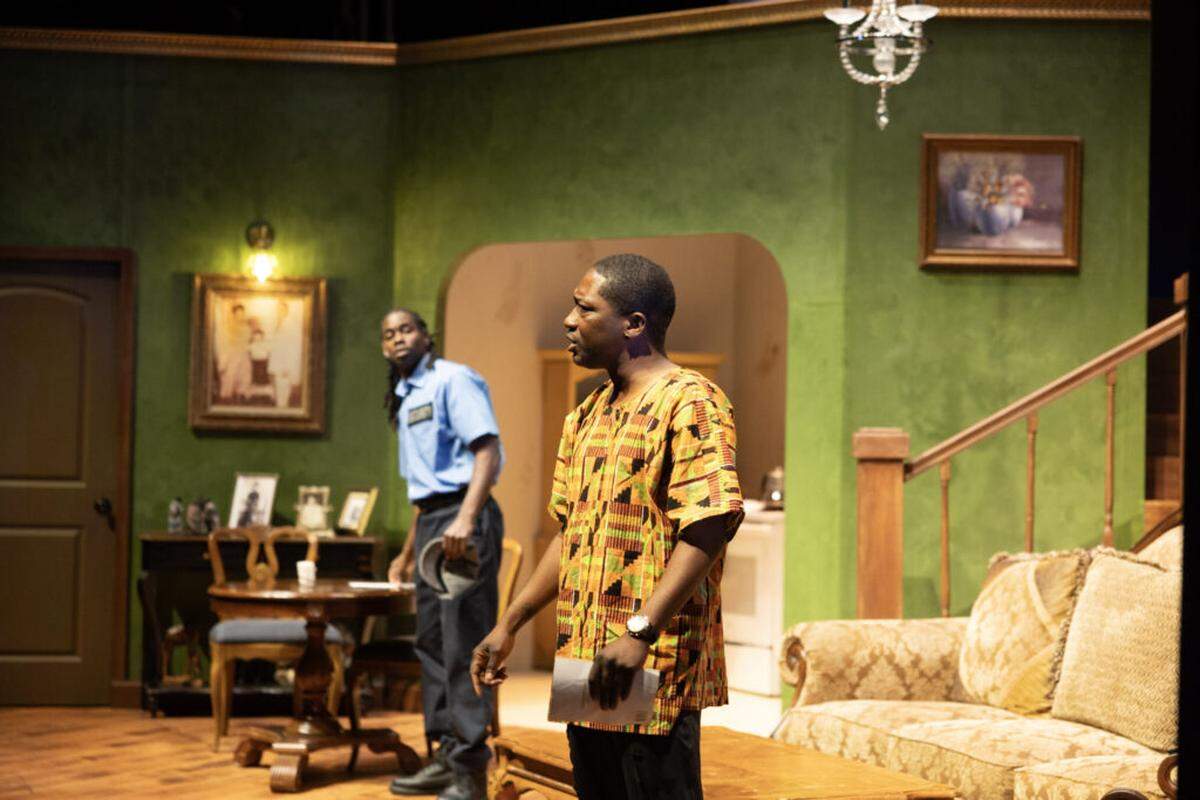
This layer, along with Gray’s historical reference to the Willie Lynch legacy — a letter, not verified as historical fact, that suggests enslaved Africans were divided and controlled through psychological methods— explores the ideas of division and how inherited trauma both from experiences inside the family and from cultural conflict throughout history has shaped three generations of a Black family.
With a strong ensemble and the ease of M Ensemble’s production, this may be where Gray’s play has found its groove, pushing it into the broader recognition he’s been searching for. M Ensemble, long a champion of exceptional Black theater, has a winner with “Searching for Willie Lynch.”
If you go:
WHAT: “Searching for Willie Lynch” by Layon Gray
WHERE: M Ensemble at the Sandrell Rivers Theater, 6103 NW 7th Ave., Miami.
WHEN: 8 p.m. Friday and Saturday, 3 p.m. Sunday. Through April 26.
COST: $40.25 (includes a $4.25 fee).
INFORMATION: 305-705-3210 or themensemble.com
ArtburstMiami.com is a nonprofit media source for the arts featuring fresh and original stories by writers dedicated to theater, dance, visual arts, film, music, and more. Don’t miss a story at www.artburstmiami.com