
This Grammy award-winning musician is celebrating Haitian heritage with Miami performance
Radio Haiti-Inter was the voice of the people. Launching in the late 1950s, it was Haiti’s first independent radio station to report critically on the country’s oppressive regimes, corruption and the lives of its people all in Creole, not French.
But shortly after its founder, journalist and outspoken human rights activist Jean Léopold Dominique, was assassinated in the courtyard of the station, Radio Haiti-Inter went silent.
Duke University later acquired Radio Haiti-Inter’s archives to preserve this piece of Haitian history. Now, about 20 years later, during Haitian Heritage Month, a Haitian-American musician is breathing new life into Radio Haiti-Inter’s archives that documented over three decades of Haitian history, politics and society at a Miami Shores performance.
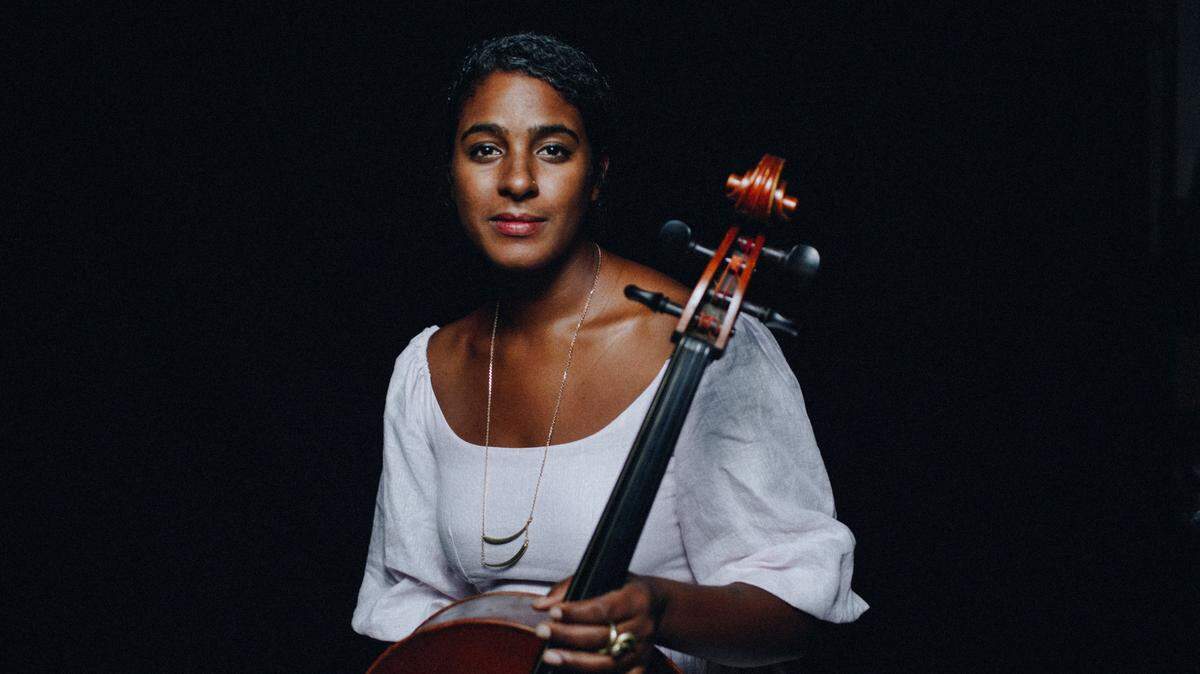
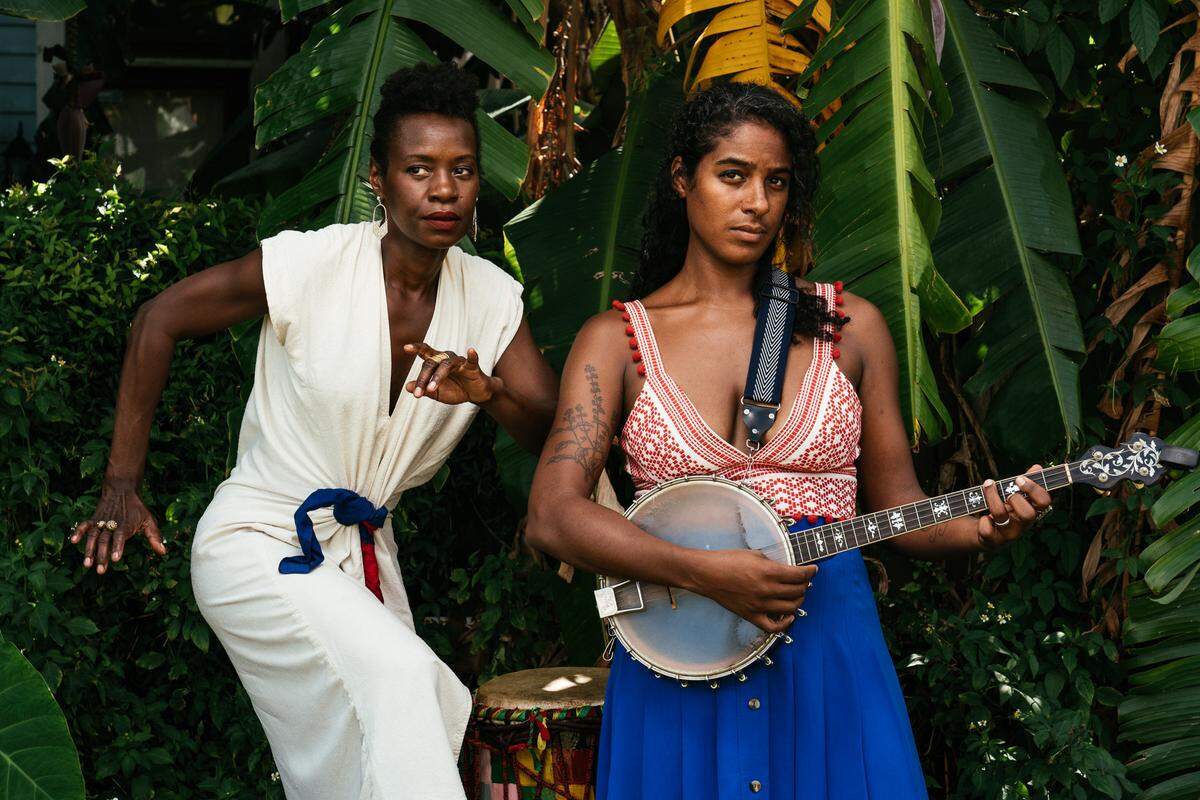
On Friday, songstress Leyla McCalla is starring in Breaking the Thermometer to Hide the Fever, a multi-disciplinary performance that combines live music, dance, archival footage and recordings to tell a story about Haitian history, heritage and pride. McCalla honors the Caribbean nation’s tradition of protest and storytelling in her songs as she sings in English and Creole, combining folk and racine, Haitian roots, music. As she plucks at the banjo and sings in Creole, a dancer moves to the music and a video projection plays footage of Haitian life and culture.
McCalla — a renaissance woman of string instruments — plays the banjo, cello and guitar and sings during her performances. Her show at Miami Theater Center coincides with the release of her album of the same name, her latest solo project after splitting from Grammy award-winning string band Carolina Chocolate Drops.
As someone who comes from a politically engaged-family — her dad is Jocelyn “Johnny“ McCalla, a Haitian rights activist who once headed the National Coalition for Haitian Rights, and her maternal grandfather is a long-retired prominent Haitian journalist — McCalla said she grew up feeling stuck between the United States and Haiti. In her performances she credits summers with her grandmother in Haiti for her draw to the country.
The Miami Herald caught up with McCalla about Breaking the Thermometer and how it helped her explore and celebrate her “Haitian-ness.” After her performance on Friday, she will be interviewed by award-winning Haitian-American writer Edwidge Danticat.
(This interview was edited for brevity and clarity.)
Q: What inspired Breaking the Thermometer? How did this project start?
A: I was approached by Duke University in 2016. The library there has recently acquired the Radio Haiti archive, and they do a series where they pair an artist with an archival collection and commission the artist to create a multimedia performance. They give you free rein to create what you want.
So they commissioned me to create a performance based on the Radio Haiti archive, and it’s been a really amazing journey of exploring late 20th century Haitian history. You know, the work of this radio station, the legacy of these journalists, it’s encouraged me to reckon with a lot of my own questions about my Haitian-ness. Breaking the Thermometer to Hide the Fever is the manifestation of all of this research.
Where does the name come from?
It comes from a quote by Jean Dominique. He was describing the independent press as the thermometer of the people. You can break the thermometer, but it won’t hide the fever.
What can audiences expect?
It’s going to be me, playing cello, banjo, and guitar and singing on stage accompanied by two drummers. Sean Myers is playing drumset and Markus Schwartz is playing the Haitian drums, the tanbou. We have an incredible choreographer and dancer named Sheila Anozier, who is part dancing, part acting, singing, storytelling.
And there’s going to be a lot of archival footage, both from the radio station and of Haiti, scenes of Haiti, Haiti during Carnival. I really wanted to create something that was going to show the depth and the beauty of Haiti.
What did you learn about Haiti while researching? What did you learn about yourself?
What I learned about a lot more is the way that politics in the United States affects Haiti and the way that Haiti has struggled for her sovereignty. Since its inception, Haiti is a place that has really struggled with its sovereignty because of different power dynamics in the world that are dysfunctional and colonial.
What I realized is that there are very few nuanced descriptions of Haiti in the U.S. media. This has been such a part of my life growing up as an American, feeling torn between these two identities and feeling like I don’t belong to either one. Through this piece, I’ve learned that I belong to both of those places. I’m learning how to take ownership of that in my artistic practice.
What was it like to grow up between two identities?
My parents have been very involved in Haitian human rights. Haiti was always a part of my consciousness.
When I traveled to Haiti as a young child, I felt very “other.” I could see that there was a class difference, and I could see that I was coming from a place of privilege as an American kid. And then when I was growing up in New Jersey in the United States, I also felt other-ed. Part of that is blackness, part of it was my Haitian-ness and having to define for myself what it means to be a Black woman.
There are many points of arrival on those kinds of journeys. I think that all of this research that I’ve done about Haiti is filling in a lot of the gaps of my knowledge. I was born in 1985 a few months before the fall of the Duvalier regime, so there’s these moments where I can see how old I was when these things were happening historically. It’s helping me understand more of where I come from.
You’re performing in Miami, which is home to a significant Haitian community. What do you hope Miamians take away from the piece?
I hope that people in Miami and beyond take away that Haiti is a beautiful place. It’s a nuanced, complex place just like the United States. I hope that it helps to deconstruct some of the stereotypes and stigmatization that people have had of Haitians.
I also hope that people realize that the struggle for political sovereignty, for democracy, for freedom of speech, for an independent press, that no society is immune from those struggles. In many ways, I feel that we are struggling with that as a society in the United States. Obviously we’re seeing that in Ukraine and in Russia where a lot of independent media have gone underground.
This case study of Haiti is actually a very global situation, and we are all connected to theses struggles in some way whether we realize it or not.
If you go
What: Breaking the Thermometer to Hide the Fever by Leyla McCalla
When: May 6 at 8 p.m.
Where: Miami Theater Center. 9806 NE 2nd Avenue, Miami Shores, FL, 33138
Tickets: $25
Info: https://liveartsmiami.org/events/leyla-mccalla/
This story was produced with financial support from The Pérez Family Foundation, in partnership with Journalism Funding Partners, as part of an independent journalism fellowship program. The Miami Herald maintains full editorial control of this work.
This story was originally published May 5, 2022 at 11:36 AM.