
‘I hate that I’m an anomaly.’ Black choreographer debuts original work with Miami City Ballet
The best ballet dancers in Miami were idling on the sidelines of the studio, chit-chatting and flexing their feet in pointe shoes, when Claudia Schreier briskly walked in. She was focused (and perhaps a bit tense).
It was an afternoon rehearsal for her brand-new ballet slated to debut at the end of the month, and it wasn’t done yet. The dancers soon fluttered to the center of the floor as Schreier tied her jacket around her waist and took her place at the front of the room.
The music suddenly began, and the dancers moved so beautifully that any random passerby would think they perfected this piece months ago. After a few minutes of impressive leaps and pirouettes, the music paused and Schreier joined the dancers on the floor. She corrected some mistakes, answered questions and taught new parts by dancing out the moves herself.
And though most may not realize it, the scene at Miami City Ballet that balmy afternoon is unfortunately rare. Schreier is a Black, female ballet choreographer. She wishes there were more.
“I hate it. I hate that I’m an anomaly,” Schreier told the Herald. “I would like to be the rule, not the exception.”
In an art form dominated by white, male leadership, Schreier is a rising star in ballet choreography who brings a much needed, fresh perspective to dance. The Source, her latest work commissioned by Miami City Ballet, proves just that. (Well, at least the rehearsals made that clear.)
The Source is an original “adventure story” made in collaboration with Adam Barish, a filmmaker and Schreier’s husband. It is part of a program of four ballets presented by Miami City Ballet in three South Florida cities over three weekends. The program, entitled Prodigal Son, also includes the show’s namesake Prodigal Son by George Balanchine, After The Rain Pas de Deux by Christopher Wheeldon and Herman Schmerman Duet by William Forsythe.
Tonight, the audience at the Kravis Center in West Palm Beach will be the first in the world to see The Source. The program comes to the Adrienne Arsht Center in Miami on May 6 and the Broward Performing Arts Center on May 21.
The ballet is the culmination of Schreier’s hard work and dedication to the art of dance, especially considering the unconventional path she took to get here. Her story is unusual, and not just because she’s a Black woman in ballet.
Schreier never became a professional dancer. She went to Harvard instead.
‘I was going to find a way.’
Ballet -- notoriously expensive and predominately white -- is still ushering in “firsts,” like when Misty Copeland became the first Black female principal dancer at American Ballet Theatre in 2015. Years later, barriers still remain.
Schreier is no stranger to those barriers. But as a little girl growing up in New York, all she wanted to do was dance.
When she was just two years old, her parents took her to see a ballet. During the performance, she noticed that a male dancer and a female dancer were inching closer and closer. “He’s gonna kiss her!” she yelled.
The fascination with ballet stuck. As a toddler, she twirled around the kitchen. By age eight, she made her own dance solo. In high school, she obsessed over works until she got them right. Schreier didn’t just fall in love with ballet. She loved rehearsals, the smell of hairspray, the sound of the orchestra warming up.
“It’s just always been a part of me to want to make movement,” she said.
The reason Schreier decided not to pursue a career as a professional ballet dancer was because of recurring injuries. Ballet is “brutal” on the body, she said, so she figured it wasn’t in the cards for her.
She went to Harvard and studied sociology. Still, her love of dance remained. When she wasn’t writing papers and taking exams, she was in the studio, choreographing with her ballet-loving peers. After years of working office jobs at dance organizations while creating ballets in her free time, she did it. She became a full-time choreographer and has been commissioned by Atlanta Ballet, Dance Theatre of Harlem and more.
“I forged my own path because there was no there rubric for this,” Schreier said. “All I knew leaving school was that I really loved to choreograph, and I was going to find a way.”
Equity
Though most dancers are women, professional ballet’s patriarchal power structure allows for men to hold most choreography roles, Schreier said.
Ballet is slowly changing, she said, “but there aren’t tools set up to accommodate the female voice, the female creative voice and the female leadership voice in a way that I would like to see.”
At the 50 largest ballet companies in the United States, men choreographed 69 percent of the works in the 2020-2021 season, according to the Dance Data Project, a nonprofit that researches gender equity in the dance industry. The latest data shows a slight decrease compared to 72 percent in the previous season.
Yes, Schreier hates being among “the first,” but it’s a position she doesn’t take lightly. She advocates for ballet to be more accessible and diverse in ways that actually count in the long run. That starts with children’s art programs supporting the next generation of dancers of color as much as possible, like offering snacks and transportation after school, she said. Little things add up to signal to young Black dancers that they’re not quite welcome. Schreier’s “nude” tights and ballet shoes didn’t match her skin color. Her natural hair had to be slicked and scraped into a tight bun to not be “considered messy.”
“It takes decades to make a professional dancer,” Schreier said. “When we’re looking around saying, ‘Where are all the Black ballerinas,’ they’re here. They’re four or five years old, waiting to be embraced, nurtured and taught.”
Ballet on video
The Source has been years in the making, of course, because of the pandemic. Miami City Ballet artistic director Lourdes Lopez originally commissioned Schreier to create a work to premiere in the spring of 2020. That didn’t happen, but the circumstances led to another opportunity. Instead, the ballet company tapped Schreier to choreograph a digital ballet, a short film called Places, that premiered November 2020.
Lopez said it’s important for her to give artists like Schreier the support and freedom to take creative risks with their work.
“That is what is so exciting about Claudia’s work for MCB,” Lopez said. “It’s pushing Claudia to another level of her talent, which is essential.”
The Source was well worth the wait, Lopez said.
By now, South Florida’s performing arts centers have reopened for live productions, busy valet parking and standing ovations. But digital versions of ballets don’t have to be a relic of the quarantined past.
When it came time to plan this season, Lopez reached out to Barish about directing a film that would capture Schreier’s next ballet for a digital audience, the couple said.
Not only does The Source need to look good on a stage, it also has to be choreographed and recorded to work as a standalone film. Think “Beychella,” Beyonce’s groundbreaking Coachella performance that was just as entertaining on a live stream as it was in person. Or Hamilton on Disney+, a filmed performance of the hit Broadway musical that used special camera angles you can’t see in a theater.
“The camera tells you where to look. It’s intimate,” Barish said. “That’s the opposite of what you get on stage where it’s much more removed.”
The filmed production won’t come until a later date, he said, so they’re prioritizing the live performances. Still, Schreier and Barish are mindful of the significance behind creating a virtual version of the ballet that anyone can watch at any time. Technology can and should be used to reach audiences who typically don’t have access to ballet, they said. It’s all about equity, a goal the ballet world struggles to achieve.
“Any art form that doesn’t evolve will be obsolete,” Barish said.
‘Rooted in heartache’
The Source tells the story of a group of people who are trying to pull out the roots, or the source, of pain and suffering, Schreier explained. But along the way, they realize that pain is inevitable and they have to accept the dark parts of life, though it may be hard.
Once they finally accept their fate, they come to “this emotional sense of release,” she said, hence the playful leaps and spins from rehearsal that afternoon.
“There’s a sense of celebration to it, even though it is ultimately rooted in heartache,” Schreier said.
The inspiration for the story came from Tired, a Langston Hughes poem where he laments waiting for the world to be a good, kind place. “Let us take a knife and cut the world in two, and see what worms are eating at the rind,” Hughes wrote.
But Barish and Schreier take a different approach to splitting the world in two. Whereas Hughes focused on the injustices in the world that should change, The Source tackles hardships that could never change. Pain, suffering, heartache.
“It’s just part of the experience of being alive,” Barish said. “How do we cope?”
In between rehearsals, while snacking on empanadas, dancers Andrei Chagas, Adrienne Carter and Nathalia Arja pondered the ballet’s meaning and the characters they play. While choreographing, Schreier focused heavily on characterization for the dancers to capture the mood of the piece, they said.
In a way, the ballet is up to interpretation, especially for the dancers as artists, Carter said.
The ballet’s message reminded Chagas of sci-fi themes he’s noticed as a fan of the Marvel Cinematic Universe, like reconciliation and acceptance of the past. For Arja, the piece is emblematic of life during lock down when many people struggled to accept the realities of the pandemic and quarantine.
“It’s not a ballet that you will all leave the theater with one message,” Arja said. “It’s going to be a personal message to each person because we’re all in different journeys of healing and discovery.”
When asked what she hope viewers gain from watching her ballet, Schreier answered with a smile. “Hope, joy and connection.”
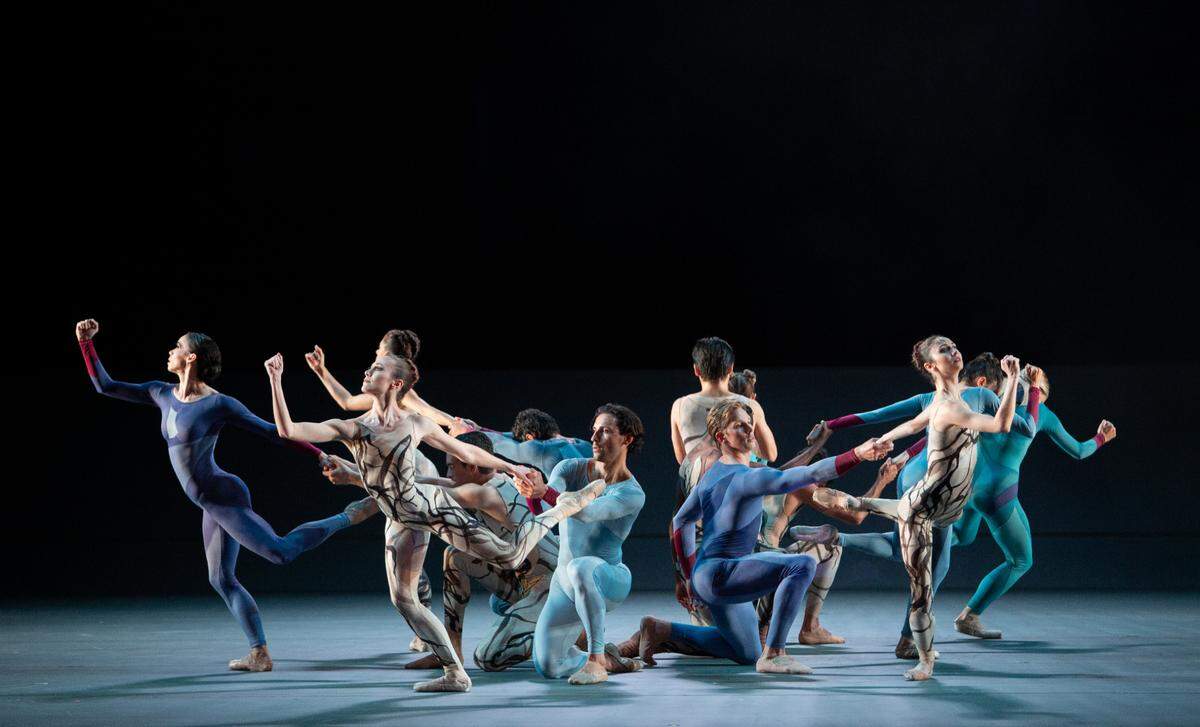
Miami City Ballet presents Prodigal Son
Featuring Prodigal Son by George Balanchine, After The Rain Pas de Deux by Christopher Wheeldon, Herman Schmerman Duet by William Forsythe and The Source by Claudia Schreier.
When: April 29 to May 22
Where: Kravis Center in West Palm Beach (April 29-May 1), Adrienne Arsht Center for the Performing Arts in Miami (May 6-8), Broward Center for the Performing Arts in Fort Lauderdale (May 21-22)
Price: Tickets start at $30
Info: www.miamicityballet.org/prodigal
This story was produced with financial support from The Pérez Family Foundation, in partnership with Journalism Funding Partners, as part of an independent journalism fellowship program. The Miami Herald maintains full editorial control of this work.
This story was originally published April 29, 2022 at 3:34 PM.