Archive: Mary Wilson on Diana Ross and why The Supremes couldn’t get on magazine covers
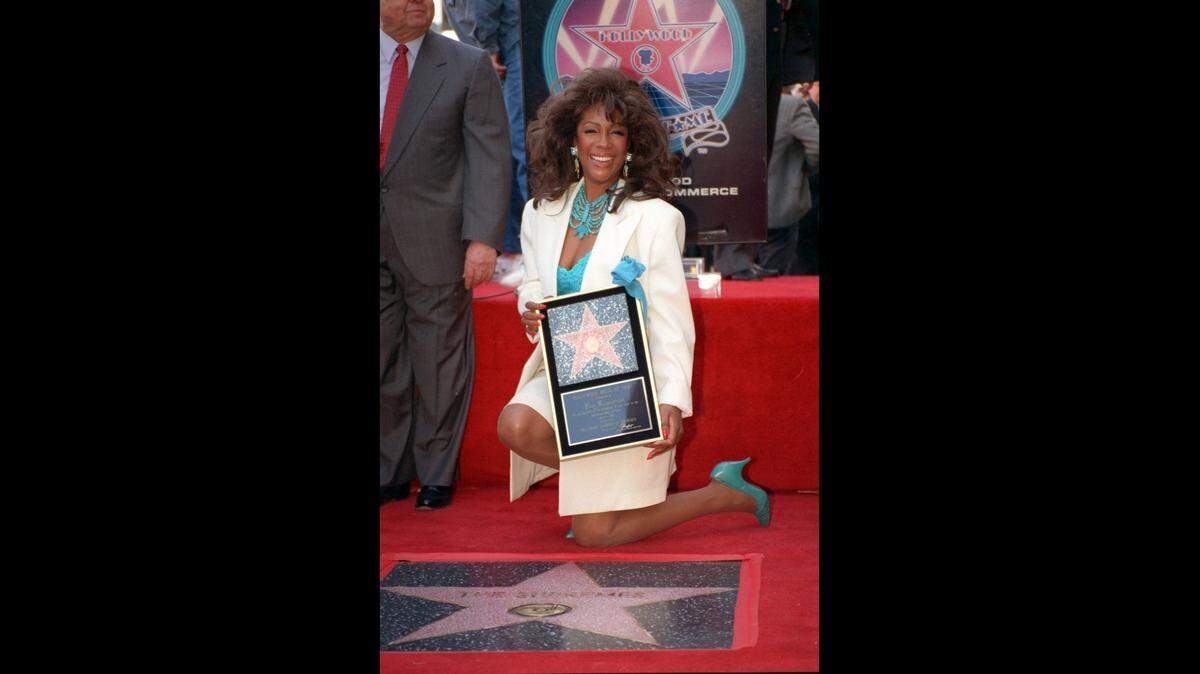
Mary Wilson, the longest-reigning original Supreme, died Monday night at her Las Vegas home at 76, The Associated Press reported.
Her publicist said the cause of death was not immediately clear.
This much, however, is clear: Wilson, Diana Ross and Florence Ballard made up the first successful configuration of The Supremes, the version that routinely bumped the Beatles out of Billboard’s No. 1 spot in the mid-1960s.
The fact AP put Wilson’s name first in that sentence may be functional — the obituary is about Wilson. But though Ross soon had her name added to the group’s title, as in “Diana Ross & the Supremes, ”with the August 1967 single, “Reflections,” Wilson has one first and last no other Supreme can claim:
Wilson was the only Supreme to stay with the group through its entire run. She was there in 1959 in Detroit as a member of The Primettes, which would soon become The Supremes. She was there for The Supremes’ reign as Motown’s most successful group of the 1960s (commercially topping the mighty Temptations, Miracles and Four Tops, among them). And Wilson remained in the post-Ross years of the 1970s as The Supremes scored Top 40 hits with “Up the Ladder to the Roof” and “Floy Joy.”
Motown officially disbanded The Supremes in 1977.
Thirty years later, in 2007, Wilson spoke with the Miami Herald to promote her benefit concerts for Broward Partnership for the Homeless. In the interview, Wilson discussed Ross, making music, and why the final Supremes single with Ross on lead, “Someday We’ll Be Together” in 1970, was a sentiment expressed on record only.
‘Dreamgirls’ close to reality, Wilson said
The following archive article was published in the Miami Herald on Feb. 12, 2007.
Anyone who thinks that “Dreamgirls, the 1981 Broadway musical-turned-Oscar nominated film, isn’t the story of the Supremes clearly isn’t paying attention.
And yet, when director Michael Bennett’s original “Dreamgirls” was winning its six Tony Awards in 1982, producers tried to distance their show from the Supremes, suggesting it wasn’t really about them.
That’s why the new hit movie is such sweet vindication for Supremes founder Mary Wilson, the only Supreme to last in every incarnation of the famed vocal group, from its founding in 1959 as The Primettes to America’s biggest pop act of the ‘60s under Diana Ross’ lead, and into the post-Ross disco ‘70s during which the trio made some of its best, yet most overlooked, material.
“I was very moved and very pleased that they switched courses,” Wilson says on the telephone from her Las Vegas home where she lives with three of her eight grandchildren. “They [including film director Bill Condon] are acknowledging it was based on the Supremes, and I felt good about that. It’s very wonderful of Bill to want to do that. It’s the truth.”
The truth, of course, is shaded by necessity. The Dreamettes are a Supremes-like group. The specific incidents are altered, and Beyoncé’s lead character isn’t nearly as distinctive as Ross was. But Wilson, who is performing vintage Supremes material such as “Stop! In the Name of Love,” “You Keep Me Hangin’ On” and “Reflections” tonight at the Broward Center for the Performing Arts says the film is close enough to reality.
“The more they changed it the more it was like us,” Wilson, 62, says.
“Dreamgirls”’ Effie White — played by Jennifer Hudson, who is vying for a Supporting Actress Oscar — is meant to resemble Supreme Flo Ballard, who was said to have a superior voice but lacked Ross’ glamour and was cast aside by Motown founder Berry Gordy. “That was basically going on . . . Flo was the major dramatic thing going on in our group,” Wilson says.
Tragic ending
.JPG "USObitMaryWilson (1).JPG")
Unlike the movie, there was no happy ending for the Flo/Effie character. After leaving the then-renamed Diana Ross & the Supremes in 1967, Ballard died in 1976 at the age of 32, impoverished after battling depression and alcohol abuse.
Ross also comes off sympathetically under Beyoncé’s watch. One notorious story from the Motown archives, not addressed by the musical, centers around the final Diana Ross & the Supremes single, “Someday We’ll Be Together.” Turns out Ross recorded that sentimental 1969 chart-topper without the other Supremes’ knowledge. The single was sold as a group number.
“It was supposed to be recorded for [Diana], she was getting ready to go out as a soloist, and the song was brought to her for one of her first recordings. Berry said it would be a better thing to have it as a Supremes single. I’m not happy about it, but it’s understandable,” Wilson says.
Alas, Ross and Wilson are not friends today. Says Wilson, “We’re related, we’re sisters ‘til the day we die but sometimes sisters don’t talk for awhile. It doesn’t mean you don’t love each other. I love her, and she loves me as well but life is different than the movies.”
Cultural changes
The movie, however, has brought to light the changes in American culture since the turbulent ‘60s.
“We started singing at such a young age,” Wilson says. “I was 13. I never had time to say ‘This is what I’d like to be.’ I’d already made up my mind. We did dare to dream about doing great things, but we could not possibly have thought it would be this great. Socially in America things weren’t as great. The expectations were not as high.”
Today, Black stars like Beyoncé and Mary J. Blige can be on the cover of Vogue. This wasn’t the case when Ross, Wilson and Ballard routinely bumped the Beatles out of No. 1 on the pop chart.
“Children today can dream about whatever they’d like to become,” says Wilson, who has a new ballads CD on the way. “We couldn’t even be on major magazine covers. That was unheard of, so, certainly times have changed for the better.”
But Wilson endured some heartache to get where she is, none worse than a 1994 accident on a California freeway in which she lost control of her Jeep. She suffered minor injuries but her 14-year-old son Rafael Ferrer died.
Now, amid the 100 or so paying gigs she lands annually, Wilson says she makes time for benefit shows, like tonight’s fundraiser for Broward Partnership for the Homeless.
“My family and I grew up in the [Detroit] projects,” Wilson says. “Without welfare we could have been homeless had the state not had programs to help people who were underpaid or mothers who had to stay home and look after their children. It’s [close] to my heart because of my upbringing. I try to do as many fundraisers as I can. It keeps you grounded.”
This story was originally published February 9, 2021 at 10:06 AM.