
From guayaberas to a global brand: Meet the Cuban man behind Perry Ellis
George Feldenkreis’s constant smile keeps your eyes on the screen in the documentary “From Cuba to America,” which had its world premiere at the Miami Jewish Film Festival on Jan. 24, with two additional screenings on Monday and Wednesday.
Feldenkreis (La Habana, 1935–Miami, 2025) speaks with a smile in his voice and his eyes. For those who think they know the story of the Cuban Jewish immigrant — the businessman and philanthropist who arrived in Miami in 1961 with $70 and built a multimillion-dollar fashion empire — Perry Ellis International — the curiosity of discovering so many lives lived with such optimism is what captivates the viewer.
“His sense of humor was unmistakably Jewish,” says Jerry Levine, director of “From Cuba to America.”
“The funniest things he said were often punctuated with Yiddish: that cadence, that irony, that warmth… it’s a very old and beautiful tradition.”
Many lives in one: from guayabera salesman to textile magnate
Feldenkreis has been many things in his 89 years: a guayabera salesman, an architect of modern Miami, one of the fortunate few who ring the opening bell at the New York Stock Exchange, a tireless worker who one day found himself holding a $12 million check, earned when his company went public — a check he kept to never forget what it took to get there.
He was also the businessman who rescued his company and took it private again when he saw his legacy threatened.
But above all, he was a Cuban boy, the son of Ukrainian Jews, who grew up in a small Havana apartment, sharing a room with his grandfather and sister.
“We lived in poverty all the time; I wouldn’t call it a happy childhood, rather a mediocre one,” Feldenkreis admits in the documentary.
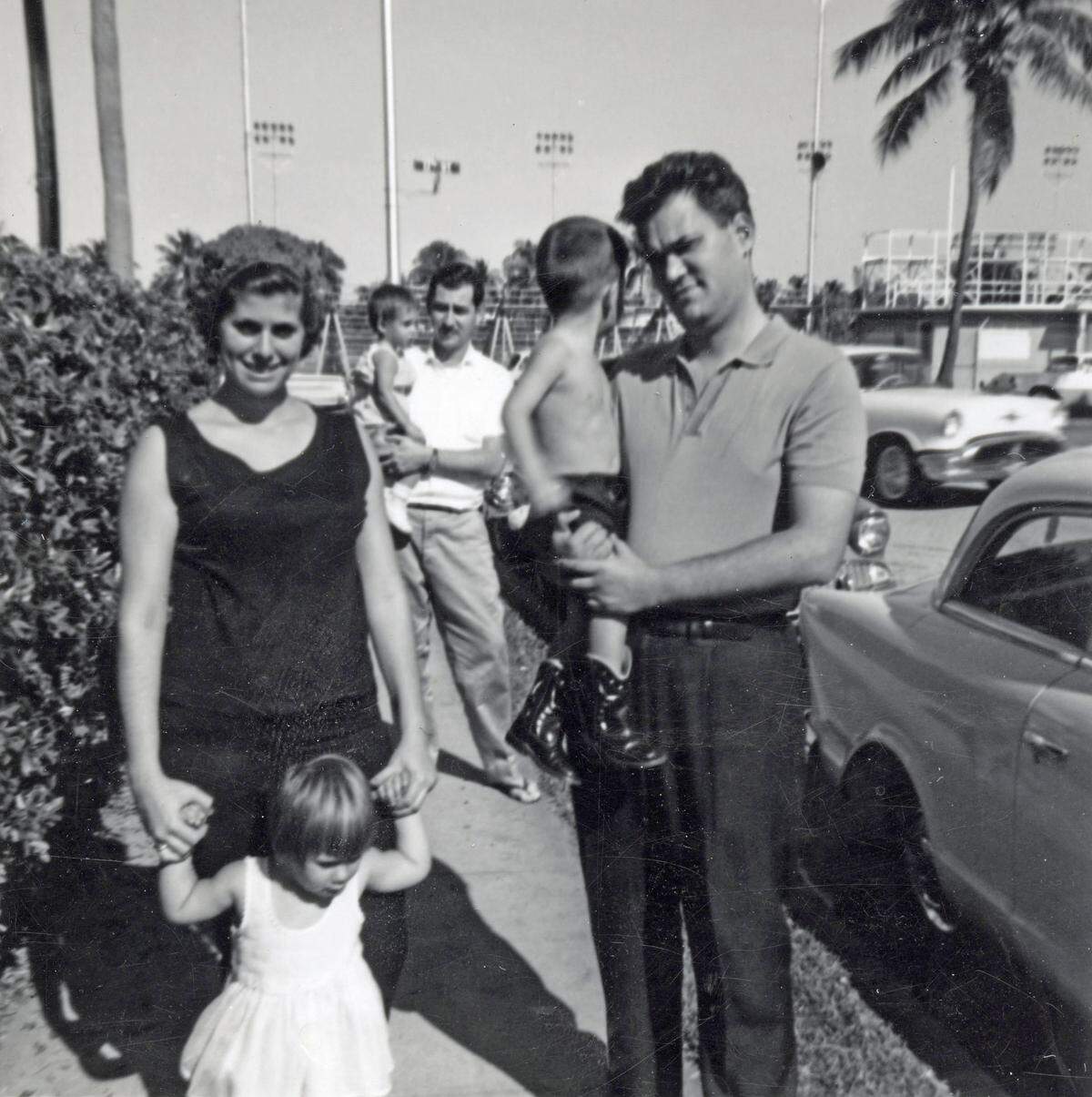
He also learned early about the suffering of the Jewish people, reflected in his mother’s tears after she lost relatives in extermination camps in Europe.
“I saw my mother cry, and that was the first time I understood the evil done to the Jews,” Feldenkreis says.
The trade learned at home: fabrics, commerce and the start in Miami
His father sold fabrics, and from him, Feldenkreis learned to be a merchant — an experience that gave him the confidence to sell door-to-door in Hialeah, he recalls in the film.
He developed his leadership early as a member of the Jewish Youth in Cuba, a time when he would visit Jewish households across Havana and came to know almost every member of the community.
“What surprised me most about Cuba, in the context of this film, was the depth of Havana’s Jewish community,” Levine says. “That religious and cultural foundation shaped George profoundly. As a teenager, he met Menachem Begin in Havana and spent an entire day as his escort — an unforgettable experience that helped set the trajectory of his life as a global leader.”
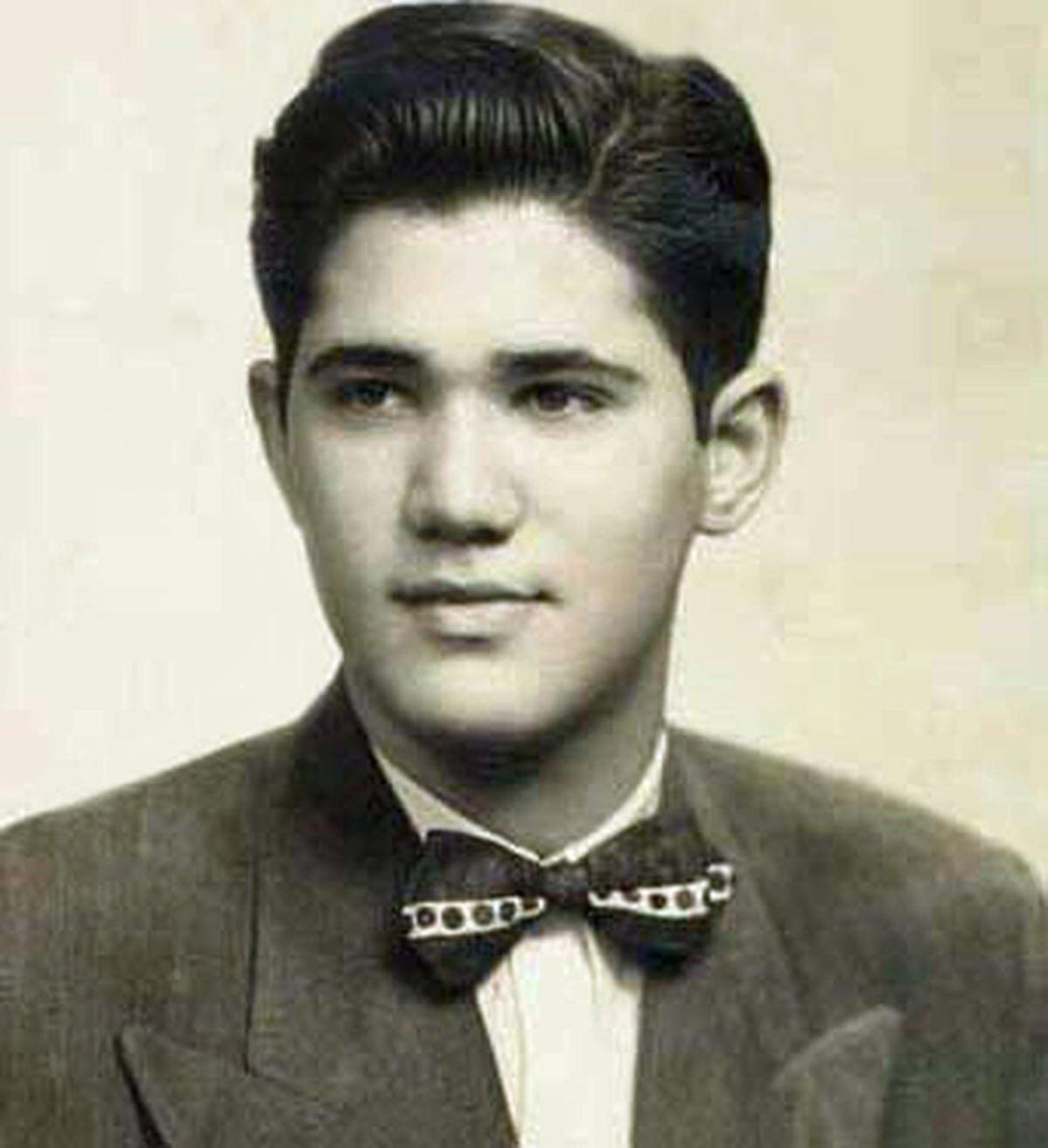
The documentary also shows Feldenkreis as a law student at the University of Havana, a degree he paid for himself. Later, as a lawyer after the 1959 revolution, he had an early encounter with Fidel Castro, who assigned him a mission — which I won’t reveal so you can see it in the theater — involving a Malecón building that housed students.
The return to Cuba in 2011, closing a circle
One of the most moving aspects of the documentary for Cuban exiles, especially those who never returned, is Feldenkreis’s trip back to the island in 2011. Now a successful man and accompanied by part of his family, he humbly knocks on the door of the Havana apartment where he grew up.
They let him in and, suddenly, two worlds meet, with the nostalgia that comes from overlapping times in the same space. What follows is joyful: Feldenkreis reunites with some law school classmates, and there is dancing and camaraderie.
.jpeg "IMG_4647 (1).jpeg")
“George handed me a DVD and said, ‘Jerry, you need to watch this raw footage,’’’ Levine recalls. “As soon as I saw it, I knew they belonged in the closing of the film. It was epic — George returning to Havana and to the home of his childhood at the sunset of his life. A true circle-of-life moment.”
Voices and testimonies: who appears in the documentary
Interviewed in the film are Feldenkreis’s children, Fanny Hanono and Oscar Feldenkreiss, who currently leads Perry Ellis; Jacob Solomon, former president of the Greater Miami Jewish Federation; designer Tommy Hilfiger; and musician and producer Emilio Estefan, who contributed part of the documentary’s soundtrack.
The Miami Jewish Film Festival runs through January 29, with a lineup that is a true celebration for the community’s film lovers, film critic Alejandro Ríos said.
Festival director Igor Shteyrenberg emphasized that the event has “the responsibility to support filmmakers and artists, especially when Jewish and Israeli stories are marginalized elsewhere.”
“A great film has the power to open hearts and minds like nothing else: it can move you deeply, make you believe in the goodness and kindness of people, and offer hope where there is none,” Shteyrenberg concluded.
‘From Cuba to America’, January 26, 7:30 p.m., Temple Menorah, 620 75th St., Miami Beach; and January 28, 7:30 p.m., Michael-Ann Russell JCC, 18900 NE 25 Ave. For the full festival program, https://miamijewishfilmfestival.org/ Tickets: 305-503-5182.
