
Interview: Q & A with Irvine Welsh
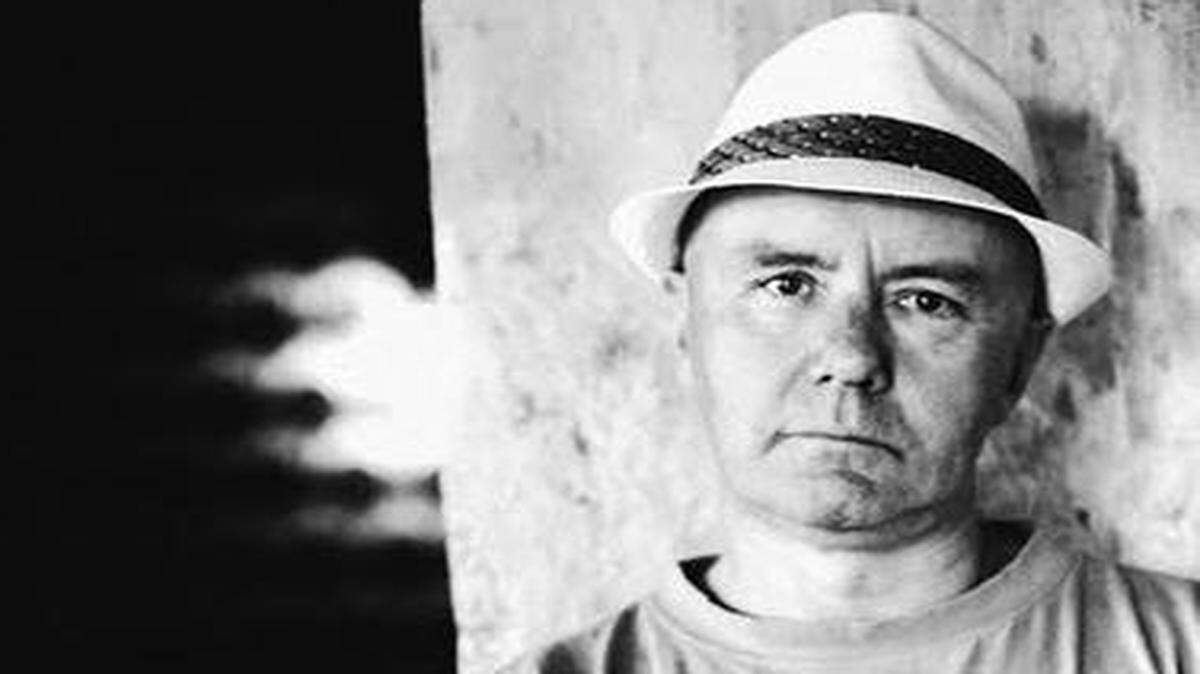
Irvine Welsh usually likes to spend a couple of winter months in Miami. But this year, he’s got an issue only his home in Chicago can cure.
“I’ve got a deadline on a script,” explains the Scottish-born author of Trainspotting, Filth, Ecstasy, Skagboys and Porno. “I just know when I go down there, I don’t get anything done. I just like to go out. I think of it as recreational. Here it’s snowing outside, and I just stay in and get through a ton of work.”
No worries, though. Welsh arrives next week to talk about his latest novel, The Sex Lives of Siamese Twins (Doubleday, $26), at Books & Books in Coral Gables. Set in South Beach, the novel — as wild and explicit as its title implies — takes on our body conscious and celebrity-worshipping culture via Lucy Brennan, a sexually voracious, bisexual personal trainer who disarms a gunman on the Julia Tuttle Causeway. The incident, captured on video by insecure, overweight artist Lena Sorenson, makes her famous. But fame has a way of turning on you, and Lucy and Lena end up locked in the sort of twisted, co-dependent relationship that only Welsh can imagine.
Welsh, whose novel Crime is also set here, says he wanted to write another book about Miami.
“I find Miami a really great place to write about. … It’s just very fluid,” he says. “People are coming in and out all the time, so it’s changing and shifting all the time. If you’ve got beautiful light and heat, the first thing you get is body-conscious people, and the second thing is visual people. I was always fascinated by art and sport. When you’re a kid, you’re either the sporty kid or you’re the bright, kind of nerdy kid. I was very much both, and I resented being channeled into one thing or another. … I wanted to look at these two dichotomies through two transplants who end up in Miami.”
The setting also helps American readers who struggled with Trainspotting’s thick Scottish dialect. But don’t feel bad if you are one of them; Welsh understands (and suggests reading the first 30 pages or so aloud to get used to its rhythms).
“When I first wrote it I looked at the way the words looked on the page and thought, ‘I’m never going to get this published. It’s a mess. Even I can’t read it.’”
Both of the protagonists are women in “Sex Lives.” Is that because you think women deal with more pressure about their bodies than men?
Both characters had to be women. Increasingly this kind of pressure is on men now, with the whole narcissism of consumerism, but not to the extent that women have it. … The book came out last year in the U.K., and when I was talking to women in interviews I found the ones who went to the gym tended to have a sneaking admiration for Lucy and the ones who didn’t were hostile to her.
What are some of the challenges of writing about a sociopathic character like Lucy?
What I like to do with any character is get someone who’s having a bad year out, in the throes of drug addiction or having a mental breakdown. They might have an edge to their personality, like Lucy. But in this extreme situation she’s becoming psychotic, internalizing things. She’s not really dealt with them. By making herself into this super- powered gym monster she’s been repressing them. I think the thing that makes her admirable is she’s actually trying. She might have gone down the wrong path, it’s not the best strategy, but she continues to fight. We can forgive characters’ shocking behavior as long as we know what’s propelling that in them. You also have to throw in the consequences of bad behavior.
What’s interesting to you as a writer about the American obsession with the body?
Think about what happens when you go to the gym. I go to the gym and work through a routine. But if you see someone with a personal trainer you know they do 10 times more than you do. You give up your sense of identity. If you watch The Biggest Loser, you see people give up their identity to become something else. It’s like AA — they submit to this higher power. There’s something kind of strange and quite liberating about that and also something dodgy as well. I wanted to explore that relationship. It’s very intimate, having someone shouting at you and telling you what to do.
I was at Crunch on Miami Beach and saw a personal trainer really ripping into this woman who was doing squats with a kettlebell. And the woman being trained was crying. I thought, “My God, you’re paying for this!” There’s a whole kind of crazy relationship there. You don’t have to amplify it much.
Are people in the U.K. equally obsessed with fitness?
It’s happening more now. People do feel it’s bad to be overweight. But one of the interesting things is the construct over there is different. The Biggest Loser is so serious. People deconstruct the person, and the person cries, there’s soft music. On Fat Families, the same kind of show on the BBC, the guy trying to get people to lose weight is a calm, comedic guy. … it kind of treats being obese or overweight as a big joke. I think that’s an element of British culture: We don’t take it seriously. We’re like that with a lot of things.
Both Lucy and Lena experience the ebb and flow of instant celebrity. Was that what your experience was like when “Trainspotting” was published?
It was quite a strange thing for me. Writers in Britain aren’t really celebrities. You become kind of a darling of a small set. … But when Trainspotting became part of the whole British youth culture at the time, I became less like a writer and more like some kind of pop star. I hadn’t really bargained for that. I didn’t expect people stopping me in the streets and all that, wanting autographs and pictures with me. One of the things you want as a successful writer is the anonymity.
Does that still happen here in America?
A little bit in the big cities, but I don’t have that kind of mainstream recognition. I’m not really a mainstream novelist! It’s more like, if I walk into a hipster bar in Chicago a few people might recognize me, but not if I walk into a sports bar.
Meet the author
When: 7 p.m. Wednesday
Where: Books & Books, 265 Aragon Ave., Coral Gables
Info: 305-442-4408 or www.booksandbooks.com
This story was originally published January 30, 2015 at 12:46 PM with the headline "Interview: Q & A with Irvine Welsh."