
Review: Kathryn Miles’ ‘Superstorm’
Natural disasters are often compounded by man-made failures. Decades of lax building codes and shoddy construction practices left South Florida far more vulnerable in 1992 than it would be today if a storm identical to Hurricane Andrew hit again (that’s the good news — here, officials learned from their mistakes and changed the codes). And while Hurricane Katrina’s devastation of New Orleans can partially be blamed on a decades-long failure to maintain the levees that surround the city, the failure of politicians to order evacuations led to unnecessary loss of life.
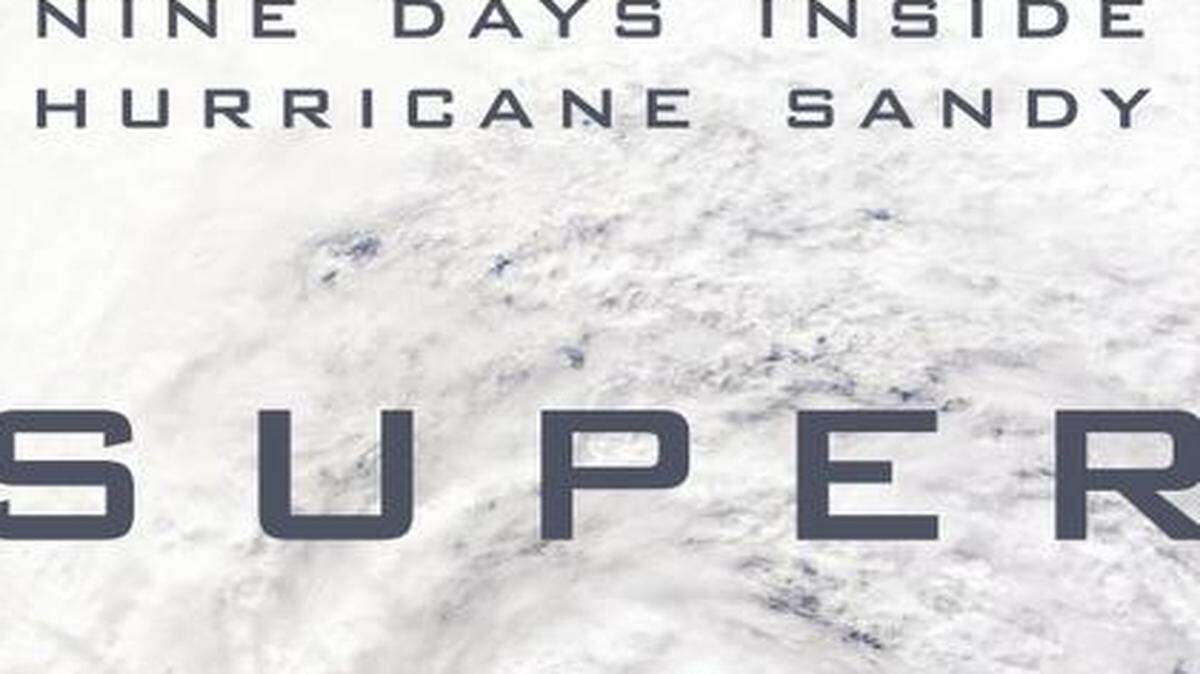
That’s one of the things that makes Kathryn Miles’ Superstorm: Nine Days Inside Hurricane Sandy such a frustrating read. The deeply reported and richly detailed narrative makes clear that people in the administration of Michael Bloomberg made similar mistakes as Superstorm Sandy surged toward New York and New Jersey.
“Like all government agencies, the National Hurricane Center runs on clear protocols,” Miles writes. “One of them is their surge expert isn’t supposed to give briefings at the city level. Nor is that person supposed to micro-manage evacuation decisions. [Meteorologist Jaime] Rhome is a rule-abiding kind of guy. But this was far from a normal situation.”
Miles details how Rhome broke ranks after watching Bloomberg announce there would be no evacuation. He called a colleague in New York, who later told Miles, “[T]here’s a joke in this industry that when the National Hurricane Center has time to call you, it’s a sure sign you’re screwed.”
A deputy commissioner in New York City’s Office of Emergency Management told Miles that he didn’t understand the seriousness of the storm that was about to hit the city until he got a call from the National Hurricane Center.
And while that decision not to evacuate has been explored and condemned before, Miles goes deeper into the story of Superstorm Sandy, exploring the decisions made by the National Weather Service and the National Hurricane Center that left the public confused and television meteorologists frustrated.
Miles digs deep into the science of storm prediction and into the technical quandary the National Hurricane Center and the National Weather Service faced when Hurricane Sandy became a “post-tropical storm.” Meteorologists knew that Sandy was losing the characteristics of a hurricane, but it was not getting less dangerous. If they stuck to the true scientific terms, they knew some would think they had downgraded the storm.
Television weathermen pleaded with the NHC and the NWS to “just break the rules. Call it a hurricane. It’ll save lives.”
Sprinkled throughout Superstorm are the recollections of people who will be familiar to South Florida readers, such as Craig Fugate, Florida’s former emergency management director and now head of the Federal Emergency Management Agency. Brian Norcross, the meteorologist who gained fame broadcasting throughout Hurricane Andrew, also helps inform Miles’ story.
And at its heart, Superstorm is an extremely complicated story. Miles mixes the science with detailed sketches of some of the storm’s victims and heroes: the gregarious and fun-loving woman on the crew of the Bounty who died when the ship went down; the seemingly fearless Coast Guard rescuers who plucked most of the rest of the crew from the ocean under almost unimaginably dangerous conditions; the pilots of hurricane hunter planes who actually enjoy flying into the sheer violence of a bad storm.
Miles’ reporting is voluminous. A lessor writer would have struggled to build a readable narrative out of dense science and history and the play-by-play recollections of meteorologists, ships’ captains and family and friends of victims. Tracking all of the characters can be difficult, but Miles does a masterful job of telling the human tale of of the storm. The book seems to have been carefully fact-checked, although Florida residents will notice Miles incorrectly has Andrew hitting the state in 1993 (it struck in 1992).
Still, Superstorm is an important read for Florida residents. Funding shortfalls have left the United States woefully unable to predict storm path and intensity. Satellites are expected to fail “pretty much any moment” but aren’t scheduled to be replaced until 2017. Meanwhile, research and technology budgets have been cut. There’s no predicting where the effects of those budget decisions will be felt next, but there is certainly a likelihood that Florida will once again find itself in the familiar and unpleasant cone of uncertainty.
Susannah Nesmith is a writer in Miami.
This story was originally published October 12, 2014 at 8:00 AM with the headline "Review: Kathryn Miles’ ‘Superstorm’."